Owning a Jeep Wrangler means you’re ready for adventure. But before you go off-road, you need to know how to shift your Jeep Wrangler into 4 wheel drive.
Many beginners worry they might damage their vehicle or get stuck if they do it wrong. In this guide, you’ll learn step-by-step how to shift into 4WD, understand the different modes, and avoid common mistakes.
Whether you have a new Jeep Wrangler or an older model, help you use your 4 wheel drive confidently.
Understanding Jeep Wrangler 4 Wheel Drive Systems
Jeep Wranglers are famous for their 4WD capability. But not all systems work the same way. Knowing which system you have is important for safe operation. There are two main types in Jeep Wranglers:
- Part-Time 4WD: Most common in older models and base trims. You use 4WD only when needed (off-road, snow, mud).
- Full-Time 4WD (Selec-Trac): Available in newer Wranglers. You can keep 4WD on all the time; it automatically adjusts to road conditions.
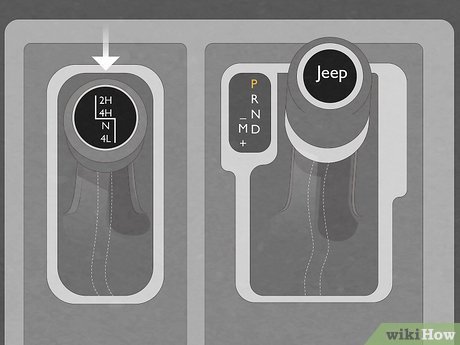
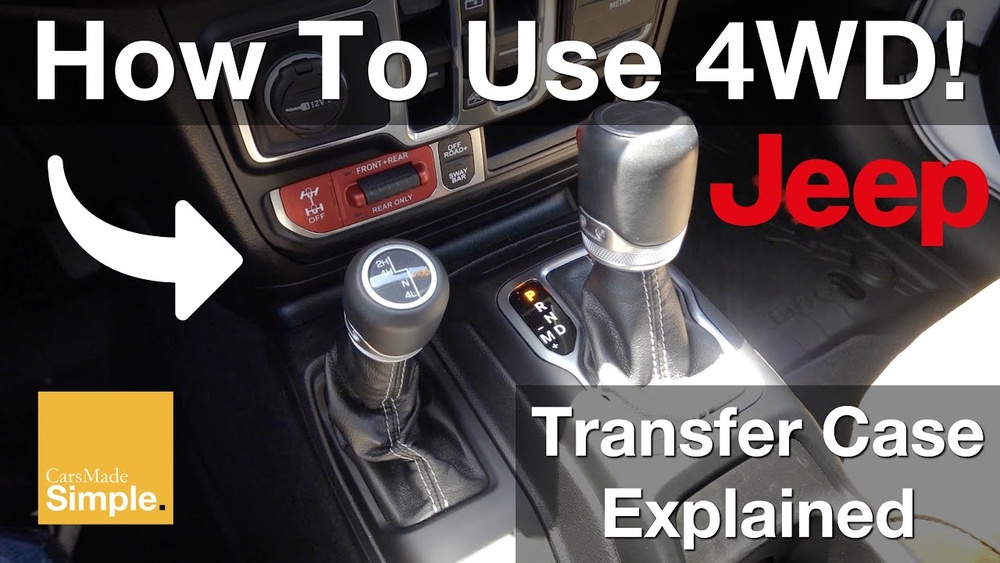
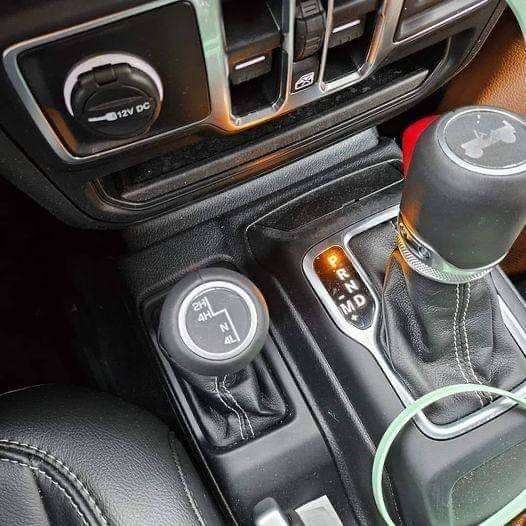
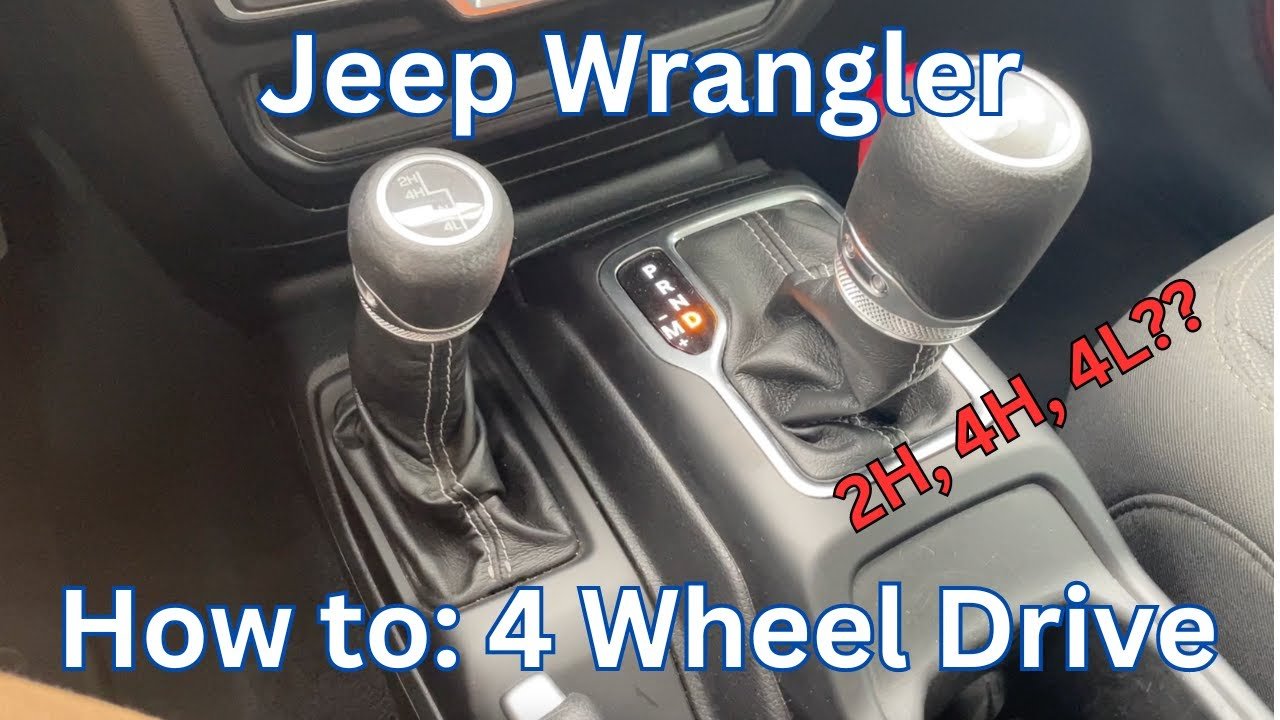
Every Jeep Wrangler has a transfer case with a lever or knob that lets you choose between drive modes. These modes are:
- 2H (Two-Wheel High): Normal driving on dry pavement.
- 4H (Four-Wheel High): For slippery or loose surfaces (snow, sand, gravel).
- N (Neutral): Used for towing.
- 4L (Four-Wheel Low): For tough off-road situations (deep mud, steep hills).
Understanding these modes will help you shift correctly and prevent damage.
The Four Main Ways To Shift Jeep Wrangler Into 4 Wheel Drive
Every Jeep Wrangler lets you shift into 4 wheel drive in four specific ways. Each method depends on the drive mode and your driving situation. Here’s how to use each one safely:
1. Shifting From 2h To 4h (four-wheel High)
This is the most common shift for beginners. It’s used when roads become slippery or you need extra traction.
How to do it:
- Keep your speed under 55 mph (88 km/h).
- You do not need to stop the vehicle.
- Simply pull the transfer case lever from 2H to 4H.
- You’ll feel a slight change in handling, but the Jeep keeps moving.
When to use it:
- Rainy roads
- Light snow
- Gravel
- Sand
Pros:
- Quick and easy
- Works while driving
- Good for mild off-road
Cons:
- Not meant for dry pavement (can cause binding)
- Less torque than 4L
Example: You’re driving on a country road and see snow ahead. Slow down to 40 mph, shift to 4H, and keep going.
2. Shifting From 4h To 4l (four-wheel Low)
This shift is for serious off-road or when you need maximum power at low speed.
How to do it:
- Stop the Jeep completely.
- Shift the transmission to Neutral (N).
- Firmly move the transfer case lever from 4H to 4L.
- Wait for the indicator light to confirm you’re in 4L.
When to use it:
- Deep mud
- Steep hills
- Rock crawling
- Deep sand
Pros:
- Provides maximum torque
- Helps in extreme conditions
- Allows slow, controlled movement
Cons:
- Only for low speeds (under 25 mph)
- Not for regular roads
- Can strain drivetrain if misused
Example: You’re facing a steep, rocky hill at a trail. Stop, shift to Neutral, switch to 4L, and climb slowly.
3. Shifting From 4l To 4h
After finishing tough terrain, you’ll want to return to normal 4WD mode.
How to do it:
- Stop the vehicle.
- Shift the transmission to Neutral.
- Move the transfer case lever from 4L to 4H.
- Wait for confirmation light.
When to use it:
- Leaving off-road area
- Ready for faster speeds
Pros:
- Smooth transition from heavy off-road to lighter conditions
- Keeps traction for slippery roads
Cons:
- Must be fully stopped
- Can be confusing for beginners
Example: You finish mud bogging and return to a gravel road. Stop, shift to Neutral, switch to 4H, and drive away.
4. Shifting From 4h To 2h
This shift returns your Jeep to normal driving mode.
How to do it:
- You can shift while moving at low speeds (under 55 mph).
- Move the transfer case lever from 4H to 2H.
- The Jeep returns to two-wheel drive.
When to use it:
- Back on dry pavement
- Finished with slippery conditions
Pros:
- Easy and quick
- Saves fuel
- Reduces drivetrain wear
Cons:
- If left in 4H on dry pavement, can cause damage
Example: The road clears up after snow. Shift from 4H to 2H at 30 mph and continue driving normally.
Comparing 4wd Modes: When And Why To Use Each
Choosing the right mode is important. Using the wrong one can damage your Jeep or make driving unsafe. Here’s a clear comparison:
| Mode | Speed Limit | Terrain | Recommended Use |
|---|---|---|---|
| 2H | Unlimited | Dry pavement | Daily driving |
| 4H | Up to 55 mph | Snow, sand, gravel | Light off-road |
| 4L | Under 25 mph | Mud, rocks, steep hills | Heavy off-road |
Non-obvious insight: Many new drivers leave their Jeep in 4H after the road clears. This can cause drivetrain binding and extra wear. Always return to 2H on dry roads.
Practical Tips For Shifting Jeep Wrangler Into 4 Wheel Drive
Shifting is easy, but there are tricks to make it smoother and safer. practical tips:
- Always check your owner’s manual for your exact model.
- Don’t force the lever. If it sticks, gently rock the Jeep back and forth.
- If you hear grinding or unusual noises, stop and check for issues.
- In newer Wranglers, some modes can be selected with a knob instead of a lever.
- Practice shifting in a safe area before you need it for real.
Beginner mistake: Many people try to shift into 4L while driving. Always stop and shift to Neutral first.
Costs And Maintenance For Jeep Wrangler 4 Wheel Drive
Using 4WD increases wear on certain parts, but it’s necessary for safety and performance. Here’s what you should know:
- Transfer case fluid: Should be changed every 30,000 to 60,000 miles. Cost: $100, $200.
- Axle maintenance: Regularly check for leaks and noises.
- Drivetrain repairs: If used incorrectly, repairs can cost $500, $2,500.
Non-obvious insight: If your Jeep stays in 4WD for too long, tires will wear unevenly. Rotate tires every 5,000 miles for best results.
Pros And Cons Of Jeep Wrangler 4 Wheel Drive
Jeep Wrangler’s 4WD is great for adventure, but there are trade-offs:
Pros:
- Excellent traction in tough conditions
- Allows safe off-road travel
- Protects against getting stuck
Cons:
- Higher fuel use in 4WD
- More maintenance
- Can cause damage if misused
Example: In heavy snow, 4WD keeps you moving. But on dry highways, it lowers MPG and wears parts faster.
Common Mistakes And How To Avoid Them
Beginner drivers often make mistakes that can lead to costly repairs. Here are the most common:
- Shifting into 4L while moving: Always stop first.
- Using 4H on dry pavement: Causes binding and wear.
- Forgetting to return to 2H: Wastes fuel and stresses drivetrain.
- Ignoring warning lights: Always check dashboard indicators.
How to avoid: Learn your Jeep’s system, practice shifting in a safe place, and watch for dashboard warnings.
Real-life Example: Shifting Jeep Wrangler Into 4 Wheel Drive
Imagine you’re driving to a mountain trail. The road starts dry, then becomes snowy and steep.
- Start in 2H on dry pavement.
- As snow appears, slow down and shift to 4H without stopping.
- When you reach a steep, muddy hill, stop, shift to Neutral, and move to 4L.
- After you clear the hill and return to easier roads, stop and shift back to 4H.
- When back on dry pavement, shift to 2H while driving at a low speed.
This process keeps you safe and prevents damage to your Jeep.
Quick Reference Table: Shifting Steps For Jeep Wrangler 4wd
For easy recall, here’s a summary:
| From | To | Action | Speed |
|---|---|---|---|
| 2H | 4H | Shift lever while moving | Under 55 mph |
| 4H | 4L | Stop, shift to Neutral, move lever | 0 mph |
| 4L | 4H | Stop, shift to Neutral, move lever | 0 mph |
| 4H | 2H | Shift lever while moving | Under 55 mph |
Updated Facts And Data About Jeep Wrangler 4wd
- The latest Jeep Wrangler models (2024) offer Selec-Trac 4WD, which lets you stay in 4WD full-time.
- Most Wranglers can shift between 2H and 4H at speeds up to 55 mph.
- The average cost for transfer case service is around $150.
- Wranglers hold value well because of their reliable 4WD systems.
- For more details and official specs, visit the Jeep Official Site.
Frequently Asked Questions
<!– wp:rank-math/faq-block {"questions":[{"id":"faq-question-9d448eee4928","title":"What Is The Difference Between 4h And 4l In Jeep Wrangler?","content":"4H (Four-Wheel High) is for normal off-road or slippery conditions at higher speeds. 4L (Four-Wheel Low) is for extreme off-road, like mud or hills, at slow speeds. 4L gives more torque for tough situations.
“,”visible”:true},{“id”:”faq-question-9ad6b268c896″,”title”:”Can I Shift My Jeep Wrangler Into 4wd While Driving?”,”content”:”Yes, you can shift from 2H to 4H and back while moving, as long as you’re under 55 mph. For 4L, always stop and shift to Neutral before changing.
“,”visible”:true},{“id”:”faq-question-9273f3aabe64″,”title”:”Does Using 4wd In Jeep Wrangler Use More Fuel?”,”content”:”Yes. 4WD uses more fuel because it powers all wheels. Use 4WD only when needed to save gas and reduce wear.
“,”visible”:true},{“id”:”faq-question-2f6277595ab4″,”title”:”How Often Should I Service My Jeep Wrangler 4wd System?”,”content”:”Check and change transfer case fluid every 30,000 to 60,000 miles. Regular maintenance prevents costly repairs and keeps 4WD working smoothly.
“,”visible”:true},{“id”:”faq-question-bf33ae8116ce”,”title”:”What Happens If I Leave My Jeep Wrangler In 4h On Dry Roads?”,”content”:”Driving in 4H on dry pavement can cause drivetrain binding, extra wear, and damage. Always switch back to 2H when conditions are normal.
“,”visible”:true}]} –>What Is The Difference Between 4h And 4l In Jeep Wrangler?
4H (Four-Wheel High) is for normal off-road or slippery conditions at higher speeds. 4L (Four-Wheel Low) is for extreme off-road, like mud or hills, at slow speeds. 4L gives more torque for tough situations.
Can I Shift My Jeep Wrangler Into 4wd While Driving?
Yes, you can shift from 2H to 4H and back while moving, as long as you’re under 55 mph. For 4L, always stop and shift to Neutral before changing.
Does Using 4wd In Jeep Wrangler Use More Fuel?
Yes. 4WD uses more fuel because it powers all wheels. Use 4WD only when needed to save gas and reduce wear.
How Often Should I Service My Jeep Wrangler 4wd System?
Check and change transfer case fluid every 30,000 to 60,000 miles. Regular maintenance prevents costly repairs and keeps 4WD working smoothly.
What Happens If I Leave My Jeep Wrangler In 4h On Dry Roads?
Driving in 4H on dry pavement can cause drivetrain binding, extra wear, and damage. Always switch back to 2H when conditions are normal.
The Bottom Line
Shifting your Jeep Wrangler into 4 wheel drive is easy with the right knowledge. Remember the four main shift types: 2H to 4H, 4H to 4L, 4L to 4H, and 4H to 2H. Practice these steps in safe conditions, maintain your system, and avoid common mistakes. With these tips, you’ll enjoy your Jeep Wrangler’s full capability without worry.
Meta Title: How To Shift Jeep Wrangler Into 4 Wheel Drive: Step-by-Step Beginner Guide
Meta Description: Learn how to shift your Jeep Wrangler into 4 wheel drive safely and easily. Get step-by-step instructions, practical tips, real examples, and FAQs for beginners.