You're driving along, nothing feels off, and then that amber message pops up on the dash: Service 4 Wheel Drive.
On a Jeep Grand Cherokee, that warning can mean anything from a fifteen-minute fix to an $800 repair, and your stomach drops a little trying to guess which one you're in for.
Can you keep driving? Should you pull over right now?

Take a breath. The Service 4 Wheel Drive Jeep Grand Cherokee warning shows up more often than you’d think, and in most cases it’s not the disaster your brain is imagining.
But it’s also not something to shrug off and forget about, especially if you actually drive your Jeep the way it was built to be driven.
Here’s what’s really going on under there, what tends to cause it, and what you’re actually looking at in terms of cost if you need a repair.
The Service 4 Wheel Drive warning means your Jeep’s control module has flagged a fault in the 4WD system, most often a failing transfer case shift motor, a dirty or damaged wheel speed sensor, low transfer case fluid, or a control module glitch.
Fixes range from a $0 sensor cleaning to a $600-$800 module replacement. Scan for codes before you assume the worst.
How This Was Put Together
The causes and cost ranges in this guide are cross-checked against Mopar/FCA transfer case specifications, NHTSA’s technical service bulletin and complaint records, and repair patterns reported by owners and independent mechanics across Jeep forums.
Where a claim couldn’t be verified against a real source, it was cut rather than left in as a guess.
Service 4 Wheel Drive Jeep Grand Cherokee: What the Warning Actually Means
This message comes straight from your Jeep’s onboard computer, and it’s telling you the 4WD system has hit a fault it can’t work around.
Depending on your model year, you might see “Service 4WD System,” “4WD System Unavailable,” or slightly different wording, but they’re all pointing at the same thing.
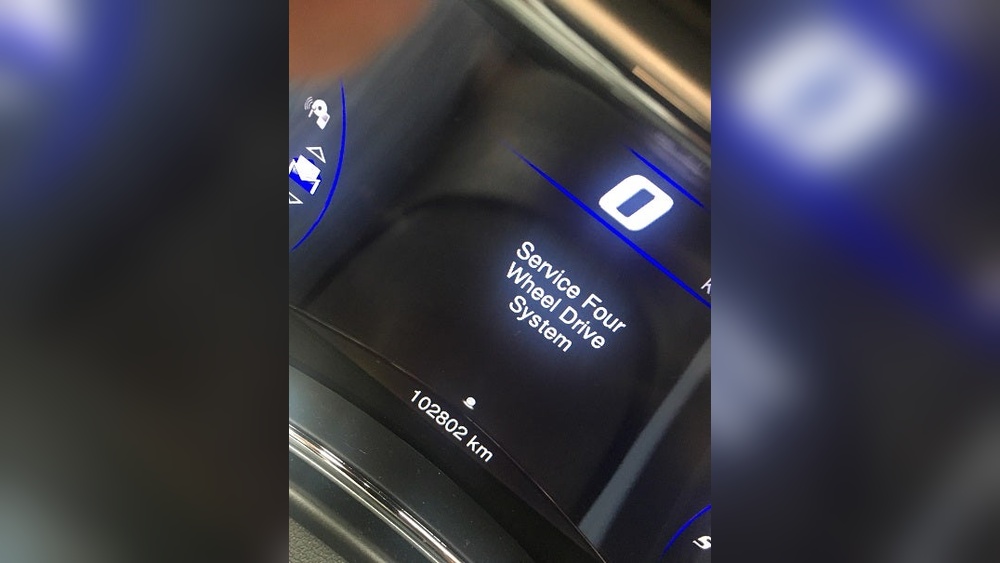
Something in the drivetrain electronics or hardware isn’t behaving the way it should.
The tricky part is that this warning covers a lot of ground. It could mean your transfer case can’t shift modes.
It could mean a wheel speed sensor is feeding bad data. It could even mean nothing mechanical is wrong at all, and a control module just had a hiccup.
That’s exactly why guessing at the fix without pulling codes first is how people end up replacing parts that were never broken in the first place.
Why You Shouldn’t Just Ignore It
Here’s the honest answer: you can usually keep driving on dry pavement without much drama. Where this actually bites you is exactly where you’d want your 4WD working: snow, mud, loose gravel, a boat ramp, anywhere traction is already limited.
If the system’s down when you need it, you’re effectively driving a two-wheel-drive Jeep, and you might not find that out until your tires are already spinning.
There’s also the slow-burn problem. Some of these faults, like low transfer case fluid or a sensor caked in mud, get worse the longer you drive on them.
What starts as an easy $100 fix can turn into a transfer case rebuild if you let it ride for months.
The Parts Actually Doing the Work
Before getting into causes, it helps to know what’s involved, because the fix depends entirely on which piece is failing.
Transfer case. The box that splits engine power between the front and rear axles and lets you toggle between drive modes. It’s the component most often blamed when this warning shows up, and for good reason.
Front and rear differentials. These let your wheels spin at different speeds when you’re turning, which matters both on-road and off. A failing diff doesn’t always trigger this specific warning on its own, but it can contribute.
Driveshafts. Simple job, but critical. They physically carry power from the transfer case out to the wheels.
The control module. Depending on the year, this might be a dedicated transfer case control module or handled through the broader powertrain electronics. Either way, it’s the brain watching everything else and deciding when to throw the warning.
Sensors. Wheel speed sensors, position sensors on the transfer case, and various switches all feed data back to that control module. A lot of “Service 4WD” warnings trace back to one of these, and they’re often the cheapest thing on this list to fix.
What’s Actually Causing Your Warning
The Service 4 Wheel Drive Jeep Grand Cherokee warning almost always traces back to one of a handful of causes. Based on what mechanics and Jeep owners run into most often, here are the usual suspects, roughly in order of how frequently they show up.
A failing transfer case shift motor.
This small electric motor physically moves the transfer case between 2WD and 4WD. When it dies or starts sticking, the system can’t complete the shift, and the warning fires.
You’ll usually notice this one because it comes with a real symptom: you engage 4WD, and nothing happens, sometimes with a clicking or grinding sound from underneath.
Wheel speed sensors that are dirty, damaged, or disconnected.
These sensors sit right where they’re exposed to everything: mud, water, road salt, rocks. It doesn’t take much for one to get caked in debris or for a connector to corrode.
The system reads bad data, can’t confirm the wheel speeds add up, and throws the fault.
This is genuinely one of the more common causes after aggressive off-roading, and it’s also the cheapest to fix. If you want to see exactly what a specific sensor fault code looks like once it’s stored, our guide to Jeep Code U1412 walks through a real wheel speed sensor code from diagnosis to fix.
Low or contaminated transfer case fluid.
Like any gear-driven component, the transfer case needs clean fluid to shift smoothly and stay cool. Skip the fluid change long enough, and things start binding or running hot, which the control module picks up on.
Most owners genuinely forget this fluid exists. Everyone remembers engine oil; almost nobody remembers the transfer case.
Control module or wiring faults.
Sometimes there’s no physical problem with the 4WD hardware at all. A software glitch, a corroded connector, or even a weak battery can cause a control module to throw a false warning.
This is the frustrating one, because a shop can inspect everything and find nothing obviously broken, and the fix ends up being a module reset rather than a parts replacement.
Communication faults between the transfer case control module and the rest of the vehicle’s electronics are common enough that they get their own trouble codes. Our breakdown of code U0403 00 covers what it looks like when the transfer case module stops talking to the rest of the car.
It’s worth calling out separately: a genuinely low or failing battery is an underrated cause here.
Modern Jeeps are picky about voltage, and a battery on its way out can trigger warnings that have nothing to do with what they claim to be about, the 4WD system included.
We’ve seen the same pattern show up under a completely different code; check out our C2101 code guide for another example of a voltage problem masquerading as a sensor fault.
How to Actually Diagnose It
Don’t skip straight to swapping parts. Here’s the order that actually saves you money.
- Pull the codes first. An OBD-II scanner reads stored trouble codes from the control module, and those point you toward the specific system that’s failing instead of leaving you guessing. This step alone eliminates most of the guesswork, and a lot of auto parts stores will read codes for free. Once you have a code in hand, a reference site like JeepDTC.com can tell you exactly what it means and how severe it is before you spend a dime on parts.
- Check the transfer case shift motor. Engage 4WD and listen: you should feel or hear a clunk as it shifts. If nothing happens, or you hear grinding, that’s your motor.
- Inspect and clean the sensors. Wheel speed sensors and transfer case position sensors are usually easy to reach. A lot of the time, cleaning off caked mud is the entire fix.
- Check the fluid. Low or dark, gritty fluid means it’s time for a change, and it’s cheap insurance either way.
- Check the battery and connections before touching anything else electronic. A quick voltage test rules out one of the sneakiest causes on this list.
One thing beginners consistently get wrong: they skip the code scan and go straight to a visual inspection, which misses anything electronic. And a surprising share of “Service 4WD” warnings turn out to be something as unglamorous as mud on a sensor, not a broken part.
Tools That Make This Diagnosis Easier
You don’t need a shop’s diagnostic equipment to work through the steps above. A basic Bluetooth scanner, a battery tester, and a can of electronics-safe contact cleaner cover most of what’s listed here:
Invalid table id.
What It Actually Costs to Fix
Repair costs vary by region, shop, and whether you’re at a dealer or an independent mechanic, but here’s a realistic range based on what owners typically report paying.
| Issue | Parts | Labor | Total | Time |
|---|---|---|---|---|
| Transfer case shift motor | $200-$400 | $100-$300 | $300-$700 | 1-2 days |
| Wheel speed sensor | $30-$150 | $20-$50 | $50-$200 | 1-2 hours |
| Transfer case fluid change | $20-$60 | $60-$90 | $80-$150 | About an hour |
| Control module diagnosis/replacement | $150-$600 | $50-$200 | $200-$800 | 1-2 days |
Treat these as ballpark figures, not quotes. A dealer will almost always run higher than an independent shop, and prices swing depending on where you live and which model year you’re dealing with.
Older mechanical parts can actually be cheaper to source than newer electronic modules.
The good news: sensor issues and fluid changes, which are also the most common causes, are also the cheapest fixes. The bad news: transfer case motors and control modules, while less common, hit your wallet a lot harder.
Sensor Cleaning vs. Motor Replacement vs. Everything Else
Not every fix here demands a trip to the shop.
Cleaning a wheel speed sensor is genuinely something most people can handle in their driveway with basic tools. Same goes for a fluid change if you’re comfortable getting under the vehicle.
It’s not much different from a differential fluid service, and it’s cheap insurance.

- Reduces wear, noise and chatter
- Add whenever the gear oil is changed
A transfer case motor or a control module is a different story. These require real diagnostic equipment, and getting the installation wrong can leave you worse off than when you started.
Unless you’ve got genuine mechanical experience, this is where paying a shop is worth it.
Signs You Shouldn’t Wait On
Most of the time, this warning gives you room to schedule a repair on your own timeline. But a few symptoms mean you should get it looked at now, not next week:
- Grinding or clunking noises from underneath the vehicle
- The system stuck in one mode and won’t shift at all
- Noticeable loss of traction on wet or slick roads
- The warning showing up alongside ABS or traction control alerts
Any of those together, especially the last one, usually means something’s actually failed rather than a sensor just needing a clean. If you’re seeing the traction control light alongside Service 4WD specifically, we’ve covered that combination in more detail here.
The Three 4WD Systems in the Grand Cherokee
Depending on your trim and model year, your Grand Cherokee runs one of three different 4WD setups, and knowing which one you have tells you a lot about what can go wrong.
Quadra-Trac I is the simplest system: full-time, single-speed, no low range, no driver input required. It splits torque at a fixed 48/52 ratio, front to rear, and pairs with a brake-based traction system to manage wheel slip. It’s reliable specifically because it has fewer moving parts to fail.
Quadra-Trac II steps things up with a two-speed transfer case, giving you an actual low-range mode for serious off-roading. It reads a network of sensors to react to wheel slip in real time and can redirect up to 100% of available torque to whichever axle has grip. More capability means more components that can throw a fault, which is part of why this system turns up in “Service 4WD” complaints more than Quadra-Trac I.
Quadra-Drive II sits at the top. It uses the same two-speed transfer case as Quadra-Trac II but adds an electronic limited-slip rear differential, letting the system send power to a single wheel if that’s what it takes to keep you moving. It’s the most capable setup Jeep offers on the Grand Cherokee, and also the priciest to diagnose and repair when something goes wrong, simply because there’s more electronics in the mix.
If you mostly drive pavement and want peace of mind in bad weather, Quadra-Trac I is plenty. If you’re actually taking your Jeep off-road with any regularity, Quadra-Trac II or Quadra-Drive II earns its keep.
Just know you’re signing up for a more complex system, and more complexity means more that can eventually need attention.
Does This Vary by Grand Cherokee Generation?
This warning isn’t limited to one era of Grand Cherokee. It turns up on the third-generation WK (2005-2010), the long-running fourth-generation WK2 (2011-2021), and the current fifth-generation WL (2022 onward).
The underlying causes stay pretty consistent across generations (shift motors, sensors, fluid, control modules), though the specific electronics and diagnostic procedure differ enough by year that codes pulled on a 2008 model won’t map cleanly onto a 2023 model.
If you’re searching for a fix online, it’s worth confirming any advice matches your specific generation before you start pulling parts.
Is This Covered Under Warranty?
Worth checking before you pay out of pocket. If your Grand Cherokee is still under Jeep’s original bumper-to-bumper or powertrain warranty, drivetrain electronics and the transfer case are typically included, so a shift motor or control module failure could be a $0 repair at the dealer instead of a $700 one.
The same goes if you bought a certified pre-owned Jeep or added an extended service contract, so pull out the paperwork and check what’s covered before you assume you’re paying full price.
If your Jeep is out of warranty, it’s still worth asking the dealer whether there’s an open recall or a known service bulletin tied to your specific model year. You can also check for open recalls yourself using NHTSA’s free VIN lookup tool.
Manufacturers occasionally issue technical service bulletins for recurring electronic faults, and those repairs can sometimes be done at reduced cost or for free even outside the standard warranty window. It costs nothing to ask before you commit to paying an independent shop full price.
Keeping This From Happening Again
A few habits go a long way toward not seeing this warning in the first place. Rinse the underside of your Jeep after mud or off-road trips, paying attention to the sensors near the wheels.
Check transfer case fluid at the same time you’re doing an oil change, or at least once a year. Don’t put off a warning light hoping it fixes itself.
Waiting rarely makes these cheaper. And when you do need parts, buy quality; a cheap aftermarket sensor that fails again in six months isn’t actually saving you money.
What This Looks Like in Practice
To make this less abstract, here’s how these fixes typically play out for owners.
A shift motor failure usually shows up at the worst possible time: someone tries to engage 4WD in snow or on a boat ramp, and nothing happens. That’s a shop visit, and depending on parts availability, it can mean a day or two without the Jeep.
A dirty sensor is the opposite story. Someone gets back from a muddy trail, the warning pops up a day or two later, they pull the sensor, hose it off, reconnect it, and the light’s gone.
Fifteen minutes, no cost beyond a garden hose.
A false alarm from the control module is common enough to mention on its own. The 4WD hardware is actually fine, but the warning keeps showing up anyway.
A scan tool reset, sometimes paired with a battery check, clears it, and it doesn’t come back.
The point of laying these out: don’t assume the worst-case scenario the second you see this warning. Scan for codes first, and you’ll usually know within minutes which of these situations you’re actually in.
What Happens If You Just Ignore It
Putting this off has real downsides. You lose traction exactly when you need it most.
Small problems, like a dirty sensor or low fluid, tend to compound into bigger, pricier ones the longer they sit. You risk getting stuck somewhere without cell signal, which is a much worse day than a $150 repair bill.
And if you ever sell the Jeep, an active warning light is exactly the kind of thing that spooks buyers and tanks your negotiating position.
Picking a Shop You Can Trust With This
If you’re not repairing yourself, a few things separate a good shop from one that’ll rack up your bill unnecessarily. Look for a shop with actual Jeep or 4WD experience, not just general auto repair.
Read reviews that specifically mention drivetrain or transfer case work. Ask upfront whether the repair comes with a warranty.
And get a second quote if the first number feels off. Prices for the same job can vary more than you’d expect between shops in the same town.
The cheapest quote isn’t always the right call, either. A shop without real 4WD experience can misdiagnose the issue, and you end up paying for the fix twice.
What does the Service 4 Wheel Drive Jeep Grand Cherokee warning actually mean?
It means your Jeep’s control module has detected a fault somewhere in the 4WD system (the transfer case, a sensor, the fluid, or the module itself), and it can’t guarantee the system will work correctly.
Can I still drive with this warning on?
On dry pavement, generally yes, at least long enough to get it checked. In snow, mud, or anything requiring actual 4WD traction, you’re taking a real risk, since the system might not engage when you need it.
How much does it cost to fix?
It ranges widely, from around $50 for a sensor cleaning up to $800 or more for a control module replacement. Most repairs land somewhere in the middle.
Is this a common problem on Grand Cherokees?
It’s common enough that it shows up constantly across Jeep owner forums, particularly after off-roading or once a vehicle gets into higher mileage. It’s not necessarily a sign your Jeep is defective. It’s a sign something needs attention.
Can I fix this myself?
Sensor cleaning and fluid changes are within reach for most people with basic tools and a bit of patience. A transfer case motor or control module replacement is better left to someone with diagnostic equipment and hands-on experience.
- Service 4WD and Traction Control Light on Jeep Grand Cherokee
- Jeep DTC U0403 00 (Transfer Case Control Module Communication)
- Jeep Code U1412 (Wheel Speed Sensor Fault)
- What Does WK2 Mean on a Jeep?
Bottom Line
The Service 4 Wheel Drive Jeep Grand Cherokee warning isn’t something to panic over, but it’s also not something to keep clearing and forgetting about.
Scan for codes before assuming the worst, start with the cheap and likely fixes (sensors and fluid) before jumping to transfer case or module replacement, and don’t put off a repair once you know what’s actually wrong.
Do that, and your Grand Cherokee will keep doing what it’s built for, whether that’s a grocery run in the rain or a weekend on a trail that has no business being called a road.
Last update on 2026-09-13 / Affiliate links / Images from Amazon Product Advertising API