VIN Number Decoder And Lookup Tool (2026) — Free VIN Check
A Vehicle Identification Number (VIN) is a unique, 17-character code assigned to every car, truck, and SUV. Decoding it reveals the year, make, model, trim, engine, drivetrain, factory build details, and any open safety recalls for that specific vehicle, instantly and for free.
Where to Find Your VIN
Before you decode it, you’ll need the 17-character VIN itself. It’s printed in a few reliable spots:
- On the driver-side dashboard, visible through the base of the windshield (the most common spot).
- On a sticker inside the driver-side door jamb or door pillar.
- On your title, registration, or insurance card.
- Stamped on the frame or engine block on many vehicles, though the exact spot varies by manufacturer.
What Is a VIN Decoder?
A VIN decoder takes that 17-character code and translates it back into the factory details it encodes: where and when the vehicle was built, the engine and body style, and other original specifications — plus, since it also checks NHTSA’s recall database, whether any safety recalls are still open. It’s a quick way to confirm a vehicle’s identity before you buy, sell, or register it.
The information doesn’t come from the seller, the dealership, or a listing description — it comes straight from the manufacturer’s own build records, filed with the federal government at the time the vehicle was produced. That’s the main reason it’s worth checking even when a seller seems trustworthy: a window sticker can be swapped, a description can be wrong by accident or on purpose, but the VIN itself was stamped into the vehicle at the factory and doesn’t change.
It’s also worth being clear about what a VIN decoder is not. It won’t tell you whether the specific car in front of you has a bad transmission, was in a flood, or has 40,000 miles or 140,000. Those are things that happened to the vehicle after it left the factory, and no VIN-based lookup can see them — that’s what a vehicle history report is for, covered in more detail further down this page.
Why Use This VIN Decoder
There are a handful of paid VIN lookup tools online, and plenty of free ones with questionable data sources. This one draws directly from government databases and doesn’t try to upsell you partway through:
- Pulls live data from NHTSA’s official vPIC and recall databases, the same sources used industry-wide.
- No sign-up, no email address, and completely free to use.
- Results in seconds, on any device.
- Works for virtually every make sold in the US and Canada — one tool, not a different decoder per brand.
What You’ll See When You Decode Your VIN
Results are grouped so the most useful information sits at the top and the exhaustive detail sits below it for anyone who wants to dig further:
Year, Make & Model
Exact model year, trim level, and body style as built.
Engine & Drivetrain
Engine size, cylinder count, fuel type, transmission, and drive type.
Full Factory Spec Sheet
Every populated field NHTSA has on file — plant, GVWR, seating, safety equipment, and more.
Open Recalls
Any active NHTSA safety recall campaigns for that year, make, and model.
How a VIN Is Structured
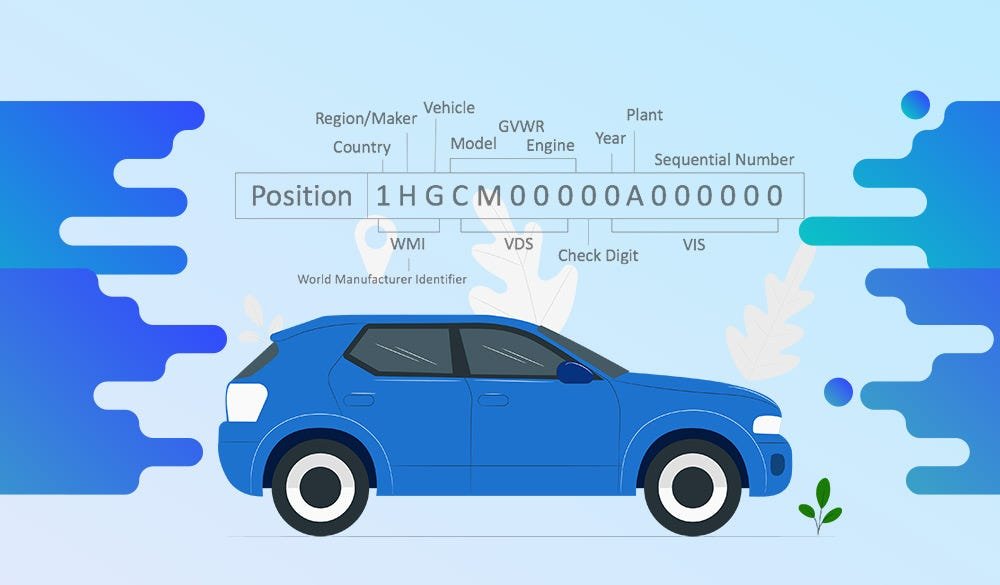
You don’t need to understand any of this to use the tool above — it does the decoding for you — but knowing roughly how a VIN is built helps explain why the tool can pull so much from what looks like a random string of letters and numbers. Every modern VIN follows the same international standard (ISO 3779), broken into four sections:
- Characters 1-3 — World Manufacturer Identifier (WMI). Identifies the manufacturer and country of assembly.
- Characters 4-8 — Vehicle Descriptor Section (VDS). Encodes the model line, body style, and engine.
- Character 9 — Check digit. A calculated value used to catch typos and detect fraudulent VINs.
- Characters 10-17 — Vehicle Identifier Section (VIS). Character 10 is the model year, character 11 is usually the assembly plant, and the rest is the sequential serial number.
The check digit is worth a second look, since it’s the one part of the VIN that exists purely to catch mistakes. It’s calculated using a weighted formula across the other 16 characters, and if even one digit is transposed or mistyped, the check digit won’t match — which is exactly how title-fraud investigators and DMV systems flag altered or fabricated VINs.
A few common WMI prefixes:
| WMI Prefix | Manufacturer | Country |
|---|---|---|
| 1C4, 1J4, 1J8 | Jeep (Stellantis) | United States |
| VF1, ZFA | Stellantis (Peugeot, Fiat, Chrysler brands) | Multinational |
| 1G1, 2G1 | General Motors | United States |
| 1F, 3F | Ford Motor Company | United States |
| 5YJ, 7SA | Tesla | United States |
| JHM, 1HG | Honda | Japan |
| JT, 4T, 1NX | Toyota | Japan |
| JN1, JN8 | Nissan | Japan |
| JMZ, 1YV | Mazda | Japan |
| JS | Suzuki | Japan |
| WBA, WBS | BMW | Germany |
| WDB, WDD | Mercedes-Benz | Germany |
| WVW, WV1 | Volkswagen | Germany |
| VF1 | Renault | France |
| YV1, YV4 | Volvo | Sweden |
| KMH, KMF | Hyundai | South Korea |
| KNA, KNM | Kia | South Korea |
| LGX, LFB, LSY | BYD / Geely | China |
You never need to memorize any of this to use the tool above — it decodes all of it automatically.
VIN Decoder vs. Vehicle History Report
These solve two different problems, and buyers often assume one covers the other — which is how someone ends up confidently buying a wrecked car because the “VIN check” they ran came back clean. It came back clean because a factory-spec decoder was never going to catch a wreck in the first place; that was never its job.
| VIN Decoder | Vehicle History Report | |
|---|---|---|
| Tells you | What the vehicle was built with, and any open safety recalls. | What’s happened to it since — accidents, title issues, ownership changes. |
| Source | Manufacturer build data and NHTSA safety records. | Insurers, DMVs, auction houses, and repair shops. |
| Cost | Free. | Usually paid. |
| Best for | Confirming specs, trim, and recalls before you buy, sell, or register. | Checking for hidden accident or title problems. |
In practice, the two are complementary rather than competing: decode the VIN first to confirm the car in the listing is actually the trim, engine, and drivetrain it’s advertised as, and to catch any open recalls while you’re at it. If everything checks out and you’re seriously considering the car, that’s the point where a paid history report earns its cost.
Jeep Owners: Already Have a Trouble Code?
This decoder will flag it automatically when your VIN turns out to be a Jeep. If your Jeep threw a check engine light, look up what the code means, likely causes, and repair cost estimates at jeepdtc.com.
Frequently Asked Questions
Where do I find my VIN?
Look at the driver-side dashboard through the windshield, the driver-side door jamb sticker, or your vehicle title, registration, or insurance card.
Is this VIN decoder free?
Yes. There is no charge and no account required to decode a VIN or check its recall status with this tool.
Can I use this for any car brand, including Jeep?
Yes. One decoder works for virtually every make sold in the US and Canada. When a decoded VIN turns out to be a Jeep, a link to look up trouble codes appears automatically.
What if my VIN isn’t 17 characters long?
That usually means the vehicle predates 1981, when the 17-character standard was adopted. Vehicles built before then used shorter, non-standardized VINs that this tool can’t decode.
Why does my VIN never show the letters I, O, or Q?
Those letters are excluded from every VIN because they’re too easily mistaken for the numbers 1 and 0.
Does this show recalls, or just specs?
Both. Alongside the factory build data, it checks NHTSA’s recall database for the decoded year, make, and model and lists any open campaigns.
Does a VIN decoder show accident or title history?
No. This tool decodes factory build data and recalls only. Accident, title, and ownership history come from separate vehicle history report services.
Can two vehicles share the same VIN?
No. Each VIN is unique to a single vehicle for at least 30 years under international VIN standards.
Conclusion
A VIN is a small piece of information that carries a surprising amount of weight. Seventeen characters, and buried inside them is everything the manufacturer knew about a vehicle the day it left the factory — the engine it left with, the trim it was built as, where it was assembled, and whether the government has since flagged it for a safety recall. Decoding it costs nothing and takes a few seconds, which makes it one of the easiest checks to skip and one of the easiest to regret skipping.
Whether you’re buying, selling, registering a car, or just confirming that the vehicle in front of you actually matches its paperwork, run the VIN before you do anything else. If it comes back clean and matches what you expected, you’ve lost nothing but a minute. If it doesn’t, you’ve just saved yourself a much worse conversation later.