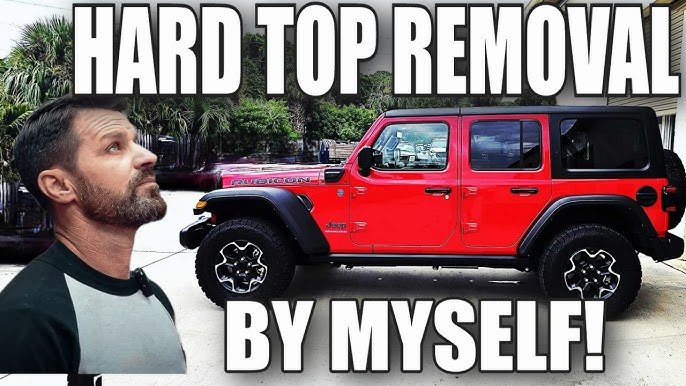
Removing the Jeep hard top by yourself seems difficult, but it’s completely doable with the right approach. Many Jeep owners love the freedom of a topless ride, but worry about the weight and the risk of damaging their vehicle.
This guide shows you how to safely remove your Jeep hard top alone, using simple tools and smart methods. Whether you own a Wrangler, Gladiator, or another Jeep model, you’ll find actionable steps, practical tips, and non-obvious advice to make the process smooth and safe.
Preparing For Hard Top Removal
Before starting, make sure you have the right space and tools. Most Jeep hard tops weigh between 90–140 pounds, depending on the model. Removing it alone means you need to plan carefully.
- Choose a flat surface: Park your Jeep on level ground. This prevents movement and keeps the top stable.
- Gather tools: You’ll need a Torx bit set (usually T40 and T50), a ratchet, a soft blanket or mat, and gloves. Optional: a hard top hoist or lift system.
- Clear obstacles: Move anything that could block your path or damage the hard top. Make sure there’s enough space behind the Jeep to place the top safely.
Data: Common Jeep Hard Top Weights
| Jeep Model | Hard Top Weight (lbs) |
|---|---|
| Wrangler JK 2-door | 90 |
| Wrangler JK 4-door | 140 |
| Wrangler JL 2-door | 95 |
| Gladiator JT | 120 |
Step-by-step Removal Process
Follow these steps to remove your Jeep hard top alone, minimizing risk and effort.
1. Remove Interior Bolts And Panels
Open all doors and the rear hatch. Locate the Torx bolts securing the hard top. Most Jeeps have:
- 6 bolts along the roof (near the roll bar)
- 2–4 bolts at the rear corners
Unscrew these bolts using your Torx bit. Put them in a labeled bag to avoid losing them.
2. Disconnect Electrical And Washer Connections
Some Jeep hard tops come with a rear wiper or defroster. Disconnect the electrical plugs and washer hose carefully.
Don’t yank them press the release tab and pull gently.
3. Lift The Top Off
Here’s where many people struggle. The hard top is bulky and awkward to lift alone. Use these tips:
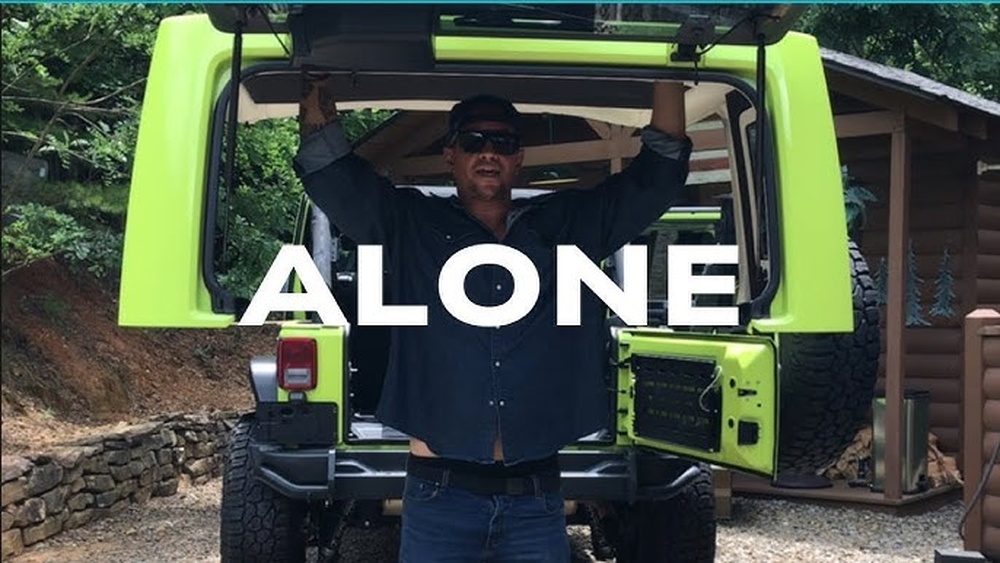
- Stand inside the back, facing forward.
- Grab the rear edge and lift slowly, tilting the top up and forward.
- Walk backward, letting the top rest on your shoulder or head (wear a cap or towel for padding).
- Step out and set the top on a blanket or mat.
If your Jeep is tall, use a small step stool for extra height. Always keep your back straight and lift with your legs.
Comparison: Manual Vs Hoist Removal
| Method | Effort Required | Risk of Damage | Cost |
|---|---|---|---|
| Manual (Alone) | High | Medium | $0 |
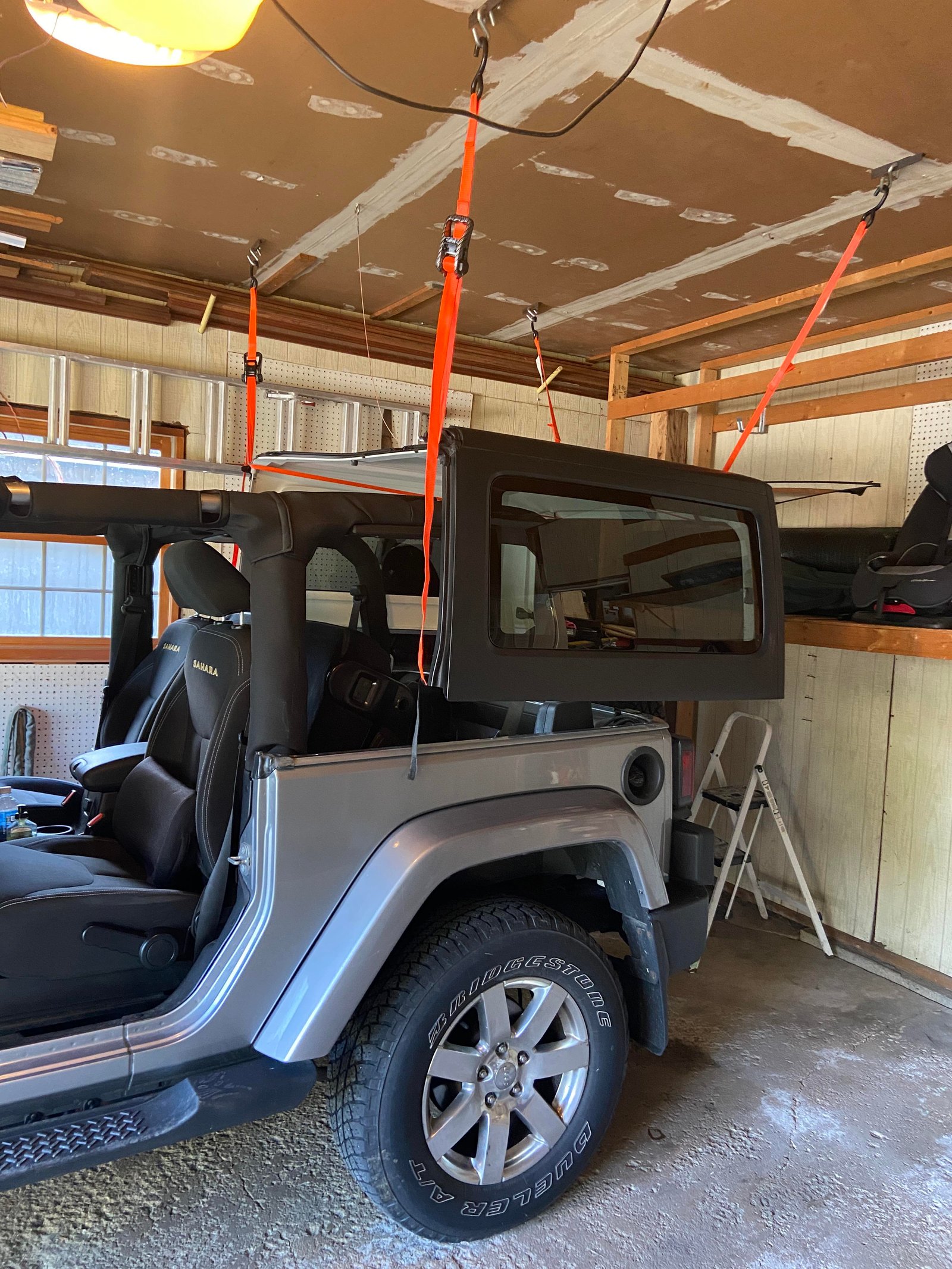
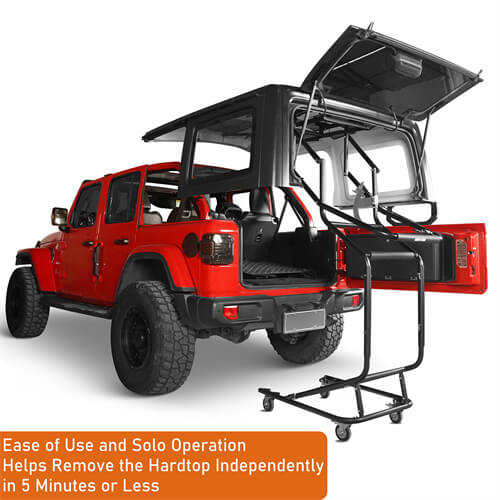
| Hoist/Lift System | Low | Low | $150–$400 |
Helpful Tips For Safe Removal
Removing the hard top alone is possible, but you need to be careful. Here are some non-obvious insights:
- Use sliding pads: Place furniture sliders or thick towels under the top to slide it off gently. This reduces strain and prevents scratches.
- Balance the weight: Don’t rush. If the top feels unbalanced, pause and adjust your grip. A sudden shift can cause cracks or dropped panels.
- Mark bolt locations: Beginners often forget where each bolt goes. Stick a small label or colored tape near each bolt hole—reinstallation becomes faster.
Example: Using A Diy Hoist
If you plan to remove your hard top often, installing a garage hoist is smart. Many owners use a pulley system with hooks and straps. The hoist lifts the top straight up, letting you drive out. This method costs extra but saves time and reduces risk. Learn more about DIY hoists at Jeep Official Site.
Storage And Maintenance
Once the hard top is off, store it carefully to avoid damage.
- Keep it on a soft surface—never directly on concrete.
- Cover with a tarp to protect from dust and scratches.
- Inspect seals and hinges for wear before reinstalling.
Data: Common Mistakes And Risks
| Mistake | Consequence |
|---|---|
| Dragging the top | Scratches, paint damage |
| Forgetting to disconnect cables | Electrical short, broken connectors |
| Using wrong tools | Stripped bolts, difficult reinstallation |
Reinstalling The Hard Top
Putting the top back is often harder than removing it. Here are key steps:
- Align the top: Slide or lift the top back onto the Jeep, making sure it’s centered.
- Reconnect cables: Plug in all electrical and washer connections before tightening bolts.
- Secure bolts: Start all bolts loosely, then tighten in a crisscross pattern. This ensures an even seal.
If you marked bolt positions earlier, this step will be much faster. Double-check that the top sits flush and all seals are intact.
Frequently Asked Questions
How Heavy Is A Jeep Hard Top?
Most Jeep hard tops weigh between 90 and 140 pounds, depending on the model. Four-door tops are heavier than two-door versions.
Can I Remove The Hard Top Without A Hoist?
Yes, many owners remove their hard top manually. Use careful lifting techniques and protect the top with a blanket or sliders.
What Tools Are Needed For Removal?
You need a Torx bit set (usually T40 and T50), a ratchet, gloves, and a soft mat. Optional: a hoist or lift system.
Will Removing The Hard Top Void My Warranty?
No, removing the hard top does not void your warranty. However, damaging electrical connectors or seals may affect coverage.
How Do I Store The Hard Top Safely?
Store your hard top on a soft surface, covered with a tarp. Avoid stacking items on top. Inspect seals before reinstalling.
Removing your Jeep hard top alone is easier than it sounds, as long as you follow these steps and use practical tips. With the right tools and patience, you can enjoy open-air driving without worry.
Remember to lift carefully, protect your top, and double-check all connections.
With practice, you’ll do this faster and safer every time.