Putting your Jeep in 4X4 mode can be confusing for many drivers, especially if you’re new to off-roading or just bought your first Jeep. Whether you want to drive through mud, snow, or rough trails, switching to four-wheel drive is essential for extra traction and safety. But not all Jeeps work the same way—some use a manual lever, others have an electronic switch. In this guide, you’ll learn exactly how to put your Jeep in 4X4, what to watch for, and how to avoid mistakes that could damage your vehicle. By the end, you’ll feel confident about using your Jeep’s 4X4 system, even if English is not your first language.
Understanding Jeep 4×4 Systems
Jeep offers several types of 4X4 systems. Knowing which one your Jeep has is the first step. The three main types are:
- Part-time 4X4: You must manually engage 4X4. Use it only when roads are slippery or off-road.
- Full-time 4X4: 4X4 is always on; you don’t need to switch modes.
- Automatic 4X4: The Jeep decides when to use 4X4 based on road conditions.
Most popular Jeep models like Wrangler, Cherokee, and Grand Cherokee have part-time or automatic systems. Always check your owner’s manual to confirm your system.
Here’s a quick comparison of Jeep 4X4 systems:
| System | How Engaged | When To Use | Common Models |
|---|---|---|---|
| Part-time 4X4 | Manual lever/switch | Off-road, slippery roads | Wrangler, Gladiator |
| Full-time 4X4 | Always active | Any condition | Cherokee, Grand Cherokee |
| Automatic 4X4 | Electronic control | Mixed conditions | Compass, Renegade |
Steps To Put Your Jeep In 4×4
The process is simple but changes based on your Jeep’s system. Let’s break down each method:
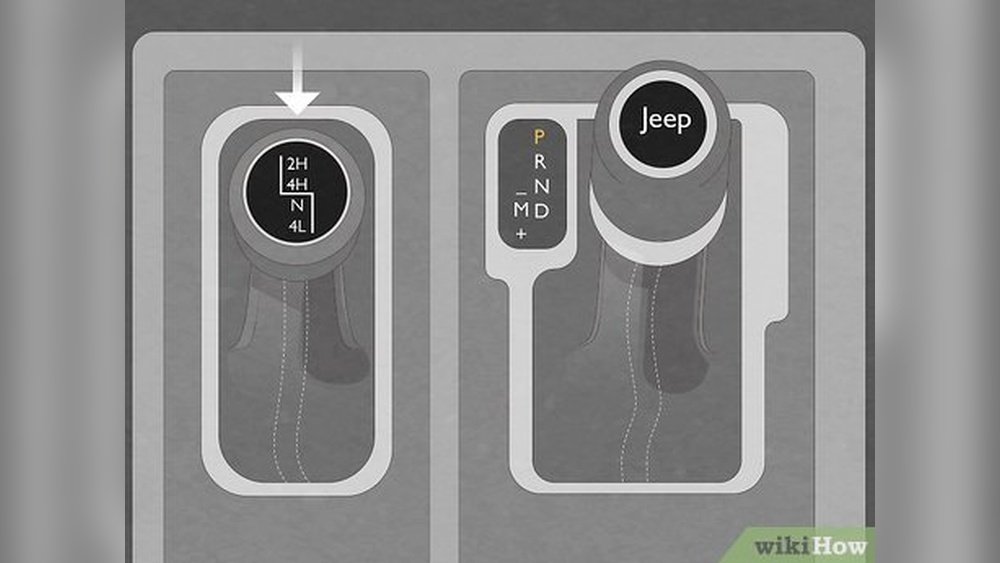
1. Using A Manual Lever (part-time 4×4)
Most Jeep Wranglers and older models have a lever near the gear shifter.
- Stop your Jeep or drive below 5 mph (8 km/h).
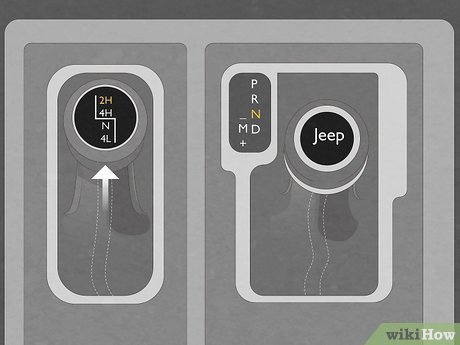
- Shift the transmission into Neutral.
- Pull the 4X4 lever to 4H (four-wheel high) for regular off-road or slippery driving.
- For tough conditions, like deep mud or snow, pull to 4L (four-wheel low).
- Wait for the 4X4 indicator light to turn on.
Never switch to 4L while moving fast it can damage your Jeep’s drivetrain.
2. Using An Electronic Switch (automatic/full-time 4×4)
Modern Jeeps often use a button or dial for 4X4.
- Slow down to below 55 mph (88 km/h).
- Press or turn the 4X4 switch to 4H or Auto.
- For extreme conditions, stop and switch to 4L.
- Watch for the dashboard light showing 4X4 is active.
Electronic systems usually work smoothly, but always double-check the indicator.
3. Switching Between Modes
Some Jeeps allow you to change between 2WD, 4H, and 4L. Knowing when to use each is important.
| Mode | Best For | Speed Range |
|---|---|---|
| 2WD | Dry pavement | Any speed |
| 4H | Snow, mud, sand | Up to 55 mph |
| 4L | Steep hills, deep mud | Below 10 mph |

Tips For Safe 4×4 Use
Many drivers make mistakes when using 4X4. Here are practical tips to avoid problems:
- Don’t use 4X4 on dry pavement: This can cause the tires and drivetrain to wear quickly.
- Switch modes at the right speed: Only shift to 4L when stopped or going very slowly.
- Check the indicator light: If the light doesn’t come on, your Jeep might not be in 4X4.
- Practice before off-roading: Try switching modes in a safe area first.
- Read your manual: Each Jeep model has slightly different instructions.
Here’s a summary of common mistakes and how to avoid them:
| Mistake | Result | How To Avoid |
|---|---|---|
| Using 4X4 on dry roads | Tire/drivetrain damage | Only use 4X4 on slippery/off-road |
| Switching to 4L at high speed | Transmission damage | Always stop or slow down first |
| Ignoring indicator lights | 4X4 not engaged | Check dashboard every time |
Real-world Example
Let’s say you drive a Jeep Wrangler and a snowstorm hits. You stop, shift to neutral, and pull the lever to 4H. The dashboard light comes on, and now you have extra grip. If the snow gets deeper, you stop again, shift to 4L, and drive slowly. This keeps you safe and prevents getting stuck.
A surprising fact: According to Jeep, using 4X4 correctly can reduce your risk of getting stuck by up to 70% compared to 2WD. Yet, many beginners forget to slow down or check the indicator light—these small steps make a big difference.
Frequently Asked Questions
How Do I Know If My Jeep Is In 4×4?
Check the dashboard indicator light. It usually says “4WD” or “4X4.” If the light is on after you switch modes, your Jeep is in four-wheel drive.
Can I Switch To 4×4 While Driving?
Yes, you can switch to 4H while moving slowly (below 55 mph). For 4L, you must stop or drive under 5 mph and shift to neutral before changing modes.
Is It Bad To Use 4×4 All The Time?
Using 4X4 on dry pavement is not recommended. It causes extra wear and can damage your Jeep over time. Only use 4X4 when needed.
What’s The Difference Between 4h And 4l?
4H is for regular slippery roads or light off-roading. 4L gives more power and is for tough conditions like deep mud, sand, or steep hills. Always drive slowly in 4L.
Where Can I Find More Details About Jeep 4×4 Systems?
You can read more on the official Jeep website or trusted sources like Wikipedia for a deeper explanation of four-wheel drive systems.
Switching your Jeep to 4X4 isn’t difficult once you know the steps and what to look for. Always remember to use the right mode for the situation, check your indicator lights, and practice in safe conditions.
With these tips, you’ll enjoy safer and more confident driving whether you’re tackling snow, mud, or rocky trails.