Building a Jeep door holder is a smart way to protect your doors and keep your garage tidy. If you often remove your Jeep’s doors for off-roading or summer drives, you know leaving them on the ground can cause scratches and dents.
A strong, homemade holder keeps your doors safe, organized, and ready for the next adventure. In this guide, you’ll learn how to build a Jeep door holder with basic tools, clear steps, and practical tips.
Even if you’re new to DIY projects, you can finish this in a weekend.
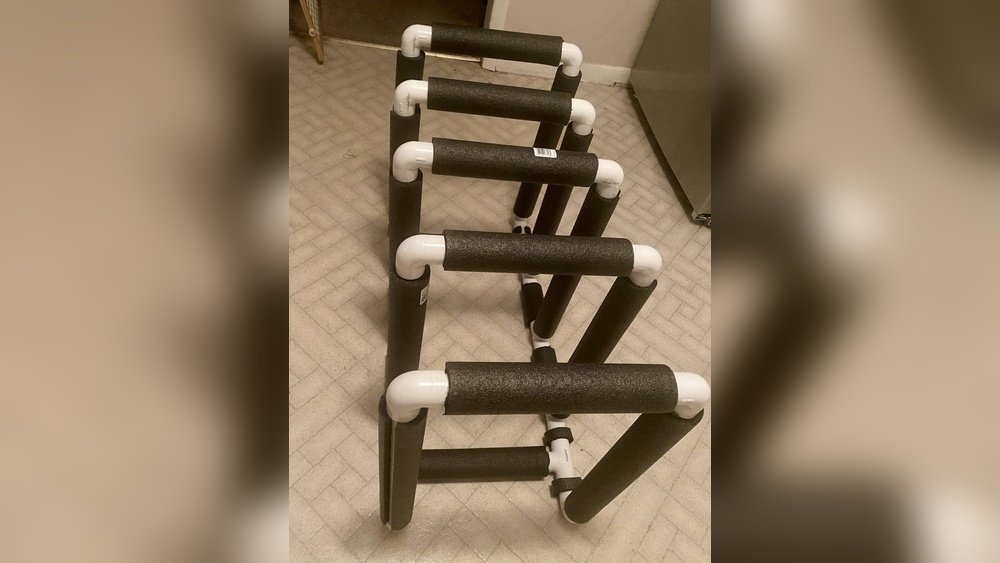
Planning Your Jeep Door Holder
Before you start, think about the space you have and the number of doors to store. Most Jeep models, like the Wrangler, have two or four removable doors. Measure your garage area to ensure the holder fits. Decide if you want a wall-mounted or freestanding holder. Wall-mounted saves floor space, while freestanding can be moved easily.
Here’s a quick comparison of holder types:
| Holder Type | Space Needed | Mobility | Ease of Building |
|---|---|---|---|
| Wall-Mounted | Low | Fixed | Moderate |
| Freestanding | Medium | Portable | Easy |
Most DIYers prefer freestanding for flexibility. Wall-mounted holders are best if you have limited floor space.
Materials And Tools Needed
Gather these items before you start:
- 2×4 lumber (6–8 feet, depending on door size and number)
- Wood screws (3” long, heavy-duty)
- Foam pipe insulation or pool noodles (for padding)
- Drill and driver
- Saw (circular or hand saw)
- Measuring tape
- Level
- Sandpaper
Optional: casters (wheels) if you want a mobile holder, paint for finishing.
For two doors, you’ll need about 12 feet of 2×4 lumber. For four doors, double that amount.
Foam insulation protects paint from scratches. Wood screws must be strong enough to hold the weight each Jeep door weighs about 45 60 lbs.
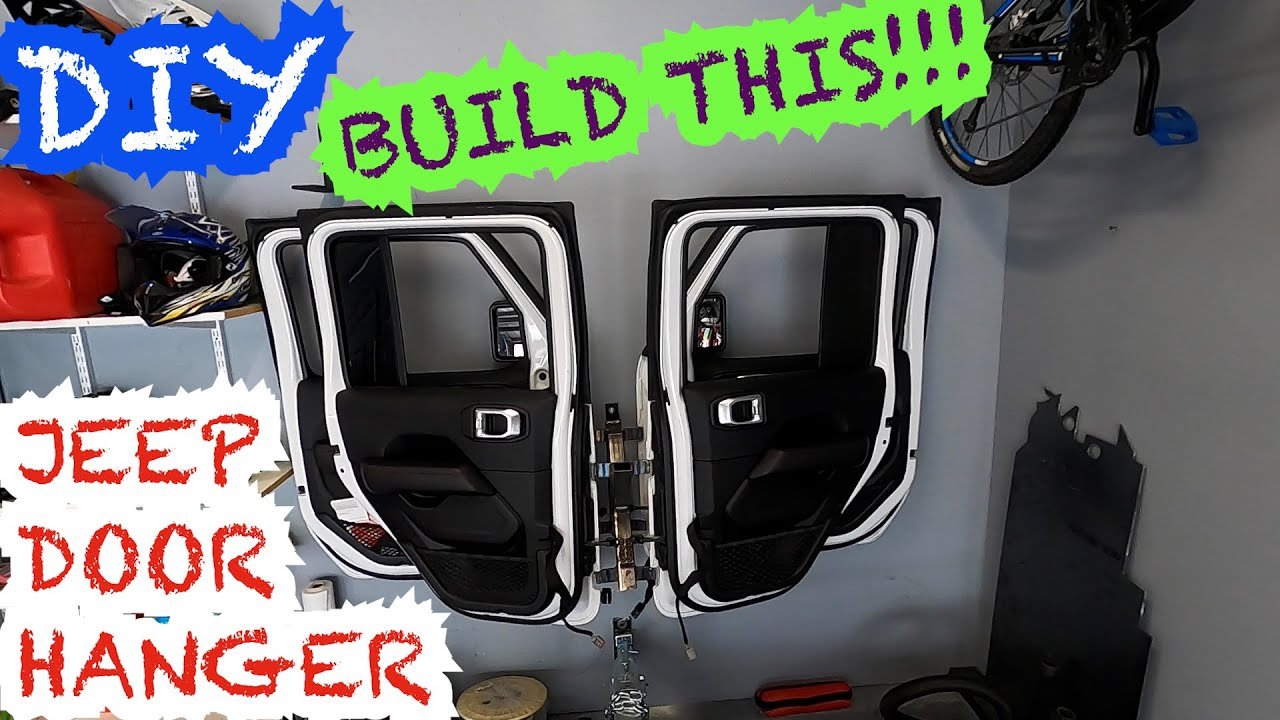
Step-by-step Guide: Building The Holder
Let’s build a freestanding Jeep door holder for two doors. You can adjust sizes for more doors.
- Measure and Cut Lumber
- Cut four pieces of 2×4, each 36 inches long (vertical supports).
- Cut two pieces, each 30 inches long (base).
- Cut two pieces, each 24 inches long (top crossbars).
- Assemble the Base
- Lay the two 30-inch pieces parallel, about 18 inches apart.
- Attach two vertical supports to each base end using wood screws. Make sure supports are upright and level.
- Attach Top Crossbars
- Place the 24-inch crossbars on top of vertical supports. Screw them in tightly. These bars hold the door hinges.
- Add Padding
- Wrap foam insulation around each crossbar and vertical support where the doors rest.
- Secure padding with zip ties or tape.
- Test Fit
- Carefully lift a Jeep door and hang it by its hinges on the crossbar. The door should rest securely without touching the ground.
- Finishing Touches
- Sand rough edges to avoid scratches.
- Paint or seal wood for durability.
- Install casters if you want mobility.
Here’s a quick data table for estimated material costs:
| Material | Average Cost (USD) | Quantity Needed |
|---|---|---|
| 2×4 Lumber | $4 per 8 ft | 2–4 pieces |
| Wood Screws | $6 per box | 1 box |
| Foam Insulation | $2 per piece | 2–4 pieces |
| Casters (optional) | $10 per set | 1 set |
Total cost is around $25 $40, depending on extras.
Practical Tips And Common Mistakes
- Don’t skip padding. Foam is critical—without it, you’ll risk paint chips.
- Check measurements twice. Jeep doors vary by model. Measure hinge-to-hinge distance before cutting.
- Don’t overload. Holders made for two doors shouldn’t be forced to hold four. This can bend wood or cause tipping.
- If you install casters, use locking wheels to keep the holder steady.
- Use a level to make sure the holder is straight. Crooked holders stress door hinges.
One insight many beginners miss: hanging doors by the hinges keeps them in a natural position, avoiding warping. Also, storing doors upright makes it easier to reinstall them later.
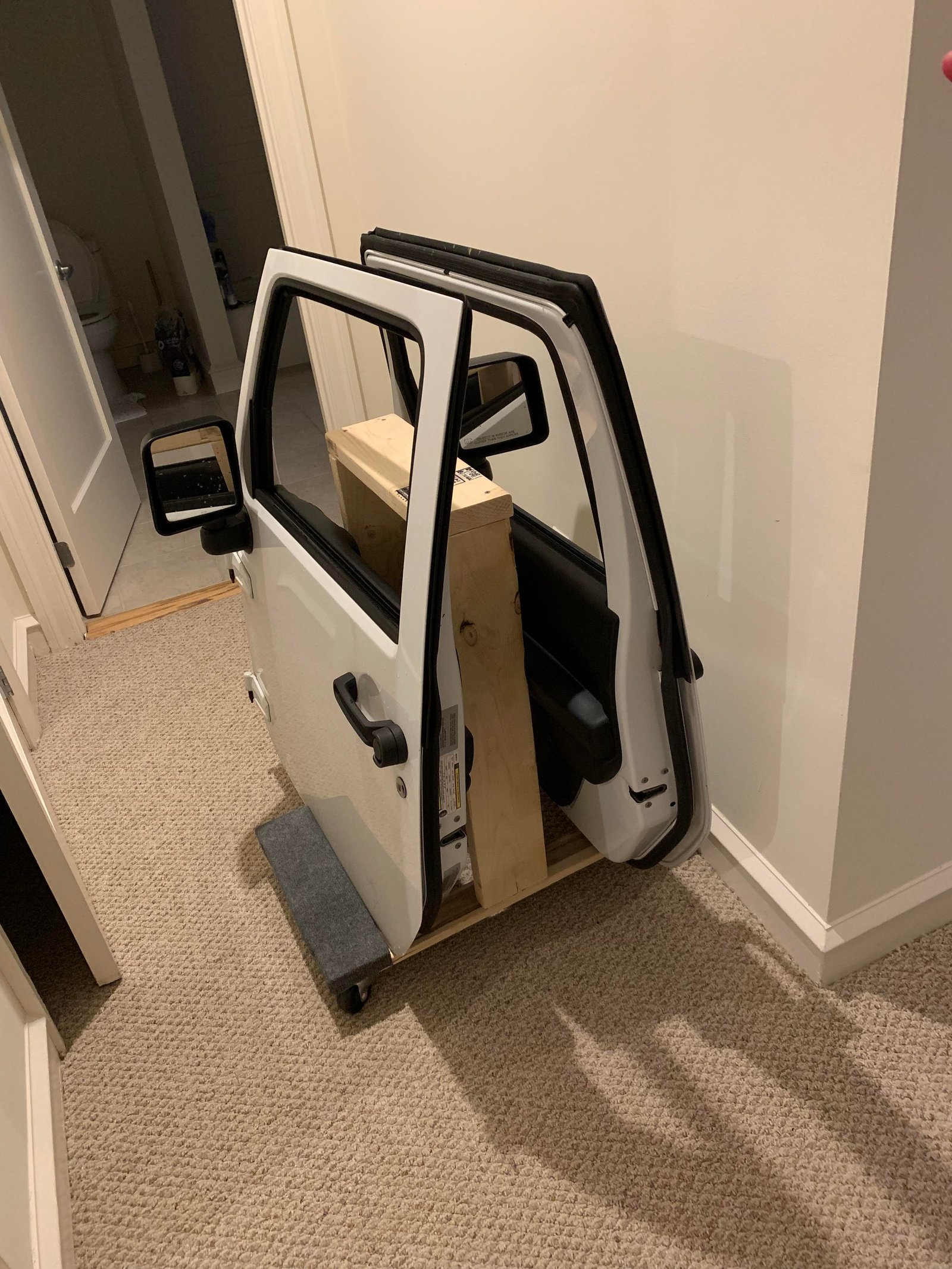
Customizing Your Holder
You can improve your holder with a few simple upgrades:
- Add hooks for storing mirrors or hardware.
- Use weatherproof paint if you plan to store the holder outside.
- Adjust height for easier lifting—shorter holders work if you have limited space.
- If you own a Jeep Gladiator, measure your larger rear doors separately.
Here’s a comparison of common Jeep models and their door sizes:
| Model | Front Door Width (inches) | Rear Door Width (inches) |
|---|---|---|
| Wrangler JK | 29 | 27 |
| Gladiator | 32 | 30 |
| Wrangler JL | 30 | 28 |
Always measure your own Jeep doors to avoid errors.
Safety And Storage Advice
Keep your door holder away from high-traffic areas to prevent accidents. If you have pets or kids, make sure the holder is stable and doors are secure.
For wall-mounted holders, use strong anchors and mount directly to wall studs.
If you want more ideas or official specs, check Jeep’s recommendations at Jeep Accessories.
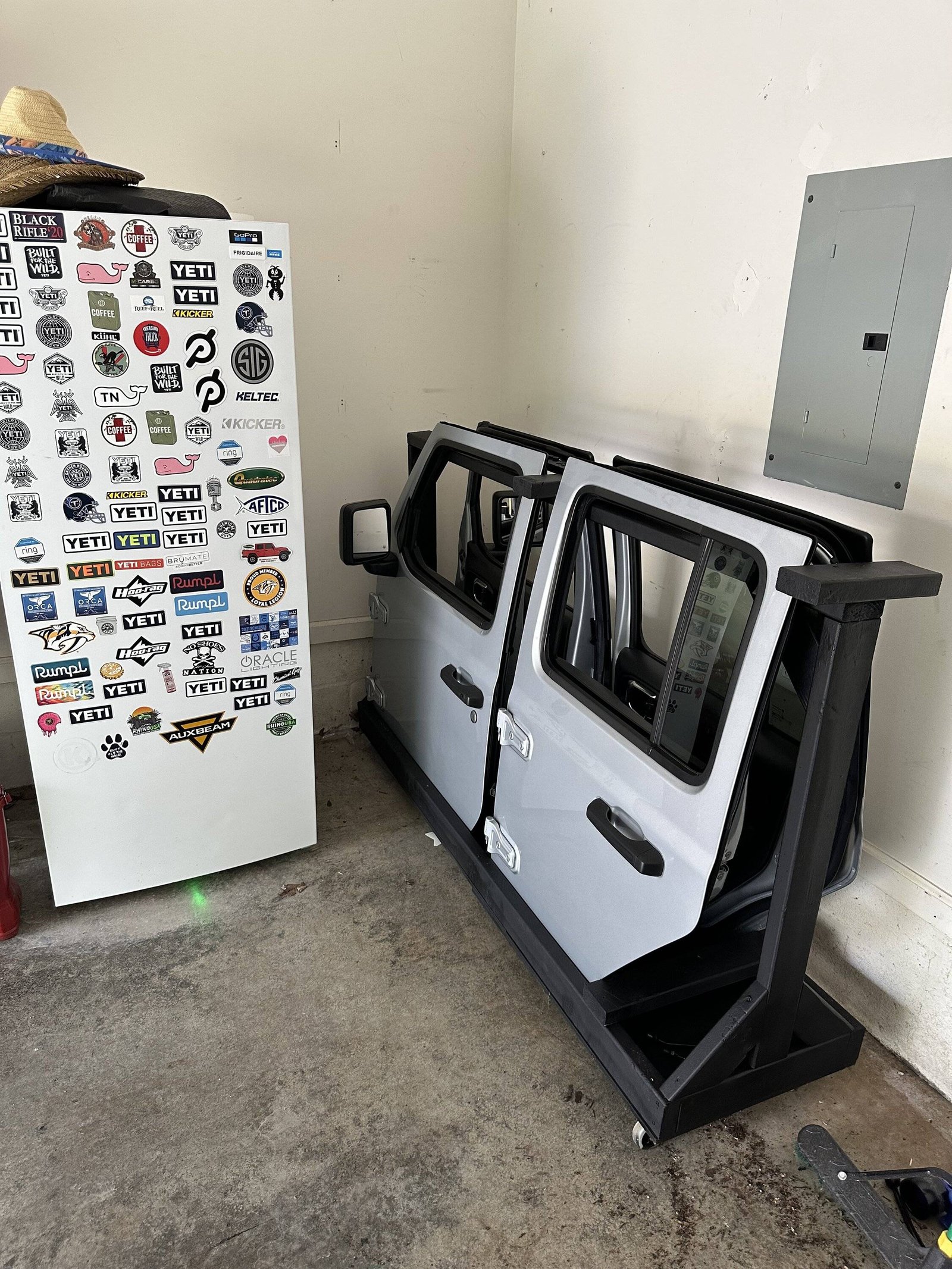
Frequently Asked Questions
How Much Weight Can A Homemade Jeep Door Holder Support?
A well-built holder with solid 2×4 lumber can support up to 120 lbs (two doors). For four doors, reinforce with extra supports.
Is Wall-mounting Or Freestanding Better?
Freestanding holders are easier to build and move. Wall-mounted holders save space but require strong anchors and careful installation.
Can I Store Doors With Mirrors Attached?
It’s safer to remove mirrors before storing. Mirrors are fragile and may break if bumped.
What Is The Best Material For Padding?
Foam pipe insulation is best. It’s cheap, easy to cut, and soft enough to protect paint.
How Long Does It Take To Build A Jeep Door Holder?
Most DIYers finish in 2–3 hours. Allow extra time for painting or sanding.
Building your own Jeep door holder keeps your doors safe and your garage organized. With a little planning and care, you’ll enjoy a simple DIY solution that lasts for years.