Before you schedule an expensive repair, there’s a good chance this warning has a simple fix.
If you’ve seen the Blind Spot Alert Temporarily Unavailable message appear on your Jeep’s dashboard, you’re probably wondering whether it’s a minor glitch or a sign of a serious problem. The good news is that this warning is often temporary and doesn’t mean your Blind Spot Monitoring (BSM) system has failed.
Common causes include dirty radar sensors, heavy rain or snow, a weak battery, software glitches, or damaged wiring. While some issues require professional repairs, many are quick and inexpensive to fix at home with a few basic checks.

In this guide, you’ll learn what Blind Spot Alert Temporarily Unavailable means, the five most common causes, step-by-step troubleshooting methods, reset procedures, repair costs, and when it’s time to visit a mechanic. Whether you drive a Jeep Wrangler JL/JLU, Gladiator JT, Grand Cherokee, Cherokee, Compass, or Renegade, help you get your Blind Spot Monitoring system working again and avoid unnecessary repair bills.
Quick Answer
| Question | Answer |
|---|---|
| What does Blind Spot Alert Temporarily Unavailable mean? | The Blind Spot Monitoring (BSM) system cannot detect nearby vehicles correctly, so it has temporarily disabled itself. |
| Is it safe to drive? | Yes, but you must rely on your mirrors and perform shoulder checks because the blind spot warning system is unavailable. |
| Most common cause | Dirt, mud, snow, or ice covering the rear radar sensors. |
| Can it go away on its own? | Yes. If weather or temporary sensor blockage caused the problem, the warning often disappears once conditions improve. |
| Does it always require repairs? | No. Many cases are resolved by cleaning the sensors or restarting the vehicle. |
Modern Jeep vehicles use a Blind Spot Monitoring (BSM) system to help detect vehicles traveling in areas that are difficult to see through the mirrors alone.
When the system detects another vehicle in your blind spot, it warns you by illuminating an icon in the side mirror. If you activate the turn signal while another vehicle is still in the blind spot, the system usually provides an audible warning as well.
When you see the message Blind Spot Alert Temporarily Unavailable, your Jeep is telling you that the system cannot reliably monitor those areas.
Rather than giving inaccurate warnings, the vehicle temporarily disables the feature until normal operation returns.
This is a protective function, not necessarily a sign that the system has failed.
How the Jeep Blind Spot Monitoring System Works
Understanding how the system works makes troubleshooting much easier.
Unlike simple camera systems, Jeep’s Blind Spot Monitoring relies on short-range radar sensors mounted behind the rear bumper.
These radar sensors continuously scan both sides of the vehicle.
When another vehicle enters your blind spot, the sensors communicate with the Body Control Module (BCM), which then activates the warning indicator.
Depending on your Jeep model, you may notice:
- A yellow warning icon in the side mirror
- An audible chime
- Rear Cross Path Detection while reversing
- Visual alerts on the instrument cluster
Because radar signals must pass through the rear bumper, anything that interferes with those signals can cause the system to stop working correctly.
Where Are the Blind Spot Sensors Located?
One of the biggest misconceptions is that the sensors are located inside the mirrors.
On most modern Jeep vehicles, they are actually positioned behind the rear bumper.
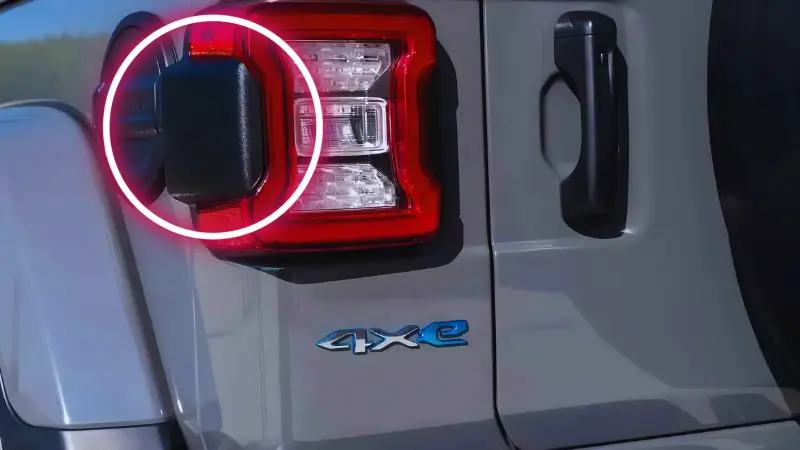
Typical sensor locations include:
- Left rear bumper corner
- Right rear bumper corner
Since these sensors are hidden behind the bumper cover, they can be affected by:
- Thick mud
- Snow buildup
- Ice
- Road salt
- Minor collisions
- Improper bumper repairs
Even something as simple as a thick layer of dirt after off-roading can prevent the radar from seeing nearby traffic.
Is It Safe to Drive?
Usually, yes.
The warning does not affect your brakes, steering, engine, or transmission.
However, you lose one important driver-assistance feature.
That means you must:
- Check both mirrors carefully.
- Perform a shoulder check before changing lanes.
- Leave extra space around surrounding traffic.
- Avoid depending solely on electronic safety systems.
If multiple warning lights appear together, such as ABS, ESC, Adaptive Cruise Control, or Forward Collision Warning, the problem may be more serious and should be diagnosed promptly.
Common Symptoms
Besides the dashboard message, you may notice other signs that indicate the Blind Spot Monitoring system is not working correctly.
Common symptoms include:
- Blind Spot Alert Temporarily Unavailable message
- Blind spot mirror indicators stop illuminating
- No audible warning during lane changes
- Rear Cross Path Detection unavailable
- Warning appears only during rain
- Warning disappears after restarting the Jeep
- System works intermittently
- Blind spot warning activates randomly
These symptoms help narrow down the underlying cause.
Not every warning means a failed sensor.
In fact, most Jeep owners experience this message because of temporary conditions.
Let’s look at the most common causes.

1. Dirty Radar Sensors
This is by far the most common reason for the warning.
Since the sensors sit behind the rear bumper, they constantly collect:
- Mud
- Dust
- Snow
- Road salt
- Ice
- Clay
- Car wash residue
When enough debris blocks the radar signal, the system temporarily disables itself.
Symptoms
- Warning appears after off-roading
- Warning after driving on muddy roads
- Blind spot system returns after washing the Jeep
How to Fix It
- Wash the rear bumper thoroughly.
- Remove mud and road salt.
- Dry the bumper completely.
- Restart the Jeep.
- Drive for several minutes.
For many owners, this completely solves the problem.
2. Heavy Rain, Snow, or Dense Fog
Radar performs well in most conditions, but severe weather reduces its ability to detect nearby vehicles accurately.
Heavy rain can scatter radar signals, while snow and ice physically block them.

You may notice the warning during:
- Heavy rainfall
- Snowstorms
- Thick fog
- Freezing rain
Fortunately, the warning usually disappears once the weather improves.
3. Ice Covering the Rear Bumper
Winter weather creates another common issue.
Even if the bumper looks clean, a thin sheet of ice over the sensor area can interfere with radar performance.
Never hit the bumper to remove ice.
Instead:
- Park in a warmer location.
- Use warm water if temperatures allow.
- Remove ice gently with a soft cloth.
4. Trailer or Bike Rack Interference
Many Jeep owners tow trailers or install hitch-mounted accessories.
These accessories may block the radar sensors.
Examples include:
- Utility trailers
- Boat trailers
- Cargo carriers
- Hitch-mounted bike racks
- Spare tire accessories
When detected, some Jeep models intentionally disable Blind Spot Monitoring because radar readings become unreliable.
If the warning appears only while towing, the system is behaving normally.
5. Low Battery Voltage
Modern Jeeps rely heavily on stable electrical power.
A weak battery can trigger unexpected warnings throughout the vehicle, including:
- Blind Spot Monitoring
- Auto Start-Stop
- Electronic Stability Control
- Forward Collision Warning
Battery voltage below normal may prevent modules from communicating correctly.
Common signs include:
- Slow engine cranking
- Multiple warning lights
- Start-Stop unavailable
- Electrical glitches
If your battery is several years old, testing it should be one of your first diagnostic steps.
6. Software Glitch
Like smartphones, modern vehicles occasionally experience software bugs.
A temporary communication error between modules can cause the Blind Spot Monitoring system to disable itself even when all hardware is functioning normally.
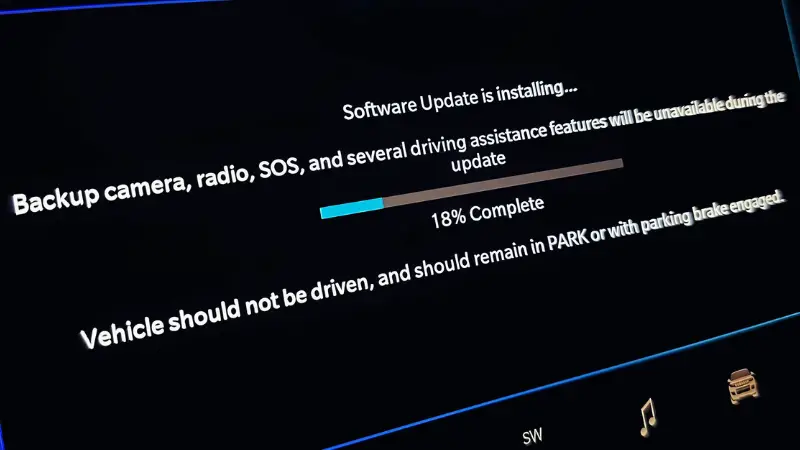
Possible situations include:
- Battery replacement
- Recent software update
- Voltage fluctuation
- Module restart during startup
Sometimes the warning disappears after:
- Turning the vehicle off
- Waiting several minutes
- Restarting the engine
- Driving a short distance
If the warning never returns, it was likely a temporary software issue.
7. Damaged Radar Sensors
If cleaning the rear bumper doesn’t solve the issue, the radar sensor itself may be damaged.
Because the sensors sit behind the rear bumper, they’re exposed to:
- Minor rear-end collisions
- Off-road impacts
- Rocks and road debris
- Water intrusion
- Corrosion over time
A damaged sensor may continue sending incorrect data, causing the Blind Spot Monitoring system to disable itself.

Symptoms
- Warning stays on every time you drive.
- Rear Cross Path Detection also stops working.
- One mirror indicator never illuminates.
- OBD scan shows blind spot module faults.
Solution
Inspect the rear bumper for signs of impact. If the sensor housing or mounting bracket is damaged, replacement and calibration are usually required.
8. Wiring Problems
Not every blind spot issue is caused by the sensor.
The wiring harness running to the radar module can become damaged due to:
- Rodents
- Corrosion
- Water
- Rear bumper removal
- Off-road vibration
Loose or damaged wiring interrupts communication between the sensor and the Body Control Module.
Signs
- Warning appears randomly.
- System works after hitting bumps.
- Warning comes and goes.
- Multiple electronic warning messages.
How to Inspect
If you’re comfortable working on vehicles:
- Remove the rear bumper.
- Locate both radar sensor connectors.
- Look for:
- Broken wires
- Green corrosion
- Loose connectors
- Water damage
Repair damaged wiring before replacing expensive sensors.
9. Blown Fuse
Although uncommon, a blown fuse can disable the Blind Spot Monitoring system.
If power never reaches the radar module, the vehicle reports the system as unavailable.
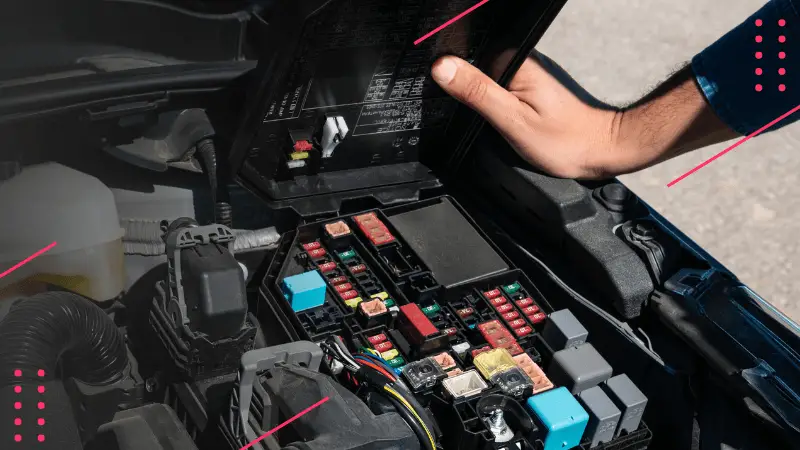
Symptoms
- Blind Spot Monitoring never works.
- Rear Cross Path Detection also fails.
- Warning appears immediately after startup.
Always check your owner’s manual for the correct fuse location before replacing it.
10. Faulty Blind Spot Module
The Blind Spot Monitoring module acts as the brain of the system.
It processes radar information and communicates with other vehicle modules.
When the module fails, you’ll often notice:
- Constant warning messages
- No mirror indicators
- Communication fault codes
- Multiple driver-assistance features disabled
Fortunately, module failure is much less common than dirty sensors or wiring problems.
11. Aftermarket Steel Bumpers
Many Wrangler and Gladiator owners install aftermarket bumpers.
Unfortunately, not every bumper is compatible with Jeep’s radar sensors.
Common issues include:
- Radar blocked by thick steel
- Sensor angle changed
- Incorrect mounting location
- Poor calibration
If the warning appeared shortly after installing a bumper, this should be your first suspect.
Choose bumpers specifically designed for Blind Spot Monitoring compatibility.
12. Radar Calibration Required
Radar sensors must be accurately aligned.
Even replacing:
- Rear bumper
- Sensor bracket
- Quarter panel
- Tailgate components
may require recalibration.
Without calibration, the sensors may incorrectly detect nearby vehicles or disable themselves.
Calibration usually requires professional diagnostic equipment.
Step-by-Step Troubleshooting Guide
Before replacing parts, work through these checks in order.
Step 1: Clean the Rear Bumper
Remove:
- Mud
- Snow
- Ice
- Dirt
- Road salt
Drive for 10 to 15 minutes afterward.
Step 2: Restart the Vehicle
Temporary software glitches often disappear after:
- Turn off the engine.
- Lock the Jeep.
- Wait five minutes.
- Restart.
Step 3: Check Battery Voltage
Low voltage creates strange electronic problems.
Healthy battery readings:
| Battery State | Voltage |
|---|---|
| Fully charged | 12.6 to 12.8 V |
| Acceptable | 12.4 to 12.6 V |
| Weak | Below 12.3 V |
If the battery tests weak, recharge or replace it before continuing diagnosis.
Step 4: Scan for Trouble Codes
Use an OBD-II scanner.
Manufacturer-specific scanners provide even more information than generic readers.
Look for:
- Blind Spot Monitoring faults
- Communication errors
- Radar sensor faults
- Body Control Module codes
Do not simply clear the codes. Record them first.
Step 5: Inspect the Rear Bumper
Look for:
- Collision damage
- Loose bumper clips
- Cracks
- Improper repairs
Even small changes in sensor position affect radar accuracy.
Step 6: Inspect Wiring
Check:
- Connectors
- Ground wires
- Corrosion
- Water intrusion
Repair damaged wiring before replacing sensors.
Step 7: Update Vehicle Software
Jeep occasionally releases software updates addressing electronic module communication.
If your Jeep hasn’t visited a dealership in years, ask whether software updates are available.
How to Reset Blind Spot Alert
Many owners ask whether there’s a reset button.
There isn’t.
Instead, try the following.
Method 1
- Turn off the Jeep.
- Lock it.
- Wait five minutes.
- Restart.
Method 2
Disconnect the negative battery cable for approximately 15 minutes.
Reconnect it and drive normally.
Note:
This resets various electronic modules but will not repair faulty hardware.
Method 3
Use a professional scan tool to clear diagnostic codes after completing repairs.
Average Repair Costs
Repair costs vary depending on the underlying issue.
| Repair | Typical Cost (USD) |
|---|---|
| Wash rear bumper | Free |
| Battery test | Free to $40 |
| Replace battery | $180 to $400 |
| Wiring repair | $100 to $300 |
| Radar sensor replacement | $350 to $900 |
| Radar calibration | $150 to $300 |
| Blind Spot Module replacement | $500 to $1,200 |
| Rear bumper replacement | $600 to $2,000 |
Labor rates differ by location and dealership.
Jeep Models Commonly Affected
Although the warning appears across multiple Jeep models, some owners report it more frequently.
Jeep Wrangler JL (2018-Present)
Common causes:
- Mud after off-roading
- Steel bumpers
- Sensor damage
Jeep Wrangler JLU
Frequent issues include:
- Trailer interference
- Dirt accumulation
- Low battery voltage
Jeep Gladiator JT
Owners often encounter the warning after:
- Installing aftermarket bumpers
- Heavy towing
- Off-road use
Jeep Grand Cherokee
Possible causes:
- Aging radar sensors
- Wiring corrosion
- Module communication errors
Jeep Cherokee
Often related to:
- Software updates
- Radar calibration
- Sensor replacement
Jeep Compass
Typical causes include:
- Rear bumper damage
- Low battery
- Water intrusion
Jeep Renegade
Less common but still possible after:
- Rear-end impacts
- Electrical faults
- Sensor obstruction
When Should You Replace the Radar Sensor?
Replacement is usually necessary only if:
- Physical damage is visible.
- Internal moisture is present.
- Radar repeatedly fails testing.
- Diagnostic equipment confirms sensor failure.
Never replace a sensor based solely on the dashboard warning.
Proper diagnosis can save hundreds of dollars.
In the previous sections, we covered what the Blind Spot Alert Temporarily Unavailable warning means, the most common causes, and how to troubleshoot the system. This final part explains the diagnostic trouble codes (DTCs) that may appear, when professional repairs are necessary, how to prevent future problems, and answers the questions Jeep owners ask most often.
When the Blind Spot Monitoring (BSM) system detects a fault, it often stores manufacturer-specific Diagnostic Trouble Codes (DTCs). A professional scan tool that supports FCA/Stellantis vehicles can read these codes.
examples you may encounter.
| Code | Description | Possible Cause |
|---|---|---|
| U0001 | High-Speed CAN Communication Bus | Network communication issue |
| U0140 | Lost Communication With Body Control Module | BCM wiring or module problem |
| U0155 | Lost Communication With Instrument Panel Cluster | Electrical communication fault |
| U1110 | Lost Vehicle Speed Message | CAN Bus interruption |
| C2200 | Internal Control Module Failure | Faulty control module |
| B1A35 | Blind Spot Sensor Fault | Radar sensor or wiring issue |
Important: The exact code varies by Jeep model and year. Generic OBD-II scanners may not display body control or blind spot monitoring codes. If your scan tool only shows a communication fault, a dealer-level or advanced aftermarket scanner may provide additional details.
DIY Fix or Visit a Mechanic?
Some issues are easy to fix at home, while others require specialized equipment.
DIY Repairs
You can usually handle these yourself:
- Cleaning the rear bumper
- Removing snow or ice
- Charging or replacing a weak battery
- Inspecting visible wiring
- Checking fuses
- Removing hitch-mounted accessories that block the sensors
These repairs require little or no special equipment.
Professional Repairs
Professional diagnosis is recommended if you need:
- Radar sensor calibration
- Blind Spot Monitoring module replacement
- CAN Bus diagnostics
- Software programming
- Rear bumper sensor alignment
- Electrical troubleshooting
Modern radar sensors must often be calibrated after replacement. Installing a new sensor without calibration may result in false warnings or a system that remains disabled.
How to Prevent the Warning From Returning
Many Blind Spot Monitoring issues are preventable with routine maintenance.
Keep the Rear Bumper Clean
After driving through:
- Mud
- Snow
- Sand
- Salt-covered roads
- Construction areas
wash the rear bumper thoroughly.
Inspect the Bumper After Off-Roading
Off-road driving exposes the rear bumper to:
- Rocks
- Branches
- Deep mud
- Water crossings
A quick inspection after each trip helps catch damage before it affects the radar sensors.
Maintain a Healthy Battery
Low battery voltage causes unexpected problems across modern Jeeps.
Test your battery annually, especially if it’s more than three years old.
Install Compatible Aftermarket Parts
If you plan to upgrade your Jeep, choose:
- Blind Spot Monitoring-compatible bumpers
- Sensor relocation kits
- Proper mounting brackets
Improper modifications are one of the leading causes of persistent blind spot warnings on lifted Wranglers and Gladiators.
Stay Current With Software Updates
Jeep occasionally releases software updates that improve communication between driver assistance modules.
If your Jeep has not received updates in several years, ask your dealership to check for available Technical Service Bulletins (TSBs) and software revisions.
When Should You Visit a Dealer?
Schedule professional service if:
- The warning never disappears.
- Cleaning the sensors doesn’t help.
- The warning appears every time you start the Jeep.
- Rear Cross Path Detection also stops working.
- Multiple safety systems become unavailable.
- The rear bumper has been replaced after a collision.
- Diagnostic codes indicate radar sensor or module failure.
Persistent warnings should not be ignored. Although the vehicle remains drivable in many cases, losing Blind Spot Monitoring reduces an important layer of safety.
The system cannot accurately detect vehicles in your blind spots. The most common reasons are dirty radar sensors, heavy rain, snow, low battery voltage, damaged wiring, or a faulty radar sensor.
Can I still drive my Jeep?
Yes. The vehicle remains safe to drive in most situations, but Blind Spot Monitoring will not assist you.
Always check your mirrors and perform a shoulder check before changing lanes.
Will washing my Jeep fix the warning?
Sometimes.
If mud, road salt, or snow is blocking the radar sensors, washing the rear bumper often restores normal operation.
Does cold weather cause this message?
Yes.
Snow and ice can block the radar sensors, while extremely cold temperatures may temporarily affect sensor performance until the vehicle warms up.
Yes.
Modern Jeep vehicles depend on stable battery voltage for electronic modules. A weak battery can trigger multiple warning messages, including Blind Spot Monitoring, Auto Start-Stop, and Electronic Stability Control.
Does replacing the rear bumper require calibration?
Usually, yes.
If the radar sensors are removed or their position changes, recalibration is often required to restore accurate detection.
Can aftermarket steel bumpers cause Blind Spot Monitoring problems?
Yes.
If the bumper blocks or changes the radar signal, the system may disable itself or produce false warnings. Choose bumpers specifically designed for vehicles equipped with Blind Spot Monitoring.
How long does it take to repair the system?
The repair time depends on the cause.
- Cleaning sensors: 10 to 20 minutes
- Battery replacement: 30 to 60 minutes
- Wiring repair: 1 to 3 hours
- Radar sensor replacement and calibration: 2 to 4 hours
- Module replacement: Several hours, depending on programming requirements
Is Blind Spot Monitoring covered under warranty?
If your Jeep is still within the factory warranty or an extended warranty, electronic components such as radar sensors and control modules may be covered. Damage caused by collisions, aftermarket modifications, or road debris is generally not covered.
Final Thoughts
Seeing the Blind Spot Alert Temporarily Unavailable message can be frustrating, but it doesn’t always mean an expensive repair is ahead. In many cases, the issue is caused by something simple, such as dirty radar sensors, harsh weather, or temporary electrical conditions.
Start with the basics. Clean the rear bumper, inspect for visible damage, check the battery, and scan the vehicle for diagnostic trouble codes before replacing any components.
If the warning persists after these checks, a professional inspection may be needed to diagnose wiring, radar sensors, or module communication issues.
Keeping your Jeep’s Blind Spot Monitoring system in good condition helps maintain one of its most valuable safety features. Regular maintenance, prompt attention to warning messages, and using compatible replacement parts will help ensure the system continues to protect you on every drive.


















Have a JL with this issue and it seems to pop up around the same area of 2 lane highway after about 150 miles of driving. Possible system overload? Restarting fixes the issue and I am good to go. I may not see the issue again. No issues on city streets