Taking off the hard top from a Jeep Wrangler 4 Door is a common project for many owners, especially when warm weather arrives. A hardtop Jeep gives you freedom, roof on for winter, roof off for summer fun.
But the process can seem tricky if you’ve never done it before. show you exactly how to remove each section step by step, including the two freedom panels and the main rear section, with practical tips, safety advice, and a breakdown of tools and costs.
Whether you’re a new owner or just want a safe refresher, you’ll find everything you need right here.
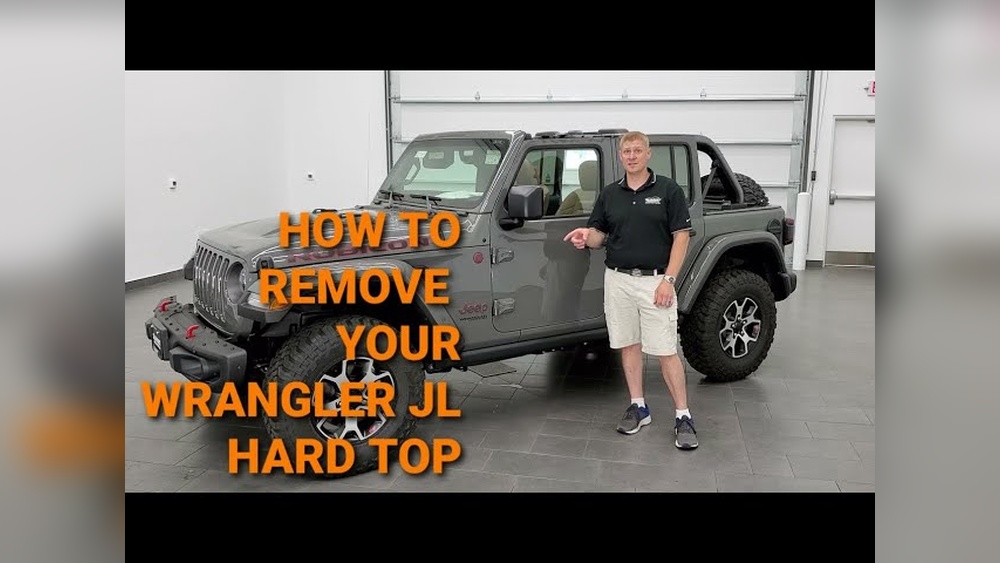
Why Remove Your Jeep Wrangler Hard Top?
Many Jeep owners love the versatility of their vehicles. Removing the hard top lets you enjoy open-air driving, feel closer to nature, and change up the Jeep’s look. It’s also useful for cleaning, repairs, or installing accessories. However, it takes some time and effort. Knowing the steps in advance helps avoid damage and frustration.
Tools And Preparation
Before you start, gather these basic tools:
- T40 Torx bit (included in most Jeep toolkits)
- Ratchet or screwdriver that fits the Torx bit
- Protective gloves (optional, but recommended)
- Soft towels or blankets (to set panels down safely)
- A friend or lifting device for the rear section (it’s heavy)
- Storage bags or covers for the panels
Check that your Jeep is parked on a flat surface. Turn off the ignition and engage the parking brake.
Remove any items from the cargo area or rear seats that could get in the way.
Step-by-step: How To Remove Hard Top Jeep Wrangler 4 Door
The Jeep Wrangler 4 Door hard top is made of three main pieces: two freedom panels in the front, and one large rear section. Each part comes off in a specific order. Let’s break down each step.
1. Removing The Front Freedom Panels
The two freedom panels sit above the driver and front passenger. They’re lighter and easier to remove compared to the main roof.
- Unclip sun visors and move them out of the way.
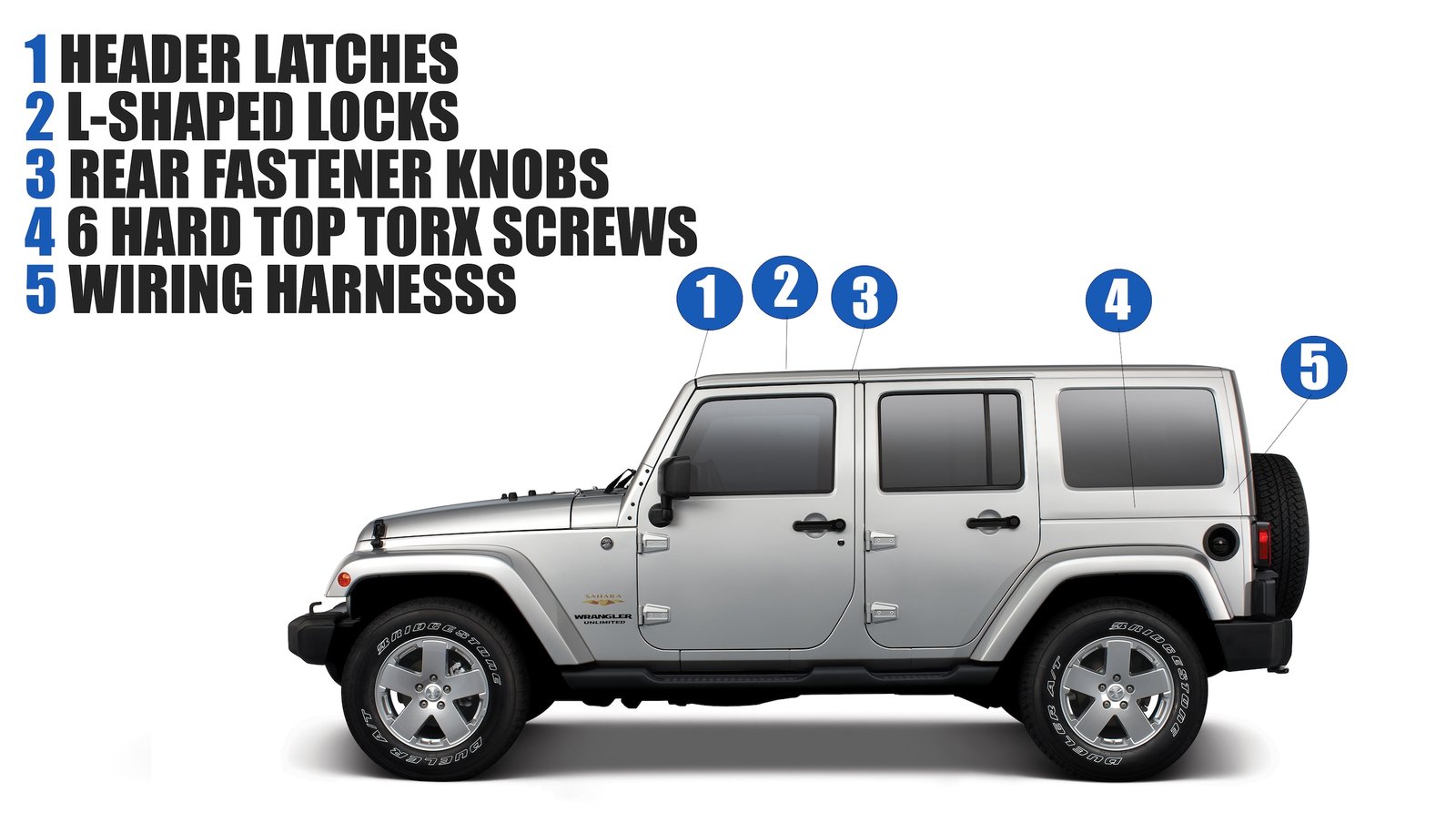
- Release the latches: There are usually six latches holding the panels, three on each side. Turn each latch counterclockwise.
- find the center lever: Find the center latch between the two panels and release it.
- Lift the panels: Push up gently from inside and lift the panels off, one at a time.
- Set on a soft surface: Place each panel on a towel or blanket to avoid scratches.
Pro tip: The panels are light, but they can still crack if dropped. Always use two hands.
2. Removing Rear Seat Bolts (if Needed)
Some Jeep models require removing or folding the rear seats to access the main hard top bolts more easily. Check your manual or inspect the bolt locations.
Most owners can leave the seats in place, but it's easier with them folded down.
3. Removing The Rear Hard Top Section
This is the largest and heaviest part of the hard top. It usually requires two people.
- Disconnect the wiring harness: Open the rear cargo door. On the driver’s side near the roll bar, you’ll see a wire connector, press the tab and pull it apart.
- Unplug the washer hose: Next to the wiring, disconnect the small washer hose by pulling gently.
- Remove the bolts: Use the T40 Torx bit to remove all the bolts. There are usually 6 bolts along the side rails and 2 at the back.
- Store bolts safely: Place them in a bag or cup so you don’t lose them.
- Lift the rear top: With a friend, stand on each side, grip the edges, and lift straight up and off. The roof can weigh 100 pounds or more.
- Set down carefully: Place the hard top on a soft, flat surface.
Non-obvious tip: Some bolts may be hidden under trim pieces or plastic covers. Pry gently with a plastic tool if needed.
4. Storage And Safety
Proper storage is important to keep your Jeep hard top in good condition.
- Keep panels out of sunlight to avoid fading or warping.
- Cover panels with blankets or dedicated bags to prevent scratches.
- Store upright or flat on a clean floor, never lean against sharp objects.
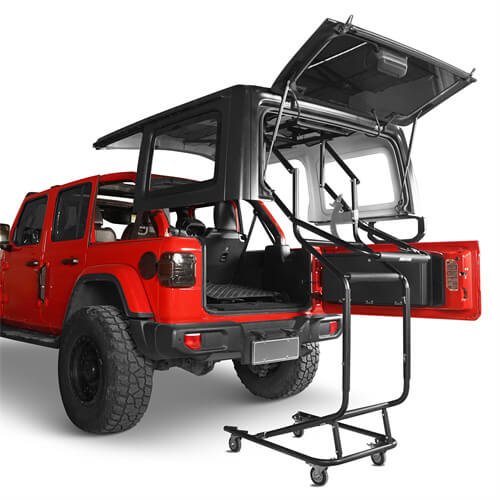
If you plan to remove the top often, consider a hard top hoist for your garage. These devices start around $150 and make lifting much easier.
Pros And Cons Of Removing The Hard Top
Owning a Jeep Wrangler means you can switch between covered and open-air driving. But what are the real pros and cons?
| Advantage | Disadvantage |
|---|---|
| Open-air experience | Hard top is heavy and bulky |
| Better views and airflow | Requires storage space |
| Easier cleaning inside | Some tools required |
| Custom look | Possible leaks if reinstalled poorly |
Non-obvious insight: Removing and reinstalling the hard top too often can wear out the seals or threads over time. Consider only removing it for longer periods.
Cost And Time Estimate
Removing the Jeep Wrangler 4 Door hard top is free if you have the tools. If you need a hoist or special bags:
- Basic tool kit: $30, $60 (if not already included with your Jeep)
- Hard top hoist: $150, $350
- Panel storage bags: $60, $120
Time needed:
- First time: About 45 to 60 minutes (including setup and careful storage)
- After practice: 20 to 30 minutes
Most owners can do this project with just one helper. If you’re alone, a hoist system is highly recommended for safety.
Common Mistakes To Avoid
- Forgetting to disconnect wiring: Always unplug the rear wiring harness and washer hose. Forgetting this can cause damage.
- Losing bolts: Use a small bag or cup to store all bolts. Missing bolts can lead to rattling or leaks.
- Scratching panels: Always use a soft surface for panels and top. Hard floors or gravel can cause permanent damage.
- Lifting alone: The rear section is heavy. Lifting solo can injure your back or drop the top.
- Forcing trim or bolts: If something feels stuck, check for hidden bolts or clips before applying force.
Pro tip: Take photos as you go. They’re helpful for reinstallation, especially if it’s your first time.
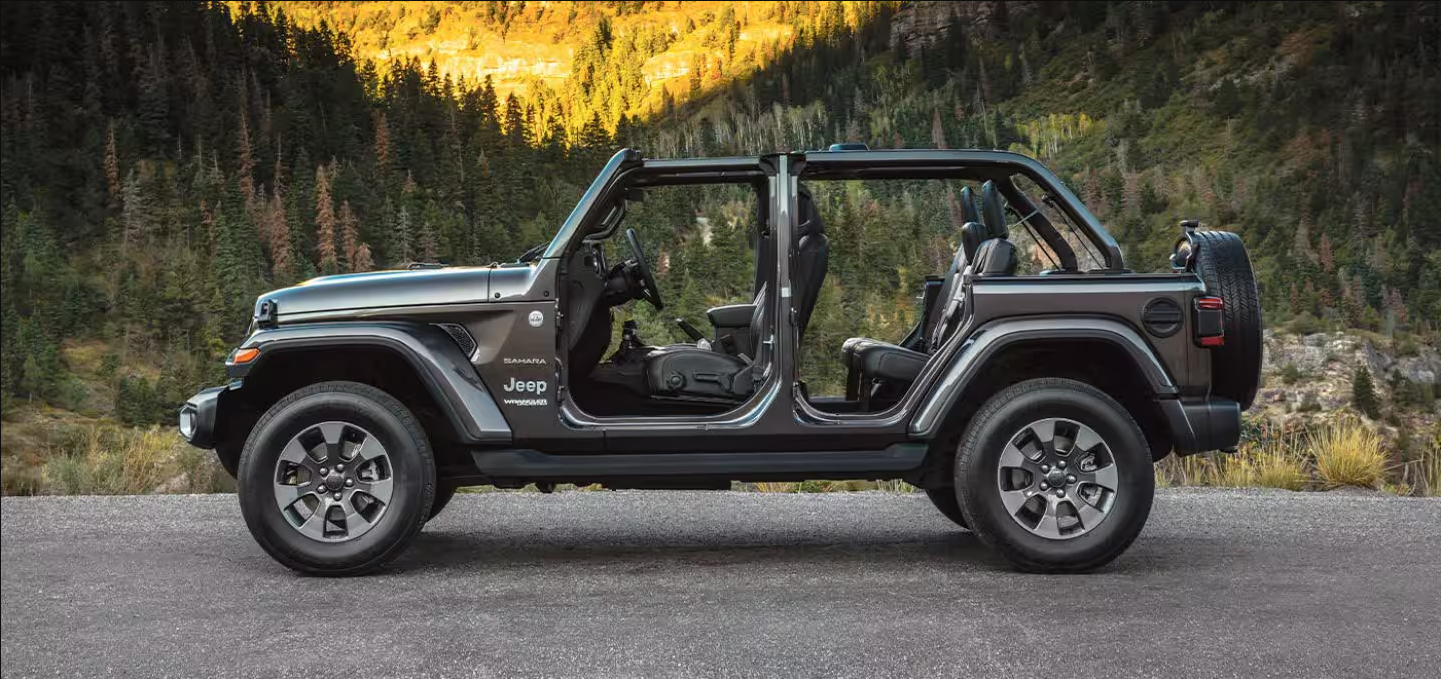
How The Hard Top Compares To The Soft Top
Some Jeep owners switch to a soft top after removing the hard top. Here’s a quick comparison:
| Hard Top | Soft Top |
|---|---|
| Quieter ride | Lighter and easier to remove |
| More secure | Less weather protection |
| Better insulation | Cheaper to replace |
| Needs more storage space | Folds up for easy storage |
If you plan to drive year-round in all weather, the hard top is best. For summer or off-road adventures, a soft top or no top is more fun.
Cleaning And Maintenance Tips
Once the hard top is off, it’s a great time to clean and check for damage.
- Wash with mild soap and water. Avoid harsh chemicals.
- Inspect seals and bolts for cracks or wear.
- Lubricate latches with a silicone spray if they feel stiff.
- Clean windows with a soft microfiber towel to prevent scratches.
Regular cleaning keeps your hard top looking new and helps it seal properly when reinstalled.
Reinstalling The Hard Top
Putting the hard top back on is simply the reverse process:
- With a friend, lift the rear section onto the Jeep. Align bolt holes.
- Reconnect wiring and washer hose before securing bolts.
- Insert and tighten all bolts with the Torx tool. Don’t overtighten.
- Place front freedom panels back, latch and secure all levers.
- Test all features (lights, washer, locks) before driving.
Pro tip: If you notice leaks after reinstalling, check that all seals are clean and bolts are snug but not overtight.
How Often Should You Remove The Hard Top?
Most Jeep owners remove the hard top once or twice each year usually in spring and fall. It's not designed for frequent removal, as repeated handling can wear out parts.
If you prefer frequent open-air driving, a soft top is a better choice.
Is It Safe To Drive Without A Hard Top?
Yes, but there are some things to consider:
- Weather: You’ll be exposed to rain, sun, and wind.
- Security: Your Jeep’s contents are less protected.
- Noise: It’s much louder without a top.
- Legal: In most states, it’s legal, but check your local laws for details.
Always keep your seat belts on and wear proper sun protection when driving topless.
Where To Learn More
For official instructions, check your Jeep Wrangler owner’s manual or visit the Jeep official website. They provide diagrams and safety warnings specific to your model year.
<!– wp:rank-math/faq-block {"questions":[{"id":"faq-question-3d4476b80f6c","title":"How Heavy Is The Jeep Wrangler 4 Door Hard Top?","content":"The rear section weighs about 100 to 140 pounds. The two front panels are about 10 to 15 pounds each. Always have a helper or use a hoist.
“,”visible”:true},{“id”:”faq-question-6a7a32c07b4b”,”title”:”Can I Remove The Hard Top Alone?”,”content”:”It’s possible, but not recommended. The rear top is awkward and heavy. Using a hoist or getting help from a friend is much safer.
“,”visible”:true},{“id”:”faq-question-cdb51e148e1d”,”title”:”Will Removing The Hard Top Void My Warranty?”,”content”:”No, removing the hard top does not void the Jeep warranty as long as you follow proper steps and don’t damage the vehicle.
“,”visible”:true},{“id”:”faq-question-7b075534308f”,”title”:”How Do I Prevent Leaks When Reinstalling The Hard Top?”,”content”:”Clean all seals and surfaces before reinstalling. Tighten bolts evenly, but don’t overtighten. Check for gaps or loose latches.
“,”visible”:true},{“id”:”faq-question-ed17445800fb”,”title”:”What If I Lose A Bolt Or Latch?”,”content”:”Replacement hardware is available at Jeep dealerships or online. Always use OEM (original equipment manufacturer) parts for best fit and safety.
“,”visible”:true}]} –>How Heavy Is The Jeep Wrangler 4 Door Hard Top?
The rear section weighs about 100 to 140 pounds. The two front panels are about 10 to 15 pounds each. Always have a helper or use a hoist.
Can I Remove The Hard Top Alone?
It’s possible, but not recommended. The rear top is awkward and heavy. Using a hoist or getting help from a friend is much safer.
Will Removing The Hard Top Void My Warranty?
No, removing the hard top does not void the Jeep warranty as long as you follow proper steps and don’t damage the vehicle.
How Do I Prevent Leaks When Reinstalling The Hard Top?
Clean all seals and surfaces before reinstalling. Tighten bolts evenly, but don’t overtighten. Check for gaps or loose latches.
What If I Lose A Bolt Or Latch?
Replacement hardware is available at Jeep dealerships or online. Always use OEM (original equipment manufacturer) parts for best fit and safety.
Meta Title
How To Remove Hard Top Jeep Wrangler 4 Door: Step-by-Step Guide
Meta Description
Learn how to remove the hard top from a Jeep Wrangler 4 Door safely and easily. Step-by-step instructions, tools, costs, safety tips, and FAQs for beginners.



















