How To Put Jeep Grand Cherokee In 4 Wheel Drive
If you own a Jeep Grand Cherokee, knowing how to use its 4 wheel drive system can save you from tough situations. Whether you’re driving on snow, mud, sand, or rocky trails, using 4WD correctly gives you better grip and control.
But many drivers are unsure how to switch their Jeep Grand Cherokee into 4WD, especially since there are different systems depending on the model year and trim.
This guide explains, in simple steps, how to put any Jeep Grand Cherokee in 4 wheel drive. We’ll cover all four main systems: Quadra-Trac I, Quadra-Trac II, Quadra-Drive II, and Quadra-Trac SRT. You’ll also see practical tips, key differences, and answers to common questions, so you can drive confidently in any condition.
Why 4 Wheel Drive Matters In A Jeep Grand Cherokee
The Jeep Grand Cherokee is famous for its off-road power. One big reason is its advanced 4WD systems. These systems help your car use all four wheels for better traction. This is important when:
- Roads are icy or covered in snow
- You drive through mud, sand, or gravel
- You tow heavy loads or go off-road
But not all Grand Cherokees use 4WD the same way. Some systems are automatic, while others need you to select 4WD manually.
Using the right system protects your car and keeps you safer.
Understanding Jeep Grand Cherokee 4wd Systems
Jeep offers several 4WD systems in the Grand Cherokee. Each works a bit differently, and each has its own control method. Here’s a quick overview:
| System Name | Type | Control | Main Benefit |
|---|---|---|---|
| Quadra-Trac I | Full-Time | Automatic | Simple operation |
| Quadra-Trac II | Active Full-Time | Selectable | Extra traction modes |
| Quadra-Drive II | Full-Time | Selectable | Best off-road grip |
| Quadra-Trac SRT | Performance Full-Time | Automatic | Sport driving focus |
how to use each system step by step.
How To Put Jeep Grand Cherokee In 4 Wheel Drive: Step-by-step For All 4 Systems
Quadra-trac I
This is the simplest 4WD system. You’ll find it in some base models. It is full-time 4WD, which means:
- You do not need to do anything to activate 4WD.
- The system automatically sends power to the front and rear wheels as needed.
How to use:
Just drive as normal. The Quadra-Trac I system senses when to send power to each wheel. If you’re on a slippery road, the system adjusts without you touching any buttons or levers.
Practical tip:
Even though you don’t select 4WD yourself, check your tire pressure regularly. Uneven tires can confuse the system and reduce its effectiveness.
Pros:
- No learning curve, great for beginners
- Always ready for changing road conditions
Cons:
- No low-range gear for extreme off-road
- Less control for advanced drivers
Example:
If you’re driving on a wet highway and suddenly hit a patch of ice, Quadra-Trac I will react instantly to keep you steady.
Quadra-trac Ii
This system is found on many mid-level Grand Cherokees. It offers full-time 4WD but adds a 4WD Low mode for tough spots.
How to put in 4 wheel drive:
1. Full-time 4wd:
The system is always active, like Quadra-Trac I. For normal roads or light off-road, just drive as usual.
- Switching to 4WD Low:
- Stop your Jeep and shift the transmission into neutral (N).
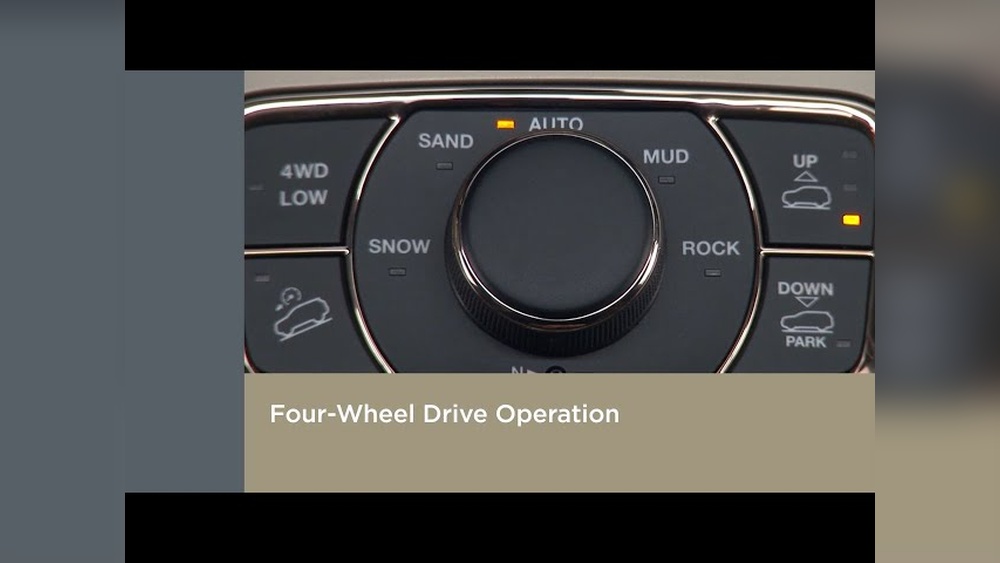
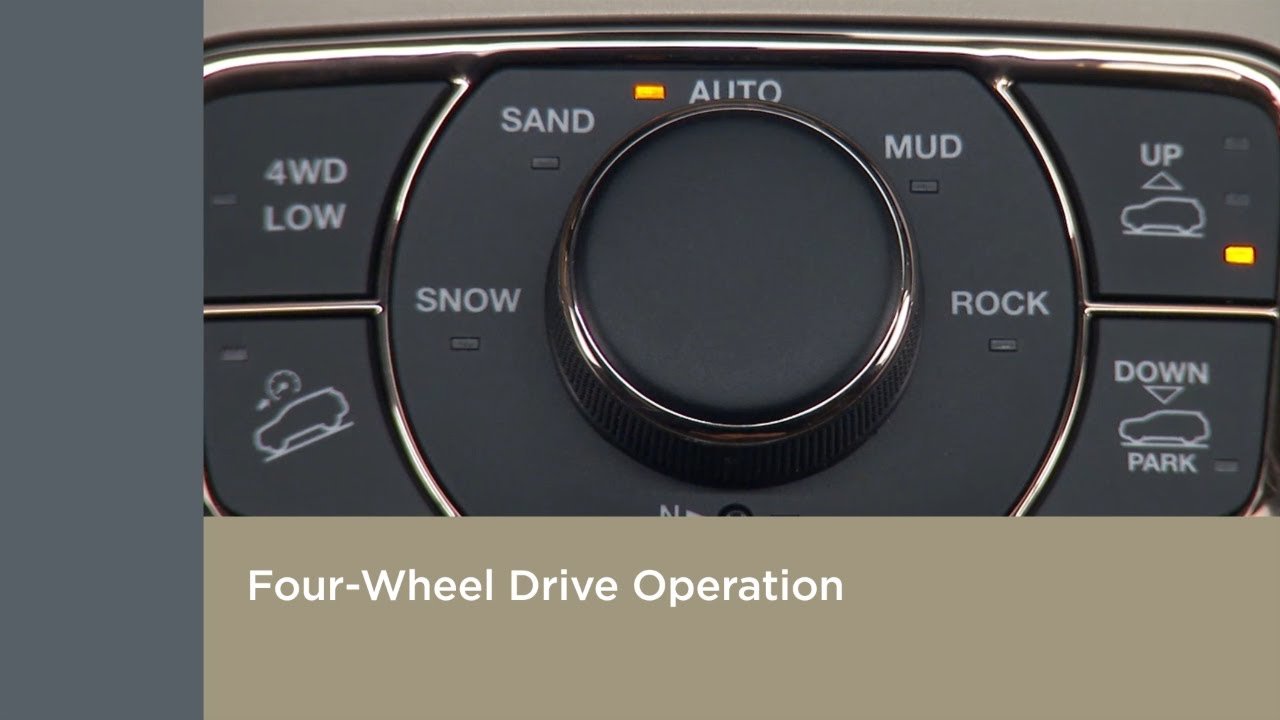
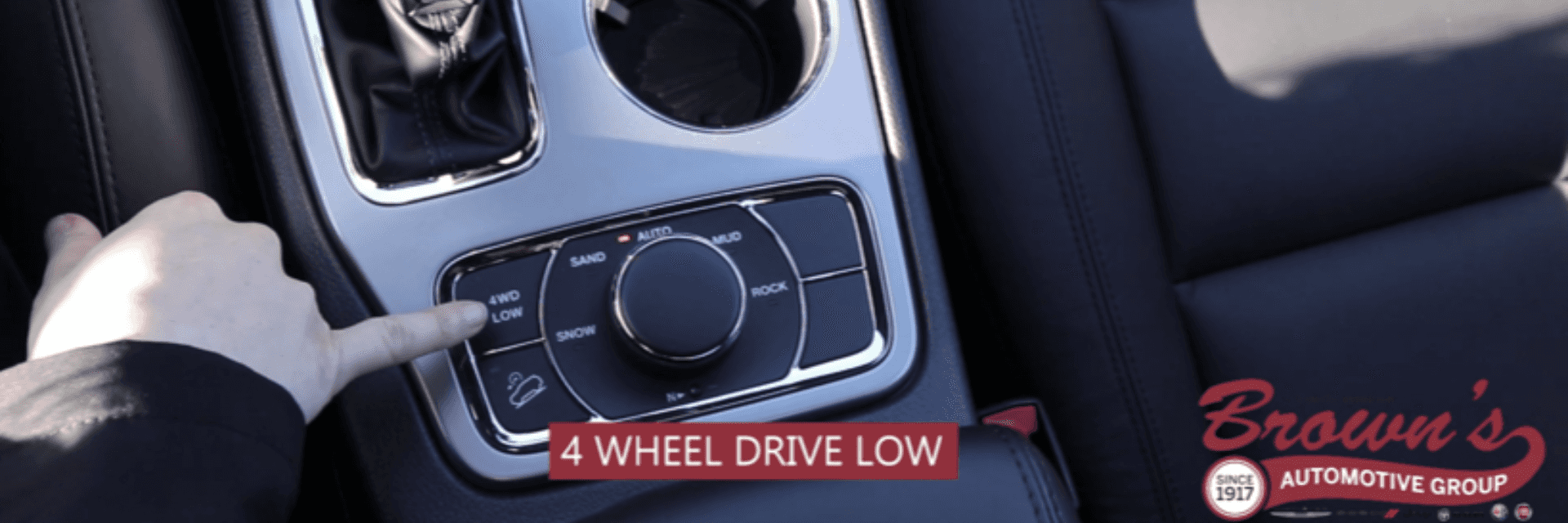
- Find the 4WD selector (usually a knob or lever labeled “4WD LOW”).
- Turn or pull the selector to “4WD LOW.”
- Wait for the dash light to show 4WD Low is engaged.
- Shift the transmission back to drive (D), then go.
When to use 4WD Low:
Use this mode for:
- Deep mud or snow
- Sand
- Climbing steep hills
- Towing heavy loads slowly
Common mistake:
Many beginners forget to stop and shift to neutral before selecting 4WD Low. If you hear grinding or the system won’t engage, check that you’re in neutral.
Pros:
- Better off-road and towing ability
- More control in tough conditions
Cons:
- Needs manual selection for 4WD Low
- Slightly more complex to use
Example:
You’re stuck on a muddy hill. Stop, shift to neutral, select 4WD Low, and drive out with extra torque.
Quadra-drive Ii
This is the most advanced system, found on higher trims. It uses electronic limited-slip differentials for maximum grip.
How to put in 4 wheel drive:
1. Full-time 4wd:
Like the others, Quadra-Drive II is always active. No need to switch anything for regular use.
- Engaging 4WD Low:
- Come to a complete stop.
- Put the transmission in neutral.
- Use the 4WD selector to choose “4WD LOW.”
- Wait for the dash indicator to light up.
- Shift back to drive and continue.
Special features:
Quadra-Drive II can send nearly 100% of power to a single wheel if needed. This is great for rock crawling or deep ruts.
Non-obvious insight:
Some drivers think they must engage 4WD Low for every off-road trip. In fact, the standard setting is enough for most trails.
Use 4WD Low only for very rough, slow-moving situations.
Pros:
- Best traction for off-road
- Handles steep, uneven terrain easily
Cons:
- More expensive to repair
- May be overkill for city drivers
Example:
Crossing rocky trails where one or two wheels may leave the ground. Quadra-Drive II keeps you moving by shifting power instantly.
Quadra-trac Srt
This system is unique to the Grand Cherokee SRT, a high-performance model. It’s designed for sport driving but still helps in bad weather.
How to put in 4 wheel drive:
- Automatic 4WD:
You don’t need to select anything. The system uses sensors to control power between the wheels. It’s always on.
- Drive Modes:
Use the Drive Mode Selector (often a knob on the console) to pick modes like “Snow,” “Sport,” or “Track.” Each mode adjusts how the 4WD system responds.
Practical tip:
For best traction in winter, choose “Snow” mode. This changes throttle response and transmission shifts for slippery roads.
Pros:
- No action needed from driver
- Great for sporty or winter driving
Cons:
- Less focus on heavy off-road
- Limited to SRT models
Example:
Driving fast on a wet highway, the system keeps your SRT stable even if you accelerate hard.
Comparing The 4 Jeep Grand Cherokee 4wd Systems
Here’s a quick comparison of the four systems so you can see their key differences:
| System | Manual Selection? | 4WD Low Available? | Best Use Case |
|---|---|---|---|
| Quadra-Trac I | No | No | Everyday roads, light snow |
| Quadra-Trac II | Yes (for 4WD Low) | Yes | Off-road, heavy snow, towing |
| Quadra-Drive II | Yes (for 4WD Low) | Yes | Extreme off-road, rock crawling |
| Quadra-Trac SRT | No | No | Performance, sport driving |
Common Mistakes When Using 4 Wheel Drive
Even experienced drivers sometimes make mistakes when using 4WD. Here are a few to watch for:
- Forgetting to shift to neutral before 4WD Low: This can damage the transfer case.
- Driving fast in 4WD Low: 4WD Low is for slow speeds (under 25 mph). Using it at high speed can hurt your car.
- Using 4WD on dry pavement (for older part-time systems): In most Grand Cherokees, the system is safe for pavement. But if you have an older or aftermarket system, check your manual.
- Not reading the owner’s manual: Each year and trim may have small differences.
Cost And Maintenance Of 4 Wheel Drive Systems
Maintaining your Grand Cherokee’s 4WD system is important for long-term reliability. Here’s what to expect:
- Fluid changes: Transfer case and differential fluids should be changed every 30,000 to 60,000 miles. Cost: $150, $400 depending on the service.
- Repairs: Electronic components and differentials can be expensive. A major repair may cost $1,000, $3,000.
- Tire care: Always keep tires matched and at the right pressure. Uneven tires can wear out your 4WD system quickly.
A non-obvious insight: Skipping basic tire maintenance can cause expensive 4WD repairs, even if the rest of your system is fine.
Real-world Example: When 4 Wheel Drive Makes A Difference
Imagine you’re driving in a heavy snowstorm. With Quadra-Trac I, your Grand Cherokee stays steady on the highway with no action from you. If you get stuck in a snowbank, Quadra-Trac II or Quadra-Drive II lets you shift into 4WD Low and crawl out safely.
Or, you’re taking a road trip and hit a dirt road. The right 4WD mode lets you pass safely, while others might get stuck. This is why understanding your system matters.
Tips For Beginners: Using 4wd Safely
- Practice in a safe area: Try your 4WD system in a parking lot before you need it for real.
- Listen for warning lights: If a 4WD warning appears, don’t ignore it.
- Don’t use 4WD Low unless needed: It’s for deep mud, sand, or climbing only.
- Always match tire size and type: Mixing tires can damage your 4WD.
When Not To Use 4 Wheel Drive
There are times when 4WD is not helpful or can even cause problems:
- Dry pavement driving: Not needed for most modern systems, but check your manual.
- High speeds in 4WD Low: Never drive fast in this mode.
- Tight turns on hard surfaces: Can cause drivetrain binding.
If you’re unsure, start in standard mode and only use 4WD Low for real challenges.
<!– wp:rank-math/faq-block {"questions":[{"id":"faq-question-78371a8a3622","title":"How Do I Know Which 4wd System My Jeep Grand Cherokee Has?","content":"Check your owner’s manual or look for badges on your car. The system type is usually listed near the gear selector or in your car’s information display.
“,”visible”:true},{“id”:”faq-question-e164f01409e1″,”title”:”Can I Switch To 4wd While Driving?”,”content”:”For Quadra-Trac II and Quadra-Drive II, you can drive in full-time 4WD without stopping. But to shift into 4WD Low, always stop and shift to neutral first.
“,”visible”:true},{“id”:”faq-question-ed52bb21422c”,”title”:”Is 4wd Always Better Than 2wd?”,”content”:”4WD is better for slippery or rough roads. But on dry, flat roads, you won’t notice a big difference, and using 4WD Low can even cause wear.
“,”visible”:true},{“id”:”faq-question-8401886cc4a6″,”title”:”What Happens If I Use The Wrong 4wd Mode?”,”content”:”Using 4WD Low at high speeds or on dry pavement can damage your transfer case or drivetrain. Always follow the steps in your manual.
“,”visible”:true},{“id”:”faq-question-f511d1786d5f”,”title”:”Where Can I Learn More About Jeep 4wd Systems?”,”content”:”For more details and technical info, visit the official Jeep Grand Cherokee page.
Driving a Jeep Grand Cherokee with the right 4 wheel drive mode is simple once you know your system. Whether your Jeep has Quadra-Trac I, Quadra-Trac II, Quadra-Drive II, or Quadra-Trac SRT, understanding how to use 4WD gives you confidence in bad weather and off-road conditions. Always follow the right steps, keep your system maintained, and practice before you hit tough terrain. With the right knowledge, your Grand Cherokee is ready for any road, or no road at all.
“,”visible”:true}]} –>How Do I Know Which 4wd System My Jeep Grand Cherokee Has?
Check your owner’s manual or look for badges on your car. The system type is usually listed near the gear selector or in your car’s information display.
Can I Switch To 4wd While Driving?
For Quadra-Trac II and Quadra-Drive II, you can drive in full-time 4WD without stopping. But to shift into 4WD Low, always stop and shift to neutral first.
Is 4wd Always Better Than 2wd?
4WD is better for slippery or rough roads. But on dry, flat roads, you won’t notice a big difference, and using 4WD Low can even cause wear.
What Happens If I Use The Wrong 4wd Mode?
Using 4WD Low at high speeds or on dry pavement can damage your transfer case or drivetrain. Always follow the steps in your manual.
Where Can I Learn More About Jeep 4wd Systems?
For more details and technical info, visit the official Jeep Grand Cherokee page.
Driving a Jeep Grand Cherokee with the right 4 wheel drive mode is simple once you know your system. Whether your Jeep has Quadra-Trac I, Quadra-Trac II, Quadra-Drive II, or Quadra-Trac SRT, understanding how to use 4WD gives you confidence in bad weather and off-road conditions. Always follow the right steps, keep your system maintained, and practice before you hit tough terrain. With the right knowledge, your Grand Cherokee is ready for any road, or no road at all.