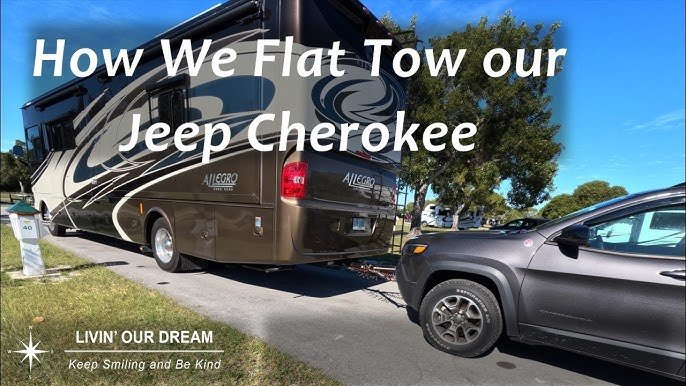
Flat towing, or “dinghy towing,” is a popular way to bring your Jeep Cherokee along behind an RV or another vehicle. Many travelers choose this method because it keeps things simple no need for a trailer or dolly.
But flat towing isn’t as easy as just hooking up and going.
You need the right equipment, correct vehicle setup, and careful attention to safety. This guide covers each step, shares real-world advice, and points out mistakes that can lead to costly repairs.
Understanding Flat Towing
Flat towing means all four wheels of the Jeep Cherokee stay on the ground while being towed. Some vehicles can’t handle this, but certain Jeep Cherokee models are built for it. Always check your owner’s manual or ask your dealer if your exact model supports flat towing. Some trims, especially those with full-time 4WD or automatic transmissions, may need extra steps or may not be suitable at all.
Cherokee Models And Flat Towing
Not every Cherokee is flat-towable. Here’s a simple comparison of popular trims:
| Model Year | Drivetrain | Flat Towable? | Special Steps |
|---|---|---|---|
| 2019-2023 | 4WD Active Drive II | Yes | Transfer case in Neutral |
| 2019-2023 | FWD/Other 4WD | No | N/A |
| 2014-2018 | Trailhawk 4WD | Yes | Transfer case in Neutral |
Tip: Don’t skip this check. Flat towing a non-approved Cherokee can destroy the transmission.
What You’ll Need
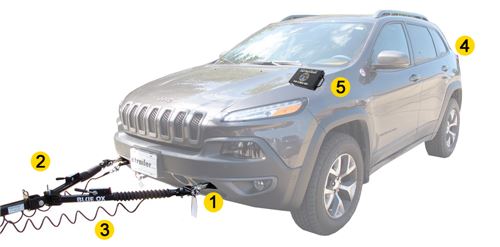
Setting up your Jeep Cherokee for flat towing takes more than a basic tow bar. Here’s a checklist of the main items:
- Base plate kit – This attaches securely to the frame.
- Tow bar – Connects the base plate to your tow vehicle.
- Safety cables – Backup connection in case the tow bar fails.
- Wiring harness – Links your Cherokee’s lights to the RV or tow vehicle.
- Supplemental braking system – Many states require this for safety.
- Tow bar locks – To prevent theft.
Here’s how these parts compare in terms of importance and legal need:
| Component | Is It Required? | Why It Matters |
|---|---|---|
| Base Plate | Yes | Strong attachment point |
| Tow Bar | Yes | Connects vehicles safely |
| Safety Cables | Yes (by law in most states) | Redundant safety |
| Wiring Harness | Yes | Syncs brake/turn lights |
| Brake System | Yes (in most states) | Stops Jeep during braking |
Setting Up Your Jeep Cherokee
Each Cherokee has a slightly different setup, but these steps cover most 4WD flat-towable models:
- Park on level ground and engage the parking brake.
- Connect the base plate to your Jeep’s frame. Follow the kit instructions—improper mounting is unsafe.
- Attach the tow bar to the base plate. Double-check all pins and clips.
- Hook up safety cables. Cross them under the tow bar for extra security.
- Install the wiring harness. Test all lights—brake, turn, and running.
- Add the supplemental brake system inside the Jeep. Most systems are plug-and-play, but some require calibration.
- Prepare the drivetrain:
- Start the engine.
- Shift the transmission to Neutral.
- Set the transfer case to Neutral (for 4WD models).
- Turn off the engine.
- Place the ignition in the correct mode (usually “Accessory” or “Off,” as per the manual).
- Release the parking brake.
Insight: Many beginners forget to check if the steering wheel is unlocked. Without this, the front wheels can drag and cause tire wear or damage.
Towing Safety And Road Tips
Once you’re hooked up, safety is your top priority. Here’s what to keep in mind:
- Double-check all connections. Give each pin, lock, and cable a tug.
- Test your lights and brakes. Do this every time before you start driving.
- Drive gently. Accelerate and brake slowly. Your Cherokee adds weight and changes how your RV handles.
- Avoid sharp turns. Flat-towed vehicles can “bind” if you turn too tightly.
- Stop after a few miles. Check all connections again, and feel the wheels for heat.
- Never back up while flat towing. This can bend or break your tow bar and base plate.
Non-obvious tip: On long trips, occasionally run the Cherokee’s engine to keep the battery charged, unless your wiring harness provides a charging line.

Common Mistakes To Avoid
Flat towing can go wrong if you miss small details. Watch out for these:
- Towing in the wrong gear. Always check the transfer case and transmission position.
- Skipping the brake system. Not only illegal in many places but also dangerous.
- Improper base plate installation. A loose or weak base plate can break free.
- Ignoring tire pressure. Underinflated tires can overheat and fail.
- Forgetting to unlock the steering. This causes expensive damage fast.
Legal Requirements And Insurance
Laws about flat towing change from state to state. In most US states, a supplemental brake system is required if the towed vehicle is over 3,000 pounds—which includes most Jeep Cherokees. Check local rules before you travel.
Insurance: Inform your insurer that you plan to flat tow. Not all policies cover damage while being towed. Some may offer special add-ons for RVers.
For more in-depth legal info and state-by-state requirements, visit the Family Motor Coach Association.
Frequently Asked Questions
Is Every Jeep Cherokee Model Safe To Flat Tow?
No. Only certain 4WD models, like the Trailhawk with Active Drive II, are designed for flat towing. Always check your owner’s manual.
What Happens If I Flat Tow A Non-approved Cherokee?
You can destroy the transmission or transfer case. Repairs can cost several thousand dollars.
Only flat tow if your model is listed as compatible.
Do I Need A Special Wiring Harness For My Jeep Cherokee?
Yes. A flat towing wiring harness syncs your Cherokee’s rear lights with your RV.
Standard trailer wiring kits are not always compatible.
Can I Back Up While Flat Towing?
Never back up with your Jeep attached. The tow bar can bend, and the base plate may fail. Always disconnect before reversing.
How Often Should I Check My Towing Setup During A Trip?
Stop after your first few miles, then every 200-300 miles or at fuel stops. Check all connections, tire pressures, and the condition of your tow bar and cables.
Flat towing a Jeep Cherokee opens up a world of adventure, but only if you do it safely and correctly. With the right setup, attention to detail, and smart road habits, you can travel with confidence.
Remember, a few careful checks can save you from headaches and expensive repairs down the road.
Safe travels!