Many Jeep Cherokee owners ask, "How do I check the transmission fluid in my Jeep Cherokee?" Keeping your transmission fluid at the right level is one of the easiest ways to protect your vehicle's transmission.
If the fluid is low or dirty, it can cause shifting problems, overheating, or even expensive damage.
Checking transmission fluid is not hard, but it does require a few steps. This guide explains exactly how to check transmission fluid in Jeep Cherokee models, whether you have an older XJ or a newer model with a sealed transmission.
We’ll cover what you need, step-by-step instructions, common mistakes, how to read the dipstick, and when to get help.
Why Transmission Fluid Matters
Transmission fluid is more than just a lubricant. It keeps the transmission cool, helps gears shift smoothly, and prevents wear inside the gearbox.
Without enough fluid, your Jeep Cherokee could start to slip, hesitate, or refuse to move. Too much fluid can also cause foaming and shifting issues.
For most Jeep Cherokees, the transmission fluid should be checked regularly, usually every 30,000 miles or as recommended in your owner’s manual.
Tools And Supplies Needed
Before starting, make sure you have:
- Clean shop rag or paper towel
- Proper transmission fluid (ATF+4 is used in many Jeeps, but always check your manual)
- Funnel (for adding fluid if needed)
- Latex gloves (optional, but keeps hands clean)
- Safety glasses (recommended)
If your Jeep has a sealed transmission (common in newer models), you may need a special dipstick tool or have the fluid checked by a professional. Always check your owner’s manual for your model’s exact instructions.
Types Of Jeep Cherokee Transmissions
The process for checking fluid depends on your transmission type. Here’s a quick comparison:
| Model Year | Transmission Type | Fluid Check Method |
|---|---|---|
| 1984 to 2001 (XJ) | 4-speed automatic (AW4) | Dipstick under hood |
| 2014 to 2023 (KL) | 9-speed automatic | Sealed/no dipstick |
| 2002 to 2013 | 4/5-speed automatics | Dipstick under hood |
Older Cherokees (like the XJ) have a dipstick for easy checking. Most modern Cherokees use a sealed transmission, which does not have a dipstick.
Step-by-step: How To Check Transmission Fluid In Jeep Cherokee
The best time to check transmission fluid is when the fluid is warm, but not hot. Here’s how to do it:
1. Park On A Level Surface
Make sure your Jeep is on level ground. If the vehicle is tilted, the fluid reading will not be accurate.
2. Warm Up The Transmission
Start the engine and let it run for 5-10 minutes until the engine and transmission reach normal operating temperature. For the most accurate reading:
- Move the gear selector through all positions (P, R, N, D, etc.) For a few seconds each.
- Leave the engine running and shift to Park.
3. Open The Hood And Locate The Dipstick
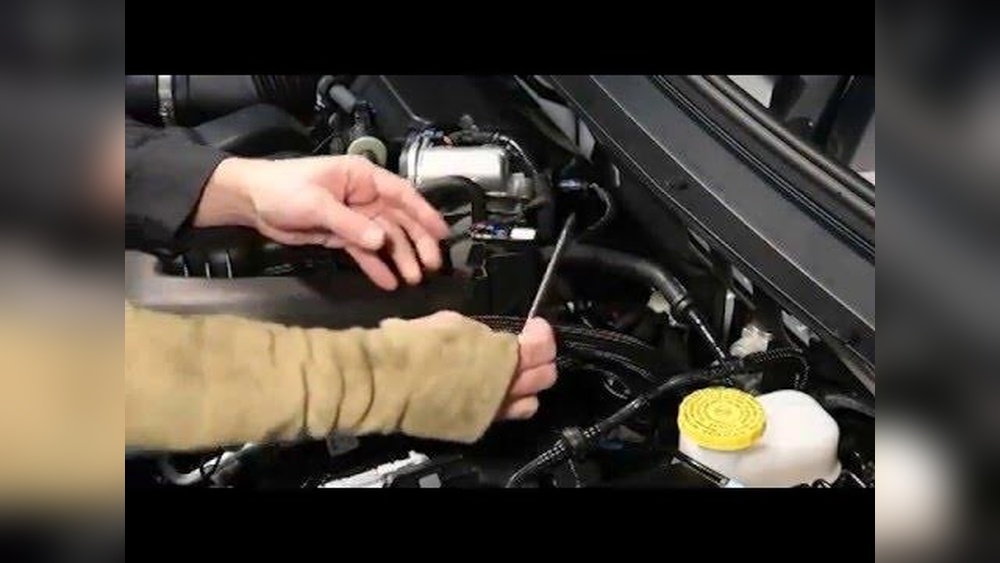
For models with a dipstick, it’s usually near the back of the engine bay, often labeled ATF or Transmission. It looks different from the engine oil dipstick, double-check the label.
If your Jeep Cherokee does not have a transmission dipstick (sealed unit), do not try to open or fill the transmission yourself. Skip to the section on sealed transmissions below.
4. Remove And Clean The Dipstick
Pull out the dipstick. Wipe it clean with your rag or paper towel.
This first wipe removes any fluid that splashed up the tube.
5. Insert And Remove The Dipstick Again
Re-insert the dipstick all the way, then pull it out again. Hold it horizontally and read the level.
- The fluid should be between the “Full” and “Add” marks.
- If the fluid is below the “Add” line, you need more.
- If it’s above “Full,” there may be too much.
6. Check Fluid Condition
Look at the color and smell:
- Good fluid: Clear, pinkish-red, and does not smell burnt.
- Old fluid: Brown, dark, or smells burnt, needs changing.
If you see metal flakes, foam, or milky color, have your transmission checked by a mechanic.
7. Add Fluid If Needed
If the level is low, add the recommended ATF through the dipstick tube using a funnel. Add a little at a time (usually 1/4 quart), then recheck the level. Do not overfill.
8. Replace The Dipstick
After checking, put the dipstick back securely.
How To Check Transmission Fluid In Sealed Transmission (newer Cherokees)
Many newer Jeep Cherokees (2014 and up) use a sealed automatic transmission. These do not have a dipstick. Fluid checking and replacement require special tools and sometimes lifting the vehicle. In most cases, it’s best to let a certified mechanic handle this.
However, here’s a brief overview for informational purposes:
- The vehicle is raised and kept level.
- A fill plug and check/fill plug are located on the transmission case.
- Fluid is checked at a specific temperature using a scan tool.
- Fluid should flow out as a thin stream if the level is correct.
Do not try this at home unless you have experience and the right equipment. Mistakes can cause leaks or damage.
Transmission Fluid Types And Quantities
Always use the exact type of fluid specified in your Jeep Cherokee’s manual. Using the wrong fluid can cause shifting problems, leaks, or transmission failure.
Here’s a quick reference for common models:
| Model | Transmission | Fluid Type | Approx. Capacity |
|---|---|---|---|
| Jeep Cherokee XJ (AW4) | 4-speed auto | Dexron III/Mercon | ~3.5 quarts (drain/fill) |
| Jeep Cherokee KL (9-speed) | 9-speed auto | Mopar ZF 9 Speed ATF | ~5.5 quarts |
| 2014 to 2023 Cherokee | 9-speed auto | ATF+4 or OEM | See manual |
Important: Always double-check your owner’s manual before buying or adding fluid.
Signs Your Transmission Fluid Needs Attention
There are several warning signs your transmission fluid may be low or dirty:
- Delayed or rough shifting
- Slipping gears
- Transmission overheating warning
- Dark or burnt-smelling fluid
- Unusual noises during shifting
Ignoring these signs can lead to expensive repairs. If you notice any of these, check your fluid as soon as possible.
How Often Should You Check Transmission Fluid?
It’s a good habit to check your transmission fluid every few months or at every oil change. At the very least, check it before long trips or if you notice any transmission problems.
Most Jeep Cherokee manuals recommend checking the fluid every 30,000 60,000 miles, but driving in extreme heat, heavy towing, or stop-and-go traffic may require more frequent checks.
Pros And Cons Of Diy Transmission Fluid Check
Before you decide to check your Jeep Cherokee’s transmission fluid yourself, consider the benefits and downsides.
Pros:
- Easy and quick on older models
- Saves money on mechanic fees
- Catches problems early
Cons:
- Some models (sealed transmissions) are hard or impossible to check without tools
- Using the wrong fluid or overfilling can cause damage
- May void warranty if done incorrectly
If you feel unsure, it’s safer to visit a Jeep dealer or trusted mechanic.
Cost To Check Or Change Transmission Fluid
Checking the transmission fluid yourself is usually free if you have the tools. At a shop, a fluid check can cost $30, $50. A full transmission fluid change or flush, with new fluid and filter, usually costs $120, $250 depending on location and vehicle model.
Sealed transmissions are often more expensive to service because they require special tools and procedures.

Common Mistakes To Avoid
Many beginners make simple mistakes when checking or adding transmission fluid. to watch out for:
- Checking fluid cold: Always check when warm, unless your manual says otherwise.
- Using the wrong fluid: Only use the recommended type.
- Overfilling: Too much fluid can be just as bad as too little.
- Forgetting to move the shifter: Cycle through all gears before checking.
- Not cleaning the dipstick first: Dirt can give a false reading.
A little care can save a lot of time and money.
When To See A Mechanic
If you notice any of the following, see a professional:
- Transmission fluid is dark, gritty, or smells burnt
- You see leaks under your Jeep
- Transmission slips or shifts roughly, even after adding fluid
- The transmission warning light is on
Never ignore major symptoms. Transmission repairs are expensive, but early action can prevent bigger problems.
Extra Tips For Long Transmission Life
- Always check for leaks under your vehicle.
- Use only high-quality or OEM fluids.
- Don’t tow heavy loads with old or dirty transmission fluid.
- Change the transmission filter when changing fluid (if your model has one).
Many Jeep owners forget that fluid maintenance is cheaper than repairs.
<!– wp:rank-math/faq-block {"questions":[{"id":"faq-question-728b0b767325","title":"How Often Should I Check My Jeep Cherokee's Transmission Fluid?","content":"Check it every few months or at every oil change. If you drive in tough conditions (towing, high heat, traffic), check more often.
“,”visible”:true},{“id”:”faq-question-91f6cefedd1c”,”title”:”What Kind Of Transmission Fluid Does A Jeep Cherokee Use?”,”content”:”It depends on the model year and transmission. Many use ATF+4, but some older models use Dexron III/Mercon. Always check your owner’s manual.
“,”visible”:true},{“id”:”faq-question-6e089b2681e3″,”title”:”Can I Check Transmission Fluid When The Engine Is Off?”,”content”:”No. For most Jeep Cherokees, the engine should be running and at operating temperature. This gives the most accurate reading.
“,”visible”:true},{“id”:”faq-question-0eefe19501b7″,”title”:”What Happens If I Overfill My Transmission?”,”content”:”Too much fluid can cause foaming, slipping, or leaks. Always add fluid slowly and check often to avoid overfilling.
“,”visible”:true},{“id”:”faq-question-5a4d9e64d181″,”title”:”Where Can I Learn More About Transmission Maintenance?”,”content”:”You can find more details on the official Jeep Maintenance Page for up-to-date service advice.
“,”visible”:true}]} –>How Often Should I Check My Jeep Cherokee's Transmission Fluid?
Check it every few months or at every oil change. If you drive in tough conditions (towing, high heat, traffic), check more often.
What Kind Of Transmission Fluid Does A Jeep Cherokee Use?
It depends on the model year and transmission. Many use ATF+4, but some older models use Dexron III/Mercon. Always check your owner’s manual.
Can I Check Transmission Fluid When The Engine Is Off?
No. For most Jeep Cherokees, the engine should be running and at operating temperature. This gives the most accurate reading.
What Happens If I Overfill My Transmission?
Too much fluid can cause foaming, slipping, or leaks. Always add fluid slowly and check often to avoid overfilling.
Where Can I Learn More About Transmission Maintenance?
You can find more details on the official Jeep Maintenance Page for up-to-date service advice.
Keep Your Jeep Cherokee Running Smooth
Checking your transmission fluid is one of the simplest ways to keep your Jeep Cherokee in top shape. Whether you have an older model with a dipstick or a newer sealed transmission, understanding this process can help you avoid headaches and costly repairs. Always use the right fluid, follow your manual, and don’t ignore warning signs. With a few minutes of care, your Jeep’s transmission can last for years and many adventures ahead.
Meta Title: How To Check Transmission Fluid In Jeep Cherokee: Step-By-Step Guide
Meta Description: Learn how to check transmission fluid in Jeep Cherokee. Includes step-by-step instructions, tips, common mistakes, and fluid types for all Cherokee models.