Storing your Jeep hardtop the right way is key to keeping it in top shape. A hardtop is not just a cover it’s an investment.
Whether you swap it for a soft top in summer, or remove it for open-air driving, proper storage makes a real difference.
Many Jeep owners struggle with scratched windows, cracked seals, and even warped panels, all because they didn’t store their hardtop correctly.
Let’s look at the best ways to store your Jeep hardtop safely, avoid common mistakes, and make sure it’s ready for any adventure.
Why Proper Storage Matters
A Jeep hardtop is heavy and awkward to move. If you leave it on the ground or lean it against a wall, the risk of damage is high. UV light, moisture, and dust can also harm the hardtop. Over time, these problems lead to faded paint, brittle seals, and leaks. Good storage protects your investment, keeps your Jeep looking sharp, and saves you from expensive repairs.
Main Storage Options For Jeep Hardtops
There are several ways to store a Jeep hardtop. Each has its strengths and downsides.
Choosing the right method depends on your space, budget, and how often you switch tops.
1. Hardtop Hoist Systems
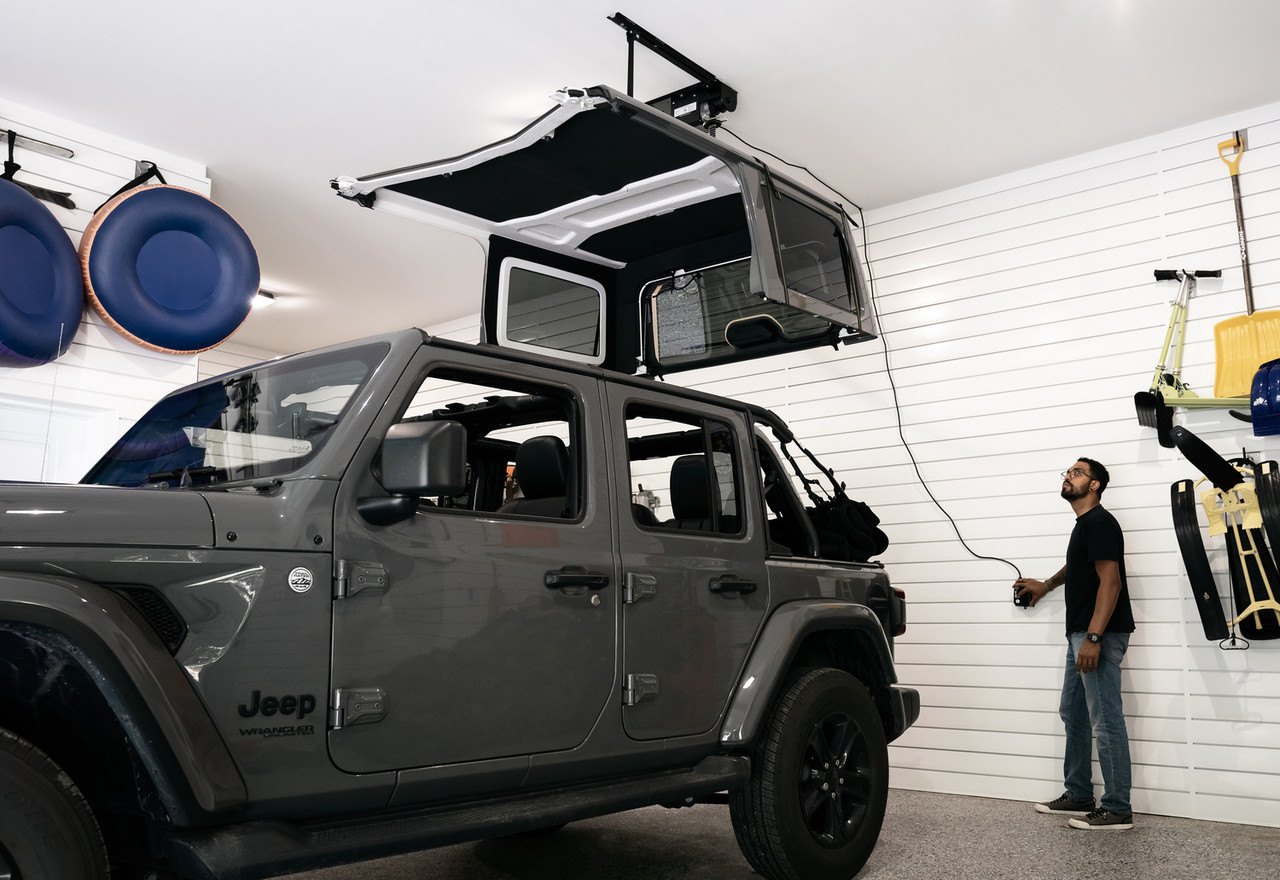
A hardtop hoist is one of the most popular solutions. This system uses pulleys and ropes or a motorized lift to raise the hardtop off your Jeep and store it near the ceiling.
Pros:
- Saves floor space
- One-person operation possible
- Reduces risk of scratches
Cons:
- Needs a strong ceiling structure
- Installation takes time
Example: A manual hoist system costs around $150–$200, while electric versions are closer to $400.
2. Hardtop Storage Carts
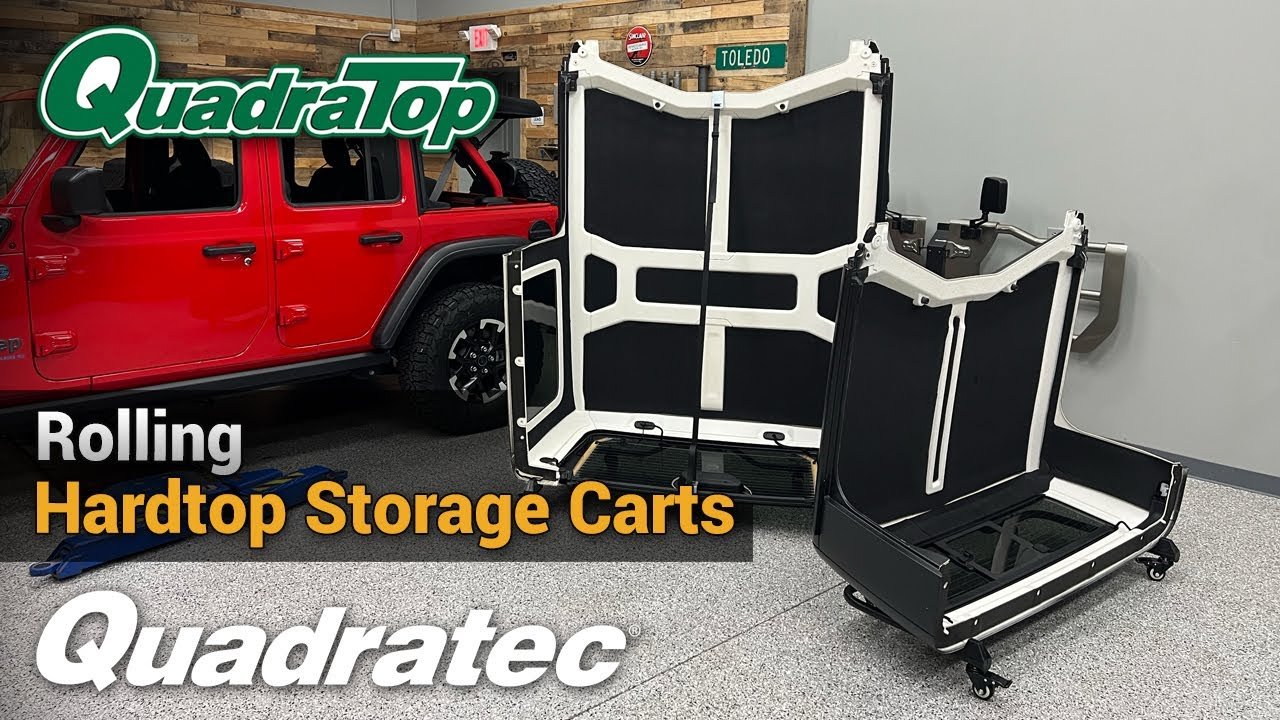
A storage cart is a wheeled frame that supports the hardtop on padded surfaces.
Pros:
- Easy to move
- Padded to prevent scratches
- Often includes covers
Cons:
- Takes up floor space
- Requires careful loading
Example: Prices range from $100 for simple racks to $350 for premium carts.
3. Wall Mount Racks
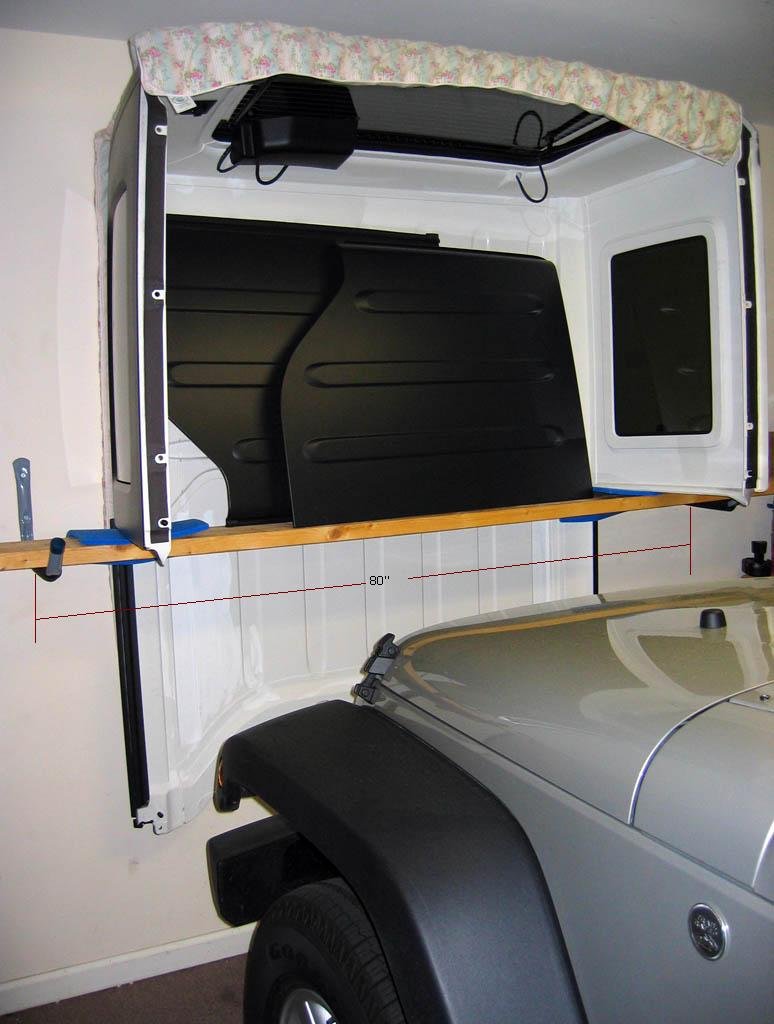
Wall racks hold your hardtop vertically or horizontally against a garage wall.
Pros:
- Frees up floor space
- Keeps hardtop off the ground
Cons:
- Needs wall space and sturdy anchors
- Installation required
Example: Most wall mounts cost between $80 and $200.
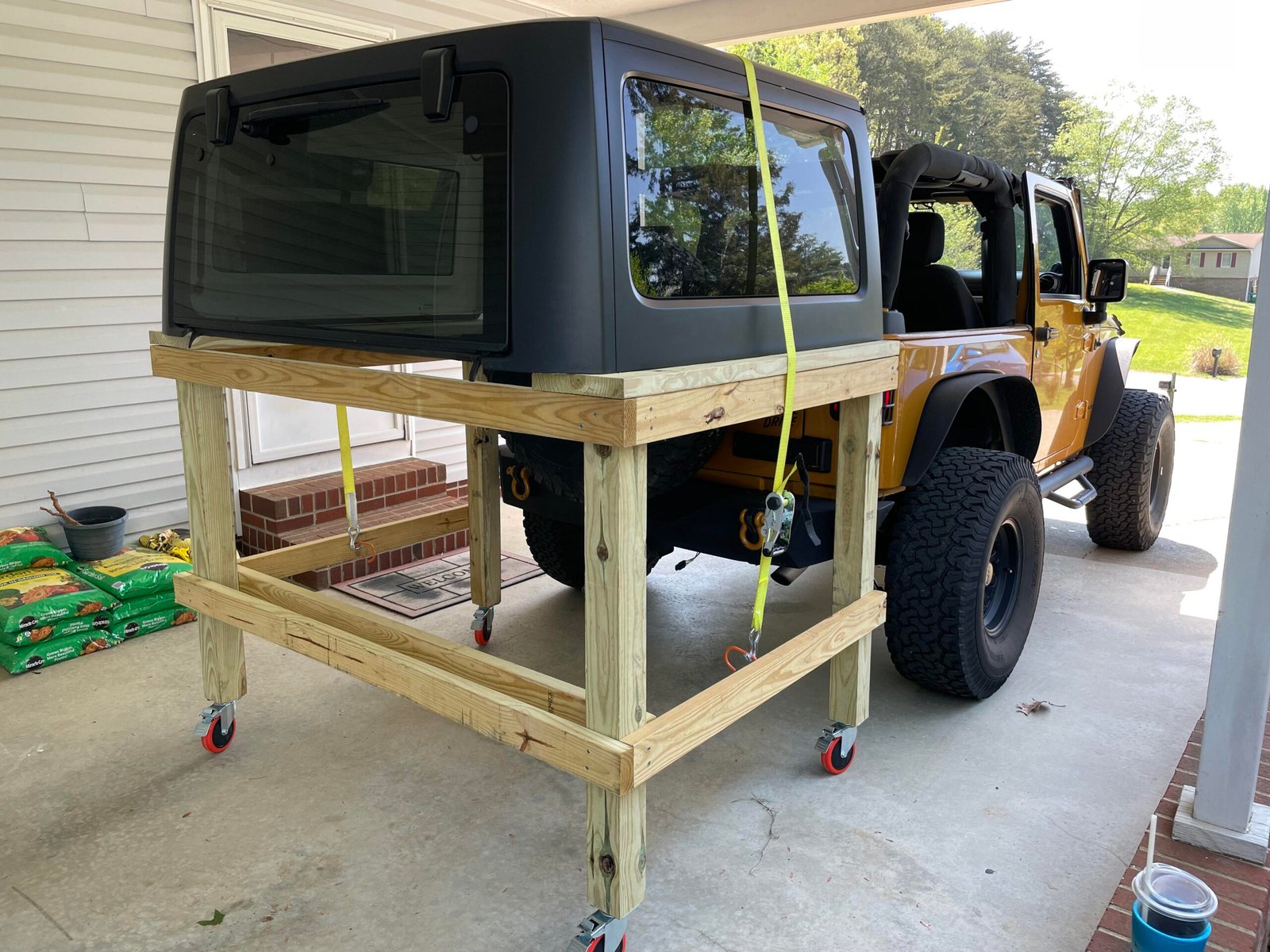
4. Diy Methods
Some owners use blankets, foam, or wood to create DIY storage. While this saves money, it carries more risk.
Pros:
- Low cost
- Customizable
Cons:
- Less secure
- More effort required
Example: Using thick blankets and a pallet can work in a pinch, but be careful about pressure points.
Comparison Of Storage Solutions
Here’s a quick look at how the main options compare:
| Storage Method | Cost | Space Required | Ease of Use | Protection Level |
|---|---|---|---|---|
| Hoist System | $$–$$$ | Ceiling | Easy/Medium | High |
| Storage Cart | $$ | Floor | Easy | High |
| Wall Rack | $–$$ | Wall | Medium | Medium/High |
| DIY | $ | Varies | Hard | Low/Medium |
Step-by-step: Safely Removing And Storing Your Hardtop
1. Prepare The Area
Make sure you have enough room to move around. Clear obstacles and lay down a padded mat to prevent damage.
2. Gather Tools
You’ll usually need a Torx bit set (T40/T50), a friend for lifting, and your storage system ready.
3. Remove Bolts And Electrical Connections
Open the doors, remove the freedom panels (if present), and unscrew all bolts. Disconnect wiring for rear wipers or defrosters.
4. Lift Carefully
With help, lift the hardtop straight up to avoid scraping paint. Move slowly to your storage system.
5. Position On Storage System
If using a hoist, make sure the top is balanced. For carts or racks, set the hardtop on padded areas never on bare concrete.
6. Cover And Protect
Use a breathable cover to keep dust off. Never use plastic sheeting, as it can trap moisture.
Key Tips For Long-term Hardtop Storage
- Clean Before Storing: Dirt and salt can cause scratches or corrosion. Wash and dry the hardtop first.
- Protect Seals: Lubricate rubber seals with silicone spray to keep them flexible.
- Avoid Sunlight: UV rays fade paint and crack seals. Store in a shaded or indoor area.
- Check Regularly: Inspect for dust, pests, and moisture every few weeks.
- Store Hardware: Keep bolts and fasteners in a labeled bag attached to the hardtop or in your glove box.
Hardtop Storage Mistakes To Avoid
Many owners make small mistakes that can lead to big problems:
- Leaning Against Walls: This puts pressure on the edges and may crack the fiberglass.
- Storing on Concrete: Direct contact with the floor can scratch and even warp the hardtop.
- Ignoring the Weather: If you store outside, rain and sun will quickly damage the finish.
Comparing Popular Hardtop Hoists
If you’re considering a hoist, here’s how three top options stack up:
| Brand | Max Load | Manual/Electric | Price | Unique Feature |
|---|---|---|---|---|
| Harken Hoister | 145 lbs | Manual | $160 | Single-person use |
| Lange Originals Hoist-A-Top | 200 lbs | Electric | $400 | Switch control |
| Smittybilt Hardtop Hoist | 440 lbs | Electric | $350 | Heavy-duty cable |
Hardtop Storage Cart Comparison
See how two carts differ for Jeep owners:
| Cart Model | Wheels | Padded Support | Fits Windows | Price |
|---|---|---|---|---|
| TopLift Pro Cart | 4 | Yes | Yes | $300 |
| Mopar Cart | 4 | Yes | No | $190 |
Non-obvious Insights For Beginners
- Label Your Bolts: Jeep hardtops use different bolts for different spots. Mixing them up makes reinstallation a headache. Use a small organizer or label bags for each bolt type.
- Check Your Garage Ceiling Strength: Not all garage ceilings can handle a hoist system. If you’re not sure, ask a contractor. Overloading ceiling joists is dangerous and can cause collapse.
- Store Side Windows Properly: On 2-door models, side windows are often removable. Store them in padded bags to prevent scratching, and never stack heavy items on them.
Final Thoughts
Choosing the best way to store a Jeep hardtop is about balancing safety, space, and budget. Hoist systems are ideal for garages with high ceilings, while carts or wall racks work better in small spaces. DIY solutions can save money but may risk the hardtop. Proper storage prevents damage, keeps your hardtop looking new, and saves money in the long run. Take time to set up a good system now, and you’ll enjoy easier swaps and a longer-lasting top for years.
Frequently Asked Questions
How Heavy Is A Jeep Hardtop?
A typical Jeep Wrangler hardtop weighs between 140 and 150 pounds. Two people can usually remove it safely, but a hoist makes the job easier.
Can I Store My Hardtop Outside?
It’s not recommended. Outdoor storage exposes the hardtop to UV rays, rain, and temperature changes, which can cause fading and warping.
What Is The Best Way To Clean A Hardtop Before Storage?
Use car soap and water to clean the surface. Dry completely, then treat the seals with silicone spray for added protection.
Do I Need To Cover My Hardtop In Storage?
Yes. Use a breathable cover to keep out dust and prevent moisture buildup. Avoid plastic, as it can trap condensation.
Where Can I Learn More About Jeep Maintenance?
Check out the official Jeep Maintenance Guide for more tips and advice.