Jeep 4×4 systems confuse more new buyers than any other spec on the window sticker. You’ve probably noticed names like Command-Trac, Selec-Trac, Rock-Trac, and Quadra-Trac scattered across trims, and most people pick based on looks or price without learning what’s actually underneath.
That usually means ending up with the wrong 4×4 system for how you actually drive.
Jeep builds four main 4×4 systems: Command-Trac (part-time, manual), Selec-Trac (full-time, automatic), Rock-Trac (heavy-duty, for the Wrangler Rubicon), and Quadra-Trac (full-time, used on Grand Cherokee and Wagoneer models). Each one trades off fuel efficiency, driver involvement, and off-road capability differently, so the “best” system depends entirely on your terrain.
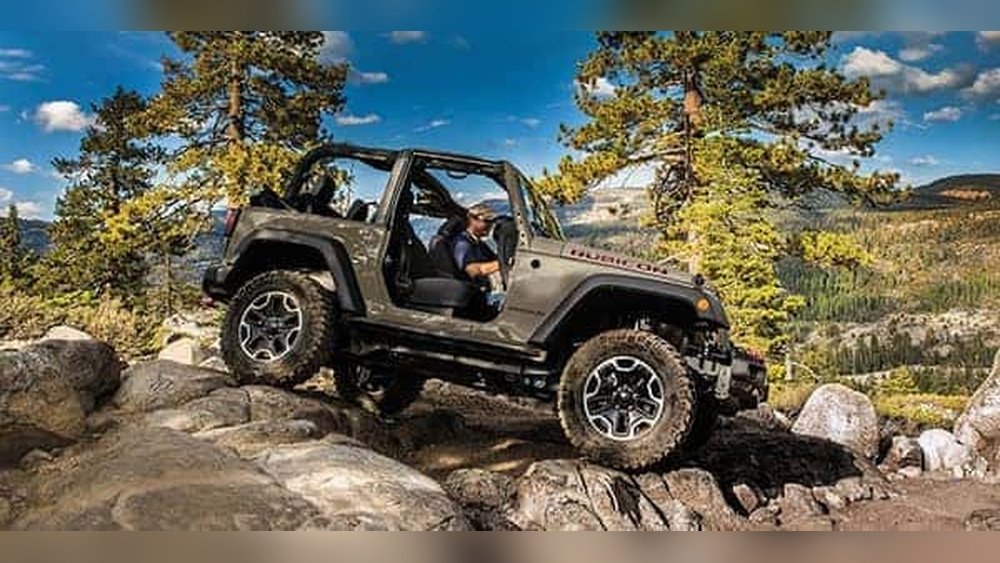
Jeep earned its reputation the hard way, through decades of tackling terrain that would strand most other vehicles. That reputation traces straight back to the Willys MB of the 1940s, a military vehicle whose simple part-time 4WD setup became the blueprint every Jeep since has built on.
Since then, the lineup has split into several distinct systems, each aimed at a different kind of driver. Here’s what’s actually going on under your Jeep, and which setup fits the way you actually use it.
Command-Trac: The Traditional Part-Time System
Command-Trac is Jeep’s classic, no-frills 4WD setup, and you’ll find it on Wranglers, Gladiators, and older SUVs. It’s a manual system, meaning you decide when 4WD engages instead of the truck deciding for you.
The transfer case offers four settings. 2H sends power only to the rear wheels for everyday paved driving, and it’s the most fuel-efficient option.
4H locks the front and rear axles together for slippery surfaces like snow, mud, or loose gravel.

Here’s the part a lot of new owners miss: never run 4H on dry pavement. Locking both axles together on a surface with plenty of grip causes drivetrain binding, since the front and rear wheels naturally spin at different speeds through a turn.
That binding stresses the transfer case, driveshafts, and differentials, and repeated abuse leads to real damage.
4L (4WD Low) drops into a lower gear ratio for serious torque multiplication, ideal for crawling over rocks or climbing steep grades at a walking pace. Neutral disconnects the drivetrain entirely, which matters if you’re flat-towing behind an RV.
Command-Trac rewards drivers who pay attention to conditions and shift accordingly. If you’re the type who wants to know exactly what your Jeep is doing at all times, this system is refreshingly simple and has proven itself for decades.
Selec-Trac: Full-Time Convenience With Off-Road Backup
Selec-Trac splits the difference between everyday convenience and real off-road ability. In its default 4-Auto mode, it behaves like a full-time system, quietly shifting power between axles as road conditions change without you touching a thing.
That means confident traction on wet pavement, packed snow, or ice, with zero input required from the driver. But Selec-Trac isn’t just an on-road comfort feature.
Drop it into 4WD Low when the pavement ends, and a locking center differential delivers the torque you need for moderate trails.
It also includes a Neutral setting for flat towing, so owners who tow their Jeep behind a motorhome don’t lose that flexibility. If you split your time between daily commuting and weekend trail runs but don’t need Rubicon-level hardware, Selec-Trac hits a sensible middle ground.
Rock-Trac: Built for the Wrangler Rubicon
Rock-Trac is where Jeep stops compromising. Found almost exclusively on Rubicon trims, it’s a heavy-duty, full-time system engineered for the kind of terrain that would leave lesser 4x4s stuck at the trailhead.
The standout feature is Tru-Lok electronic locking differentials on both the front and rear axles. When you lock a differential, both wheels on that axle spin at the same speed, so power keeps getting to the ground even if one tire lifts completely off a rock.
Rock-Trac’s low-range gearing also runs deeper than Command-Trac’s, typically around a 4.0:1 ratio, which multiplies torque dramatically for slow, controlled rock crawling. Rubicon models usually pair this transfer case with an electronic front sway bar disconnect, letting the suspension flex further for extra wheel articulation on uneven ground.
None of this matters much if you only ever see pavement. But if you’re chasing genuine rock-crawling capability, Rock-Trac is the reason Rubicon owners talk about their Jeeps the way they do.
Quadra-Trac: Refined Power for Grand Cherokee and Wagoneer
Quadra-Trac covers a family of systems rather than one single setup, and you’ll find it across Grand Cherokee and Wagoneer trims. These Jeeps prioritize on-road comfort and daily livability while still holding real off-road chops in reserve.
Quadra-Trac I is the simplest version: a full-time, single-speed system with no low-range gearing. It’s built for light off-roading and confident traction on rain, snow, or gravel, not technical trails.
Quadra-Trac II steps things up with a two-speed transfer case, a locking center differential, and a 4-Low mode for genuine off-road use. Many owners consider it the sweet spot for a Grand Cherokee that occasionally sees dirt roads or a snowy mountain pass.
Quadra-Drive II sits at the top of the lineup, adding electronic limited-slip differentials on both axles. That setup actively manages torque not just front-to-rear but side-to-side on each axle, giving the Grand Cherokee near-Rubicon composure in a package that still feels like a luxury SUV on the highway.
The Transfer Case: Why It’s the Heart of Every System
Every 4×4 system above depends on a transfer case, a separate gearbox mounted behind the transmission that splits engine power between the front and rear axles.
It’s also where low-range gearing lives, which is why a busted transfer case makes 4WD unusable no matter how good the rest of the drivetrain is.
Two-speed transfer cases, used in Command-Trac, Selec-Trac, Rock-Trac, and Quadra-Trac II, give you both a high range for normal driving and a low range for serious off-roading.
Single-speed cases, like the one in Quadra-Trac I, skip the low range entirely and focus purely on automatic traction for daily driving.
Not sure which transfer case your specific Jeep has? This guide walks through checking your owner’s manual, shift pattern, and the physical tag on the case itself, which is the fastest way to confirm it without guessing from the trim name alone.
Owners of the JK-generation Wrangler in particular run into some confusion here, since Command-Trac and Rock-Trac look nearly identical from the driver’s seat but behave very differently on the trail.
Part-Time vs. Full-Time 4WD: The Distinction That Actually Matters
This is the single most important concept for understanding why you can run some Jeeps in 4WD on dry roads and others you absolutely cannot.
Part-time systems like Command-Trac lock the front and rear driveshafts together at a fixed 50/50 split whenever you engage 4WD. That’s excellent on loose or slippery surfaces, but it causes binding on dry pavement because the axles can’t rotate at different speeds through a turn.
Full-time systems like Selec-Trac and the Quadra-Trac family use a center differential that lets the front and rear driveshafts spin independently. That eliminates binding entirely, which is why these systems are safe to leave engaged on any surface, wet or dry, without a second thought.
If you’re weighing a Wrangler against a Grand Cherokee and daily pavement driving matters to you, this distinction alone might settle the decision.
Electronic Locking Differentials vs. Limited-Slip Differentials
A standard open differential has a weakness: if one wheel loses grip, it sends all the power there, and the wheel with traction just sits idle. Jeep solves this in two different ways depending on the system.
Tru-Lok differentials, standard on Rock-Trac Rubicon models, mechanically force both wheels on an axle to spin at the same speed once locked. It’s a blunt, reliable tool built for extreme low-speed crawling where you want total control over traction.
Electronic limited-slip differentials, used in Quadra-Drive II, take a more nuanced approach. Sensors detect wheel slip and automatically redirect torque before you even notice a problem, which suits higher-speed driving on varied terrain better than a mechanical locker would.
Selec-Terrain: Letting the Jeep Do the Thinking
Most Jeeps running Quadra-Trac also come with Selec-Terrain, a dial or button setup that lets you pick a driving mode matched to conditions instead of manually adjusting settings yourself.
Auto mode handles everyday driving without any input needed. Snow, Sand, Mud, and Rock modes each retune throttle response, transmission shift points, and traction control to match that specific surface, taking a lot of the guesswork out of off-road driving for less experienced owners.
Which Jeep 4×4 System Is Right for You?
If your Jeep rarely leaves pavement and just needs to handle the occasional snowstorm, a full-time system like Selec-Trac or Quadra-Trac I covers you without adding complexity.
Drivers who want serious weekend trail capability without babying a manual system should look at Quadra-Trac II or Selec-Trac’s low-range mode.
For committed off-roaders who measure success in rock ledges cleared rather than miles driven, nothing else in Jeep’s lineup touches Rock-Trac. And if you’re shopping a Grand Cherokee or Wagoneer specifically for a blend of daily comfort and genuine trail composure, Quadra-Drive II is worth the extra cost over base trims.
Curious how these systems affect real-world ownership costs down the line? It’s also worth reading up on common transfer case problems on the Grand Cherokee and how to tell if your specific Jeep is running all-wheel drive versus true four-wheel drive before you sign anything.
If towing is part of your plans, check which Jeep models can actually be flat-towed behind an RV based on your transfer case, since not every setup supports it safely.
For the full technical rundown on Jeep’s historical and current transfer case naming across every model line, the Jeep four-wheel-drive systems overview on Wikipedia is a solid reference once you’ve got the basics down.
Can I switch between 2WD and 4WD while driving?
On Command-Trac and Rock-Trac equipped Jeeps, yes, most allow shift-on-the-fly between 2H and 4H at speeds under roughly 55 mph. Always drop to a full stop before shifting into or out of 4L.
Is Rock-Trac only available on the Rubicon?
Essentially, yes. Rock-Trac and its Tru-Lok locking differentials are a Rubicon-specific feature across Wrangler and Gladiator Rubicon trims, which is a big part of why Rubicon models command a price premium.
Does Quadra-Trac mean my Jeep has all-wheel drive instead of four-wheel drive?
It depends on the version. Quadra-Trac I behaves more like all-wheel drive with no low-range gearing, while Quadra-Trac II and Quadra-Drive II add genuine 4WD Low capability for real off-road use.
Final Thoughts
Jeep’s badge names can look like marketing fluff until you understand what’s actually spinning underneath. Command-Trac, Selec-Trac, Rock-Trac, and Quadra-Trac each solve a different problem, and none of them is objectively “better” outside the context of how you actually drive.
Match the system to your terrain instead of your trim level’s price tag, and you’ll end up with a Jeep that does exactly what you need it to, whether that’s shrugging off a Rubicon rock ledge or just getting you through an icy commute without a second thought.