Removing the doors from your Jeep gives a sense of freedom and adventure. Many Jeep owners enjoy the open-air experience, but storing the doors safely and efficiently becomes important once they are off.
If you don’t store them correctly, you risk scratches, damage, or even warping. Learning how to store Jeep doors will protect your investment and keep your ride looking great.
This guide covers practical steps, product comparisons, common mistakes, and tips for both short-term and long-term storage.

Why Proper Storage Matters
Jeep doors are large, heavy, and often expensive to replace. Improper storage can lead to:
- Scratches and dents from accidental bumps
- Bent hinges or misalignment
- Weather damage if exposed to moisture
- Safety hazards in your garage or storage area
A well-planned storage method can prevent these issues and make reinstalling the doors easier.
Preparing Jeep Doors For Storage
Before storing, always clean your doors thoroughly. Use a mild soap and water to remove dirt, then dry them completely.
Inspect for any existing scratches or damage. Lubricate the hinges with a light oil to prevent rust.
Remove any accessories or mirrors if possible. This reduces the risk of breakage and makes the door lighter and easier to handle.
Place small parts in a labeled bag for easy retrieval.

Storage Methods Compared
Different storage methods suit different needs and spaces. Here’s a comparison of the most popular options:
| Method | Space Needed | Protection Level | Ease of Access |
|---|---|---|---|
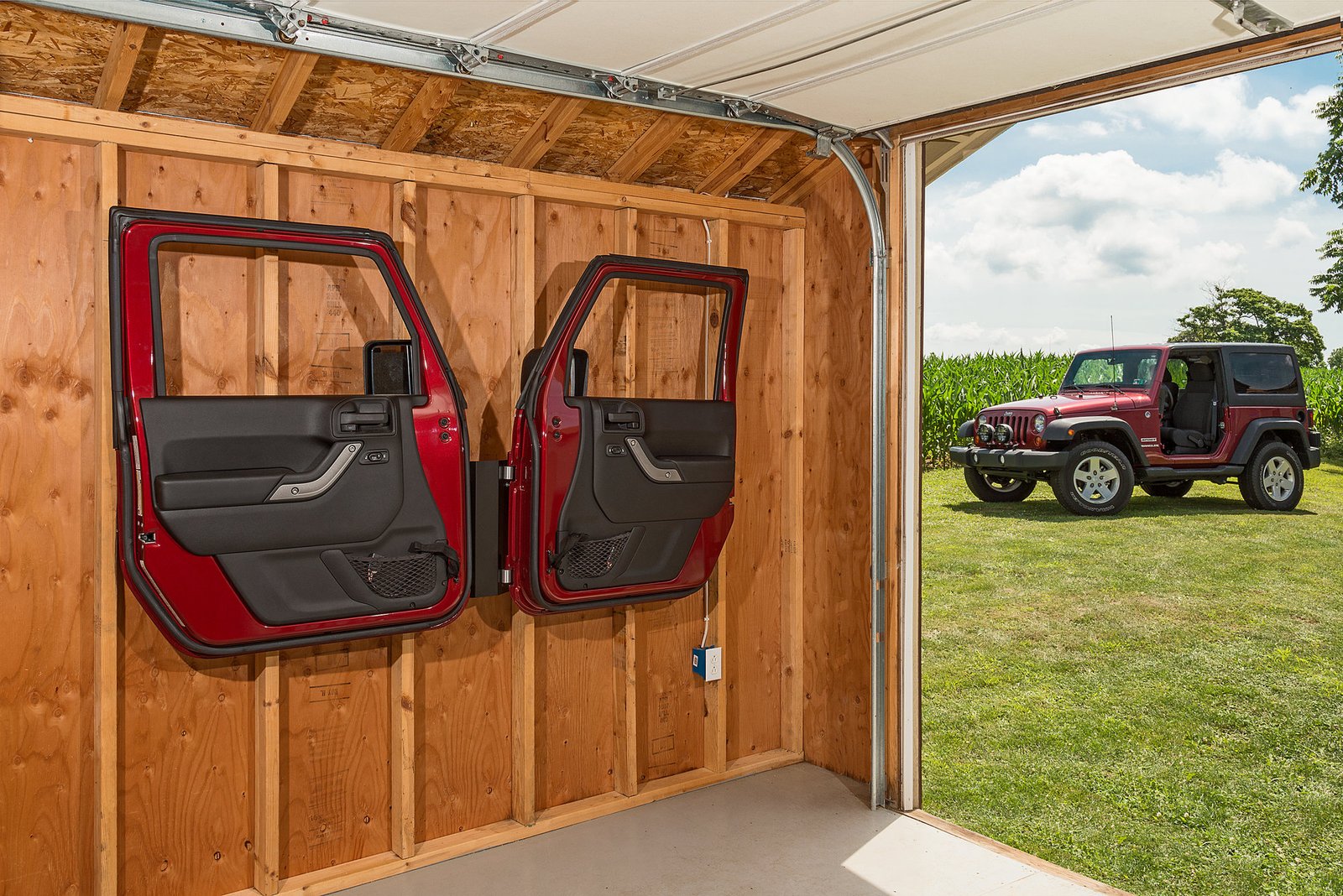
| Wall Mounts | Medium | High | Easy |
| Door Storage Bags | Low | Medium | Moderate |
| Floor Stands/Racks | High | High | Easy |
| DIY Solutions | Varies | Low to Medium | Depends |
Wall mounts are ideal for garages with free wall space. Door storage bags fit smaller homes or apartments. Floor racks are best for those with dedicated storage rooms. DIY solutions can save money but may lack proper protection.
Step-by-step Storage Process
1. Choose Your Storage Location
Pick a dry, secure spot. Avoid places with extreme heat, cold, or humidity.
2. Select Your Storage Method
Decide if you’ll use a rack, wall mount, bag, or custom setup.
3. Prepare The Area
Clear enough space for easy movement. Lay down a soft mat if you’re storing on the floor.
4. Lift Doors Carefully
Jeep doors can weigh 45 60 lbs each. Always lift with a partner if possible.
5. Secure The Doors
If using a rack or wall mount, make sure the doors sit snugly. For bags, zip up and place upright.
6. Cover Exposed Parts
Use towels or foam to protect hinges and edges.
7. Check Regularly
Inspect for moisture, dust, or pests every few weeks.

Wall Mounts Vs. Floor Stands
Wall mounts and floor stands are the most popular options. Here’s how they compare:
| Feature | Wall Mount | Floor Stand |
|---|---|---|
| Installation | Requires wall drilling | No installation needed |
| Mobility | Fixed position | Portable |
| Safety | Off the floor, less risk of bumping | Potential for tipping |
| Cost | $60–$150 | $100–$250 |
If you move often or want flexibility, a floor stand is better. For permanent setups, wall mounts save floor space.
Storage Bags: A Flexible Option
Door storage bags are made with padded materials to protect paint and glass. They’re easy to use and can fit under beds or inside closets. Most bags are water-resistant, but not waterproof. If storing in a damp area, place silica gel packets inside to absorb moisture.
One common mistake is storing doors upright without support, which can bend the edges. Always lay them flat or use a bag with stiff panels.
Diy Storage Tips
Some Jeep owners build their own racks from wood or PVC pipes. If you go this route, make sure your structure:
- Holds the doors securely without wobbling
- Uses soft padding at contact points
- Keeps the doors off the ground
Never store doors leaning against a wall without support this is a frequent cause of damage.
Long-term Storage Considerations
If you plan to store your Jeep doors for months, follow these tips:
- Keep them away from sunlight to avoid fading
- Use a cover to prevent dust buildup
- Check hinges and seals for rust every 2–3 months
In very humid climates, consider a dehumidifier in your storage area. For added peace of mind, some owners use climate-controlled units.
Common Mistakes To Avoid
- Stacking doors on top of each other without padding
- Storing in wet areas, which leads to corrosion
- Forgetting small parts like bolts and mirrors
- Using unstable racks or mounts that can tip over
- Not labeling storage bags, making reinstallation confusing
Practical Safety Advice
Always wear gloves when handling doors. The edges can be sharp, and dropping a door can cause injury.
If you store doors high up, secure them so they can’t fall. Make sure children and pets cannot access the storage area.
Example: Storing Doors In A Small Garage
A Jeep owner in Florida, with limited space, used wall mounts above their workbench. They added foam padding and labeled each door for the driver and passenger sides.
The doors were protected from humidity and could be reinstalled in minutes.
This setup cost less than $120 and saved valuable floor space.
Frequently Asked Questions
How Heavy Are Jeep Doors?
Most Jeep doors weigh between 45 and 60 lbs each. Rear doors are often lighter than front doors. Always check your model’s manual for exact weights.
Can I Store Doors Outside?
It’s not recommended. Exposure to rain, sun, and temperature changes can damage paint and parts.
If you must store outside, use waterproof covers and elevate the doors off the ground.
What’s The Best Way To Prevent Scratches?
Use padded storage racks or bags. Avoid stacking doors or placing them on concrete. Soft materials and careful handling are key.
Are Storage Racks Universal For All Jeep Models?
No. Racks are often designed for specific Jeep models or door types.
Check compatibility before buying or building your own.
Where Can I Find Reliable Storage Accessories?
For trusted products and reviews, visit Quadratec, a leading Jeep accessory retailer.
Storing your Jeep doors the right way protects your investment and makes your adventures more enjoyable. Whether you choose wall mounts, racks, or bags, careful preparation and regular checks will keep your doors safe and ready for the road.