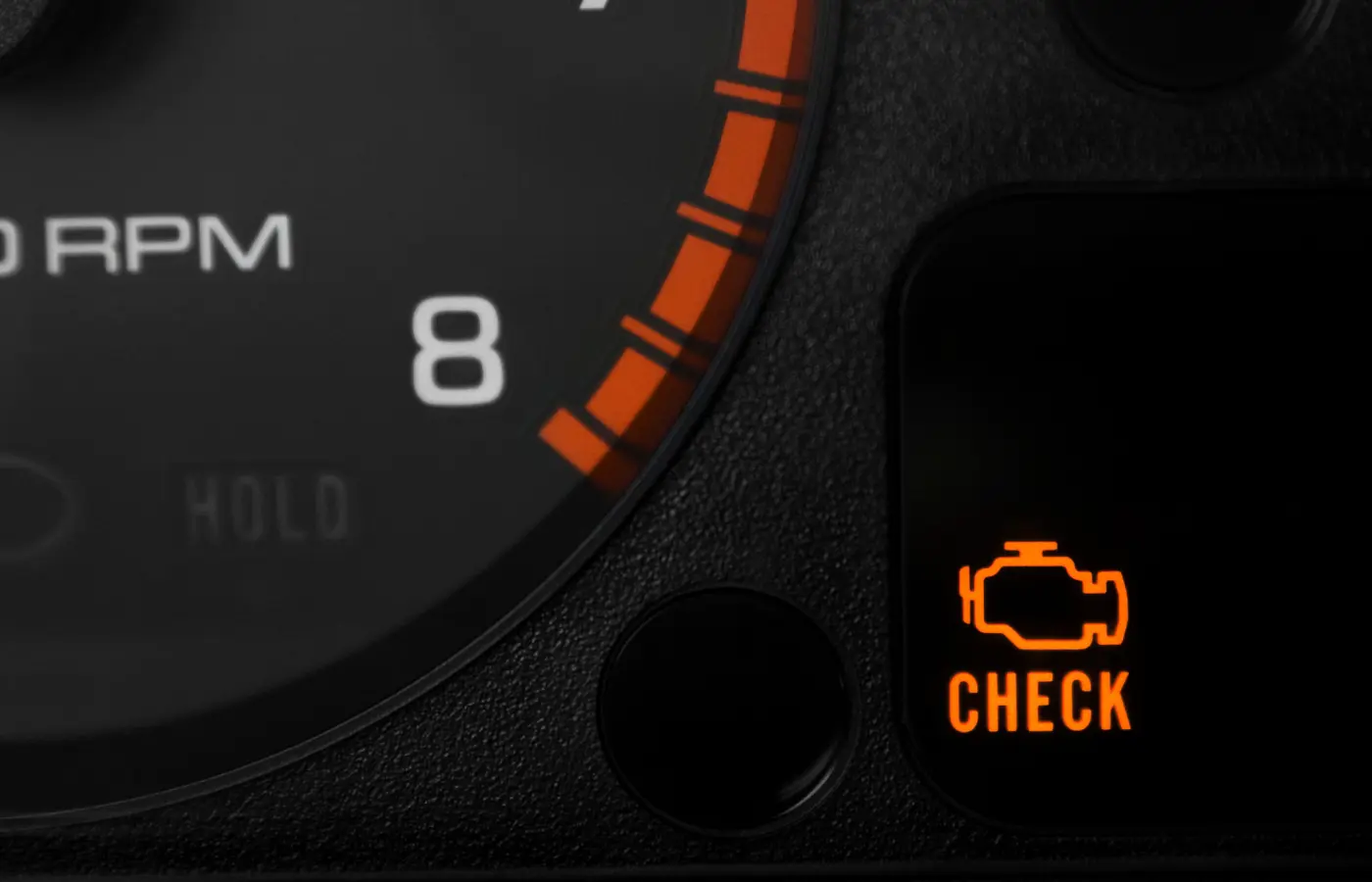
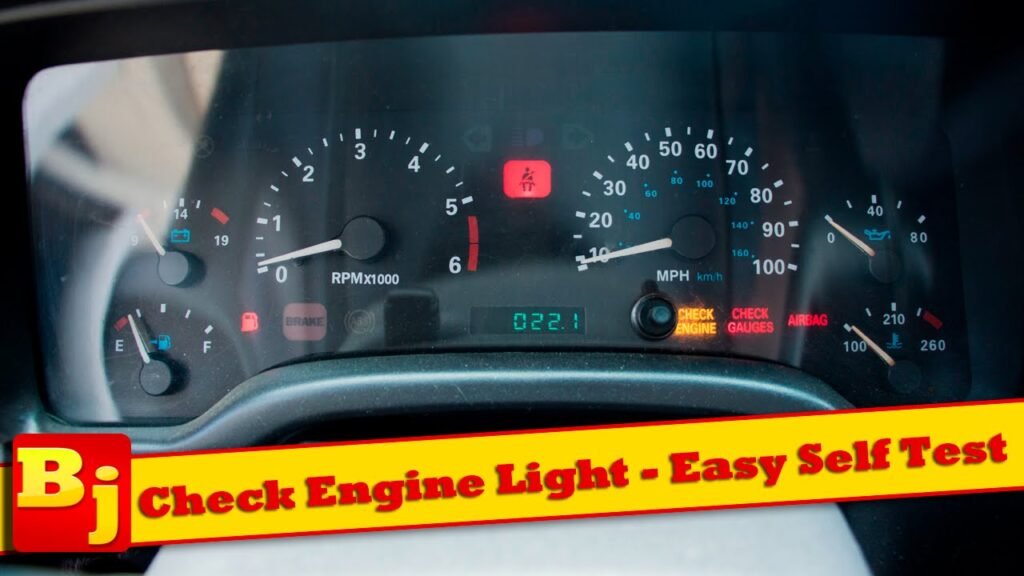
That amber light just popped up on your dash, and now you’re wondering how worried to be. The Jeep Malfunction Indicator Light, commonly called the Check Engine Light (CEL), means your OBD system caught something off with the engine, transmission, or emissions.
When your Jeep’s Malfunction Indicator Light comes on, it means the onboard diagnostic system detected a fault outside normal parameters, anything from a loose gas cap to a failing catalytic converter. Whether it’s solid or flashing tells you how urgent the problem actually is.
Ignore it long enough, and you’re looking at worse mileage, a failed emissions test, or a repair bill that didn’t need to happen. This guide breaks down what’s triggering it, how to read the signs, and what to actually do next.
Key Takeaways
- The Jeep Malfunction Indicator Light (Check Engine Light) signifies a detected issue within the engine, transmission, or emissions system.
- Common triggers include a loose gas cap, faulty oxygen sensors, catalytic converter issues, and problems with the spark plugs or ignition coils.
- While a loose gas cap is the simplest fix, other illuminated lights often require professional diagnosis using an OBD-II scanner.
- Ignoring the light can lead to reduced fuel economy, failed emissions tests, and severe engine damage.
- Prompt diagnosis and repair by a qualified mechanic are crucial for maintaining your Jeep’s performance and longevity.
Understanding The Jeep Malfunction Indicator Light
The Malfunction Indicator Light (MIL), commonly known as the Check Engine Light, is part of your Jeep’s OBD-II system. This system continuously monitors various sensors and components throughout the vehicle.
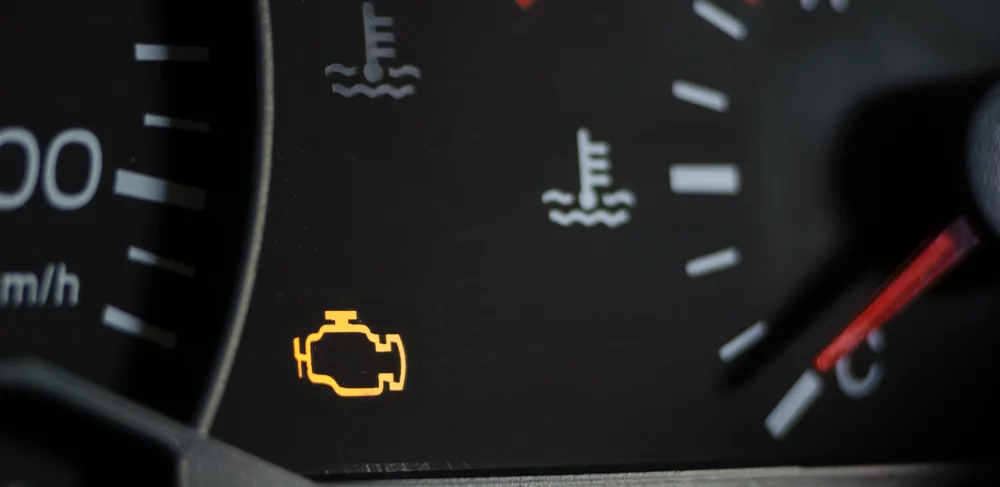
When a reading falls outside the manufacturer’s specified parameters, the OBD-II computer stores a Diagnostic Trouble Code (DTC) and illuminates the MIL to alert the driver.
Types Of Malfunction Indicator Lights
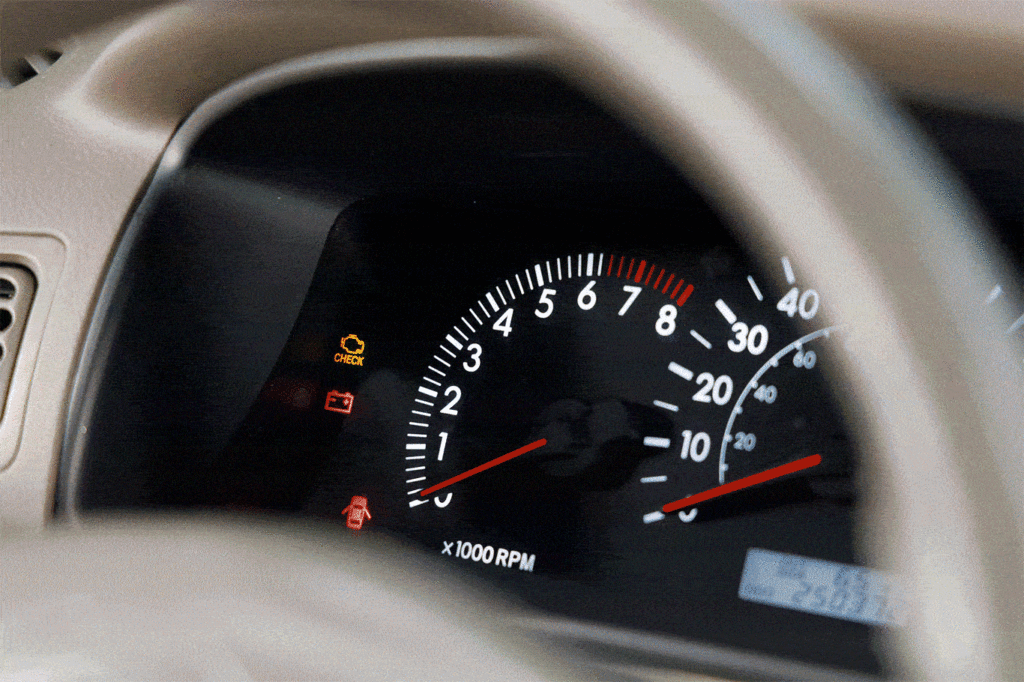
Jeep, like most manufacturers, uses a standard color coding for dashboard warning lights. The Malfunction Indicator Light is typically amber or yellow, distinguishing it from red warning lights that indicate more urgent, immediate safety concerns.
Solid Light
A solid MIL usually indicates a fault requiring diagnosis, but it does not automatically mean your Jeep needs to stop immediately.
If the Jeep runs normally, drive gently and arrange a diagnostic check soon.
Watch for:
- Rough idle
- Loss of power
- Poor acceleration
- Unusual engine noises
- Reduced fuel economy
- Strange exhaust smells
- Other warning lights
If serious drivability symptoms appear, stop driving and seek professional assistance.
Flashing Check Engine Light
A flashing MIL deserves immediate attention.
An active engine misfire is one common reason for a flashing light. A severe misfire may send unburned fuel into the exhaust, where excessive heat may damage the catalytic converter.
If your Jeep’s Check Engine Light flashes:
- Ease off the accelerator.
- Avoid hard acceleration.
- Reduce engine load.
- Pull over somewhere safe if the flashing continues.
- Arrange professional diagnosis.
Don’t keep driving for long distances while the MIL flashes.
How the OBD-II System Detects Problems
OBD-II provides standardized diagnostic communication between your vehicle and a compatible scan tool.
The OBD-II connector normally sits underneath the dashboard on the driver’s side.
A scanner retrieves Diagnostic Trouble Codes stored by the vehicle’s control modules.
For example, a P0420 code relates to catalyst-system efficiency. The code gives you a starting point for diagnosis, but it doesn’t automatically prove which component failed.
Recommended OBD2 Scanner
If you regularly work on your Jeep yourself, keeping an OBD-II scanner in your garage makes troubleshooting easier.

- Turn your iPhone, Android device, or Windows PC into a professional...
- Recommended adapter for FORScan, Torque, BimmerCode, Dashcommand...
- Enhanced OEM Support for Ford, GM, Mazda, Nissan/Infiniti...
- Clear check Engine Light and get more live parameters (ABS, SRS, TPMS...
- Over-voltage and battery drain protection, and included firmware...
The OBDLink MX+ is a wireless diagnostic adapter designed to connect with compatible devices and diagnostic applications. It provides access to OBD-II data and supports reading diagnostic information.
Before buying any scanner, verify compatibility with your Jeep and the diagnostic functions you need.
7 Common Causes of a Jeep Malfunction Indicator Light
The Check Engine Light has dozens of possible triggers. Some are inexpensive. Others require detailed testing.
Here are common causes worth checking.
Simple And Common Triggers
Most Check Engine Light triggers on a Jeep come down to something small and inexpensive to fix.
Before assuming the worst, rule out the everyday culprits below; a loose cap, a worn sensor, or a fouled spark plug can each set off the same warning light as a major mechanical failure.
These issues share a common thread: they’re all things a driver can check or replace at home with basic tools, often for under $50. Working through them first can save you an unnecessary trip to the shop.
1. Loose or Faulty Gas Cap
A loose, damaged, or incorrectly sealed fuel cap may allow the EVAP system to detect a leak.
This is one of the easiest things to check.
What to do
Turn off the Jeep and inspect the gas cap.
Make sure:
- The cap is installed correctly.
- The cap tightens securely.
- The sealing area isn’t damaged.
- The cap isn’t missing.
After correcting the problem, the light may need several drive cycles before turning off.
If the light stays on, scan for the stored DTC instead of assuming the gas cap caused the problem.
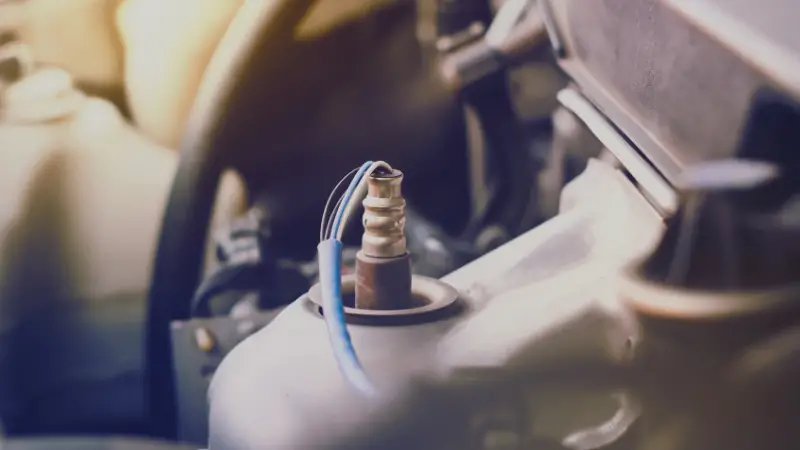
2. Faulty Oxygen (O2) Sensor
Oxygen sensors monitor exhaust oxygen levels and provide information used by the engine control system to manage fuel delivery.
A failing sensor may trigger a diagnostic code and contribute to poor fuel economy or drivability problems.
Common symptoms
- Poor fuel economy
- Rough idle
- Increased emissions
- Hesitation
- Check Engine Light
Don’t replace an oxygen sensor solely because an oxygen-sensor-related code appears. Wiring problems, exhaust leaks, or other conditions may produce similar codes.
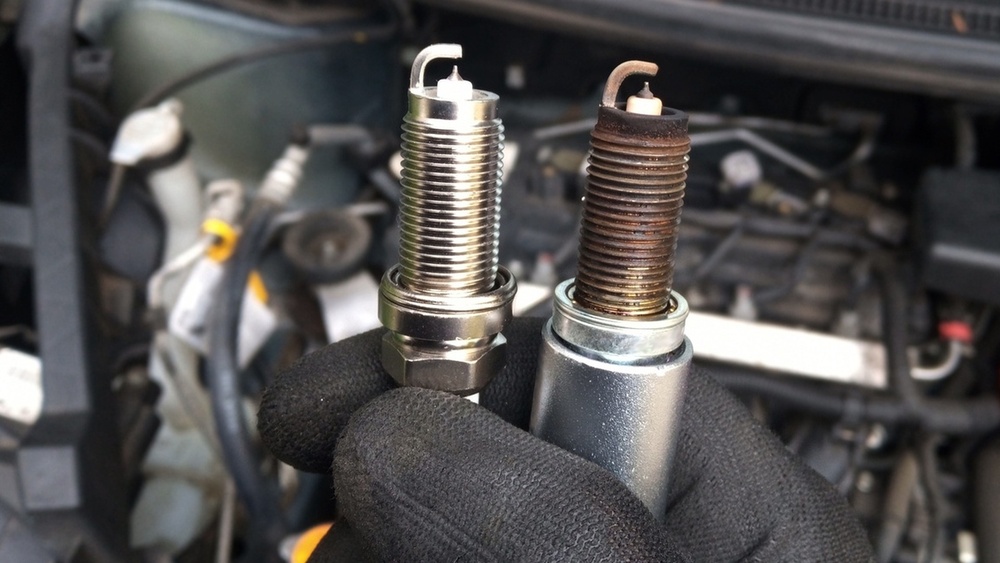
3. Worn Spark Plugs or Ignition Coils
Spark plugs ignite the fuel-air mixture, and ignition coils provide the necessary high voltage. If spark plugs are worn, fouled, or improperly gapped, or if an ignition coil fails, it can lead to engine misfires, which will trigger the MIL.
Common symptoms
- Rough idle
- Engine misfire
- Poor acceleration
- Reduced power
- Increased fuel consumption
- Flashing Check Engine Light
Spark plug replacement intervals vary by engine, plug type, and manufacturer recommendations. Always check the service information for your specific Jeep.
If your diagnosis confirms worn plugs, use plugs specified for your exact engine.
Don’t use a generic spark plug listing without verifying year, engine, and application.
4. Dirty or Clogged Air Filter
A clogged air filter restricts airflow into the engine, throwing off the air-fuel ratio the ECM is trying to maintain. It’s one of the cheapest fixes on this list and one of the most overlooked.
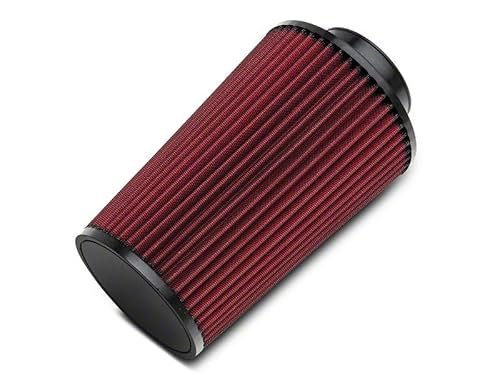
Symptoms: Reduced acceleration, a noticeable drop in fuel economy, and occasionally a faint burning smell from unburned fuel.
Action: Pull the filter and hold it up to a light source. If you can’t see light through it, replace it. Jeep recommends checking every 12,000 miles and swapping every 30,000 miles or so, sooner in dusty or off-road conditions.
5. Low or Contaminated Engine Oil
Low engine oil is a maintenance issue you should take seriously.
Check the oil level using the procedure in your owner’s manual. If the level is low, identify why the oil level dropped rather than repeatedly topping it off without investigating.
Low oil pressure is different from low oil level. If the oil-pressure warning appears, follow the vehicle manufacturer’s instructions immediately.
Do not use the Check Engine Light as a substitute for checking your oil level.
6. EVAP System Leak
The evaporative emissions system prevents fuel vapors from escaping into the atmosphere.
A loose gas cap is one possible EVAP problem. Other causes include:
- Damaged hoses
- Faulty purge valves
- Vent-valve problems
- Charcoal canister problems
- Wiring faults
- Leaks in the fuel system
An OBD-II scan helps identify the stored code and narrow down the diagnostic path.
7. Thermostat Malfunction
If the engine thermostat fails to open or close properly, the engine can either overheat or take too long to reach its optimal operating temperature. Both scenarios can trigger the MIL.
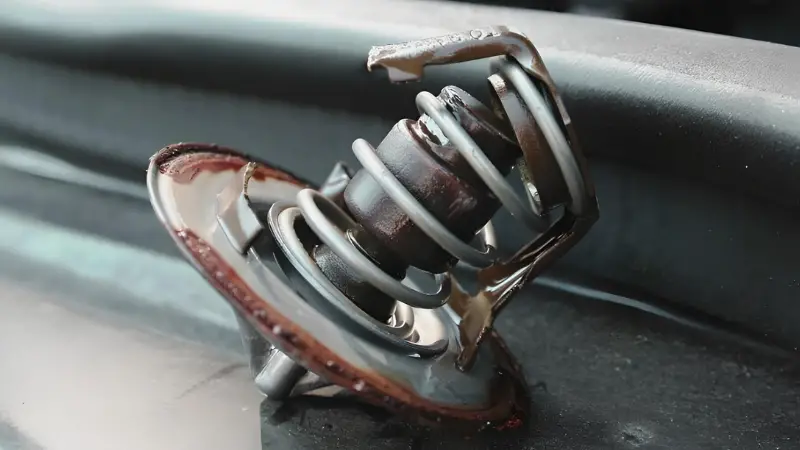
Symptoms: Engine temperature gauge reading too high or too low, poor heater performance, and potential overheating.
More Complex And Costly Issues
Once you’ve ruled out the simple fixes, the remaining causes tend to hit your wallet harder.
These issues usually point to a component that’s failed rather than one that just needs tightening or cleaning, and several can cause real damage if left unaddressed.
Unlike the checks above, most of these require a scan tool to properly diagnose and often a trip to a mechanic to resolve. Catching them early is still worth it: driving on a misfire or a stuck EGR valve for too long can turn a moderate repair into a much bigger one.
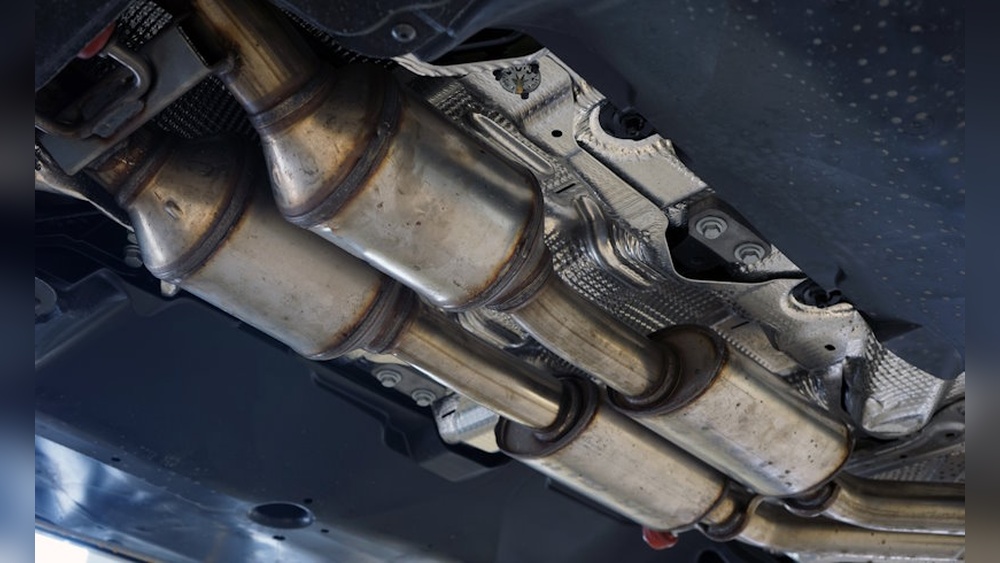
1. Catalytic Converter or Exhaust Problems
The catalytic converter is a vital part of the emissions system, converting harmful pollutants into less harmful gases. It can fail due to age, contamination from engine oil or coolant leaks, or damage from engine misfires.
Possible symptoms include:
- Reduced engine performance
- Rattling underneath the Jeep
- Unusual exhaust odor
- Check Engine Light
- Poor acceleration
Don’t replace a catalytic converter based on a P0420 code alone.
A technician should also check for exhaust leaks, oxygen-sensor performance, misfires, fuel-mixture problems, and other underlying faults.
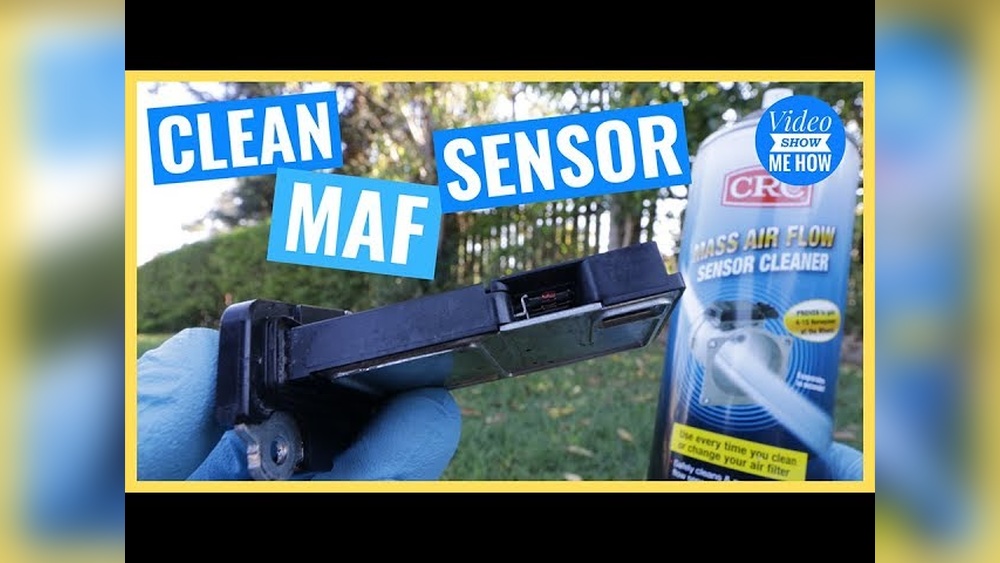
2. Mass Airflow (MAF) Sensor Issues
The MAF sensor measures the amount of air entering the engine, which is critical for calculating the correct amount of fuel to inject. If the MAF sensor is dirty or faulty, it can lead to an incorrect air-fuel mixture.
Symptoms: Hesitation during acceleration, rough idling, stalling, and decreased fuel economy.
Cleaning vs. Replacement: Sometimes, a dirty MAF sensor can be cleaned with specialized MAF sensor cleaner. If it’s faulty, it will need replacement.
3. Vacuum or Intake Leaks
Leaks in the vacuum hoses or intake manifold can allow unmetered air into the engine, disrupting the air-fuel ratio and causing the MIL to illuminate.
Symptoms: Rough or unstable idle, whistling sounds from the engine bay, and poor engine performance.
Diagnosis: Technicians often use a smoke machine to find vacuum leaks by introducing smoke into the intake system and observing where it escapes.
4. Exhaust Gas Recirculation (EGR) Valve Problems
The EGR valve recirculates a small amount of exhaust gas back into the engine cylinders to reduce combustion temperatures and NOx emissions.
If the valve gets stuck open or closed, or if its passages become clogged, it can cause performance issues and trigger the MIL.
Symptoms: Rough idling, stalling, knocking sounds, and reduced power.
How to Diagnose a Jeep Malfunction Indicator Light
Don’t start replacing parts as soon as the light appears.
Start with diagnosis.
Step 1: Check the Dashboard
Determine whether the MIL is:
- Solid
- Flashing
Also check for other warning lights.
A flashing MIL combined with rough running or severe power loss requires more urgent attention than a solid MIL on a Jeep that drives normally.
Step 2: Check for Obvious Problems
Inspect:
- Gas cap
- Engine oil level
- Air filter
- Visible intake hoses
- Battery connections
- Obvious damaged wiring
Don’t disconnect components randomly. Start with simple visual checks.
Step 3: Scan the Jeep
Connect an OBD-II scanner and retrieve the stored codes.
- Turn your iPhone, Android device, or Windows PC into a professional...
- Recommended adapter for FORScan, Torque, BimmerCode, Dashcommand...
- Enhanced OEM Support for Ford, GM, Mazda, Nissan/Infiniti...
- Clear check Engine Light and get more live parameters (ABS, SRS, TPMS...
- Over-voltage and battery drain protection, and included firmware...
Write down every stored code before clearing anything.
Also check whether the scanner displays pending codes and freeze-frame data.
Step 4: Research the Code
A DTC provides a diagnostic direction.
For example, P0300 indicates a random or multiple-cylinder misfire. The underlying cause might involve ignition, fuel delivery, air intake, mechanical problems, or other systems.
A code doesn’t automatically identify the failed part.
Step 5: Test Before Replacing Parts
Use the code and symptoms to determine which tests make sense.
Depending on the fault, diagnosis may involve:
- Inspecting wiring
- Checking sensor signals
- Testing fuel pressure
- Checking ignition components
- Looking for vacuum leaks
- Inspecting exhaust leaks
- Reviewing live data
- Performing mechanical tests
This approach prevents unnecessary parts replacement.
Solid vs. Flashing Check Engine Light
| MIL condition | What it usually means | What you should do |
|---|---|---|
| Solid | A fault has been detected | Drive cautiously if the Jeep runs normally and arrange diagnosis |
| Flashing | Often indicates an active severe fault such as a misfire | Reduce engine load and seek immediate diagnosis |
| Solid + poor running | Fault with drivability symptoms | Minimize driving and get the Jeep checked |
| Flashing + shaking | Potential severe misfire | Stop when safe and arrange professional assistance |
Your owner’s manual takes priority because warning-light behavior varies between Jeep models and model years.
What To Do When the Light Comes On
If the Light Is Solid
First, check the gas cap.
Then pay attention to how your Jeep drives.
If the vehicle runs normally:
- Check the gas cap.
- Check the oil level.
- Scan the stored DTC.
- Record the codes.
- Research the code.
- Arrange diagnosis if the light stays on.
Avoid hard acceleration until you know why the light appeared.
If the Light Is Flashing
Treat a flashing MIL as urgent.
Reduce engine load immediately.
Avoid:
- Hard acceleration
- High engine speeds
- Heavy towing
- Extended driving
If the light continues flashing, pull over safely and arrange professional assistance.
A persistent misfire may damage the catalytic converter.
Should You Clear the Check Engine Light?
You should not clear the code simply to turn off the warning.
Clearing codes removes useful diagnostic information and may reset emissions monitors.
If you repair the underlying problem, the light may turn off after the vehicle completes the required drive cycles. A scan tool may also allow a technician to clear the code after repairs.
If you clear the code before diagnosing the problem, you may lose freeze-frame information useful for troubleshooting.
What Happens If You Ignore the MIL?
Ignoring the warning may allow a small issue to develop into a larger repair.
Potential consequences include:
Reduced Fuel Economy
Problems involving fuel delivery, oxygen sensors, ignition, or airflow may affect engine operation and fuel consumption.
Emissions Test Failure
An active Check Engine Light often results in an emissions inspection failure in jurisdictions using OBD-based testing.
Readiness monitors also matter, so clearing codes immediately before an emissions test may leave the vehicle’s monitors incomplete.
Catalytic Converter Damage
An unresolved misfire may send excess fuel into the exhaust and overheat the catalytic converter.
Engine Damage
Some faults, especially overheating or lubrication problems, require immediate attention.
The severity depends on the underlying fault.
When Should You Repair the Jeep Yourself?
Some basic checks suit DIY work.
Examples include:
- Checking the gas cap
- Checking engine oil
- Inspecting the air filter
- Reading OBD-II codes
- Replacing an accessible air filter
- Replacing spark plugs when you have the correct tools and service information
More advanced problems require proper testing equipment and experience.
Examples include:
- Persistent misfires
- Catalytic converter diagnosis
- Electrical faults
- Fuel-pressure problems
- Internal engine problems
- Complex EVAP leaks
- Cooling-system failures
Common Jeep Models And Specific Light Issues
While the general principles apply to all Jeep models, certain models or common issues might be more prevalent.
For example, older Jeep Cherokees (XJ) or Grand Cherokees (WJ, WK) might have specific quirks related to their older diagnostic systems or common wear-and-tear components.
Jeep Wrangler (JK/JL)
The Jeep Wrangler, particularly newer generations like the JK and JL, features advanced engine management systems. Common issues that might trigger the MIL include:
- EVAP System Leaks: Beyond the gas cap, leaks can occur in hoses, vent valves, or the charcoal canister.
- Crankshaft Position Sensor: Failure of this sensor can lead to stalling and starting problems, triggering the MIL.
- Transmission Issues: For automatic transmissions, issues with sensors or solenoids can illuminate the light.
Jeep Grand Cherokee (WK2/WL)
The Grand Cherokee, with its more complex systems including available diesel engines, can present a wider range of potential MIL triggers.
- Diesel Specifics: Diesel models may experience issues related to the Diesel Particulate Filter (DPF), Selective Catalytic Reduction (SCR) systems, or Glow Plugs, all of which can trigger the MIL.
- Electronic Throttle Control (ETC): Problems with the throttle body or its sensors can cause drivability issues and illuminate the light.
Jeep Cherokee (KL)
The KL Cherokee, known for its nine-speed automatic transmission, can sometimes exhibit MILs related to transmission performance or its complex powertrain control module.
Example: A Jeep owner reported on an online forum that their KL Cherokee’s MIL illuminated intermittently. After scanning, the code pointed to a P0171 “System Too Lean” condition. Initially suspected as a vacuum leak, further diagnosis revealed a partially clogged fuel injector, which was affecting the air-fuel ratio and triggering the fault.
Repair And Maintenance Strategies
Preventative maintenance and prompt attention to warning signs are key to avoiding costly repairs related to the Malfunction Indicator Light.
Proactive Maintenance For Your Jeep
Regular maintenance outlined in your Jeep owner’s manual is the first line of defense:
Regular oil changes (correct grade helps prevent sludge buildup that can affect sensors), air filter replacement (ensures proper airflow to the MAF sensor and engine), and spark plug replacement (adhering to recommended intervals prevents misfires).
Fuel system cleaning (prevents injector clogging) and inspecting hoses and belts (checking for cracks, wear, or leaks that can trigger the MIL).
When To Repair Vs. Ignore
Loose gas cap: tighten it, and if the light stays on after a few drives, proceed to other diagnostics. Minor EVAP codes: if it clearly points to a minor leak and the vehicle runs fine, you might monitor it, but it’s still best to address it.
Catalytic converter codes: almost always serious and expensive; address them promptly. Misfire codes: especially if flashing, these require immediate attention.
Finding A Reliable Mechanic
Look for ASE-certified technicians (certification indicates a level of expertise), specialization in Jeep or FCA vehicles (more experience with common issues), good reviews and reputation, and clear communication about the problem, solution, and costs.
What Does It Mean If My Jeep’s Check Engine Light Is On?
It means the onboard diagnostic system caught a fault in the engine, transmission, or emissions system- anything from a loose gas cap to a bigger repair. The only way to know which is to pull the stored code.
How Long Can I Drive With The Check Engine Light On?
If it’s solid and the Jeep runs normally, you can drive short-term but should get it scanned soon.u003cbru003eu003cbru003eIf it’s flashing, stop driving and get it looked at immediately; that usually means an active misfire that can damage the catalytic converter.
Can I Fix The Check Engine Light Myself?
Simple stuff like a loose gas cap or a dirty air filter, sure. Anything involving the catalytic converter, oxygen sensors, or internal engine components is worth handing to a mechanic.
Will My Jeep Pass Emissions Testing With The Check Engine Light On?
No. Most testing stations fail any vehicle with an active MIL, and you’ll need the underlying issue fixed (not just the code cleared) before it’ll pass.
Bottom Line
A Check Engine Light isn’t a reason to panic; it’s a reason to pay attention. Check the gas cap, glance at the oil, then pull the stored code with a scanner before you guess at repairs.
Solid means you’ve got room to schedule a diagnosis. Flashing means pull over and stop driving on it; a misfire that keeps burning fuel through the exhaust can take out your catalytic converter fast.
Either way, the code is a starting point, not a verdict. Confirm what’s actually wrong before you buy parts.
Got a specific code on your dash? Search JeepInside for it and follow the diagnostic steps before you spend a dime on replacements.
Last update on 2026-10-26 / Affiliate links / Images from Amazon Product Advertising API