Meta description: Learn what causes a death wobble in a Jeep, common symptoms, how to fix it, and which models are most affected. Expert tips for safe, confident driving.
A sudden, violent shaking of your Jeep’s steering wheel while driving can be terrifying. This is known as the death wobble, and it’s a problem that’s frustrated many Jeep owners. If you’ve felt this shake, you’re not alone—death wobble is a real safety concern for several Jeep models, especially after modifications or high mileage.
Understanding the causes, symptoms, and solutions will help you keep your Jeep safe and stable. Let’s break down what really triggers this wobble, which models are at risk, and how you can fix it without wasting time or money.
What Is A Death Wobble?
Death wobble is a severe, uncontrollable shaking of the steering wheel and sometimes the entire vehicle. It usually happens after hitting a bump at speeds above 45 mph. The shaking is so strong that you must slow down or stop to regain control. Unlike simple vibrations, death wobble makes driving unsafe and can damage other parts if ignored.
Which Jeep Models Are Most Affected?
Not all Jeeps are equally at risk. Death wobble is most common in these platforms:
- Jeep Wrangler TJ (1997–2006)
- Jeep Wrangler JK (2007–2018)
- Jeep Wrangler JL (2018–present)
- Jeep Grand Cherokee WJ and WK (1999–2010)
- Jeep Cherokee XJ (1984–2001)
Solid front axle Jeeps (like Wrangler, Cherokee, and some Grand Cherokees) are more likely to experience death wobble than independent suspension models (like the WK2 or WL Grand Cherokee).
Here’s a quick comparison of key Jeep platforms:
| Model | Solid Front Axle | Years | Prone to Death Wobble? |
|---|---|---|---|
| TJ | Yes | 1997-2006 | High |
| JK | Yes | 2007-2018 | High |
| JL | Yes | 2018-present | Medium |
| WK2/WL | No | 2011-present | Low |
Non-obvious insight: Even new Jeeps can develop death wobble if suspension parts wear out faster due to off-roading or heavy towing.
What Causes A Death Wobble In A Jeep?
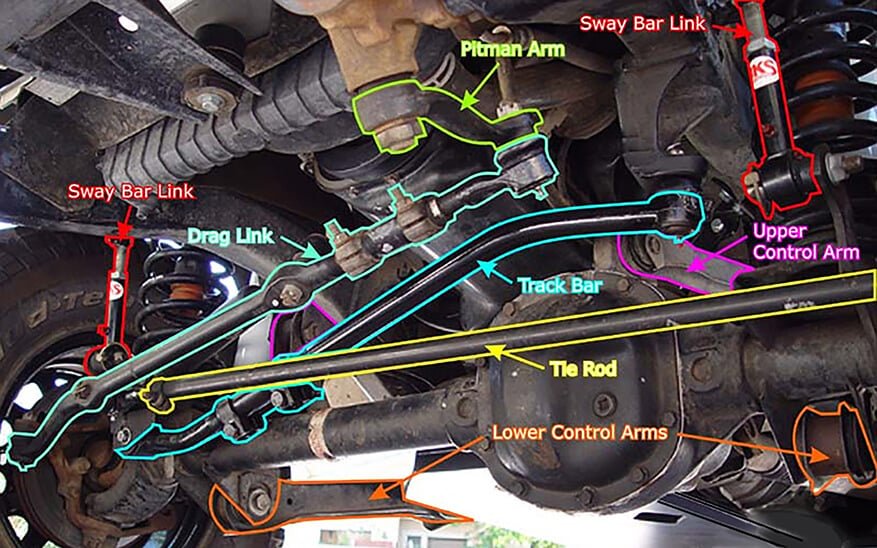
Death wobble is rarely caused by a single issue. Usually, it’s a combination of worn suspension and steering components. Here are the most common triggers:
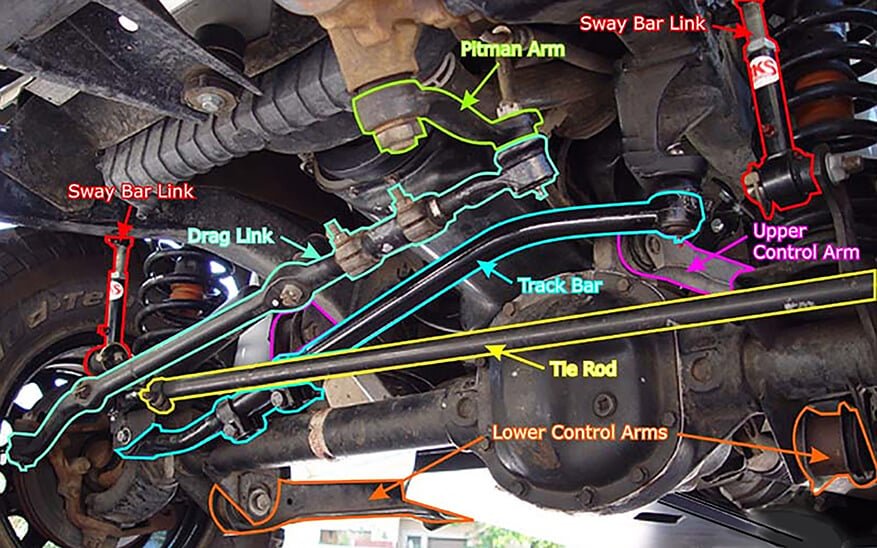
- Loose or worn track bar bushings or bolts
- Worn tie rod ends or drag link
- Damaged or bent wheels
- Improper wheel alignment
- Unbalanced tires
- Worn ball joints
- Weak or failing steering stabilizer
Lifting your Jeep or adding larger tires can make these problems worse. The track bar is often the main culprit, but ignoring any single issue can allow death wobble to happen.
Example: Track Bar Vs. Steering Stabilizer
A steering stabilizer can reduce steering shake, but it won’t fix the underlying problem. The track bar keeps the axle centered; if it’s loose, death wobble can start easily.
| Component | Main Function | Effect on Death Wobble |
|---|---|---|
| Track Bar | Centers axle | Major cause if worn/loose |
| Steering Stabilizer | Dampens vibration | Masks symptoms, not root cause |
Non-obvious insight: Many shops replace the steering stabilizer first, but this rarely solves the death wobble long-term.
Symptoms Of Death Wobble
You might notice these signs before the wobble gets severe:
- Sudden, hard shaking of the steering wheel at highway speeds
- Clunking noises from the front suspension
- Uneven or rapid tire wear
- Loose steering feel
- Shaking stops only after slowing down
If you feel even mild wobble, address it early. Ignoring it can lead to more expensive damage.

How To Diagnose Death Wobble
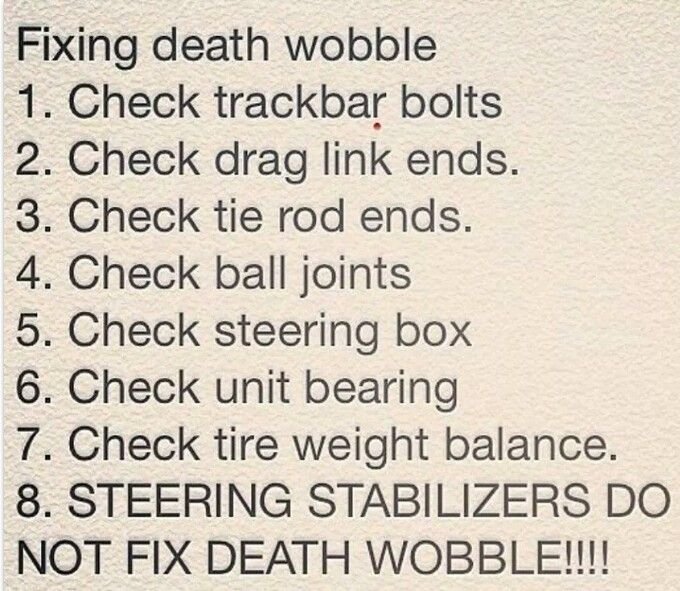
Finding the source takes patience. Here’s a step-by-step process:
- Check tire pressure and balance. Uneven tires trigger or amplify wobble.
- Inspect the track bar. Look for loose bolts or worn bushings at both ends.
- Examine tie rods and drag links. Wiggle them by hand—there should be minimal play.
- Look for worn ball joints. Lift the Jeep and move the wheel up and down.
- Check wheel alignment. Misalignment increases stress on steering parts.
- Test the steering stabilizer. If it leaks or feels weak, replace it after fixing main issues.
Often, you’ll find multiple worn parts. Fix all problems at once for a lasting repair.
Estimated Repair Costs
Fixing death wobble can be affordable or expensive, depending on what’s wrong.
| Repair Item | Average Cost (Parts & Labor) |
|---|---|
| Track Bar Replacement | $150–$400 |
| Tie Rod Ends | $120–$350 |
| Ball Joints (pair) | $200–$450 |
| Wheel Alignment | $80–$150 |
| Steering Stabilizer | $60–$200 |
Tip: If you’re not comfortable inspecting suspension parts, visit a mechanic who knows Jeeps. Many general repair shops may miss subtle causes.
When To Visit A Mechanic
You should see a specialist if:
- The death wobble happens more than once
- You can’t find obvious loose or worn parts
- You have modified suspension or a lift kit
A Jeep-certified mechanic will have the right tools and experience. For more technical information, check out this Wikipedia page on death wobble.
How To Prevent Death Wobble
Prevention is easier than fixing repeated wobble:
- Tighten all suspension bolts to factory specs
- Inspect bushings and joints every 10,000 miles
- Balance and rotate tires regularly
- Use only high-quality parts for repairs
- Avoid poorly designed lift kits
Compatibility tip: Always check that new parts fit your exact Jeep model and year. For example, JL and JK steering parts are not interchangeable.
Frequently Asked Questions
What’s The Difference Between Death Wobble And Normal Vibration?
Death wobble is much more violent and can make your Jeep hard to control. Normal vibration is usually mild and doesn’t force you to slow down.
Can Death Wobble Damage My Jeep?
Yes. The shaking stresses the suspension, steering, and even the frame.
This can lead to more expensive repairs if not fixed quickly.
Is The Death Wobble Covered By Jeep’s Warranty?
For newer Jeeps, repairs may be covered if the parts are faulty and your warranty is active. Wear and tear, or changes due to lifts, are usually not covered.
Can Larger Tires Cause Death Wobble?
Larger tires increase stress on steering and suspension, making death wobble more likely if parts are already worn or loose.
Is It Safe To Drive With A Death Wobble?
No. If you experience death wobble, drive slowly and get off the road as soon as it’s safe. Have your Jeep inspected before driving again.
If you want to learn more about Jeep suspension upgrades, off-road driving tips, or Jeep towing capacity, check out our other guides for practical advice tailored to your model.