Removing seats from your Jeep Wrangler can transform your vehicle for many reasons. Some owners want extra cargo space.
Others need to clean or replace old seats. Sometimes, it’s about upgrading to new seat styles.
The process is straightforward, but you need to follow steps carefully. This guide explains how to take seats out of your Jeep Wrangler quickly and safely, whether you own a two-door or four-door model.
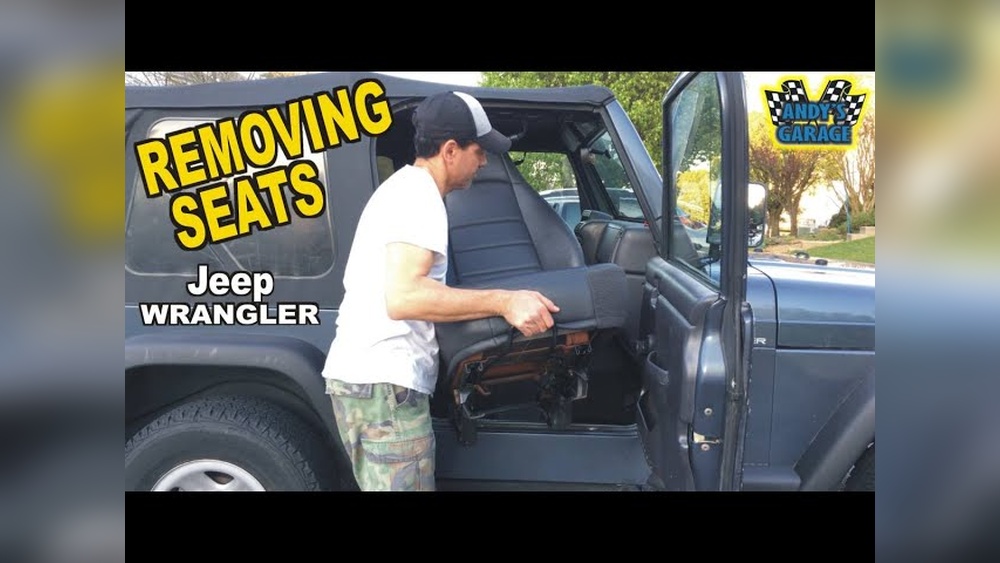
You’ll learn which tools to use, how to avoid mistakes, and some practical tips only experienced Jeep owners know.
Preparing For Seat Removal
Before you start, gather your tools and plan your work. The most common tools are:
- Socket wrench set
- Torx bits (usually T40 or T50)
- Flathead screwdriver
- Safety gloves
Check your owner’s manual for exact bolt sizes. Most Jeep Wranglers use Torx bolts for seat mounting. Park your Jeep on a flat surface and disconnect the battery. This is important because some seats have airbag sensors or electrical connections. Removing them without disconnecting the battery can trigger error codes or even airbags.
Jeep Wrangler Models: Seat Removal Differences
Different models have slightly different seat removal steps. Here’s a quick comparison:
| Model | Front Seats | Rear Seats | Electrical Connections |
|---|---|---|---|
| JK (2007-2018) | 4 bolts | Fold & latch system | Yes (airbag/seatbelt) |
| JL (2018-present) | 4 bolts | Easy release handles | Yes (airbag/seatbelt) |
| TJ (1997-2006) | 4 bolts | Simple latch | No |
Most modern Wranglers (JK, JL) have electrical connections under the seats. Older models (TJ, YJ) usually do not.
How To Take Out The Front Seats
Removing the front seats is usually a two-step process. Here’s how to do it:
- Slide the seat all the way back. This exposes the front bolts.
- Remove the front bolts. Use your socket wrench or Torx bit.
- Slide the seat forward. Now you can see the rear bolts.
- Remove the rear bolts.
- Tilt the seat backward. Check for electrical connectors under the seat.
- Disconnect any wiring. Carefully unplug airbag or seatbelt connectors. Use the flathead screwdriver to release clips if needed.
- Lift the seat out. It’s best to hold the seat from both sides to avoid scratching the doors.
Common Mistakes To Avoid
- Forgetting to disconnect the battery: This can cause warning lights or damage.
- Losing bolts: Put removed bolts in a labeled bag.
- Damaging electrical connectors: Pull gently; never force the plugs.
How To Remove The Rear Seats
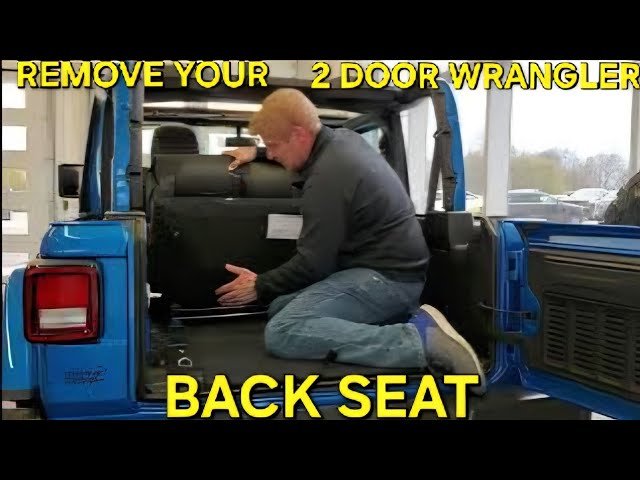
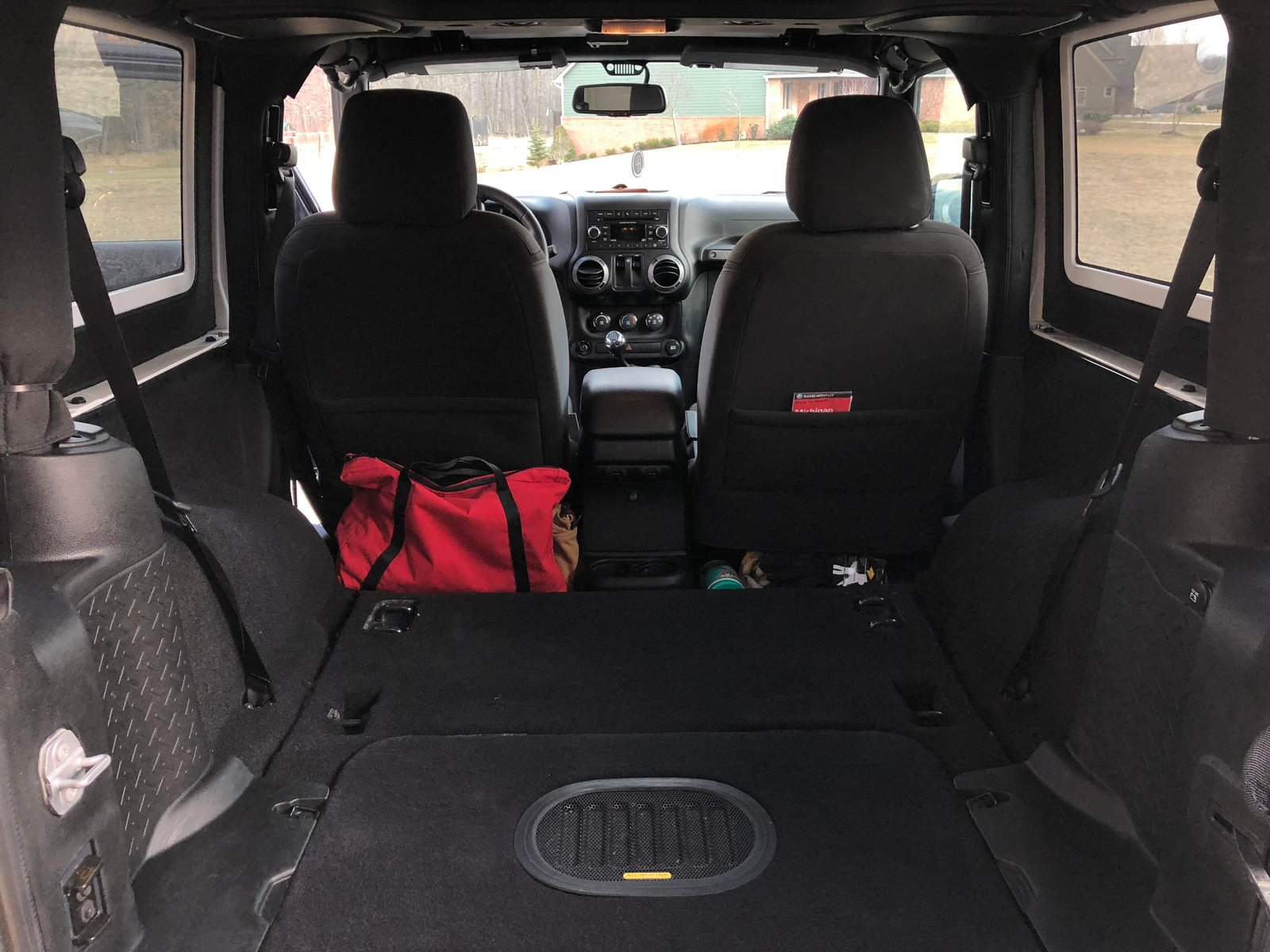
Rear seats are designed for easy removal, especially in four-door Wranglers. The steps are:
- Fold the seat down. Most rear seats fold forward.
- Find release levers or latches. These are usually at the base or side of the seat.
- Release the seat from the floor mounts.
- Lift the seat out. You may need a helper for larger bench seats.
For two-door models, rear seat removal is similar but may require more effort to maneuver seats out of the smaller doors.
Rear Seat Removal: Time Estimates
Here’s a table showing average time needed for each Wrangler model:
| Model | Front Seats | Rear Seats | Total Time |
|---|---|---|---|
| JL 4-door | 20 mins | 15 mins | 35 mins |
| JK 2-door | 20 mins | 25 mins | 45 mins |
| TJ | 15 mins | 20 mins | 35 mins |
Many owners are surprised that rear seat removal is often faster than the front.
Cleaning Or Upgrading After Removal
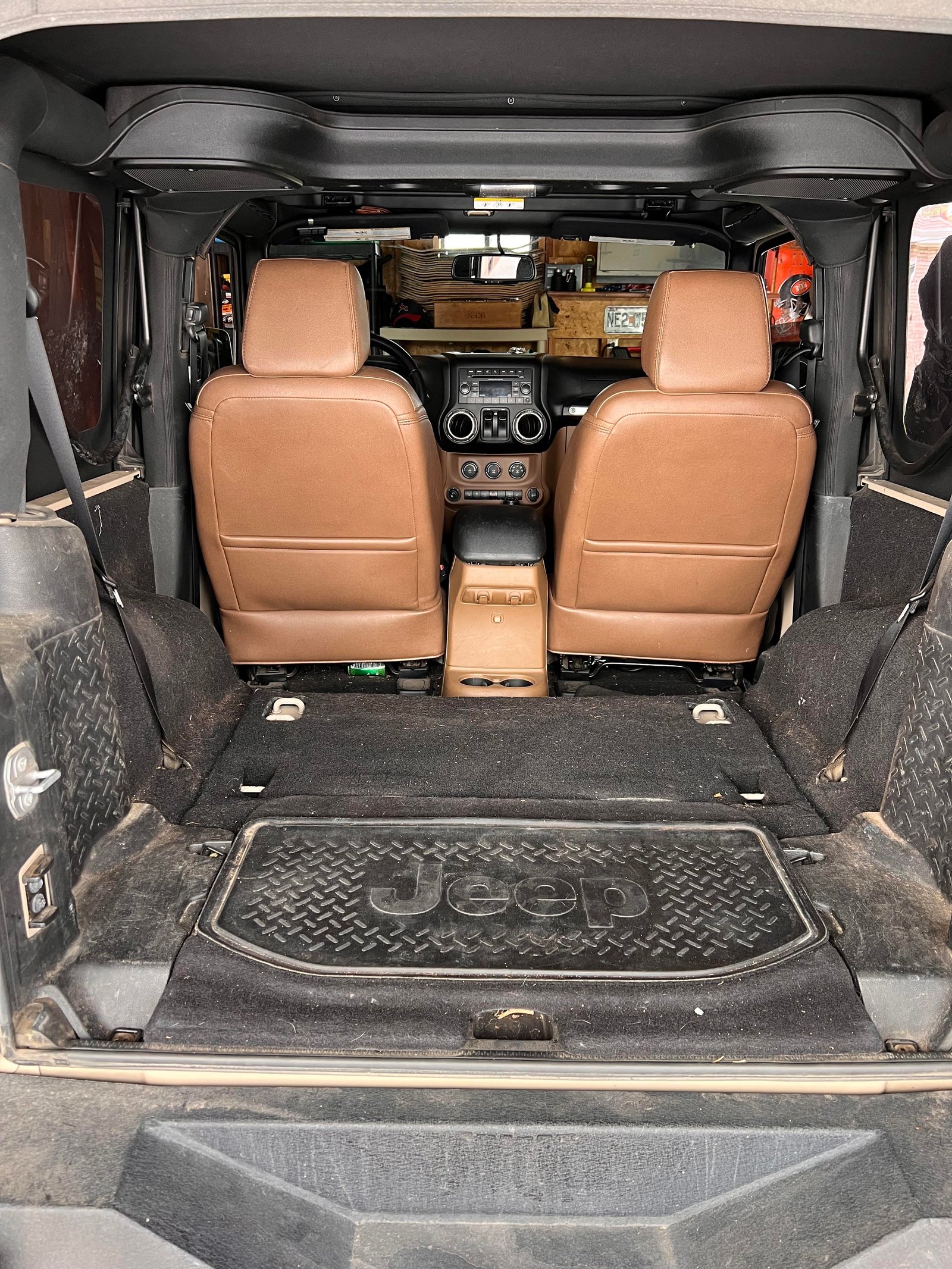
Once seats are out, you have access to parts of your Jeep you rarely see. Take this chance to:
- Clean underneath seats. You’ll find dust, coins, or old snacks.
- Check for rust or damage. Jeep floors are sometimes prone to rust, especially after wet adventures.
- Inspect wiring. Look for wear or loose connections.
If you’re installing new seats, compare mounting points first. Not all aftermarket seats fit perfectly.
Measure bolt distances and check for compatibility with seatbelt and airbag connectors.
Upgrading Seats: What Matters
Upgrades can improve comfort and style. Here’s a quick comparison:
| Seat Type | Comfort | Compatibility | Price Range |
|---|---|---|---|
| OEM Wrangler | Moderate | Perfect fit | $300-$600 |
| Aftermarket Racing | High | Requires brackets | $400-$1200 |
| Leather Upgrade | High | May need wiring | $800-$1500 |
Always double-check seat compatibility. Installing seats that don’t fit can cause safety issues.
Practical Tips From Experienced Owners
Some advice you won’t find in the manual:
- Label all connectors before unplugging. This saves time during re-installation.
- Photograph bolt positions as you work. Photos help if you forget which bolt goes where.
- Use a magnetic tray for bolts and nuts. It prevents losing small parts.
- Work in daylight or use a strong light. Jeep interiors are dark, and you need to see connectors clearly.
These tips help avoid beginner mistakes and make the process smoother.
Frequently Asked Questions
What Tools Do I Need To Remove Jeep Wrangler Seats?
You need a socket wrench set, Torx bits (T40/T50), a flathead screwdriver, and safety gloves. For some models, you may need a Phillips screwdriver.
Is It Safe To Remove Seats With Airbags?
Always disconnect the battery before removing seats with airbag connectors. This prevents accidental airbag deployment and error codes.
Will Removing Seats Affect My Jeep’s Warranty?
Seat removal may affect your warranty if it causes damage or electrical issues. Check your warranty details or contact your dealer for advice.
Can I Drive My Jeep Without Seats Installed?
You can drive without the rear seats, but you must have front seats and seatbelts for legal and safety reasons. Never drive without properly installed front seats.
How Do I Know If Aftermarket Seats Will Fit My Wrangler?
Compare bolt patterns, seat dimensions, and electrical connectors. Some aftermarket seats need special brackets or adapters. Read reviews or check fitment guides at Quadratec.
Removing seats from your Jeep Wrangler is a task almost anyone can do with basic tools and careful steps.
Whether you’re making room for camping gear, cleaning up after a muddy adventure, or upgrading to new seats, following the right process keeps your Jeep safe and ready for the road.
Planning, patience, and a few smart tricks make the job easier than most expect.