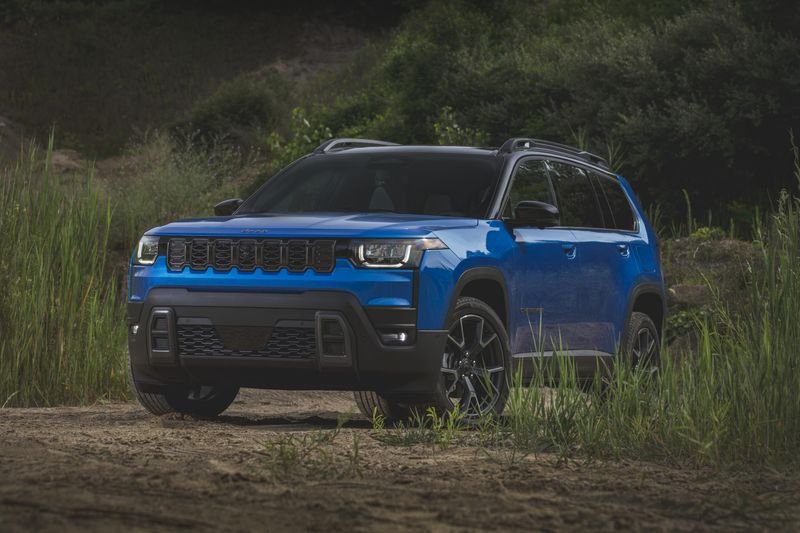
Storing your Jeep hard top can feel like a puzzle the first time. This large, heavy piece protects you during rough rides, but when summer calls, it’s time to take it off.
If you store it wrong, you could scratch the paint, crack the fiberglass, or even warp the seals.
Luckily, with the right approach, you can keep your hard top safe and ready for next season. Here’s a simple, step-by-step guide to help you store your Jeep hard top the smart way.
Why Proper Storage Matters
A Jeep hard top is more than just a cover—it’s a major investment. These tops can cost $2,000 or more to replace. Poor storage can lead to:
- Scratches and cosmetic damage
- Warped seals that cause leaks
- Cracked fiberglass or plastic
- Reduced resale value
Most Jeep owners are surprised that even a small dent or crack can cause water leaks or wind noise. It’s not just about looks; it’s about protecting your ride.
Preparing Your Hard Top For Storage
Before you remove the hard top, follow these steps:
- Clean thoroughly: Wash off dirt, salt, and bird droppings. Any grit left behind can scratch the surface during storage.
- Dry completely: Water trapped in seals or corners can lead to mold.
- Inspect for damage: Look for cracks or loose seals. Small issues can get worse in storage.
- Remove accessories: Take off the wiper, cables, and any attached lights.
A little prep now means fewer problems later.
Choosing The Right Storage Location
The ideal spot is dry, cool, and out of direct sunlight. Here’s how different options compare:
| Location | Protection | Space Needed | Risk Level |
|---|---|---|---|
| Garage | Excellent | Large | Low |
| Basement | Good | Large | Low |
| Outdoor Shed | Fair | Large | Medium |
| Outdoors (covered) | Poor | Large | High |
Keep in mind: Humid or hot places can warp the seals and fade the paint. Never store your hard top directly on the ground outside.
Top Methods To Store Your Jeep Hard Top
1. Hard Top Cart
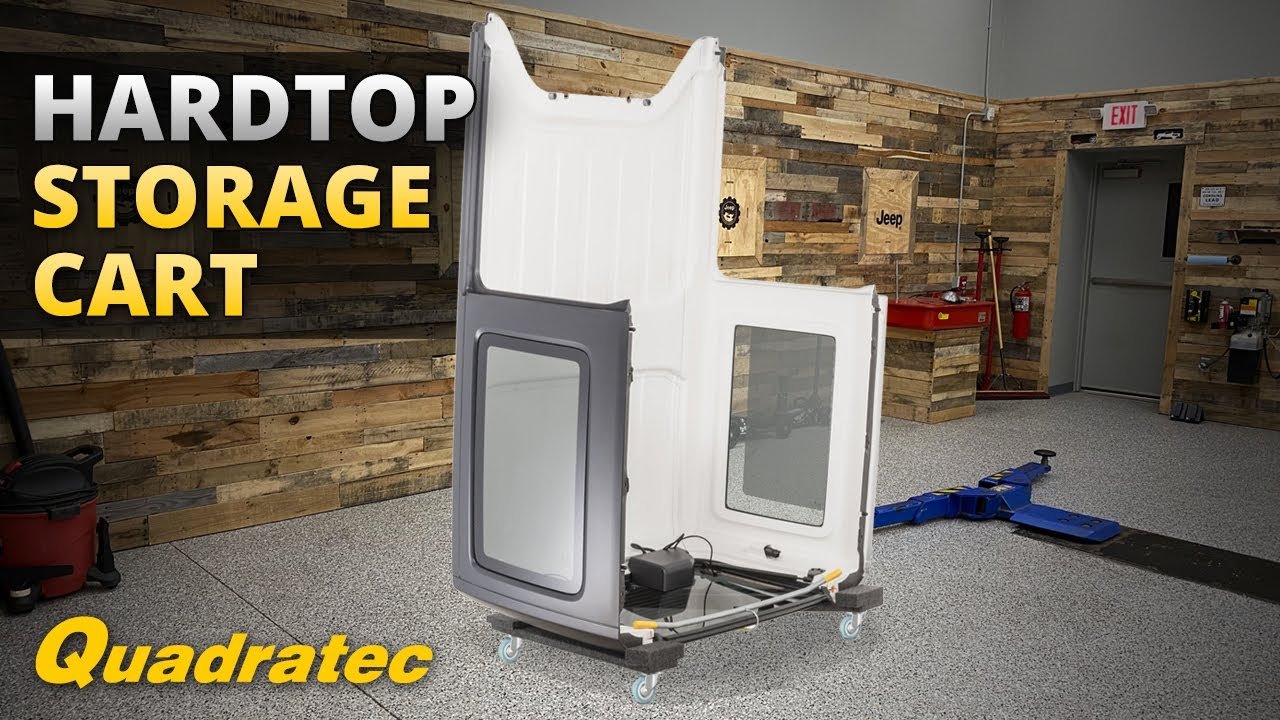
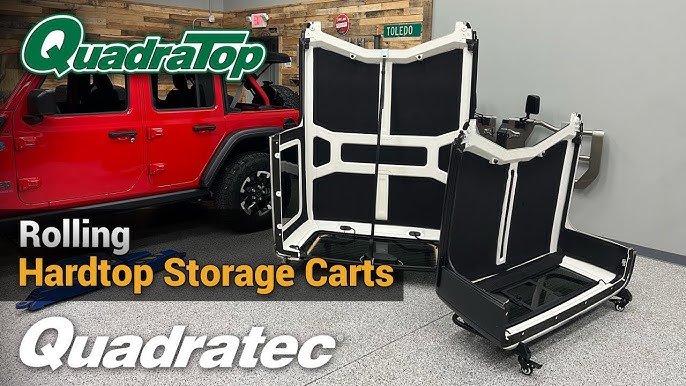
A hard top cart is a rolling frame designed to hold your top upright. It keeps the top off the ground and makes it easy to move.
Pros:
- Saves space
- Protects edges
- Easy to move around
Cons:
- Costs $100–$300
- Needs assembly
Some owners build their own carts with wood and foam padding for extra savings.
2. Ceiling Hoist System
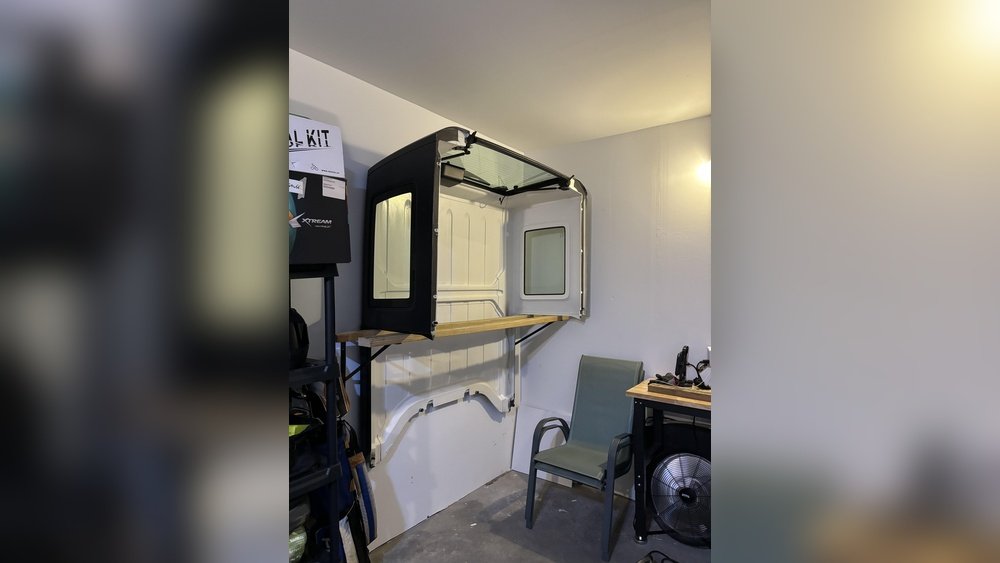
A ceiling hoist lets you lift the top up and store it above your Jeep or in the garage ceiling space.
Pros:
- Saves floor space
- Can be operated by one person
- Keeps top safe from bumps
Cons:
- Installation takes time
- Needs strong ceiling joists
Here’s a quick comparison of cart vs. hoist:
| Method | Cost Range | Space Saving | Ease of Use |
|---|---|---|---|
| Cart | $100–$300 | Good | Very Easy |
| Hoist | $150–$400 | Excellent | Easy (after install) |
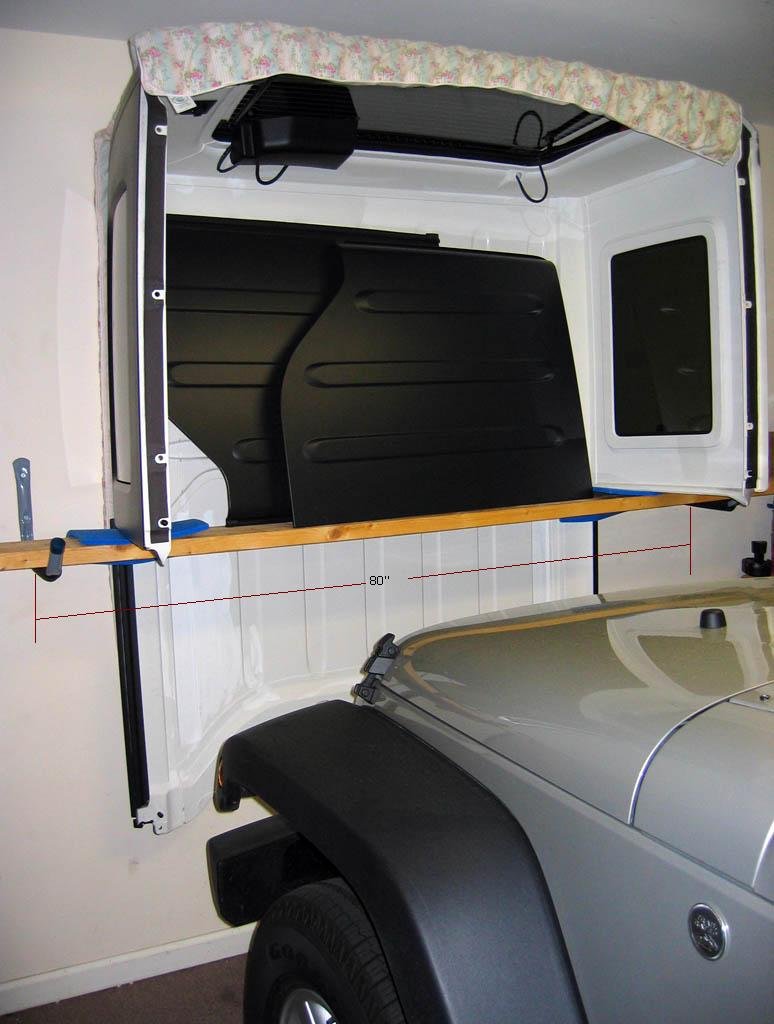
3. Wall-mounted Rack
A wall rack is another smart option. It uses padded hooks or bars mounted on a sturdy wall.
Pros:
- Keeps top off the ground
- Good use of wall space
- Low cost ($50–$150)
Cons:
- Needs strong wall anchors
- Slightly harder to lift top into place
4. Storing Directly On The Floor (not Recommended)
Some owners place their hard top on a blanket or foam pad on the garage floor. This is risky.
- Flat surfaces can stress the seals
- Easier to bump or scratch
- Moisture can build up underneath
If you must use the floor, place thick foam blocks under the edges and never stack anything on top.
Protecting The Hard Top During Storage
No matter which method you use, always:
- Place padding (foam or thick towels) at contact points
- Cover with a breathable cover to keep dust off but allow moisture to escape
- Avoid tight plastic wraps, which can trap moisture
Here’s a quick overview of protection options:
| Protection Method | Best For | Cost |
|---|---|---|
| Foam Pads | Edge safety | Low |
| Breathable Cover | Dust/moisture control | Medium |
| Plastic Wrap | Short-term only | Low |
Don’t forget to store bolts, nuts, and small parts in a labeled bag. Tape it to the hard top or keep it with your Jeep gear.
Common Mistakes To Avoid
Even careful owners make small mistakes that can damage a hard top:
- Stacking other items on top of the hard top
- Leaving the top in direct sunlight for months
- Using tight plastic covers that trap moisture
- Forgetting to check for rodents or insects
- Ignoring seal lubrication—dry seals can crack
An often-missed tip: Lubricate the rubber seals with silicone spray before storage. This keeps them soft and prevents cracks.
Frequently Asked Questions
How Heavy Is A Jeep Hard Top?
Most Jeep hard tops weigh between 100 and 140 pounds. It’s best to have a friend help when removing or lifting it.
Can I Store My Hard Top Outdoors With A Tarp?
It’s possible, but not recommended. Even with a tarp, sunlight, moisture, and temperature changes can damage the top over time.
Is It Safe To Hang The Hard Top From The Ceiling?
Yes, if you use a purpose-built hoist system and attach it to strong ceiling joists. Never use basic hooks or ropes that aren’t designed for heavy loads.
Should I Remove The Hard Top’s Windows Before Storage?
You don’t have to, but removing the removable windows (if your model allows) can make the top lighter and reduce risk of scratches.
Where Can I Buy A Good Hard Top Hoist?
You can find quality hoist systems at auto stores or online. For more on top-rated options, visit the Quadratec hard top hoist guide.
Storing your Jeep hard top the right way protects your investment and makes reinstallation easy when the weather changes. With a little planning, you’ll keep your top looking and fitting like new for years.