Removing the hard top from your 2021 Jeep Wrangler can transform your driving experience, especially when the weather is nice. It lets in fresh air, sunlight, and creates that open-road feeling Jeep owners love. However, the process requires the right tools, patience, and a few smart tips to avoid damage. Whether you’re preparing for summer or just want to know how it’s done, this guide walks you through each step clearly.
Tools And Preparation
Before you start, gather the essentials:
- Torx bit set (usually T40 and T50)
- Ratchet or screwdriver handle
- Storage bags for bolts
- A friend (helpful for lifting)
- Safety glasses
Make sure your Wrangler is parked on a flat surface. Removing the hard top is easier with two people, as the panels can be heavy and awkward to move alone.
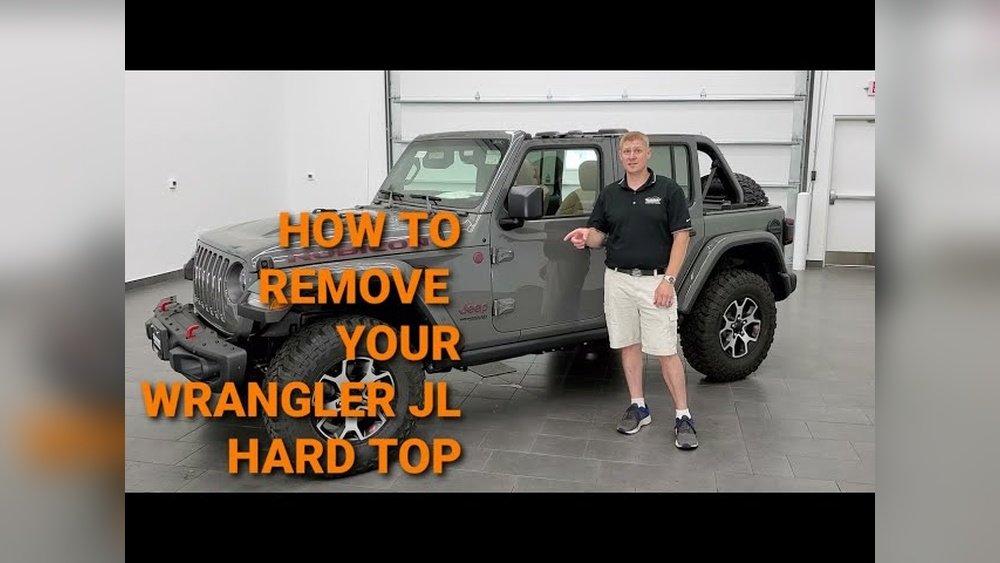
Step-by-step Hard Top Removal
1. Remove The Freedom Panels
The Freedom Panels are the small sections above the driver and front passenger seats. Here’s how to take them off:
- Flip down the sun visors.
- Release the latches above the windshield.
- Unscrew the center latch and release the rear latches.
- Carefully lift each panel and place them in a safe spot.
These panels are lightweight compared to the main top, but handle them gently to prevent scratches.
2. Disconnect The Electrical Connector
Before removing the main top, you must disconnect the wiring harness and the windshield washer hose, which control the rear wiper and defroster.
- Open the trunk.
- On the driver’s side, locate the wiring harness and washer hose near the rear corner.
- Gently press the tab to unplug the harness.
- Disconnect the washer hose by pulling it straight out.
This step is critical. If you forget, you risk damaging the wires.
3. Remove The Hard Top Bolts
The main top is secured by Torx bolts. For the 2021 Wrangler, you’ll find:
- Two bolts above each rear wheel well (inside the cargo area)
- Three bolts along each side at the rear
Using your Torx bit, unscrew all bolts and store them safely. Some Wranglers have a bolt storage tray for convenience.
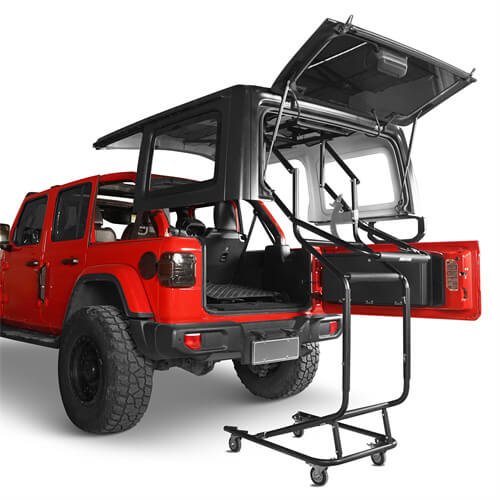
4. Lift Off The Hard Top
With all bolts removed and wires disconnected, you’re ready to lift. The hard top is bulky and weighs around 100 pounds. Enlist a friend:
- Each person stands on one side.
- Lift straight up to clear the alignment pins, then walk the top backward off the Jeep.
Never drag the top along the body this can scratch your paint.
Storage Tips
Proper storage keeps your hard top in good shape. Place it on a soft surface, such as a blanket or foam blocks.
Avoid direct sunlight for extended periods, as UV rays can fade the paint and seals. Some owners use ceiling hoists or wall mounts to save space.
Common Mistakes To Avoid
- Forgetting the wiring harness: This is the most common error and can cause expensive repairs.
- Losing bolts: Always use a dedicated bag or tray.
- Forcing the top: If it doesn’t lift easily, check for missed bolts or connectors.
- Storing on concrete: Hard surfaces can warp the top over time.
Comparing Soft Top Vs. Hard Top
Here’s a quick look at the differences:
| Feature | Hard Top | Soft Top |
|---|---|---|
| Insulation | Better for noise and weather | Less insulation |
| Security | More secure | Less secure |
| Weight | Heavier (100+ lbs) | Lighter (30-50 lbs) |
| Ease of Removal | Needs tools, 2 people | Can be done solo, no tools |
Jeep Wrangler Models And Top Removal
Different trims have small differences:
| Model | Standard Top | Top Removal Tools Needed |
|---|---|---|
| Sport | Black Freedom Top | T40, T50 bits |
| Sahara | Body-color Top | T40, T50 bits |
| Rubicon | Premium Hard Top | T40, T50 bits |
Many new owners overlook the small alignment pins at the back corners of the hard top. These must be lifted straight up before moving the top backward. Skipping this can bend the pins or scratch the Jeep’s paint.
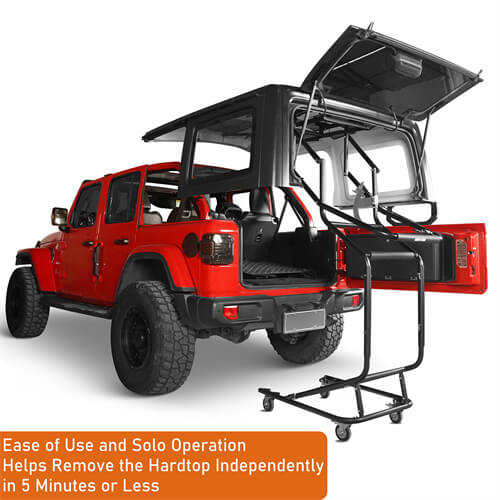
Another tip: If you plan to reinstall the top often, consider using quick-release thumb screws instead of the factory bolts. This makes removal and installation much faster, especially if you’re doing it solo.
After Removing Your Hard Top
With the top off, check the weather forecast before leaving your Jeep uncovered. Sudden rain can soak your seats and electronics. Consider a simple cab cover for quick protection.
Inspect the seals around the doors and windows for damage or dirt before reinstalling the top. Clean and lightly lubricate them to prevent leaks.
When To Reinstall The Hard Top
Reinstall the top before cold or wet weather returns. The process is the reverse of removal, but always check that the wiring harness is fully reconnected and all bolts are tight.
Loose connections can cause warning lights or leaks.
Safety And Legal Considerations
Some regions have laws about driving without a roof or doors. Always check local rules before heading out.
Also, remember that removing the hard top changes the Jeep’s rollover protection and security.
For more detailed information, you can also visit the official Jeep website.
Frequently Asked Questions
How Heavy Is The 2021 Jeep Wrangler Hard Top?
The hard top weighs around 100-120 pounds, depending on the model and options. It’s best to have two people for safe removal.
Can One Person Remove The Hard Top Alone?
It’s possible but not recommended. The top is bulky and awkward.
Trying it solo increases the risk of dropping or damaging it.
Will Removing The Hard Top Void My Warranty?
No, removing the top as described in the owner’s manual does not void the warranty. However, damage from improper removal may not be covered.
How Do I Protect The Seals During Storage?
Clean the weather seals with mild soap and water. Store the top on a soft surface and avoid direct sunlight to prevent drying and cracking.
Is It Safe To Drive In The Rain Without A Hard Top?
It’s not safe or comfortable. Rain can damage the interior electronics and upholstery.
Always use a cover if you’re caught in bad weather.
Taking off your 2021 Jeep Wrangler hard top is a rewarding DIY project.
With the right tools, a little help, and the steps above, you can enjoy the open-air experience Jeep is famous for while keeping your vehicle in top shape for years to come.