Driving a Jeep Gladiator gives you the freedom to tackle rough terrain, deep snow, or muddy roads. But switching between two-wheel drive and four-wheel drive can confuse even experienced drivers.
If you’re new to the Gladiator or want a simple explanation, this guide will help you understand how to put your Jeep Gladiator in 4 wheel drive safely and correctly.
Understanding Jeep Gladiator 4 Wheel Drive Modes
The Jeep Gladiator uses a transfer case to switch between driving modes. You have four main settings:
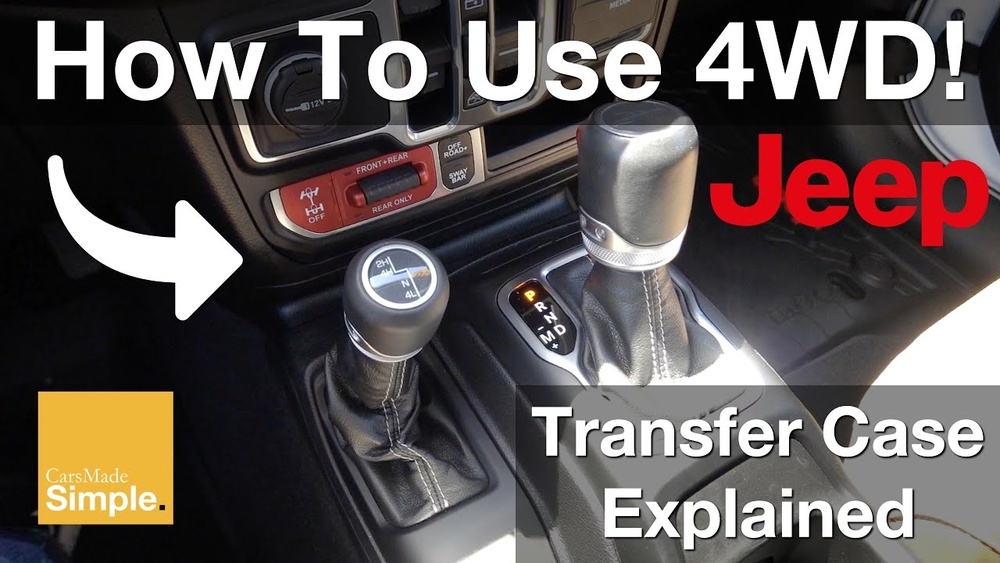
- 2H (Two-Wheel Drive High): Only the rear wheels power the vehicle. Best for dry, paved roads.
- 4H (Four-Wheel Drive High): All four wheels get power. Ideal for slippery conditions, like rain, snow, or sand.
- 4L (Four-Wheel Drive Low): All four wheels get power, but at lower speed and higher torque. Perfect for steep hills, deep mud, or rocky trails.
- Neutral: Disconnects the wheels from the engine. Used for towing.
Each mode offers different benefits, so knowing when and how to use them is important for both safety and performance.
| Mode | Use Case | Max Speed |
|---|---|---|
| 2H | Normal roads | Unlimited |
| 4H | Slippery surfaces | Up to 55 mph |
| 4L | Off-road, steep climbs | Up to 25 mph |
| Neutral | Towing | Not for driving |
How To Put A Jeep Gladiator In 4 Wheel Drive
Switching to four-wheel drive is simple, but you must follow the correct steps for each mode. Here’s how to use all four settings:
1. Engaging 4h (four-wheel Drive High)
4H is the most common four-wheel drive mode. It helps when roads are slippery but you still need to drive at normal speeds.
- Slow down to under 55 mph. You don’t need to stop completely.
- Firmly grip the transfer case lever (usually found next to the gear shifter).
- Move the lever from 2H to 4H in one smooth motion.
- You’ll feel a slight change. The dashboard may show a 4WD indicator.
You can switch between 2H and 4H while driving as long as your wheels aren’t spinning wildly. If you hear grinding, stop and try again.
2. Switching To 4l (four-wheel Drive Low)
4L gives you extra torque for tough situations, like deep mud or steep rocks.
- Come to a complete stop.
- Put the transmission in Neutral.
- Press the brake firmly.
- Pull the transfer case lever from 4H straight down to 4L. This might take a little force.
- Wait for the 4WD LOW indicator on your dashboard.
Never switch to 4L at high speeds. This can damage your Jeep’s drivetrain and transfer case.
3. Returning To 2h (two-wheel Drive High)
Switching back to 2H is important when you leave rough terrain and return to smooth roads.
- Slow down or stop the vehicle.
- If you’re in 4H, move the lever back to 2H. You can do this while driving slowly.
- If you’re in 4L, stop completely, shift the transmission to Neutral, then move the lever up to 4H and then 2H.
- Check that the 4WD indicator turns off.
Driving in 4H or 4L on dry pavement can cause tire wear and strain the drivetrain.
4. Using Neutral Mode
The Neutral setting is not for driving. It’s used if you need to tow your Gladiator.
- Stop the vehicle completely.
- Shift the transmission to Neutral.
- Move the transfer case lever to Neutral.
- Confirm the N indicator is on.
If you plan to tow your Jeep, check your owner’s manual for detailed instructions. Incorrect use can cause serious damage.
| Mode | Shifting Steps | Common Mistake |
|---|---|---|
| 4H | Shift while moving <55 mph | Shifting at high speed |
| 4L | Shift while stopped, in Neutral | Shifting while moving |
| 2H | Shift while moving slowly | Shifting from 4L without stopping |
| Neutral | Shift while stopped, in Neutral | Using Neutral to drive |
Tips For Smooth 4wd Operation
Making the switch is easy, but a few extra tips will help you avoid common mistakes.
- Always slow down before shifting modes.
- Use 4H only when traction is poor.
- Use 4L for extreme off-road situations.
- Never shift to 4L while moving.
- Avoid using four-wheel drive on dry pavement.
- If the transfer lever feels stuck, gently rock the vehicle forward and backward while shifting.
Many beginners forget to put the transmission in Neutral before switching to 4L. Another common mistake is forgetting to switch back to 2H after leaving rough terrain, which can cause unnecessary wear.
Real-world Example
Let’s say you’re driving your Gladiator and encounter a snowy hill. You slow down and shift from 2H to 4H. If the hill is very steep or slippery, you stop, put the transmission in Neutral, and shift to 4L. Once you’re past the hill and back on clear roads, you shift back to 2H to save your tires and drivetrain.

Frequently Asked Questions
How Fast Can I Drive In 4h Or 4l?
You can drive up to 55 mph in 4H. In 4L, keep your speed under 25 mph. Going faster can damage the transfer case.
Can I Shift To 4h While Driving?
Yes, you can shift to 4H while moving, as long as you are going less than 55 mph and the wheels aren’t slipping.
Should I Use Four-wheel Drive On Dry Pavement?
No, using 4H or 4L on dry roads can cause tire wear and strain the drivetrain.
Why Is My Transfer Case Lever Hard To Move?
If the lever is hard to shift, your wheels may not be lined up or the vehicle isn’t stopped. Try gently rocking the Jeep or double-check that you’re in Neutral.
Where Can I Find More Details About Jeep Gladiator 4wd?
For more technical information and troubleshooting, visit the official Jeep Gladiator page.
Switching your Jeep Gladiator into 4 wheel drive is simple once you know the steps. By following the right process for each mode and avoiding common mistakes, you’ll keep your Jeep ready for any adventure and protect its mechanical parts. Remember, practice makes perfect—soon switching modes will feel natural every time you hit the trails.