Towing a Jeep behind an RV opens up a world of adventure. You can drive your RV to a beautiful campsite, then use your Jeep to explore backroads, visit stores, or tour national parks.
But towing a vehicle is not as simple as attaching a rope and hitting the road. Safety, the right equipment, and following the law are all important.
This guide explains everything you need to know to pull a Jeep behind an RV, even if you’ve never done it before.
Understanding Towing Methods
You can tow a Jeep in several ways, but not all are safe or legal for every model.
| Towing Method | Pros | Cons |
|---|---|---|
| Flat Towing (Dinghy Towing) | Simple, fast hookup | Not for all transmissions |
| Tow Dolly | Protects drive wheels | Heavier, more parts |
| Trailer | Best for any vehicle | Expensive, needs storage |
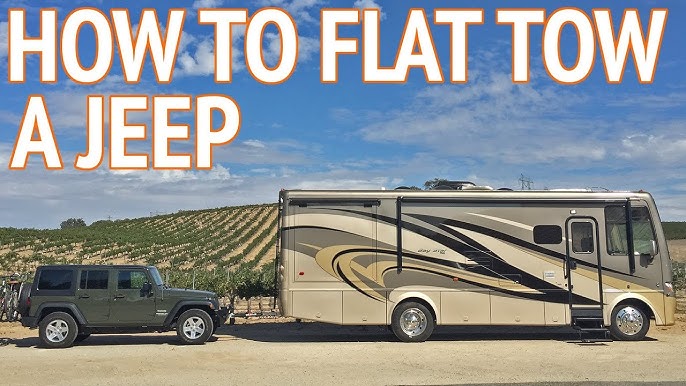
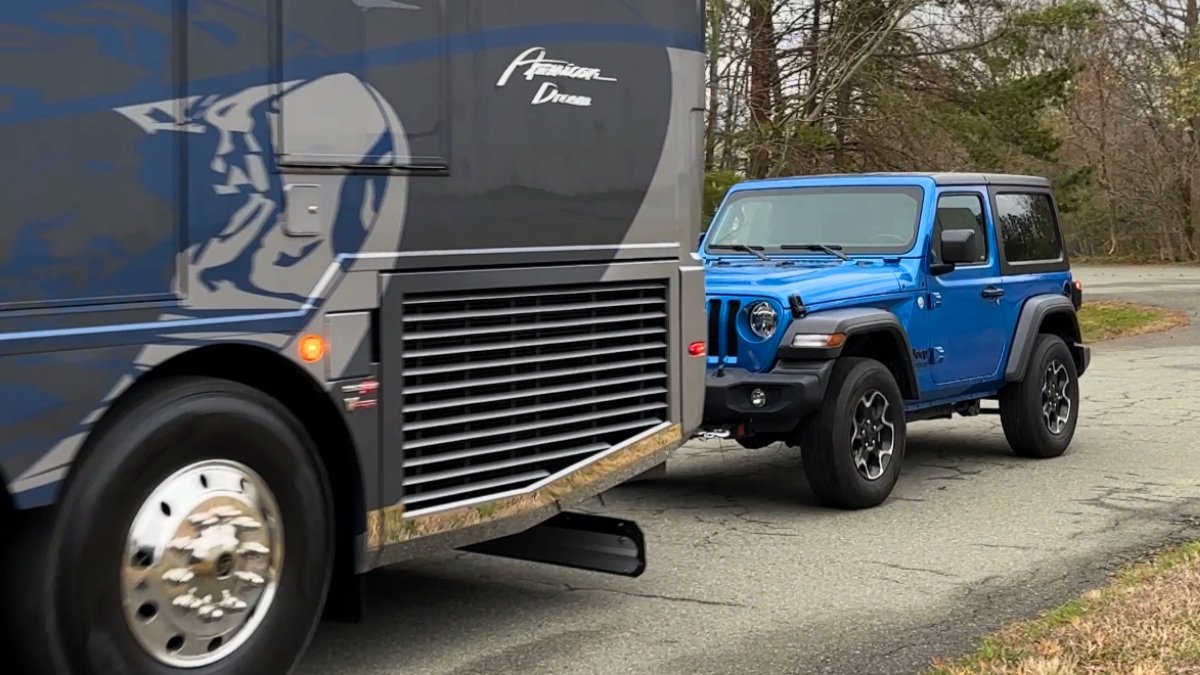
- Flat towing means all four Jeep wheels stay on the ground.
- Tow dollies lift the front wheels off the road.
- Trailers carry the whole Jeep.
Most Jeep Wranglers and some Cherokees are designed for flat towing. Always check your Jeep’s owner’s manual.
Using the wrong method can damage your transmission or void your warranty.
Equipment You’ll Need
To pull your Jeep behind your RV, you need special gear that keeps everything safe and legal.
Main Components
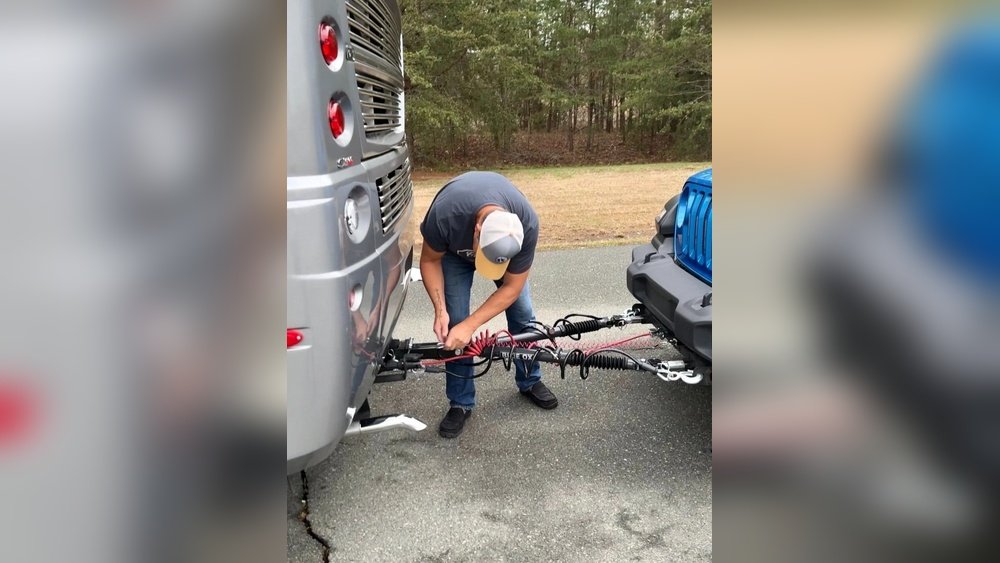
- Base plate: Bolted to the Jeep’s frame for attaching the tow bar.
- Tow bar: Connects the Jeep to the RV.
- Safety cables: Backup connection in case the tow bar fails.
- Wiring harness: Links the Jeep’s tail lights to the RV’s lights.
- Supplemental braking system: Makes the Jeep brake when the RV brakes.
Cost Comparison Example
Here’s a basic cost comparison for new gear:
| Item | Approximate Cost |
|---|---|
| Base Plate | $400 – $600 |
| Tow Bar | $500 – $1,200 |
| Wiring Kit | $100 – $250 |
| Braking System | $800 – $1,500 |
Buying used can save money, but always check for damage. Cutting corners on safety is risky.
Step-by-step: How To Flat Tow A Jeep
- Check the Jeep’s manual. Not all models can be flat towed. Look for the “Recreational Towing” section.
- Install the base plate using a professional if you’re not handy with tools.
- Attach the tow bar between the Jeep and the RV.
- Connect safety cables in a crisscross pattern for extra security.
- Plug in the wiring harness so the Jeep’s lights work with the RV.
- Set up the braking system according to both vehicles’ manuals.
- Shift the Jeep’s transfer case into “Neutral.” This step is critical—missing it can destroy your transmission.
- Release the parking brake on the Jeep.
- Double-check all connections before driving.
A key detail beginners forget: always confirm the Jeep’s steering wheel is unlocked, so the front wheels can turn with the RV.
Legal And Safety Considerations
Each state has its own rules about towed vehicles. Most require a supplemental braking system if the Jeep is over a certain weight (often 3,000 lbs). Police can fine you if you skip this. Also, your insurance may not cover accidents if you ignore these laws.
Always use safety cables and check all connections at every stop. Tire pressure should be correct on both vehicles. Make wide turns, and leave extra space for braking.

Common Mistakes To Avoid
- Forgetting to shift the transfer case to neutral. This mistake can destroy your transmission in minutes.
- Missing the steering unlock step. Locked wheels can drag and cause dangerous skids.
- Ignoring weight limits. Both the RV and the Jeep have maximum towing ratings.
- Skipping braking systems. This can cause long stops or make you lose control.
- Not testing lights. Broken or mismatched lights confuse other drivers and can get you pulled over.
Real-world Example
Many full-time RVers choose the Jeep Wrangler for flat towing because its transfer case makes the process simple. For instance, Sarah and Bill, a couple from Arizona, have towed their Wrangler over 20,000 miles with no issues. They always follow the checklist, especially when stopping for gas or overnight stays.
When To Use A Tow Dolly Or Trailer
If your Jeep cannot be flat towed, a tow dolly or trailer is your best option. Trailers are also better for long trips or rough roads, as they protect your Jeep from wear and road debris.
Quick Comparison
| Feature | Flat Tow | Tow Dolly | Trailer |
|---|---|---|---|
| Speed to Hook Up | Fast | Medium | Slow |
| Vehicle Compatibility | Limited | Moderate | Universal |
| Storage Needed | Minimal | Some | High |
Practical Tips For First-time Towers
- Practice turning and braking in a large, empty parking lot.
- Always carry a basic tool kit and spare fuses.
- Check all connections and tire pressures at every rest stop.
- If you’re unsure, ask for help at an RV dealer or join an RV club.
One insight many miss: RV rear cameras often give a distorted view of the Jeep. Always check connections in person, not just through a screen.
Frequently Asked Questions
Can All Jeep Models Be Flat Towed?
No, not every Jeep can be flat towed. Most Wranglers and some Cherokees are designed for it, but always check your owner’s manual before trying.
Is A Supplemental Braking System Required By Law?
In most states, yes. If your Jeep weighs over 3,000 lbs, you need a separate braking system. Check your state’s requirements on the National Highway Traffic Safety Administration website.
Do I Need To Disconnect The Battery Before Towing?
Usually, you do not. Some newer Jeeps may require it to prevent battery drain.
Your Jeep’s manual will explain if this is needed.
How Fast Can I Drive While Towing My Jeep?
Stay at or below 65 mph, even if speed limits are higher. Faster speeds increase stopping distance and wear out your tow equipment.
What Should I Do If My Jeep Fishtails Or Sways?
Slow down carefully and stop as soon as it’s safe. Check all connections, tire pressures, and make sure the steering is unlocked.
Fishtailing often means something is not set up correctly.
Pulling a Jeep behind your RV adds adventure and flexibility to your travels. With the right equipment and careful checks, you can enjoy smooth, trouble-free journeys.
Always follow your Jeep’s manual and local laws for the best results.