Jack up a Jeep Wrangler safely and correctly, and you’ll avoid damage, injury, and costly mistakes. Many owners think it’s just about lifting the vehicle, but there’s more to it.
Choosing the right jack, locating proper lift points, and understanding the steps are crucial.
This guide breaks down the process, shows what tools you need, and explains common errors so you can confidently raise your Wrangler for tire changes, repairs, or off-road adjustments.
Understanding Your Jeep Wrangler’s Lift Points
Before you start, it’s important to know where to place the jack. Jeep Wranglers have specific lift points designed for safety.
Most models (JK, JL, TJ) have reinforced frame rails behind the front wheels and just ahead of the rear wheels. These are the safest spots. Using other areas—like the body or suspension components—can cause damage. The reason is simple: the frame rails are built to support the weight of the entire vehicle, while other parts, such as the body panels or thin metal brackets, are not. Placing the jack in the wrong spot can bend metal, crack parts, or even cause the Jeep to slip off the jack.
Here’s a quick reference for common Wrangler generations:
| Model Year | Front Lift Point | Rear Lift Point |
|---|---|---|
| TJ (1997–2006) | Frame rail behind front wheel | Frame rail in front of rear wheel |
| JK (2007–2018) | Frame rail behind front wheel | Frame rail in front of rear wheel |
| JL (2018–present) | Frame rail behind front wheel | Frame rail in front of rear wheel |
Never use the axle or control arms as your main jack point unless you have expert knowledge and specialized equipment. For example, the axle can twist if you lift it with the wrong jack or without proper support, and control arms can bend easily. If you’re unsure, always stick to the frame rails.
Some owners try to lift their Jeep by placing the jack under the bumper or rocker panels, but these areas are not reinforced and may collapse.
If your Wrangler has modifications like oversized tires or a lift kit you might need to adjust your jack position slightly, but still aim for the frame.
Choosing The Right Jack And Tools
Not all jacks are suitable for a Jeep Wrangler. Because Wranglers have higher ground clearance, a standard sedan jack may not work.
Recommended jack types:
- Hydraulic floor jack: Stable, easy to position, and provides enough height. Look for a minimum 3-ton capacity. For most garage work, this is the best choice because it slides easily under the frame, lifts smoothly, and keeps the vehicle balanced.
- Hi-lift jack: Useful for off-road situations. Requires extra care and knowledge. Hi-lift jacks are popular with off-roaders because they can lift the Jeep higher, but they’re less stable on hard surfaces and can be dangerous if not used correctly. Always read the instructions.
- Bottle jack: Compact, but often not tall enough unless you get a high-lift version. Bottle jacks are practical for quick fixes or roadside tire changes, but check the height before buying. Some high-lift bottle jacks are made for trucks and Jeeps, but regular ones may not reach the frame.
Essential tools:
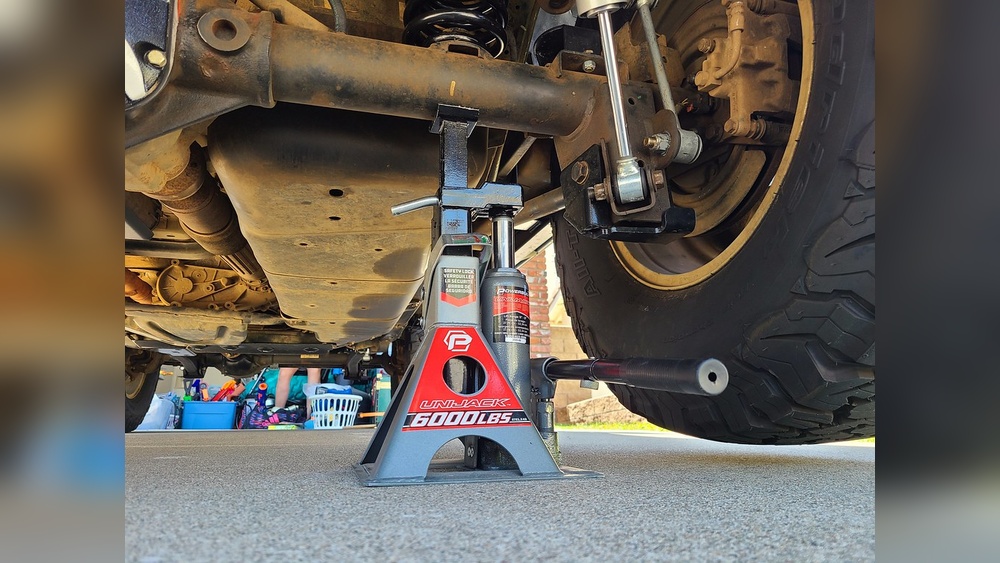
- Jack stands: Always use these for safety after lifting.
- Wheel chocks
- Lug wrench
- Gloves
Here’s a comparison of common jack types:
| Jack Type | Max Height | Stability | Best Use |
|---|---|---|---|
| Floor Jack | 18–24 inches | High | Garage repairs |
| Hi-Lift Jack | Up to 48 inches | Moderate | Off-road |
| Bottle Jack | 12–20 inches | Medium | Quick fixes |
A floor jack is the safest choice for most home mechanics. If you’re working outdoors or have a lifted Jeep, a hi-lift jack is helpful, but always practice with it before using it for real repairs. One overlooked point: check your jack stands’ height. Many stands for cars are too short for Jeep frames, so look for SUV or truck models.

Step-by-step: How To Jack Up A Jeep Wrangler
Follow these steps for a safe lift:
- Park on a level surface. Uneven ground increases the risk of the jack slipping. If you’re on gravel or dirt, use a thick board under the jack for stability.
- Engage the parking brake. This prevents rolling. For automatic transmissions, put the gear in “Park”; for manual, use first gear.
- Place wheel chocks behind the opposite wheels. For front lifts, chock rear wheels; for rear lifts, chock front wheels. Wheel chocks are simple but very effective—never skip them.
- Position your jack under the correct frame rail lift point. Double-check your owner’s manual if unsure.
- Begin lifting slowly. Watch for movement—stop if the vehicle shifts. If you hear any odd noises or see the Jeep tilting, lower it and reposition.
- Raise to desired height. Never lift higher than needed. Extra height increases risk and isn’t necessary for most tasks.
- Place jack stands under the frame near the jack point. Lower the Jeep onto the stands. Always make sure both stands are on solid ground.
- Check stability. Gently rock the vehicle; it should not move. If it wobbles, adjust the stands and check again.
- Remove wheels or perform maintenance. Only do this when the Jeep is secure on stands.
To lower:
- Reinstall wheels and tighten lug nuts partially. Start the nuts by hand to avoid cross-threading.
- Raise the Jeep slightly with the jack to remove the jack stands.
- Lower the Jeep slowly. Quick drops can damage parts.
- Fully tighten lug nuts in a crisscross pattern. This ensures even pressure and avoids warping the brake rotor.
If you’re working outdoors, extra care is needed. Sun, wind, or uneven surfaces can affect stability.
Lay out your tools before starting so you don’t have to reach under the Jeep while it’s lifted.
Practical Tips And Common Mistakes
Many beginners overlook simple but critical details. Here are two non-obvious insights:
- If your Wrangler has aftermarket rock sliders or body armor, these are not designed for jacking. Use only the frame. Even though rock sliders look strong, they often bolt to the body and can bend or snap under weight.
- The weight of the Jeep can exceed 4,000 lbs. If you use a jack rated at only 2 tons, it may fail, especially with gear onboard. Always check the sticker or label on your jack and stands before use.
Other tips:
- Clean lift points before use. Dirt or rust can cause slipping. A wire brush helps remove rust and grime.
- Don’t rely on the jack alone—always use jack stands. Jacks can lose pressure or tip, but stands keep the Jeep stable.
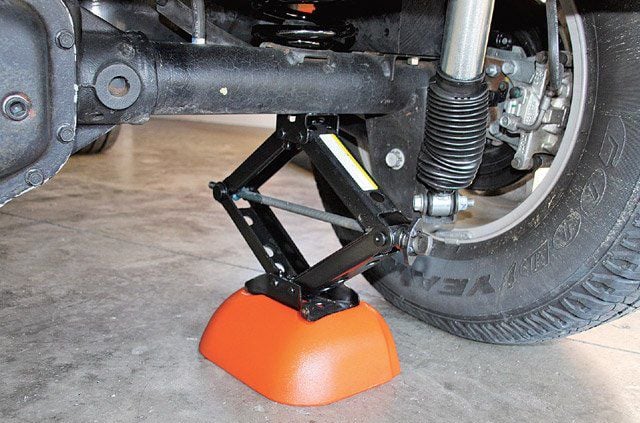
- Avoid using the Jeep’s factory scissor jack except for emergencies. It’s not stable for larger repairs. Many owners have noticed these jacks twisting under load, especially with bigger tires.
Here’s a quick safety comparison:
| Method | Risk Level | Recommended? |
|---|---|---|
| Floor Jack + Jack Stands | Low | Yes |
| Hi-Lift Jack (Untrained) | High | No |
| Factory Scissor Jack | Medium | Only for emergencies |
Another mistake: forgetting to block the wheels. Even if you’re only lifting one corner, the other wheels can roll if not blocked. Also, never crawl under the Jeep unless it’s fully supported by stands—not just a jack.
Frequently Asked Questions
What’s The Safest Jack For A Jeep Wrangler?
The hydraulic floor jack is safest for most situations. It’s stable, has enough height, and works well with jack stands. For lifted Jeeps or off-road use, a hi-lift jack can work, but only if you know the technique.
Can I Jack Up My Wrangler Using The Axle?
Only if you have experience and proper equipment. The frame rail is always safer for lifting.
If you must use the axle, place the jack pad carefully to avoid damaging brake lines or differential covers.
How High Should I Lift My Jeep?
Lift only as high as needed for the task. For tire changes, 2 3 inches off the ground is enough.
For brake repairs, you may need slightly more, but never raise the Jeep higher than you must.
Do I Need To Use Jack Stands Every Time?
Yes. Never rely on the jack alone.
Jack stands prevent accidents if the jack slips or fails. Even for short jobs, the extra minute it takes to set stands can save your life.
Where Can I Find The Official Lift Points?
You’ll find them in your owner’s manual or on the manufacturer’s site, such as Jeep Official Site. Diagrams and instructions are often included.
Jacking up your Jeep Wrangler isn’t difficult, but doing it right takes attention to detail and the correct tools. Take your time, use the proper lift points, and always prioritize safety.
With practice, you’ll be ready for repairs or adventures confident your Wrangler is supported securely.
Remember, safety is always first. If you’re unsure, ask a friend or local mechanic for help.