If you own a Jeep or are thinking about upgrading one, understanding its axles is crucial. Jeep axles are at the heart of the vehicle’s strength and off-road ability.
But with so many models and years, it can be confusing to tell which axle you have under your Jeep.
Whether you want better off-road performance, plan to swap parts, or just want to know more about your vehicle, learning how to identify Jeep axles is a smart move.
This guide will break things down step-by-step using simple language, real examples, and practical tips so you can confidently identify any Jeep axle.
Why Jeep Axle Identification Matters
Jeep owners often modify their vehicles for tougher trails, towing, or just for fun. The axle type directly affects which upgrades, gears, and parts fit. Using the wrong information can lead to expensive mistakes, such as buying incompatible parts or overloading a weak axle. Also, some Jeep axles are much stronger than others, so knowing which one you have can help you avoid breaking down off-road.
Main Types Of Jeep Axles
Most Jeeps use a few main axle types, but each has its own features. Here are the most common ones:
- Dana 30 – Found in many Jeep front axles, especially Wranglers and Cherokees.
- Dana 35 – Used in many Jeep rear axles, especially in older models.
- Dana 44 – Stronger, used in some front and rear axles, especially Rubicon models.
- Dana 60 – Heavy-duty, found in special editions or swapped in by enthusiasts.
- AMC 20 – Used in some older Jeep models.
- Chrysler 8.25 – Found in some Cherokee XJs and Libertys.
Each axle has different strengths, weaknesses, and identification marks.
Key Ways To Identify Jeep Axles
You don’t need to be a mechanic to identify your Jeep’s axles. Here are the most effective methods:
1. Counting Bolts On The Differential Cover
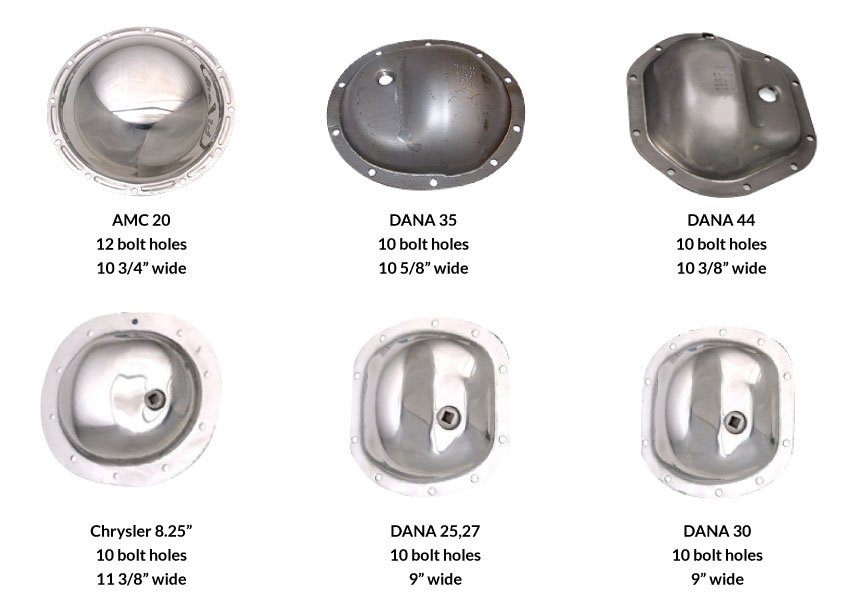
Every axle has a differential cover held by bolts. The number of bolts is a quick clue. For example:
| Axle Model | Number of Cover Bolts | Shape of Cover |
|---|---|---|
| Dana 30 | 10 | Rounded, slightly oval |
| Dana 35 | 10 | Oval, smooth edges |
| Dana 44 | 10 | Hexagonal, flat sides |
| AMC 20 | 12 | Perfect circle |
| Chrysler 8.25 | 10 | Flat bottom, two corners |
Bolt counting is not perfect, but it narrows down the options fast.
2. Checking The Shape Of The Differential Cover
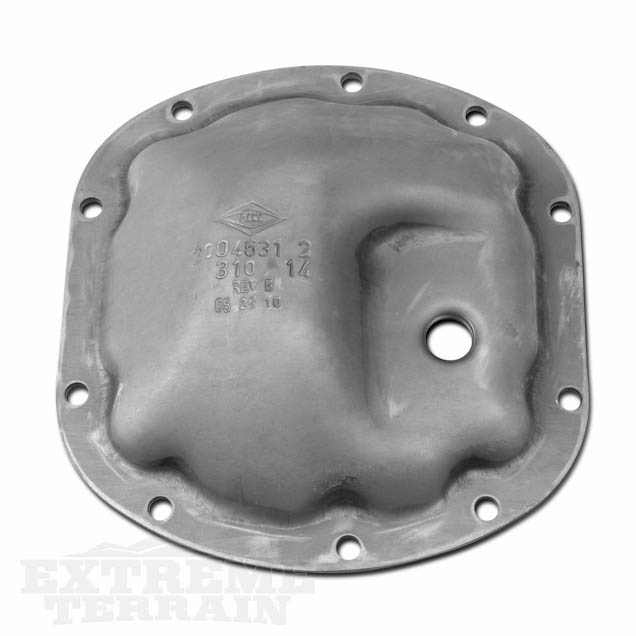
Each axle has a unique cover shape. For example, the Dana 44 cover is more hexagonal, while the Dana 35 is oval. AMC 20 covers are almost perfectly round. A quick visual check is often enough for experienced owners.
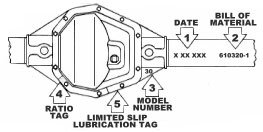
Jeep axles often have a metal tag attached to one of the differential cover bolts, or numbers stamped on the axle tube. These numbers tell you the axle model, gear ratio, and sometimes the build date.
Cleaning dirt and rust may be needed to see the numbers.
4. Measuring The Axle Tube Diameter
The axle tube is the round part that connects the wheels to the differential. Different axles have different tube sizes. For example, Dana 30 tubes are about 2.5 inches in diameter, while Dana 44 tubes are closer to 2.75 inches. This method is helpful if other markings are missing.
5. Counting Lug Nuts And Looking At The Axle Shaft Ends
Some axles, like the AMC 20, use a two-piece shaft, which is weaker. Others use one-piece shafts.
Looking at the end of the shaft (where the wheel mounts) can give you clues.
6. Using Online Resources And Jeep Forums
If you are unsure, take a photo of your axle and post it on a Jeep forum. Many experienced owners can identify it quickly. Also, official Jeep manuals and websites like Jeep.com have detailed charts and images.
Detailed Breakdown: Popular Jeep Axles
Let’s look at the most common Jeep axles in more detail, so you can spot them with confidence.
Dana 30
- Common Models: Front axle on Wrangler (YJ, TJ, JK, JL), Cherokee (XJ), Grand Cherokee (ZJ, WJ)
- Differential Cover: 10 bolts, rounded oval shape
- Tube Diameter: About 2.5 inches
- Strength: Good for daily driving and mild off-roading
- Weakness: Not ideal for big tires or hard rock crawling
Dana 35
- Common Models: Rear axle on Wrangler (YJ, TJ), Cherokee (XJ), Grand Cherokee (ZJ)
- Differential Cover: 10 bolts, oval shape, flat at the bottom
- Tube Diameter: About 2.62 inches
- Strength: Light-duty, okay for stock tires
- Weakness: Prone to bending with big tires or lots of power
Dana 44
- Common Models: Rear on Wrangler Rubicon, some Cherokees and CJs; front on Rubicon models
- Differential Cover: 10 bolts, hexagonal shape
- Tube Diameter: About 2.75-3.0 inches
- Strength: Strong, good for off-roading and big tires
- Weakness: Heavier, more expensive to maintain
Amc 20
- Common Models: Rear axle on CJ5, CJ7, some Wagoneers
- Differential Cover: 12 bolts, perfectly round
- Tube Diameter: About 2.5 inches
- Strength: Decent if upgraded to one-piece shafts
- Weakness: Two-piece shafts can fail under stress
Chrysler 8.25
- Common Models: Rear axle on Cherokee (XJ), Liberty (KJ)
- Differential Cover: 10 bolts, flat bottom with two sharp corners
- Tube Diameter: About 3.0 inches
- Strength: Medium-duty, better than Dana 35
- Weakness: Slightly less aftermarket support
Dana 60
- Common Models: Rare on stock Jeeps, often swapped in for heavy-duty builds
- Differential Cover: 10 bolts, larger and more squared than Dana 44
- Tube Diameter: About 3.125 inches
- Strength: Very strong, handles large tires and V8 power
- Weakness: Heavy, may reduce fuel economy
Quick Comparison: Jeep Axle Specs
Here’s a direct comparison for fast reference:
| Axle Model | Stock Spline Count | Max Tire Size (Recommended) | Common Vehicles |
|---|---|---|---|
| Dana 30 | 27-30 | 33″ | Wrangler, Cherokee |
| Dana 35 | 27 | 31″ | Wrangler, Cherokee |
| Dana 44 | 30-32 | 35″ | Wrangler Rubicon, CJ, XJ |
| Chrysler 8.25 | 27-29 | 33″ | Cherokee, Liberty |
| AMC 20 | 29 | 33″ | CJ5, CJ7 |
| Dana 60 | 30-35 | 40″+ | Custom builds |
Common Mistakes When Identifying Jeep Axles
Many beginners make errors that can cost time and money. Here are some of the most common:
- Confusing Dana 35 and Dana 44: Both use 10 bolts, but the Dana 44 cover is more squared, and the tubes are larger.
- Ignoring axle swaps: Jeeps are often modified, so don’t assume the axle is original. Always check the numbers.
- Forgetting about year-to-year changes: Jeep sometimes changed axles mid-year. Always check your exact build year.
- Not cleaning the axle before checking: Dirt and rust can hide important tags or numbers.
Two Non-obvious Tips For Accurate Id
- Look at brake type: Some axles came with drum brakes, others with discs. For example, later Dana 44s often have disc brakes, while most Dana 35s use drums. This can be a quick way to tell them apart.
- Check for a fill plug location: On some axles, the fill plug is on the differential cover (Dana 35, Dana 44), but on others (Chrysler 8.25), it’s on the axle housing itself. This detail is easy to miss but very useful.
Real-world Example: Identifying A Cherokee Rear Axle
Suppose you have a 1998 Jeep Cherokee XJ. You want to know if the rear axle is a Dana 35 or Chrysler 8.25. Here’s what you do:
- Count the bolts: Both have 10.
- Look at the cover shape: Dana 35 is oval, Chrysler 8.25 has a flat bottom.
- Check the fill plug: Chrysler 8.25 has it on the housing, Dana 35 on the cover.
- Measure the axle tube: Chrysler 8.25 is a bit bigger.
Using these steps, you can be sure which axle you have.
Upgrading Or Swapping Axles: What To Consider
If you plan to upgrade, keep these points in mind:
- Strength vs. weight: Heavier axles (like Dana 60) are very strong but add weight, which can affect ride and fuel use.
- Parts compatibility: Not all axles fit every Jeep model. Measure carefully before swapping.
- Gear ratios: Match front and rear gear ratios to avoid drivetrain problems.
- Aftermarket support: Some axles have more upgrade options than others.
Also, check local laws if you change axles, especially for on-road use.
Frequently Asked Questions
What If My Jeep Axle Doesn’t Match Any Common Models?
Sometimes Jeeps have swapped or rare axles. If your axle doesn’t match the usual covers or bolt counts, look for stamped numbers or tags, and ask for help on Jeep forums.
Posting clear photos often helps experts identify unusual axles.
Can I Upgrade From A Dana 35 To A Dana 44 Easily?
Upgrading is possible but not always simple. The Dana 44 is stronger, but you may need to change brackets, driveshaft length, and brake lines.
Always check for compatibility with your specific Jeep model and year.
How Can I Tell If My Axle Has Limited-slip Or Is Open?
Most axles have a tag or stamp that says “LSD” (limited-slip differential) or “Open. ” You can also lift both wheels and spin one.
If the other wheel spins the same way, it’s likely limited-slip. If it spins the opposite direction, it’s open.
Do All Jeep Wranglers Have Dana 44 Axles?
No. Only Rubicon models and some special editions come with Dana 44s front and rear.
Most other Wranglers use Dana 30 (front) and Dana 35 (rear). Always check your Jeep’s build sheet or axle tags to be sure.
Where Can I Find More Detailed Charts Or Diagrams?
The official Jeep website and forums like JeepForum have many charts, diagrams, and guides for all Jeep axles. These resources include photos, measurements, and user experiences.
Learning how to identify Jeep axles gives you more control over your vehicle and future upgrades. Taking the time to check bolt counts, cover shapes, tags, and tube sizes can save you from expensive mistakes.
As you gain experience, axle ID will become second nature.
Your Jeep and your wallet will thank you.