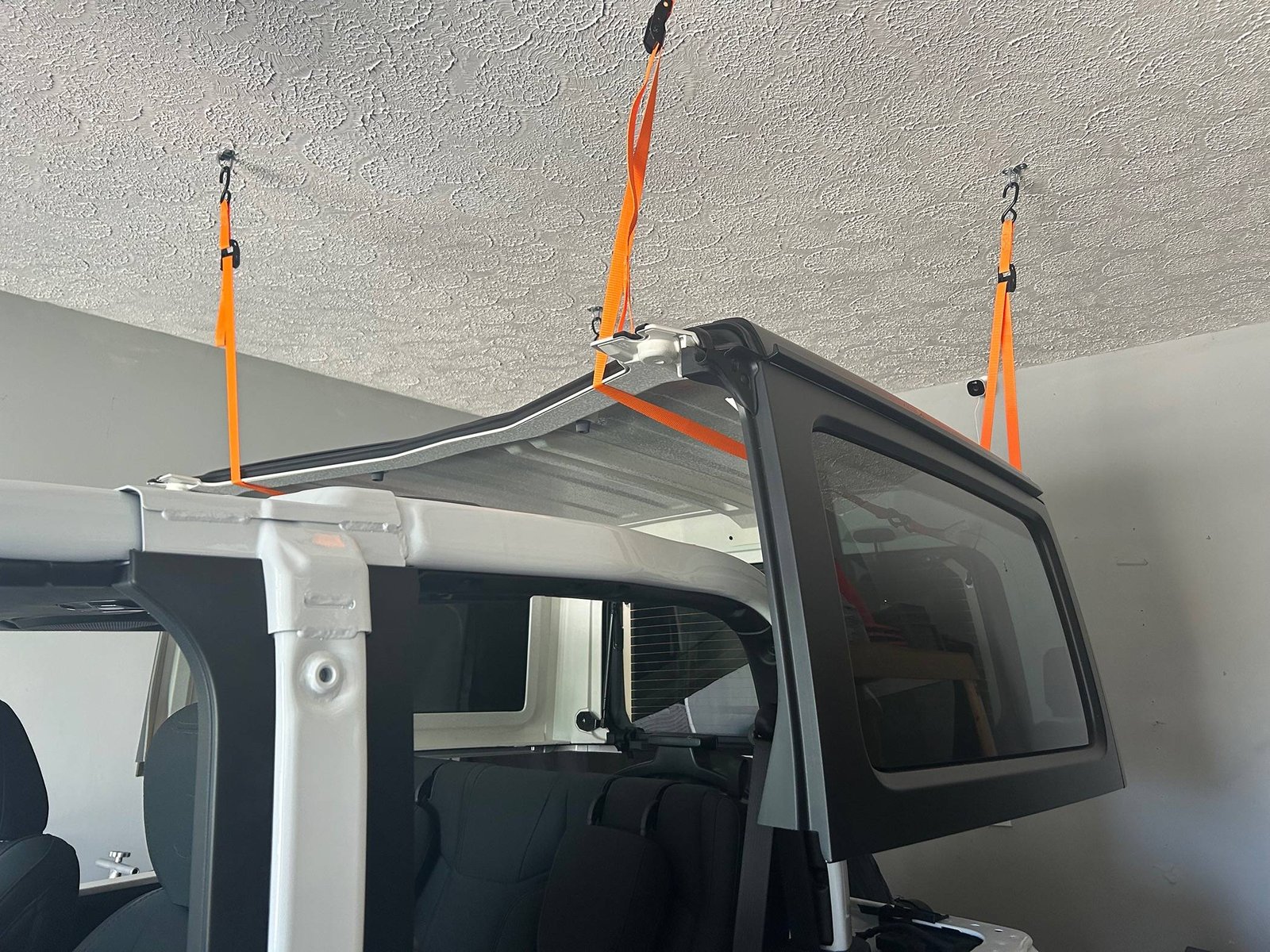
Hanging a Jeep hardtop in your garage is a smart way to save floor space and protect your investment. If you own a Jeep Wrangler or Gladiator, you know removing the hardtop can be a challenge, especially if you have limited storage.
Lifting and storing the hardtop safely is not just about convenience it's also about avoiding scratches, cracks, or injuries. With the right setup, you can turn a tough job into a simple, one-person task.
This guide walks you through the process, explains the best methods, and highlights common mistakes to avoid. Whether you’re planning a DIY solution or considering a pre-made system, you’ll find practical advice and clear steps to follow.
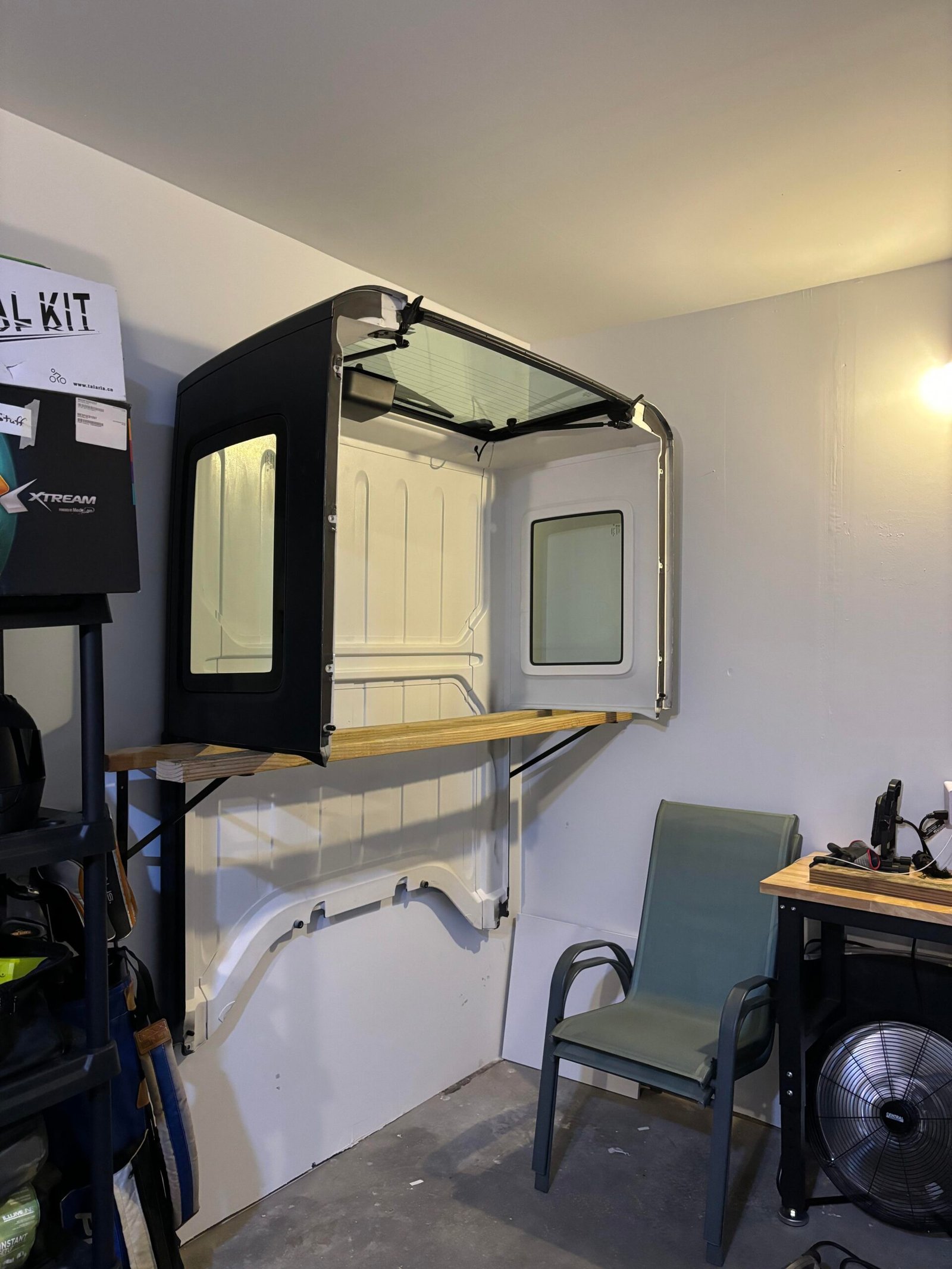
Why Hang A Jeep Hardtop In Your Garage?
Jeep hardtops are heavy—often weighing between 120 and 150 pounds—and awkward to move. Storing them on the garage floor risks damage from tools, bikes, or moisture. Hanging the top uses vertical space, freeing up room for other gear or vehicles.
Benefits include:
- Prevents hardtop damage from bumps or scratches
- Saves garage space
- Makes reinstalling the hardtop easier
- Reduces risk of injury when handling alone
Choosing The Right Hanging System
There are three main systems for hanging a Jeep hardtop:
| System Type | Cost Range | Skill Level | Main Benefit |
|---|---|---|---|
| Manual Pulley Hoist | $50 – $200 | Intermediate | Affordable and reliable |
| Electric Hoist | $150 – $500 | Beginner | Effortless lifting |
| DIY Rope & Pulley | $30 – $100 | Advanced | Custom fit and low cost |
- Manual pulley hoists are the most popular. They use ropes or straps and a hand-operated system to lift the top.
- Electric hoists make lifting nearly effortless and are ideal for one-person use.
- DIY rope and pulley setups are cheapest but require careful planning and strong anchor points.
Pro tip: Always check your garage ceiling’s load capacity. Most hardtops need at least 200 pounds of support.
Tools And Materials Needed
Before you start, gather these items:
- Hoist system (manual or electric)
- Mounting hardware (lag bolts, anchors)
- Drill and bits
- Stud finder
- Measuring tape
- Protective straps or slings
- Ladder or step stool
- Socket wrench
For DIY setups, use 1/4-inch steel cable or heavy-duty rope rated for at least 200 pounds.
Step-by-step Guide To Hanging A Jeep Hardtop
1. Measure Your Space
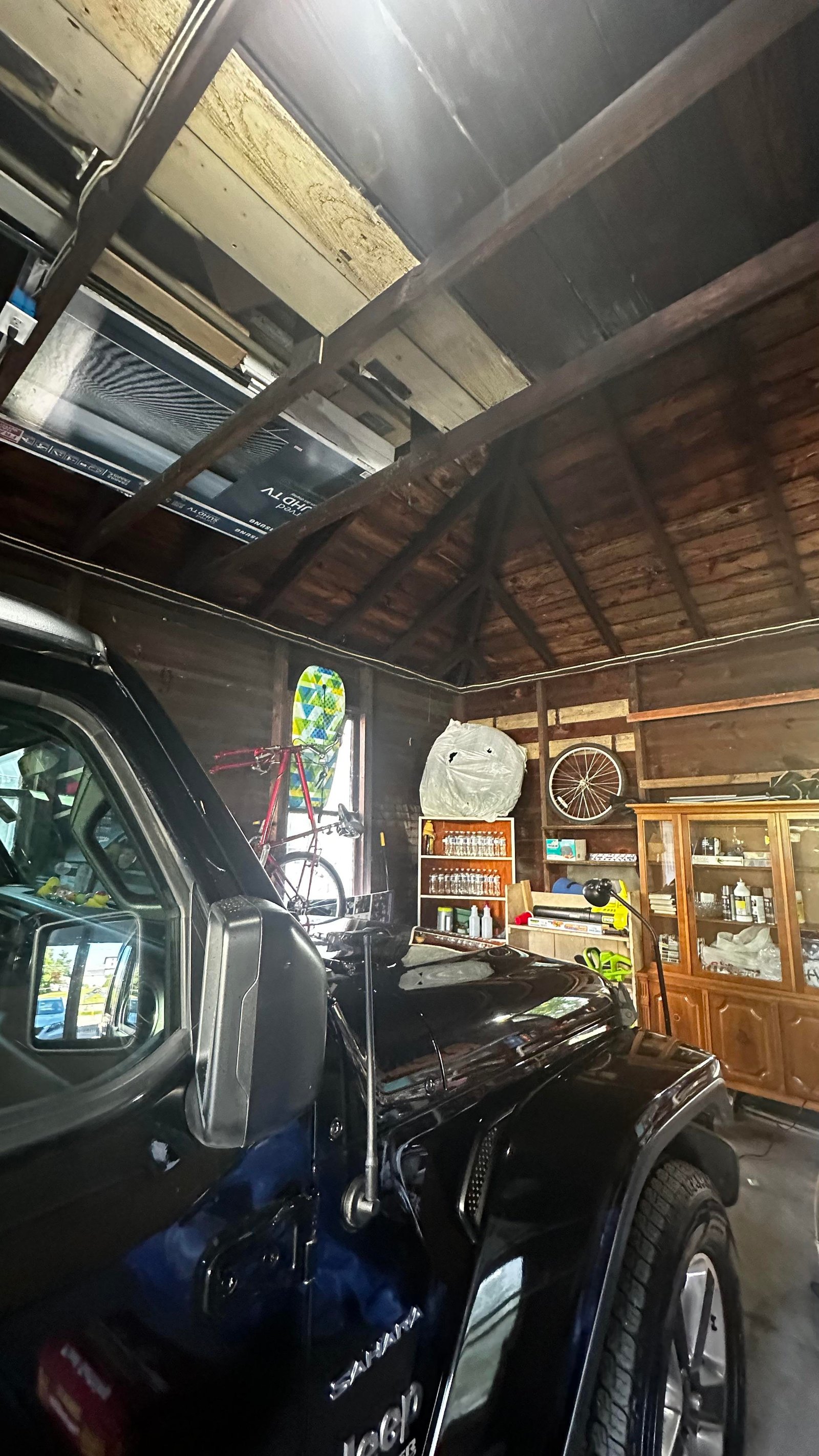
Use a tape measure to check your garage ceiling height. You need at least 8 feet of clearance to lift most hardtops above a vehicle.
- Find ceiling joists with a stud finder.
- Mark anchor points at least 36 inches apart for stability.
2. Install The Hoist System
Follow the manufacturer’s instructions for your hoist. For most manual hoists:
- Drill pilot holes into ceiling joists.
- Install mounting hardware firmly.
- Attach the hoist frame or pulley block.
For electric hoists, plug into a grounded outlet and test the lift before loading.
3. Attach Straps To The Hardtop
Use padded straps or slings to avoid scratching the surface. Loop the straps through the factory hardtop holes or around strong points.
- Double-check the straps are even.
- Avoid over-tightening, which can crack fiberglass.
4. Lift The Hardtop
With the hoist system ready:
- Slowly raise the hardtop, keeping it level.
- Stop lifting if you hear cracking or see bending.
- Raise the top until there’s at least 1 foot of clearance above your vehicle.
5. Secure And Store
Once lifted, lock the hoist in place. For added safety, use a backup rope tied to a separate anchor.
- Never leave the hardtop partially suspended.
- Check all hardware twice each season.
Comparing Manual Vs Electric Hoists
Is an electric hoist worth the extra money? Here’s a quick comparison:
| Feature | Manual Hoist | Electric Hoist |
|---|---|---|
| Price | Lower | Higher |
| Ease of Use | Requires effort | Push-button operation |
| Installation | Simple tools | Needs power outlet |
| One-person Operation | Possible | Very easy |
Manual hoists are great if you’re on a budget and don’t mind some lifting. Electric hoists are better for regular use or if you want a truly easy lift.
Common Mistakes And How To Avoid Them
Many Jeep owners make these errors when hanging their hardtop:
- Missing ceiling studs: Hardware in drywall alone will not hold the weight.
- Uneven lifting: Lifting from one side first may crack the hardtop.
- Cheap straps: Using old or weak straps can cause sudden drops.
- Ignoring safety checks: Failing to double-check anchors risks damage or injury.
Insider tip: Always inspect your hoist setup before each season. Temperature and humidity can loosen hardware over time.
Practical Tips For Success
- Label your straps and hardware for easy seasonal setup.
- Place foam padding on your garage floor during installation.
- If using a DIY pulley, add a safety knot as a backup.
- Store the hardtop with windows facing up to avoid scratches.
For in-depth technical info on ceiling joists and load ratings, check resources like the Wikipedia page on ceiling joists.
Frequently Asked Questions
How Much Does A Jeep Hardtop Weigh?
Most Jeep Wrangler and Gladiator hardtops weigh between 120 and 150 pounds. Always check your owner’s manual for the exact number.
Can I Hang A Hardtop By Myself?
Yes, especially with an electric hoist. Manual hoists or DIY setups are best with two people for safety.
Will Hanging The Hardtop Damage It?
Not if you use padded straps, lift evenly, and avoid over-tightening. Always lift from factory-approved points.
What Is The Best Ceiling Height For Hanging A Hardtop?
At least 8 feet is recommended. This gives enough clearance above your vehicle and keeps the hardtop safely out of the way.
Can I Use A Bike Hoist System For My Jeep Hardtop?
Only if it’s rated for at least 200 pounds. Most bike hoists are not strong enough for a Jeep hardtop—always check the weight rating.
Hanging your Jeep hardtop in your garage is a practical project that protects your hardtop and saves space. With the right tools and careful setup, you’ll enjoy hassle-free storage for years to come.