Getting off-road with a Jeep Wrangler is an adventure many drivers love. But before you hit muddy trails or snowy roads, you need to know how to engage the 4 wheel drive system safely and correctly. Many Jeep owners, especially beginners, are unsure about the right steps or when to use each mode. Making a mistake can damage your Jeep or leave you stuck. Here’s a practical guide to engaging 4WD in a Jeep Wrangler, breaking down each step for new and experienced drivers alike.
Understanding Jeep Wrangler 4 Wheel Drive
Jeep Wranglers are famous for their part-time 4WD systems. This means you can switch between two-wheel drive (2H) and four-wheel drive (4H, 4L) as needed. Some models also have an Auto mode, but most off-roaders use the main four settings:
- 2H (Two-Wheel Drive High)
- 4H (Four-Wheel Drive High)
- N (Neutral)
- 4L (Four-Wheel Drive Low)
Knowing when and how to use each mode is key to safe, confident driving.
1. 2h (two-wheel Drive High)
The 2H setting is for regular, everyday driving on dry, paved roads. In this mode, power goes only to the rear wheels, which gives better fuel economy and a smoother ride.
- When to use: Dry pavement, highways, city driving.
- How to engage: Most Wranglers start in 2H by default. No action is needed.
Tip: Do not use 4H or 4L on dry pavement. These modes are for low-traction situations and can cause tire wear or drivetrain damage if used incorrectly.

2. 4h (four-wheel Drive High)
4H gives power to all four wheels, which helps with traction on slippery surfaces like snow, sand, mud, or gravel. It’s the most common 4WD mode for off-road adventures and winter roads.
- When to use: Rainy roads, light off-road, snow, or sand.
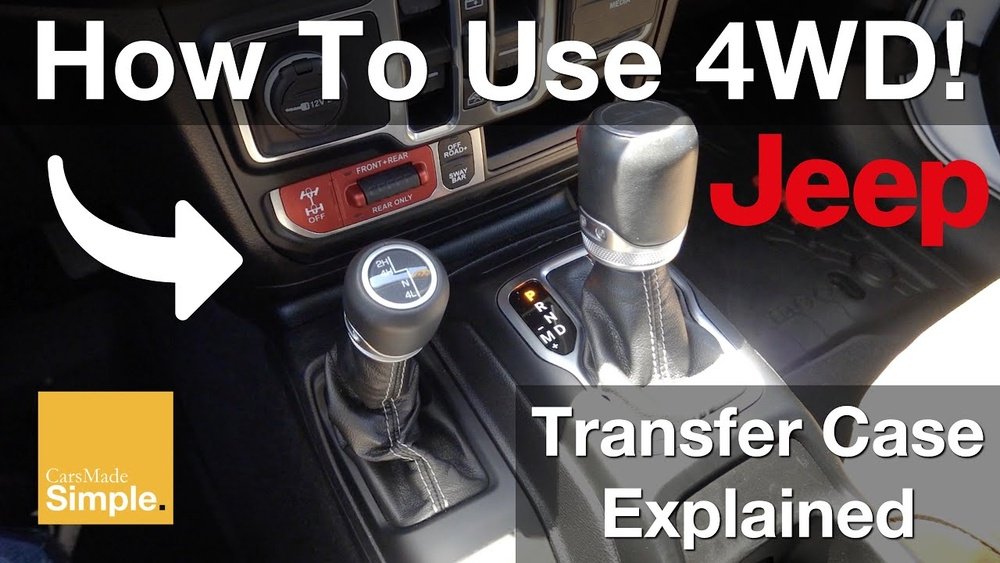
- How to engage: Slow down to under 55 mph (88 km/h). Move the transfer case lever from 2H to 4H. On many models, you can shift “on the fly” without stopping or shifting to neutral.
Example: You’re driving on a snowy highway and start to feel your rear wheels slip. Simply slow down a bit and shift into 4H for better control.
Common Mistakes In 4h
Many beginners forget to slow down before shifting into 4H. Always reduce speed to avoid gear grinding.
If you hear a loud clunk or resistance, stop, and try again gently.
3. N (neutral)
The Neutral setting disconnects the transmission from the wheels. This is not for driving. It’s used mainly when towing your Wrangler with all wheels on the ground (flat towing).
- When to use: Only for towing or during certain recovery operations.
- How to engage: Stop the vehicle completely. Shift the transmission to neutral, then move the transfer case lever to N.
Warning: Never drive with the transfer case in Neutral. It can cause drivetrain damage and you’ll have no power to the wheels.
4. 4l (four-wheel Drive Low)
4L is for extreme situations where you need maximum power and control at low speeds—like rock crawling, deep mud, steep hills, or pulling another vehicle out.
- When to use: Deep snow, mud, climbing rocks, steep off-road slopes.
- How to engage:
- Bring your Wrangler to a complete stop.
- Keep your foot on the brake.
- Shift the automatic transmission to neutral (or press the clutch for manual).
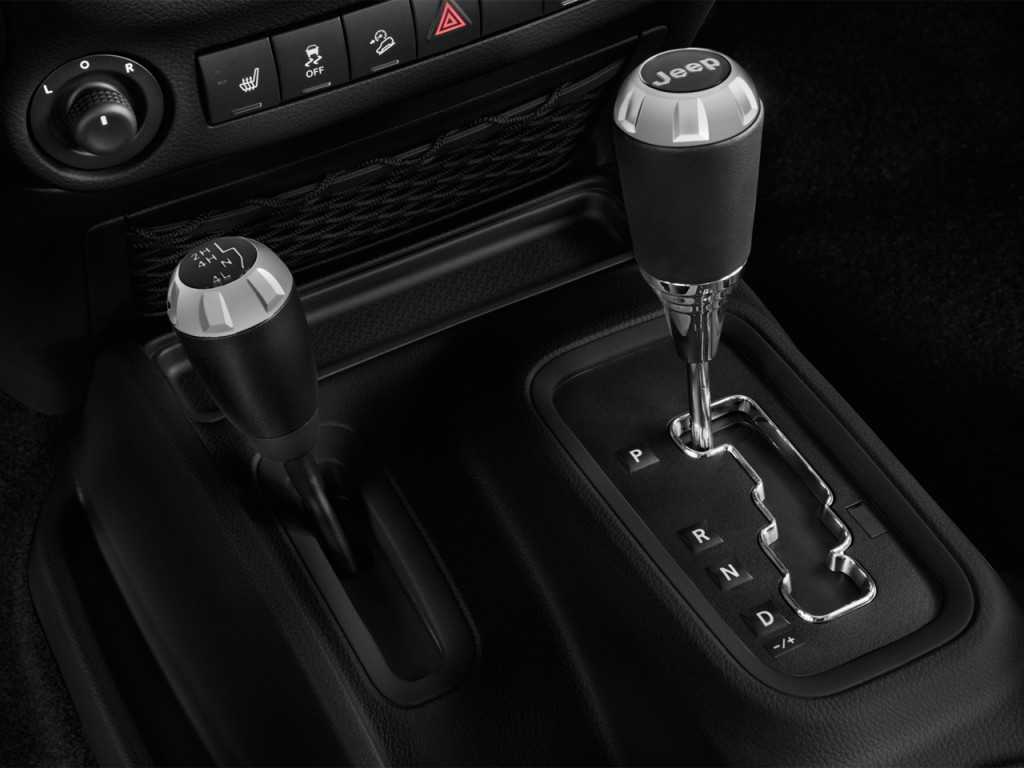
- Firmly pull the transfer case lever from 4H directly into 4L.
- Shift the transmission back to drive or first gear and release the brake gently.
Tip: Do not use 4L for daily driving. It’s designed for low-speed, high-torque situations only.
How 4h And 4l Compare
Here’s a quick look at key differences:
| Mode | Speed Range | Best For | Torque |
|---|---|---|---|
| 4H | Up to 55 mph | Snow, sand, light off-road | Normal |
| 4L | Below 25 mph | Rocks, deep mud, steep hills | High |
Step-by-step: Engaging 4 Wheel Drive In Your Wrangler
Here’s a simple sequence to follow for each mode:
- Identify the road condition—Is it slippery, rocky, or normal?
- Select the right mode—2H for dry, 4H for slippery, 4L for tough terrain.
- Shift the lever slowly—Never force the transfer case lever.
- Check the dashboard—Look for the 4WD indicator light to confirm engagement.
Example: Switching From 2h To 4h
- Slow down under 55 mph.
- Keep driving straight.
- Move the transfer lever from 2H to 4H.
- Watch for the 4WD light on your dashboard.
If you hear loud noises or the 4WD light blinks, stop and repeat the process more gently.

Practical Tips For New Jeep Owners
- Always practice shifting between modes in a safe, empty parking lot before heading off-road.
- Avoid sharp turns in 4H or 4L on pavement; this can cause drivetrain binding.
- Use the owner’s manual for your Wrangler’s specific year, as systems may differ.
- If you plan to tow, learn the correct steps for the Neutral position to prevent damage.
- For more technical details, the official Jeep Off-Road Guide is a reliable resource.
Comparing Wrangler 4wd Engagement With Other Suvs
Jeep Wranglers use a manual lever for 4WD, while many modern SUVs use electronic switches or buttons. Here’s a comparison:
| Vehicle | 4WD Engagement | User Control |
|---|---|---|
| Jeep Wrangler | Manual lever | Full (driver decides) |
| Toyota 4Runner | Electronic dial | Automatic/Manual |
| Ford Bronco | Electronic dial | Automatic/Manual |
Insight: Manual systems like Jeep’s give more control, but require more driver knowledge.
Frequently Asked Questions
What Happens If I Use 4h Or 4l On Dry Pavement?
Using 4H or 4L on dry roads causes drivetrain binding, which can damage your Jeep and wear out your tires quickly. Only use these modes on loose or slippery surfaces.
Can I Switch From 2h To 4h While Driving?
Yes, you can shift “on the fly” below 55 mph. Always slow down first and shift gently while driving straight.
Why Does My 4wd Indicator Light Blink Or Not Turn On?
A blinking or absent 4WD light usually means the system is not fully engaged. Stop, shift to neutral, and try again.
Check your owner’s manual if the problem continues.
Is Neutral (n) The Same As Transmission Neutral?
No. Transfer case Neutral disconnects the transmission from the wheels for towing, while transmission neutral just stops sending power from the engine.
How Often Should I Use 4wd To Keep It Working?
Engage 4WD for a few minutes every month, even on dry ground (in a straight line), to keep the system lubricated and in good working order.
Knowing how to engage 4 wheel drive in your Jeep Wrangler isn’t just about following steps—it’s about understanding your vehicle and using the right mode for the right situation. With these tips, you’ll have more confidence whether you’re tackling winter roads or exploring rugged trails. Drive smart and enjoy your adventures!