Drawing a Willys Jeep can be a fun and rewarding experience, whether you’re an artist, a history lover, or just exploring a new creative hobby. The Willys Jeep is an iconic vehicle, known for its rugged design and historic role in World War II.
Capturing its unique shape and features on paper is not as hard as it seems, even for beginners. In this guide, you’ll learn how to draw a Willys Jeep step by step, from understanding its proportions to adding final details and shading.
Along the way, you’ll pick up tips that make your sketch stand out, plus some common mistakes to avoid.
What Makes The Willys Jeep Unique?
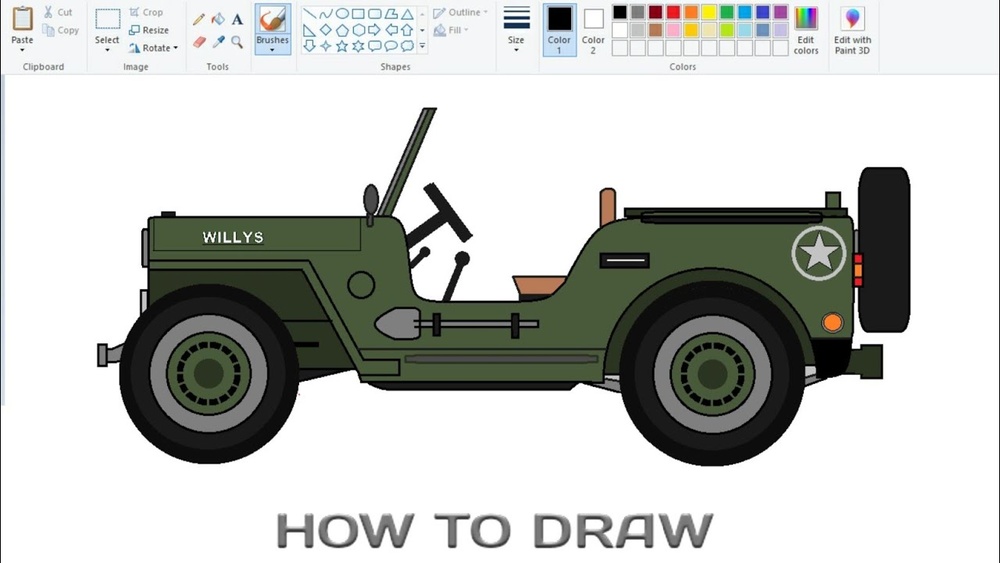
Before starting your drawing, it helps to know what sets the Willys Jeep apart. This vehicle has a boxy, compact body, flat fenders, round headlights, and a distinctive vertical-slat grille.
Unlike modern SUVs, the Willys Jeep was built for function over style, with simple lines and a practical layout.
These unique features are important to capture in your drawing.
| Feature | Willys Jeep | Modern SUV |
|---|---|---|
| Grille | Vertical slats | Horizontal mesh or plastic |
| Headlights | Round | Shaped (oval, rectangular) |
| Body Shape | Boxy, flat panels | Sleek, curved |
| Fenders | Flat, wide | Integrated, curved |
Recognizing these details helps you avoid generic shapes and makes your Willys Jeep instantly recognizable.
Materials You’ll Need
You don’t need expensive art supplies to get started. Here’s what works best:
- Pencil (HB or 2B for sketching)
- Eraser (preferably kneaded)
- Ruler (for straight lines)
- Fine-liner pen or ink pen (for final outlines)
- Paper (A4 or US Letter)
- Colored pencils or markers (optional for color)
If you want to add extra realism, use a reference photo of a real Willys Jeep. It helps with proportions and details.
Planning Your Drawing: Proportions And Basic Shapes
Before you start drawing, spend a minute looking at a Willys Jeep photo. Notice how the body is almost a rectangle, and the wheels sit outside the main body, under flat fenders.
The grille sits in the center, with two large round headlights on either side.
Laying Out The Basic Structure
- Draw a horizontal rectangle for the main body. This is the foundation.
- Mark the wheel positions—about one wheel’s width from each end of the rectangle. Willys Jeeps have a short wheelbase, so the wheels are closer together than on many cars.
- Lightly sketch circles for the wheels, making sure they overlap the bottom edge of the body rectangle.
- Draw a smaller rectangle above the main body for the windshield area.
This basic framework helps keep everything in proportion. Many beginners draw the body too long or the wheels too small; using simple shapes solves this.
Drawing The Jeep Step By Step
Now you’ll add detail and bring your Willys Jeep to life.
Step 1: Outline The Main Body
With your pencil, go over the rectangle you drew for the body, adjusting the lines to match the flat sides and squared corners of the Jeep. The front and rear should be nearly vertical, with the roofline flat or slightly angled.
Step 2: Shape The Fenders And Wheels
Draw the flat fenders above each wheel. They’re like small rectangles sticking out from the body. Add a curve at the edges to show the metal shape.
Refine the wheel circles so they look even. Willys Jeeps have large, rugged wheels. Draw the tires thick, and add simple hubcaps or details inside.
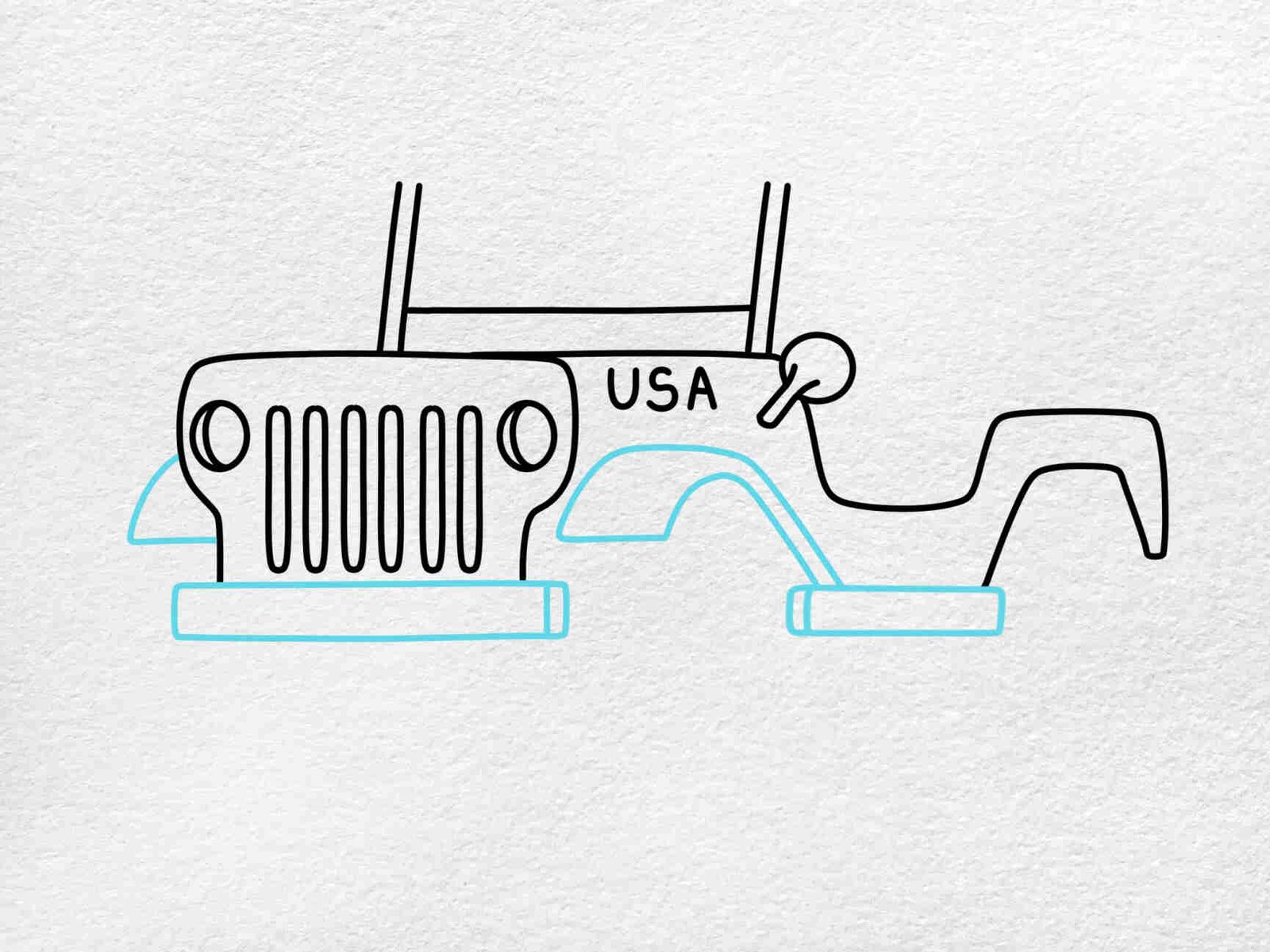
Step 3: Add The Grille And Headlights
At the front of the vehicle, draw the vertical-slat grille. It usually has seven or nine vertical bars. Place two large circles on either side for the headlights. Below the grille, add a simple bumper (a thin rectangle).
Step 4: Sketch The Windshield And Interior
The windshield is a flat rectangle, sometimes divided in the middle. Lightly indicate the glass panels and the frame. Inside, you can add a simple steering wheel and seats, but keep them basic for now.
Step 5: Draw The Doors And Side Details
Outline the doors—Willys Jeeps often have simple, flat doors or even open sides. Add handles, hinges, or a mirror if you like. Sketch the side steps (thin rectangles) under the doors.
Step 6: Final Details
Now add smaller touches that make the drawing look real:
- Hood latches and fuel cap (small circles or rectangles)
- Spare tire on the rear
- Canvas top (optional—draw as a simple curve or rectangle above the windshield)
- Simple lines for the hood and body panels
Take your time with these details; they make a big difference.
Inking And Finalizing Your Drawing
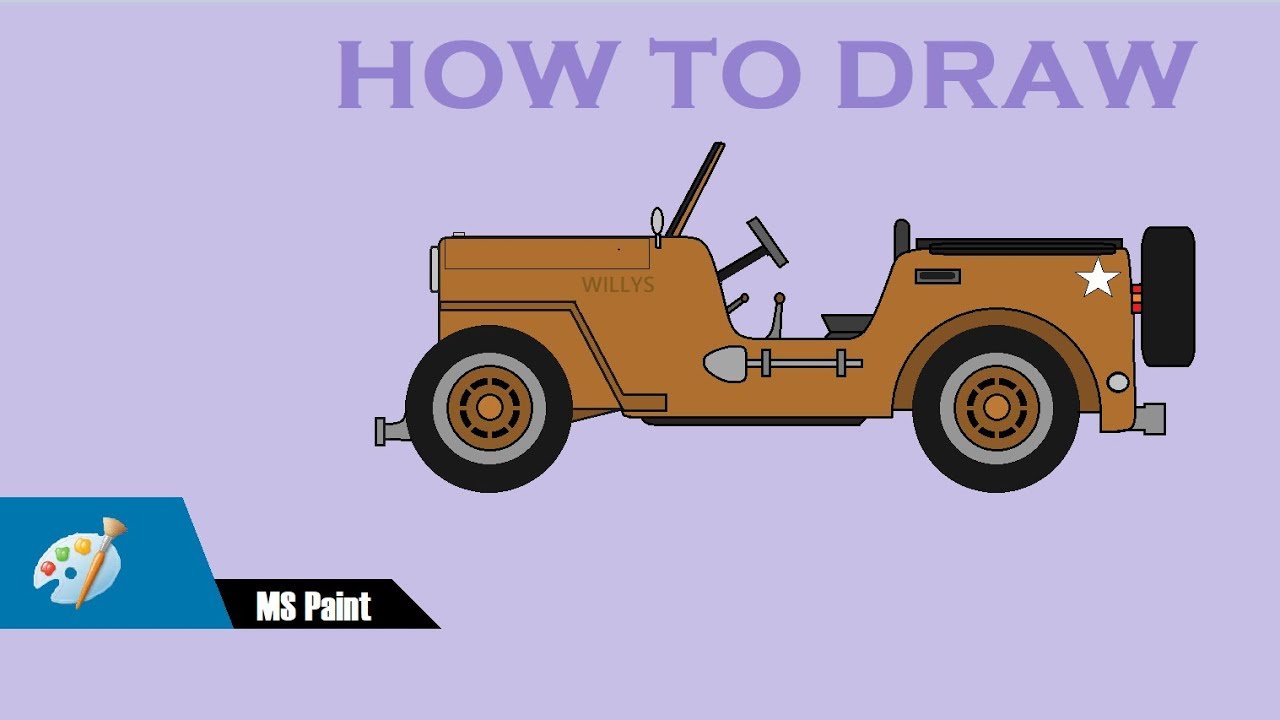
Once you’re happy with your pencil sketch, go over your lines with a fine-liner pen. Use steady, confident strokes.
Wait until the ink dries, then erase any extra pencil marks.
Adding Texture And Shading
To make your Jeep look three-dimensional, add some shading:
- Use hatching (parallel lines) to show shadow under the fenders and wheels.
- Darken the inside of the grille slats and under the Jeep.
- Lightly shade the tires and inside the wheel wells.
- If there’s a canvas top, use curving lines to show folds.
Remember, the Willys Jeep is not a shiny sports car; it’s rugged. Keep your shading a bit rough for a realistic effect.
Coloring (optional)
Many Willys Jeeps are painted olive drab green or army beige. Use colored pencils or markers if you want to add color. Shade lightly and blend colors for a natural look. Add a hint of brown or gray for mud or dust, especially around the wheels and lower panels.
Common Mistakes To Avoid
Drawing a Willys Jeep is easier when you know what to watch out for:
- Wheels too small or too close together—check your proportions with a ruler.
- Missing grille details—the vertical slats are a signature feature.
- Overcomplicating the interior—keep dashboard and seats simple.
- Forgetting fender shapes—flat fenders are key to the Jeep’s look.
- Rushing ink work—let pencil lines guide you; don’t ink too soon.
Beginners often miss the way the fenders and wheels relate double-check that the wheels stick out from the body under the fenders, not tucked inside.
How To Make Your Willys Jeep Drawing Stand Out
If you want your drawing to look less like a beginner’s sketch and more like a finished piece, try these tips:
- Add a background—a dirt road, forest, or battlefield scene.
- Include gear—draw a jerry can, shovel, or rope on the side for extra realism.
- Show movement—sketch dust clouds behind the wheels or a driver inside.
- Use reference images—compare your work to real Jeep photos and adjust.
Non-obvious insight: Adding a slight tilt to the wheels (as if turning) creates a dynamic look. Also, drawing reflections in the windshield with simple diagonal lines gives a sense of glass.
Comparing The Willys Jeep To Other Classic Vehicles
To appreciate the unique look of your drawing, here’s how the Willys Jeep compares with other classic military vehicles:
| Vehicle | Year Introduced | Main Use | Design Feature |
|---|---|---|---|
| Willys Jeep | 1941 | Recon, transport | Flat fenders, vertical grille |
| Dodge WC Series | 1941 | Troop, cargo | Rounded fenders, larger body |
| Volkswagen Kübelwagen | 1940 | Light transport | Angular body, rear engine |
This comparison helps you notice why the Willys Jeep’s shape is so iconic and why it’s instantly recognizable.
Practice Exercises To Improve Your Drawing Skills
Drawing the Willys Jeep once is great, but practicing with variations helps you get better. Try these exercises:
- Draw the Jeep from different angles—front, side, and three-quarter view.
- Sketch with only straight lines to focus on structure.
- Time yourself—try a quick 5-minute Jeep sketch, then a detailed 30-minute version.
- Use different shading styles—cross-hatching, stippling, or smooth shading.
Each exercise helps you see the Jeep’s form and details more clearly.
Real-world Examples And Inspiration
Many artists and illustrators include Willys Jeeps in their work, from comic books to military history books. Some even specialize in vehicle art. Look for inspiration in:
- Vintage advertisements and manuals
- Military history illustrations
- Online art communities (like DeviantArt or Behance)
For a deeper look at the Willys Jeep’s history and technical details, visit the Willys MB Wikipedia page. This resource offers photos and background that can boost your drawing accuracy.
Frequently Asked Questions
What Size Should I Draw My Willys Jeep?
Start with a drawing about 6 to 8 inches long (15 20 cm). This gives enough room for detail but is easy to manage on standard paper.
How Do I Make The Wheels Look Round And Even?
Use a small cup or a round object as a template to trace perfect circles. Check that the wheels are level and the same size.
Can I Draw The Willys Jeep Digitally?
Yes! Use a basic drawing app or tablet.
The same steps apply start with simple shapes, then add detail and color. Digital tools let you erase and adjust easily.
What Colors Should I Use For An Authentic Look?
Classic Willys Jeeps are usually olive drab green or beige. Tires are black, and metal parts are silver or gray. For a modern twist, try custom colors.
Where Can I Find Good Reference Photos?
Look for Willys Jeep images on official military history sites, museums, or the Wikipedia Willys MB page. High-quality photos help with details and accuracy.
Drawing a Willys Jeep is about more than just copying a picture it’s about understanding its history and design. Each sketch helps you improve, and with practice, you’ll capture the Jeep’s tough, adventurous spirit on paper.
Grab your pencil and start creating your own piece of history today!