Building your own Jeep top lift can make removing and storing your Jeep’s hardtop much easier. If you love off-roading or enjoy driving your Jeep open-air, a top lift lets you handle the heavy, awkward roof without needing extra hands. Many Jeep owners build their lifts at home to save money and get the exact features they want. In this guide, you’ll learn how to plan, build, and safely use a Jeep top lift—even if you’re not an expert with tools.
Why Build A Jeep Top Lift?
The hardtop on a Jeep Wrangler or Gladiator can weigh between 140 and 150 pounds. It’s also big and hard to grip. Lifting alone can be risky for your back and your paint job. A simple DIY top lift helps you:
- Remove the top alone, quickly
- Store it safely overhead, saving garage space
- Reduce the risk of damage or injury
Most homemade lifts are cheaper than buying commercial systems, which can cost $200–$600. With basic materials and some time, you can build a strong, safe lift for less.
Planning Your Jeep Top Lift
Before you start, think about your garage space and your Jeep’s model. Not every lift fits every garage or ceiling.
Types Of Jeep Top Lifts
| Lift Type | Pros | Cons |
|---|---|---|
| Manual Pulley | Cheap, simple, no power needed | Slower, requires effort |
| Winch (Electric or Hand) | Easy lifting, good for heavy tops | Costs more, needs power (if electric) |
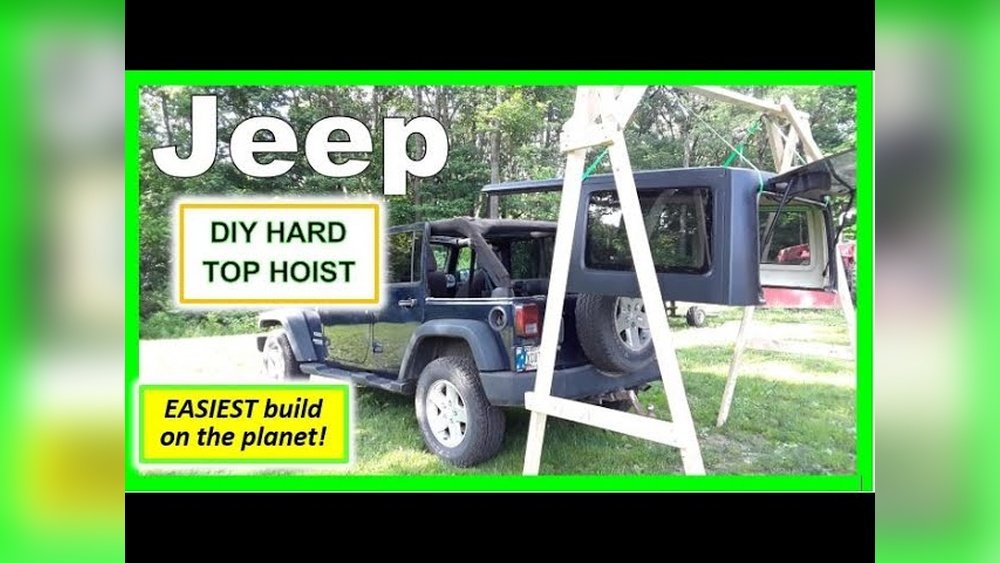
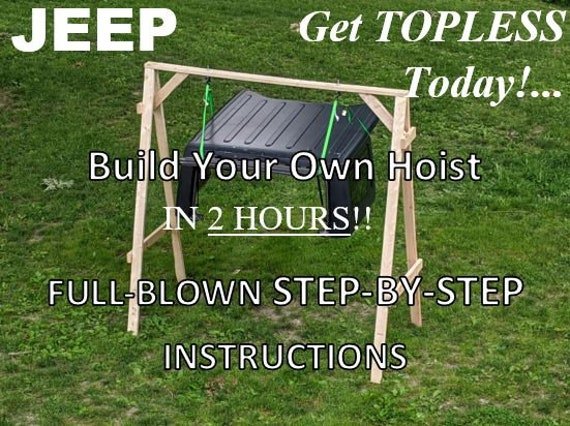
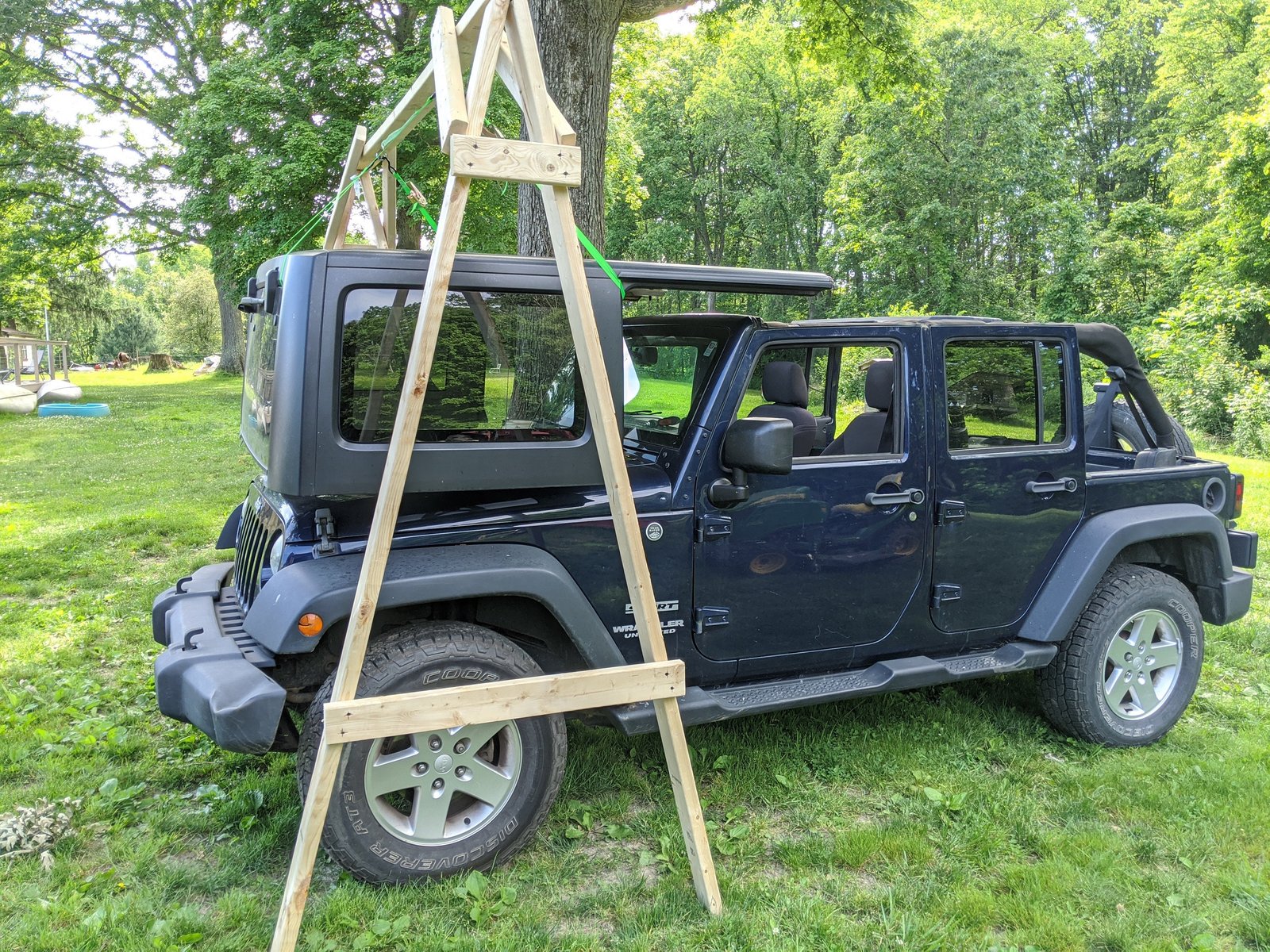
| Hoist with Frame | Very stable, mobile | Takes floor space, more complex |
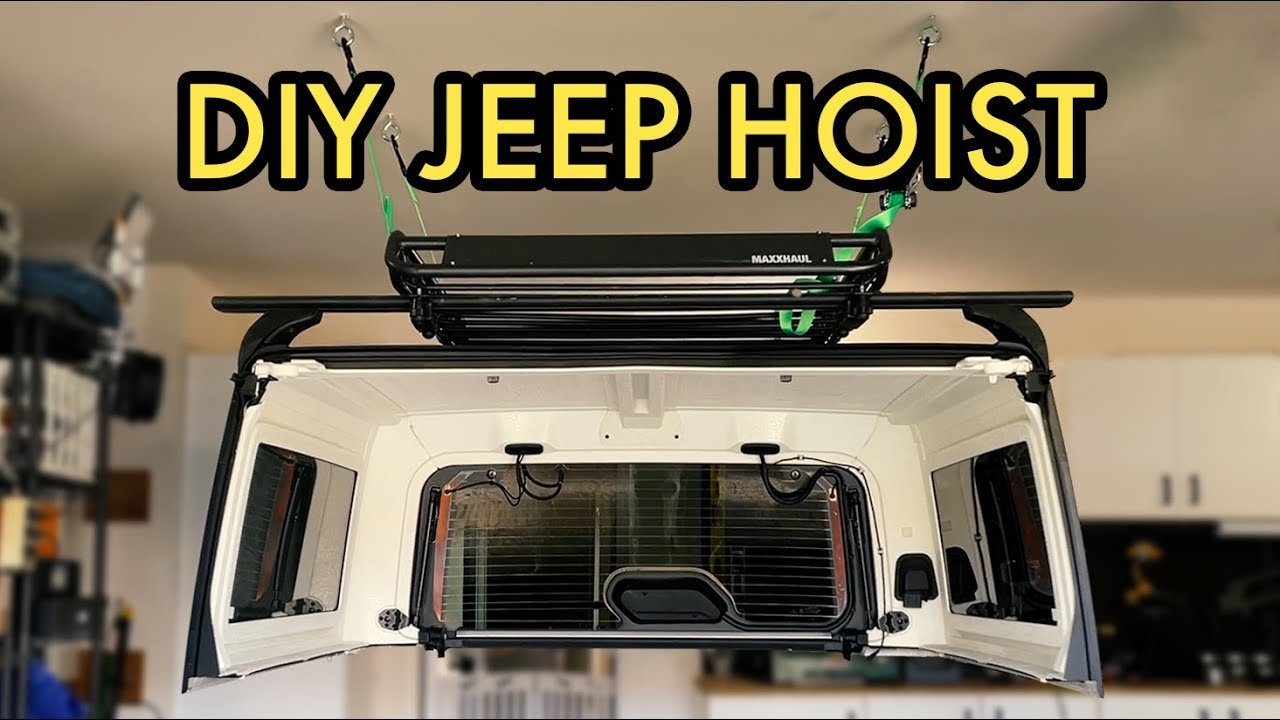
Most DIYers choose a manual pulley or a basic hand winch for safety and low cost.
Space And Safety
- Ceiling height: You need at least 8 feet to lift and store a hardtop overhead.
- Joist strength: Your ceiling must support at least 200 pounds.
- Obstacles: Check for garage doors, lights, or pipes in the way.
Materials And Tools Needed
Here’s what you need for a basic overhead pulley lift:
- Strong eye bolts (1/2″ or larger, rated for 200+ lbs)
- Heavy-duty pulleys (2-4, rated for 200+ lbs)
- Rope or cable (3/8″ or thicker, braided nylon or steel)
- Two lifting straps or webbing (6 ft each, 1,000+ lbs rating)
- Manual hand winch (optional, for easier lifting)
- Lag bolts, washers, and nuts
- Drill and bits
- Socket wrench
- Stud finder
- Measuring tape
You can find these at hardware stores or online.
Step-by-step Building Instructions
1. Locate Ceiling Joists
Find sturdy joists above your Jeep. Use a stud finder for accuracy. Mark two spots about 3 feet apart (wider than your Jeep’s roof).
2. Install Eye Bolts
Drill pilot holes into the joists. Install eye bolts deeply so they sit flush with the wood. Tighten with a wrench.
3. Mount Pulleys
Attach pulleys to the eye bolts. If using a winch, mount it on the wall nearby, anchored into a stud.
4. Thread Rope Or Cable
Run the rope or cable through the pulleys. The end should reach down to Jeep roof height.
5. Attach Lifting Straps
Loop two straps under your Jeep’s hardtop one near the front and one near the rear. Make sure straps are flat and not twisted.
6. Connect Straps To Rope
Secure the straps to the rope with strong carabiners or knots. Double-check all connections.
7. Test The Lift
Gently pull the rope or use the winch to lift the hardtop an inch. Check for slipping or creaking. If everything holds, raise the top fully.
8. Store The Top Overhead
Lift the top until it clears the Jeep. Drive your vehicle out from under it.
Raise the top a bit higher to store it safely overhead.
Safety Tips And Common Mistakes
Never trust drywall or weak ceiling beams. Always use solid joists. Two common mistakes are:
- Underestimating weight: Some ropes or bolts look strong but can snap under load.
- Poor anchoring: If you miss the joist, the lift can fail dangerously.
A good rule: Always use parts rated for double your Jeep top’s weight. Inspect your lift every few months for wear.
Extra Features And Upgrades
Some Jeep owners add:
- Electric winch for push-button lifting
- Rubber padding on straps to protect paint
- Quick-release hooks for faster setup
- Locking cleats to prevent slipping
These features add cost but increase ease and safety.
Cost Comparison
Here’s how a DIY lift compares to a popular store-bought system:
| System | Approximate Cost | Assembly Time |
|---|---|---|
| DIY Pulley Lift | $50–$100 | 2–3 hours |
| Store-Bought Hoist | $200–$600 | 1–2 hours |
DIY lifts save money and can be customized, but require more time and careful installation.
Real-world Example
Jeep owner Mike built a top lift in his 9-foot garage with two pulleys, a $35 winch, and four eye bolts. He lifts his Wrangler hardtop in under 10 minutes.
After two years, his system still works perfectly thanks to regular checks and strong parts.
Frequently Asked Questions
How Much Weight Will My Jeep Top Lift Need To Hold?
Most Jeep hardtops weigh 140–150 pounds. Your lift should be rated for at least 200 pounds for safety.
Can I Build A Jeep Top Lift If My Garage Ceiling Is Low?
A ceiling under 8 feet is possible, but you might not be able to store the top overhead. Consider a rolling frame lift instead.
Is An Electric Winch Worth It?
If you remove your top often or have limited strength, an electric winch saves effort. Manual lifts work well for most people.
How Do I Protect My Jeep’s Paint When Lifting?
Use wide, padded straps. Never use chains or bare metal. Always check strap placement before lifting.
Where Can I See More Jeep Top Lift Designs?
You can find photos and plans on forums or the JeepForum, which has many DIY guides and ideas.
Building your own Jeep top lift gives you freedom and saves money. With careful planning and the right materials, you’ll enjoy open-air driving anytime without needing a helping hand.


















