Building your own Jeep top hoist can make removing and storing your hardtop much easier. Jeep hardtops are heavy and awkward to handle alone.
A hoist lets you lift and park the top safely overhead, all by yourself. Many Jeep owners spend hundreds on commercial hoists, but you can create a reliable system for far less.
If you want to save money, protect your hardtop, and enjoy more open-air driving, this guide will show you how to build a Jeep top hoist at home.
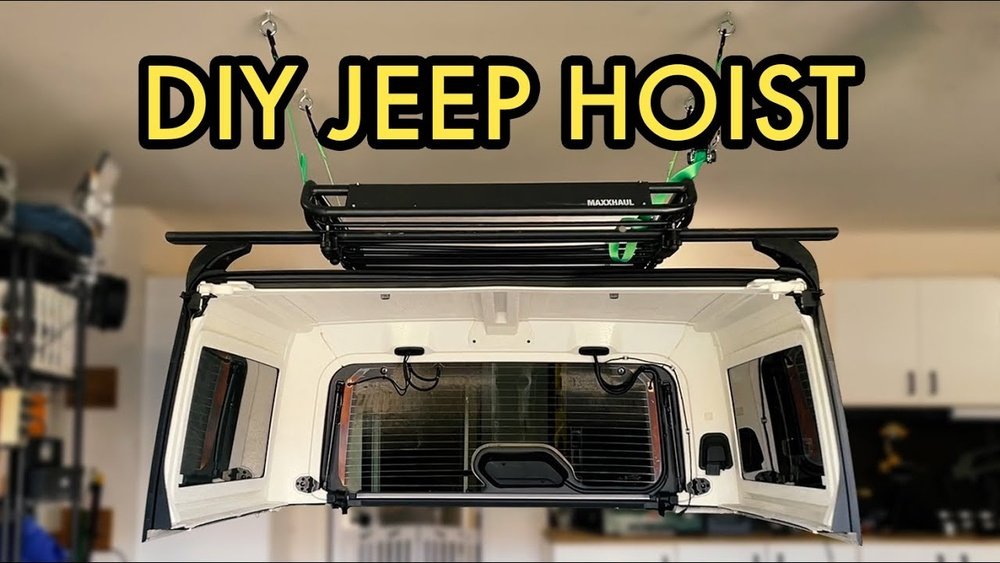
Why Build A Jeep Top Hoist?
If you own a Jeep Wrangler, especially the hardtop models, you know the top is bulky and weighs about 100–150 pounds. Removing it without help risks scratches, damage, or even injury. With a homemade hoist, you can:
- Lift the top easily by yourself
- Store the top safely off the ground
- Free up garage space
- Save money compared to buying a commercial hoist
A well-built hoist makes the job safer, quicker, and protects your investment.
What You Need: Materials And Tools
Before starting, gather the needed items. Many can be found at hardware stores or ordered online.
Materials:
- 2 heavy-duty ratchet straps (minimum 400 lb rating)
- 1 pulley block (rated 400 lbs or more)
- 1 ceiling mount hook/lag eye bolt (rated 400 lbs or more)
- 1 hand winch (manual or electric, rated 400 lbs or more)
- 2-3 lengths of strong rope (nylon or polyester, 1/4″ to 3/8″ thick)
- 2 foam pool noodles or pipe insulation (optional, for padding)
- 4 soft loops or webbing straps
Tools:
- Power drill with wood bit
- Stud finder
- Ladder
- Socket wrench or adjustable wrench
- Tape measure
- Pencil or chalk for marking
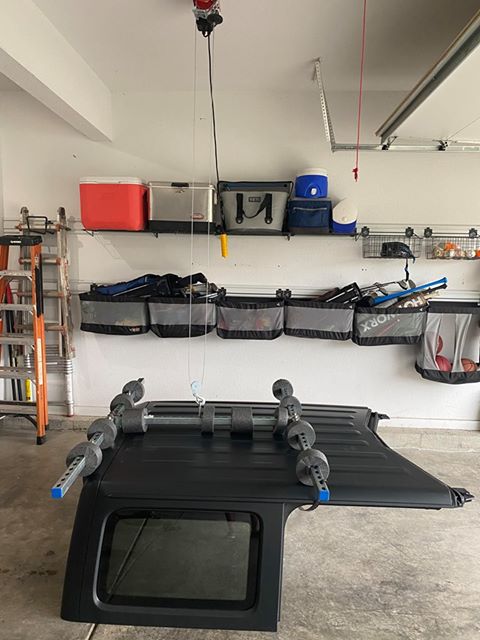
Step-by-step Guide To Building Your Hoist
1. Find The Right Spot
Use a stud finder to locate a ceiling joist in your garage. The joist must support the weight of the hardtop and the hoist system. Mark the center point above where your Jeep will park.
2. Install The Ceiling Hook
Drill a pilot hole into the joist. Screw in the lag eye bolt or heavy-duty hook. Tighten securely—this holds all the weight.
3. Attach The Pulley Block
Clip or attach the pulley block to the ceiling hook. Make sure the pulley hangs straight down and spins freely.
4. Mount The Winch
Bolt the hand winch to a wall stud nearby or use a portable winch you can anchor. If using an electric winch, ensure there’s a safe power supply.
5. Prepare The Lifting Straps
Wrap two soft loops or webbing straps around each side of the Jeep hardtop. Place foam pool noodles or pipe insulation between straps and the top to prevent scratching.
6. Thread The Rope
Pass your rope through the pulley. Attach one end to the straps on the hardtop.
Tie strong knots (like a bowline) or use carabiners for quick release.
7. Hoist The Top
Stand clear and crank the winch slowly, lifting the hardtop a few inches at a time. Make sure it stays balanced.
Raise the top until it’s clear of the Jeep.
8. Secure And Store
Once the top is high enough, tie off the rope or lock the winch. Double-check the straps and all connections.
Back your Jeep out, leaving the hardtop suspended.
Cost Comparison: Diy Vs Commercial Hoist
Building your own hoist can save a lot compared to buying a ready-made system.
| Option | Average Cost | Installation Difficulty |
|---|---|---|
| DIY Hoist | $60–$120 | Moderate |
| Commercial Hoist | $180–$500 | Easy |
A DIY hoist costs less, but you need basic tools and some time. Commercial hoists are quick to install but much more expensive.
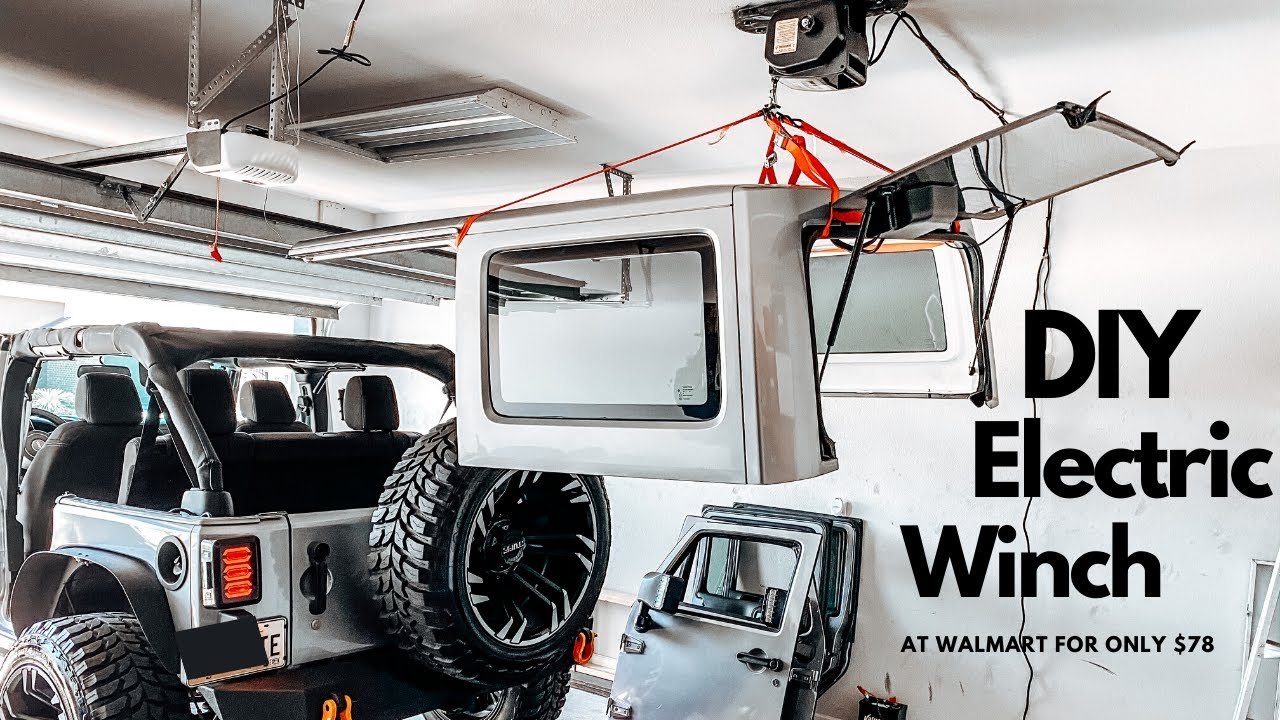
Safety Tips And Common Mistakes
A hoist is only safe when built and used correctly. Here are some important tips:
- Always use hardware rated well above your hardtop’s weight
- Double-check all knots and connections before lifting
- Never let anyone stand under the hardtop while it’s suspended
- Inspect straps and ropes for wear each time you use the hoist
- If the top swings or tilts, lower it and readjust the straps
A common mistake is anchoring the hoist to drywall or a weak spot always find a strong ceiling joist. Also, avoid using cheap ropes or hardware; failure can lead to serious damage or injury.
Advantages Of A Home-built Hoist
A DIY system is not just about saving money. You can customize it to fit your garage, Jeep model, and ceiling height.
If you have a high ceiling, add extra rope or a longer winch cable. If you want to move the top sideways, add a second pulley for horizontal movement.
These adjustments are hard to get with commercial kits.
Many owners also pad their straps with leftover towels or foam to prevent scratches. Small touches like this make a big difference.
Some even add labels or color codes to straps for easier reinstallation.
Real-world Example
One Jeep owner, Sarah from Texas, built her hoist for under $80. She used a manual winch, two ratchet straps, and a heavy-duty pulley.
With her setup, she removes her top in 10 minutes, stores it above her Jeep, and has never had a scratch or drop.
Comparison: Manual Vs Electric Winch
Choosing between a manual and electric winch depends on your budget and needs.
| Winch Type | Cost | Effort | Best For |
|---|---|---|---|
| Manual | $30–$60 | Physical cranking | Budget DIYers |
| Electric | $80–$200 | Push-button ease | Frequent users |
For most people, a manual winch is enough for 1 2 uses per year. If you swap tops often, electric may be worth the extra cost.
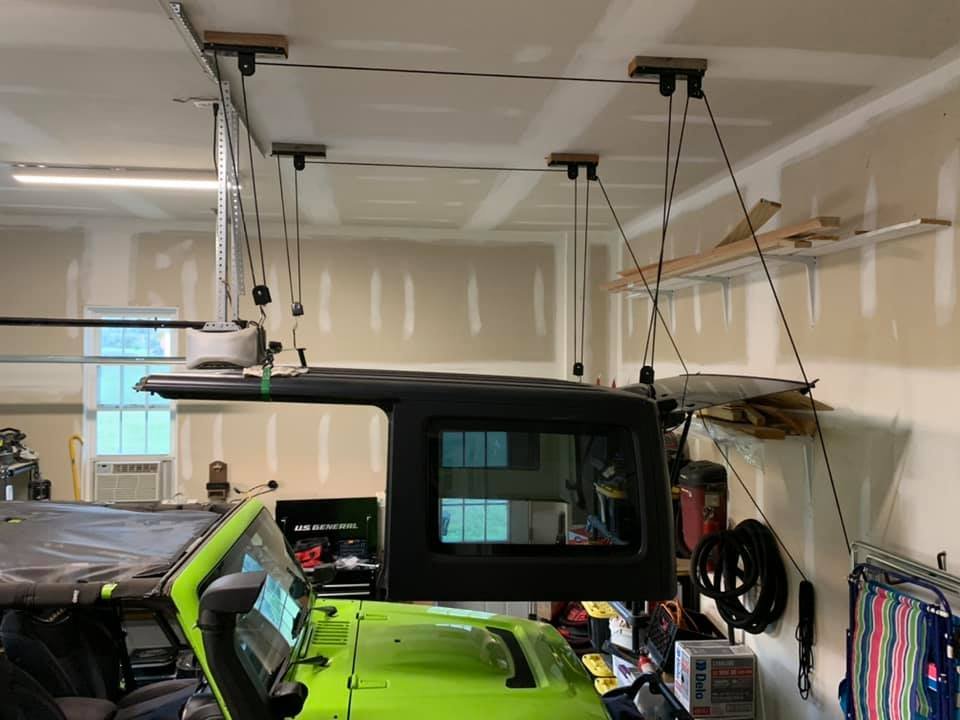
Frequently Asked Questions
What Weight Rating Should My Hoist Have?
Your hoist should be rated at least twice the weight of your Jeep hardtop. Most Wrangler tops weigh 100–150 lbs, so a 400 lb rating gives a safe margin.
Can I Use A Bike Or Kayak Hoist For My Jeep Top?
Some kayak hoists can work if rated high enough, but many are not designed for this weight or shape. Always check the load rating before using non-Jeep products.
Is It Safe To Leave The Hardtop Hanging For Months?
If built with quality parts and checked regularly, it is safe. Still, consider lowering the top to the ground if you will not use the Jeep for a long period.
How Long Does It Take To Build A Hoist?
Most people can complete the project in 2–3 hours, including setup and testing. Having a friend help can make installation easier.
Where Can I Find More Detailed Plans Or Videos?
You can find helpful guides and videos at Wrangler Forum and similar Jeep communities.
Building your own Jeep top hoist is a smart, satisfying project. With the right materials, a bit of time, and careful setup, you can make top removal easy and safe for years to come.
Enjoy the open air, and keep your hardtop protected!