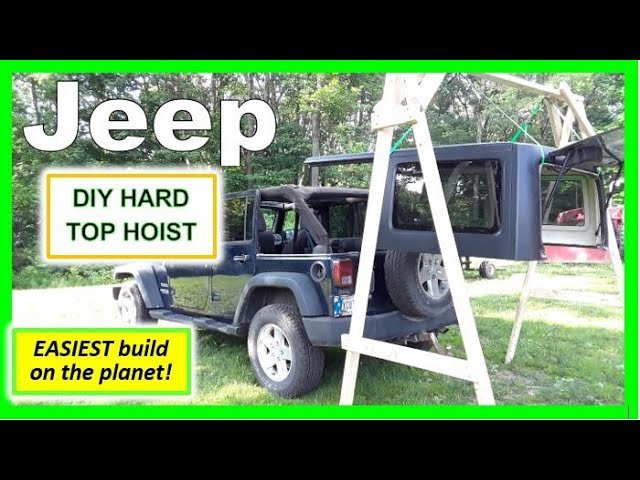
Building your own Jeep hardtop lift can make removing and storing your Jeep’s hardtop much easier. Lifting the heavy, awkward top alone is challenging, and asking for help every time gets old. With the right setup, you can do it safely by yourself, save space, and avoid damaging your hardtop. Many Jeep owners choose a DIY solution to avoid the high prices of commercial lifts. Let’s see how you can build a practical, reliable hardtop lift at home, even if you have little experience with tools.
What Is A Jeep Hardtop Lift?
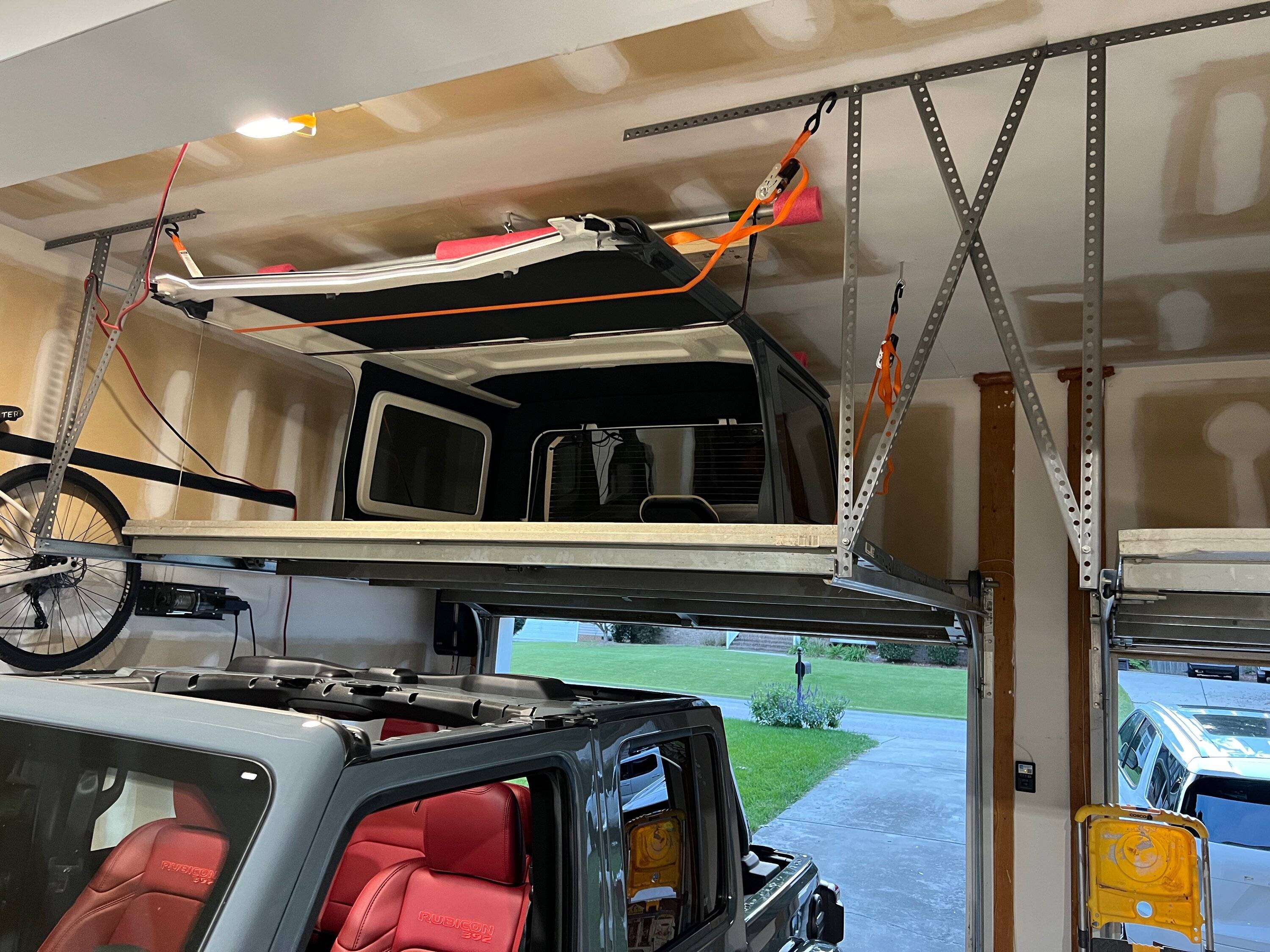
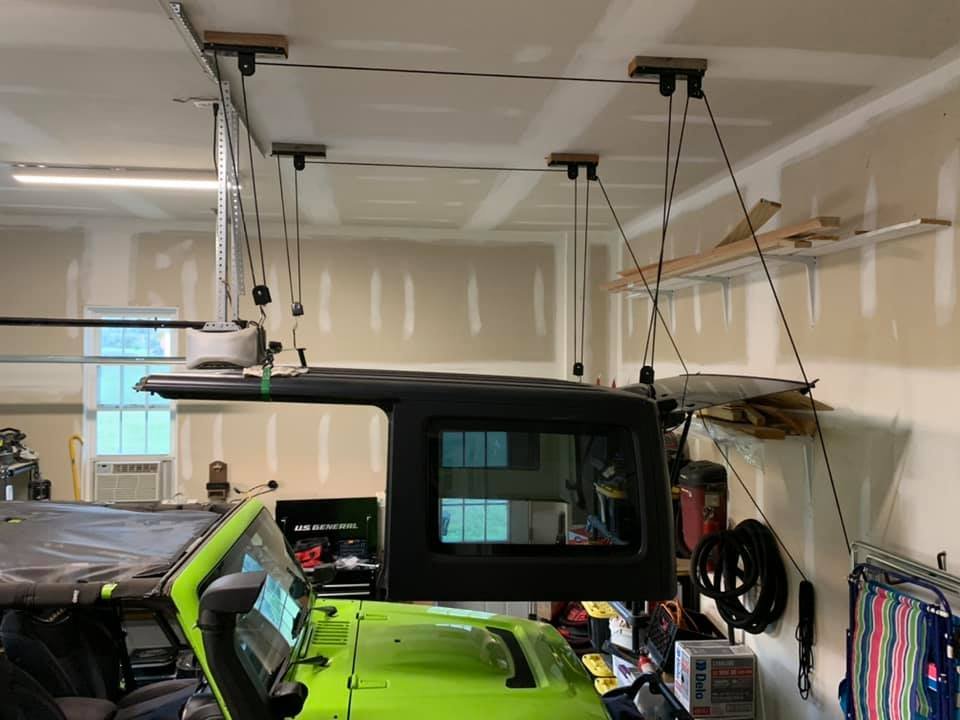
A hardtop lift is a mechanical device that helps you raise and store the Jeep’s hardtop overhead. Most use a pulley or winch system mounted to the garage ceiling. The lift supports the weight of the top, so you don’t need to strain your back or ask for extra hands.
There are two main types:
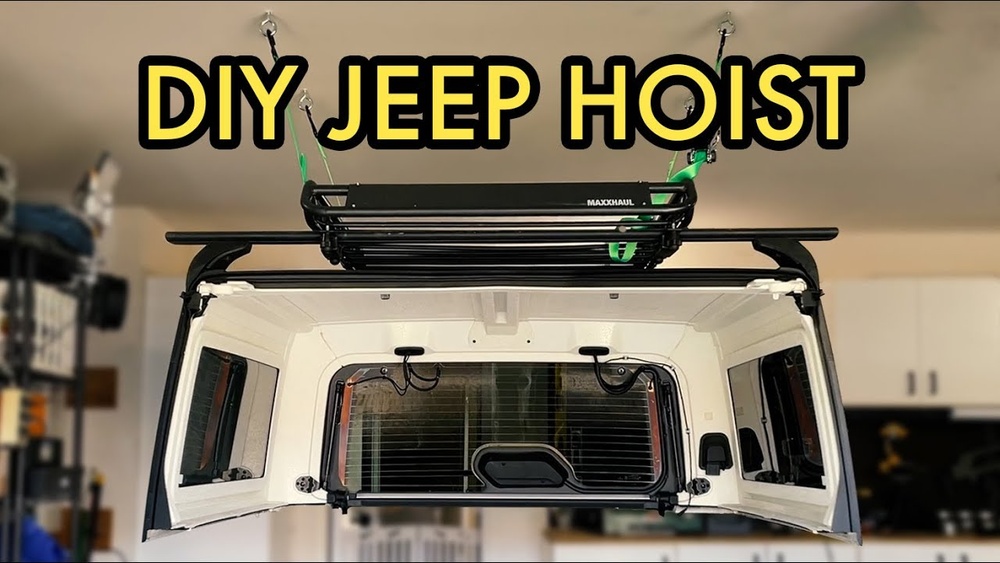
- Manual pulley systems: Use ropes and pulleys to lift the top.
- Electric winch systems: Use a powered winch to do the heavy lifting.
Building your own system can save $200 $700 compared to commercial kits. Plus, you can customize it to fit your garage space.
Tools And Materials Needed
Gather these items before starting. This list is for a basic manual pulley system, which is affordable and effective.
- 4 heavy-duty ceiling hooks or eye bolts (rated for 200+ lbs each)
- 2–4 pulleys (sheave wheels), strong enough for 150–200 lbs
- 50 feet of braided nylon rope (at least 3/8″ thick, 300+ lbs rating)
- 4 ratchet straps or adjustable webbing straps
- Drill and 1/4″ or 3/8″ drill bit
- Stud finder
- Measuring tape
- Wrench set or socket set
- Ladder
- Optional: Small hand winch (for easier lifting)
If you want an electric system, you’ll also need:
- Electric winch (500 lbs rating)
- Power outlet near the ceiling
Here’s a quick comparison of costs:
| Component | Manual Pulley Cost | Electric Winch Cost |
|---|---|---|
| Pulleys & Rope | $40–$60 | N/A |
| Winch | N/A | $100–$200 |
| Hardware | $20–$30 | $20–$30 |
| Total | $60–$90 | $120–$230 |
Step-by-step Guide To Building A Jeep Hardtop Lift
1. Find The Right Spot In Your Garage
Choose a spot where you can park your Jeep under the lift and still walk around. The ceiling needs to be at least 8 feet high. Use a stud finder to locate ceiling joists. Never anchor into drywall alone.
2. Measure And Mark The Mounting Points
Measure the width and length of your Jeep hardtop. Mark four points on the ceiling joists that match the corners of the hardtop.
These marks will be where you install the hooks or eye bolts.
3. Install Ceiling Hooks Or Eye Bolts
Drill pilot holes at each marked spot. Screw in the eye bolts or hooks until they are snug. Test each one by hanging from it briefly (if safe), or by pulling down with your full body weight. This checks that they are secure.
4. Attach The Pulleys And Rope
Hang a pulley from each hook. Thread the rope through the pulleys so you have a continuous loop. One end will be the lifting side, the other the lowering side. Make sure the rope is free of knots or frays.
5. Prepare The Straps
Wrap ratchet straps or webbing straps around each corner of your hardtop. Attach the straps to the rope using strong carabiners or knots. The straps should be tight but not damage the hardtop edges.
6. Lifting The Hardtop
With all straps in place, start pulling the rope to lift the hardtop. Go slowly, keeping the top level.
Raise it just high enough to clear the Jeep body. Park the Jeep away, then raise the top fully to the ceiling for storage.
If using a winch, follow the same steps but use the winch remote or handle to lift.
7. Securing And Storing
Once the top is lifted, tie off the rope securely to a wall cleat or hook. Double-check all straps and knots before letting go.
Keep the hardtop at least 12 inches from the ceiling for air flow.
Here’s a table showing the main differences between manual and electric systems:
| Feature | Manual Pulley | Electric Winch |
|---|---|---|
| Price | Low | Medium–High |
| Setup Difficulty | Easy | Moderate |
| Lifting Effort | Physical | Minimal |
| Maintenance | Very Low | Low–Medium |
| Speed | Moderate | Fast |
Tips For Safe And Smooth Operation
- Check all hardware for rust or wear every season.
- Avoid cheap rope—braided nylon is stronger and lasts longer.
- Never lift with people or pets under the hardtop.
- Use two people for your first lift, even if the system is designed for solo use.
- Store the Jeep top on the lift only when fully supported and stable.
A common mistake is not checking for joist alignment—many garages have joists that don’t match the hardtop’s size. In that case, use a wooden beam across multiple joists, then mount your hardware to the beam.
Another tip: Label your straps by corner (front left, rear right, etc.) so you can set up faster next time.
Benefits Of Building Your Own Jeep Hardtop Lift
- Saves money compared to buying commercial lifts
- Custom fit for your garage and Jeep model
- Safer storage reduces the risk of dropping or scratching the top
- One-person operation after setup
Some Jeep owners even use their lift to hang other large items, like canoes or rooftop tents, during the off-season.
For more info on Jeep hardtop removal and accessories, check the official Jeep Accessories page.
Frequently Asked Questions
How Much Weight Can A Typical Diy Hardtop Lift Hold?
Most Jeep hardtops weigh 120–150 lbs. A well-built DIY system with strong hardware can safely hold up to 200 lbs. Always use hardware rated higher than your top’s weight for safety.
Can I Use My Hardtop Lift For Other Vehicles Or Items?
Yes, as long as the item fits the lift’s size and weight limits. Many people use the same system for truck bed covers, kayaks, or bicycles.
Is An Electric Winch Safer Than A Manual Pulley System?
Both are safe when built correctly. However, an electric winch reduces physical strain and can be more consistent. Manual systems have fewer parts that can fail.
What Ceiling Height Is Needed For A Jeep Hardtop Lift?
A minimum ceiling height of 8 feet is recommended. This allows enough space to lift the top above your Jeep and still park underneath.
Do I Need Special Tools Or Skills?
Basic DIY skills are enough—measuring, drilling, and tying knots. If you’re not comfortable with ceiling work, ask a friend or hire help.
Building your own Jeep hardtop lift is a smart way to save time and money. With careful setup and strong hardware, you’ll enjoy easy, safe hardtop removal for years.