If you recently bought a Jeep or are curious about driving off-road, you might wonder how to use 4 wheel drive. Many beginners find the controls confusing. With the right steps, though, you can enjoy better traction and safety on rough terrain. This guide explains how to use the four main 4WD modes found in most Jeeps. You’ll also learn when to use each, common mistakes, and get practical tips for smooth driving.
Understanding Jeep 4 Wheel Drive
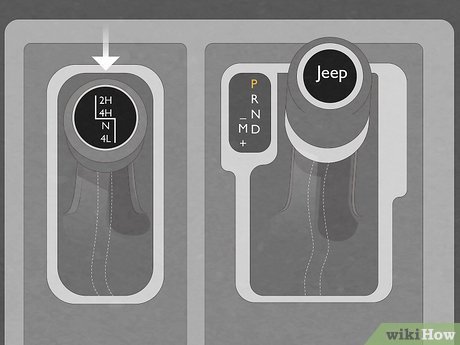
Modern Jeeps come with several 4WD systems. The most common are Command-Trac, Rock-Trac, and Selec-Trac. These systems let you switch between two-wheel drive (2H), four-wheel drive high (4H), four-wheel drive low (4L), and sometimes Auto mode. Knowing when and how to use these modes can help you avoid damage and get the best performance.
Here’s a quick comparison of what each mode does:
| 4WD Mode | Best For | Speed Range | Traction |
|---|---|---|---|
| 2H | Normal roads | All speeds | Rear wheels only |
| 4H | Snow, sand, mud | Up to 55 mph | All wheels |
| 4L | Steep hills, rocks | Below 25 mph | Maximum grip |
| Auto | Changing conditions | All speeds | Automatic |
How To Use 2h (two-wheel Drive High)
2H is the default mode for most daily driving. In this mode, only the rear wheels receive power, which helps with fuel efficiency.
- When to use: Dry pavement, highways, city roads.
- How to engage: Most Jeeps start in 2H. If not, shift the lever or press the button marked “2H” while stopped or moving slowly.
- Why it matters: Using 2H on normal roads reduces tire wear and saves gas.
Beginner insight: Some think using 4WD all the time is safer, but on dry roads, it can actually harm your drivetrain and reduce efficiency.
How To Use 4h (four-wheel Drive High)
Switch to 4H when you need more traction. This mode powers all four wheels and is good for slippery or loose surfaces.
- When to use: Snow, mud, gravel, light off-roading.
- How to engage: Slow down to under 55 mph. Move the 4WD lever from 2H to 4H, or press the 4H button. In most Jeeps, you can do this “on the fly” while moving slowly.
- Why it matters: 4H helps prevent wheels from spinning and keeps you moving in tricky conditions.
Practical tip: Always return to 2H when back on dry pavement. Using 4H on dry roads can cause binding—a situation where drivetrain parts fight each other, leading to wear or damage.
How To Use 4l (four-wheel Drive Low)
4L is for the toughest conditions. It gives maximum power at low speeds, which is important for climbing, descending, or crawling over rocks.
- When to use: Deep sand, snow, mud, steep hills, rocky trails.
- How to engage: Come to a complete stop. Shift the transmission to Neutral (N), then move the 4WD lever from 4H to 4L. Wait for the indicator light to confirm.
- Why it matters: 4L multiplies engine torque, letting you control the Jeep at very slow speeds without straining the engine.
Common mistake: Engaging 4L while moving can damage the transfer case. Always stop and shift to Neutral first.
Here’s a summary of when to use each mode:
| Road Condition | Recommended Mode |
|---|---|
| Dry pavement | 2H |
| Wet or icy roads | 4H or Auto |
| Deep mud/sand | 4L |
| Rock crawling | 4L |
| Changing weather | Auto |
How To Use Auto (automatic 4wd)
Some newer Jeeps feature an Auto mode. This mode automatically switches between 2WD and 4WD as needed.
- When to use: Mixed conditions (dry, wet, patches of ice or snow).
- How to engage: Turn the dial or press the “Auto” button. The system handles everything—no need to switch back and forth.
- Why it matters: Auto mode gives peace of mind if you’re unsure about the road ahead.
Beginner insight: Many drivers forget Auto mode still requires regular tire rotations and matching tire sizes to work correctly. Uneven tires can confuse the system.
Common 4wd Problems And How To Avoid Them
Understanding how to use your Jeep’s 4WD can prevent expensive repairs. Here are some issues and how to avoid them:
- Drivetrain binding: Happens when using 4H or 4L on dry pavement. Always switch to 2H if the surface is not slippery.
- Incorrect shifting: Forcing the lever can break the transfer case. Always follow the correct steps.
- Tire mismatch: All tires must be the same size and wear. Mismatched tires can damage the 4WD system.
Tips For Smooth 4wd Operation
- Practice shifting between modes in a safe, open area.
- Always consult your Jeep’s manual for specific instructions.
- Check for indicator lights—if a mode doesn’t engage, stop and try again.
- Keep tire pressure consistent for best performance.
- After using 4L, shift back to 2H or 4H on level ground to avoid strain.
Frequently Asked Questions
What Is The Main Difference Between 4h And 4l?
4H is for higher speeds and loose surfaces like snow or sand. 4L is for very low speeds and tough obstacles like rocks or deep mud. 4L multiplies torque and slows the Jeep, giving you more control.
Can I Switch From 2h To 4h While Driving?
Yes, in most Jeeps, you can shift from 2H to 4H while moving below 55 mph. Always do it at a steady speed and avoid sharp turns.
Is It Bad To Use 4wd On Dry Pavement?
Yes. Using 4WD on dry roads can cause drivetrain binding, tire wear, and even mechanical damage. Only use 4WD on slippery or loose surfaces.
How Do I Know If 4wd Is Working?
Look for the 4WD indicator light on your dashboard. You should also feel more grip and control on slippery surfaces. If the light flashes or you hear strange noises, check your manual or visit a mechanic.
Where Can I Learn More About Jeep 4wd Systems?
For more detailed information, visit the official Jeep 4×4 page for guides, videos, and tips.
Driving a Jeep with 4 wheel drive opens up new adventures, but using the right mode at the right time is key. Practice shifting, check your tires, and respect the limits of each system.
With these basics, you’ll be ready for both the highway and the trail.


















