Getting your Jeep JK ready for tough trails or slippery roads means knowing how to use its 4WD system. Many owners feel unsure about when and how to shift their Jeep into 4-wheel drive, especially if they’re new to off-roading. The process is simple when you know what to do—and doing it right protects your drivetrain and keeps you safe.
This guide explains how to put a Jeep JK in 4WD, the differences between 4H and 4L, and common mistakes to avoid. You’ll also find quick-reference tables and answers to frequent questions at the end.
Understanding Your Jeep Jk’s 4wd System
The Jeep JK Wrangler comes with a part-time 4WD system. This means you choose when to engage four-wheel drive—unlike “full-time” systems that always send power to all wheels.
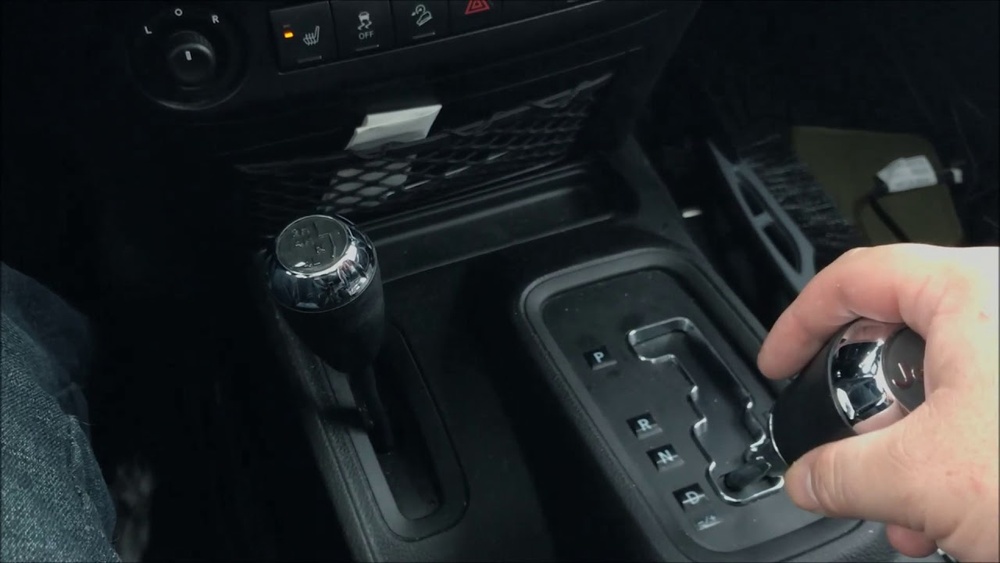
There are two main 4WD modes:
- 4H (4 High): Good for slippery surfaces like mud, snow, sand, or gravel.
- 4L (4 Low): Gives more torque for slow, tough terrain like rocks or deep mud.
Here’s a quick comparison:
| Mode | Use Case | Max Speed |
|---|---|---|
| 2H | Normal dry roads | All speeds |
| 4H | Snow, mud, sand | Up to 55 mph |
| 4L | Steep hills, rocks, deep mud | Up to 25 mph |
Important: Using 4WD on dry pavement can damage your Jeep’s drivetrain.
Steps To Put Your Jeep Jk In 4wd
Switching to 4WD is quick, but doing it right matters. Follow these steps:
1. Slow Down
Always slow to 2 3 mph before shifting into 4L. For 4H, you can shift while driving up to 45 mph, but slower is safer.
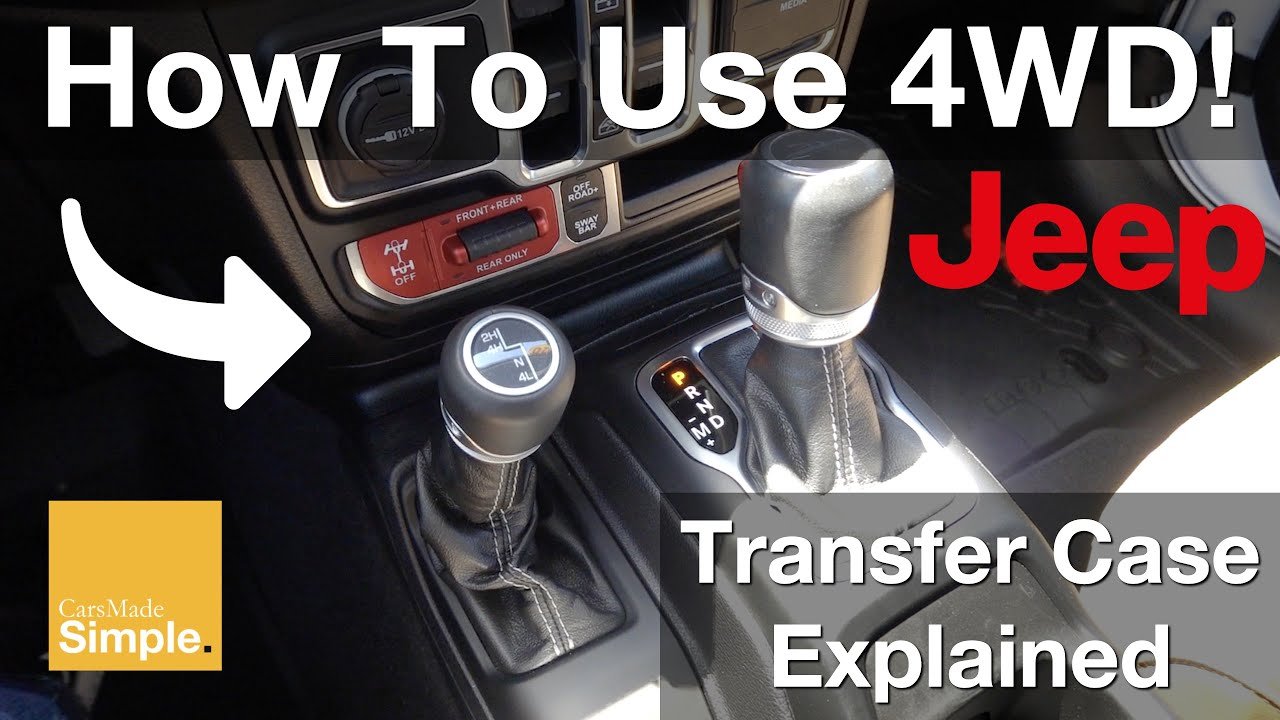
2. Locate The Transfer Case Lever
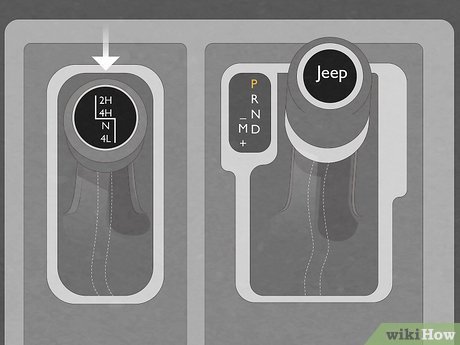
This short lever is next to the gear shifter. It usually has markings: 2H, 4H, N, 4L.
- Shifting from 2H to 4H
- Keep the transmission in neutral or drive (automatic) or neutral (manual).
- Pull the lever straight back from 2H to 4H.
- You may feel a slight clunk—this is normal.
- Resume driving. You’re now in 4H.
- Shifting from 4H to 4L
- Stop the Jeep and put the transmission in neutral.
- Firmly pull the transfer case lever from 4H through N (neutral) into 4L.
- Wait for the 4L light on the dash to appear.
- Shift back into drive or first gear, and drive slowly.
- Returning to 2H
- Stop or move slowly.
- Put the transmission in neutral.
- Push the lever forward to 2H.
- You’re now back in two-wheel drive.
Tip: If the lever is hard to move, gently rock the Jeep forward and back. This helps align gears.
When To Use 2h, 4h, Or 4l
Choosing the right mode protects your Jeep and helps you stay in control. Here’s a quick-use guide:
| Condition | Best Mode | Why? |
|---|---|---|
| Dry pavement | 2H | Prevents drivetrain stress |
| Light snow/rain | 4H | Extra traction |
| Off-road/trails | 4L | Maximum torque/control |
| Deep sand/mud | 4L | Slow speed, high power |
Pro insight: Many beginners overuse 4L. Use it only for very slow, technical situations. For most off-road driving, 4H is enough.
Common Mistakes To Avoid
Even experienced drivers can make errors that harm their Jeep or reduce performance. Here are mistakes to watch for:
1. Shifting At High Speed
Never shift into 4L unless you’re almost stopped. Fast shifting can damage the transfer case.
2. Forgetting To Return To 2h
Driving on dry roads in 4H or 4L wears tires and puts stress on parts.
3. Using 4wd When Not Needed
Only use 4WD when traction is low. On dry pavement, it actually makes handling worse.
4. Ignoring Warning Lights
If the 4WD light blinks or stays on, check your manual. This could mean the system isn’t fully engaged.

Troubleshooting 4wd Problems
Sometimes, your Jeep JK may not shift into 4WD as expected. Here are quick fixes:
- Lever feels stuck: Try rolling the Jeep slightly forward or backward.
- 4WD light doesn’t appear: Shift back to neutral and repeat the process slowly.
- Grinding noise: Stop immediately. Forcing the lever can break gears.
For more complex issues, consult a certified Jeep mechanic or refer to the official Jeep Wrangler page.
Maintenance Tips For The 4wd System
Regular care keeps your Jeep’s 4WD reliable:
- Engage 4WD once a month, even if you don’t off-road. This keeps parts lubricated.
- Check transfer case fluid every 30,000 miles.
- Listen for unusual noises during shifts—this can warn of early problems.
- After deep water or mud, have the system inspected for leaks or damage.
Frequently Asked Questions
How Do I Know If My Jeep Is In 4wd?
A 4WD light will appear on your dashboard. You may also feel extra resistance when turning, especially in 4L.
Can I Shift Into 4h While Driving?
Yes. You can shift from 2H to 4H at speeds up to 45 mph, but it’s safer to do it below 25 mph to avoid gear grinding.
What Happens If I Use 4wd On Dry Roads?
It can cause drivetrain binding or “crow hop,” making steering difficult and wearing out parts faster. Always return to 2H on dry pavement.
How Often Should I Use 4wd If I Mostly Drive On-road?
Engage 4WD once a month for a few minutes. This keeps the system lubricated and ensures it works when you need it.
My Lever Is Hard To Move. Is Something Wrong?
Not always. The transfer case gears sometimes need to align. Try gently rolling the Jeep while shifting. If it’s still stiff, have it checked by a mechanic.
Getting comfortable with your Jeep JK’s 4WD system is a big step toward safe, fun adventures whether you’re tackling rocky trails or just handling winter roads. With practice, shifting into the right mode will become second nature.