Storing your Jeep Wrangler hard top might seem simple at first. But if you want to keep it safe, scratch-free, and easy to reinstall, choosing the right storage method matters.Many Jeep owners damage their hard tops by accident; cracks, faded paint, and broken seals often come from poor storage. Whether you use your Wrangler for daily drives or summer adventures, learning how and where to store your hard top will save you money and stress.Let’s look at the best ways to store your hard top, what to avoid, and tips that most beginners miss.
Why Proper Storage Matters
A Jeep Wrangler hard top is not cheap. New ones can cost $2,000 or more, and repairs add up fast. Sunlight, moisture, and bumps can all cause long-term damage if the top is not stored correctly.

Good storage means your hard top lasts longer, keeps a nice finish, and fits tightly when you put it back. It also prevents common issues like warped seals, broken glass, and even mold.
Best Places To Store A Jeep Wrangler Hard Top
Where you keep your hard top depends on your space, budget, and how often you plan to put it back on. Here are the most popular and practical options.
1. Garage Storage
Most Jeep owners store their hard top in a garage. The main benefits are:
- Protection from weather (rain, sun, hail)
- Less risk of theft
- Temperature control prevents warping or cracks
However, garages are often crowded. Hard tops are big (about 70 90 inches long), so plan for at least 4 5 feet of free space.
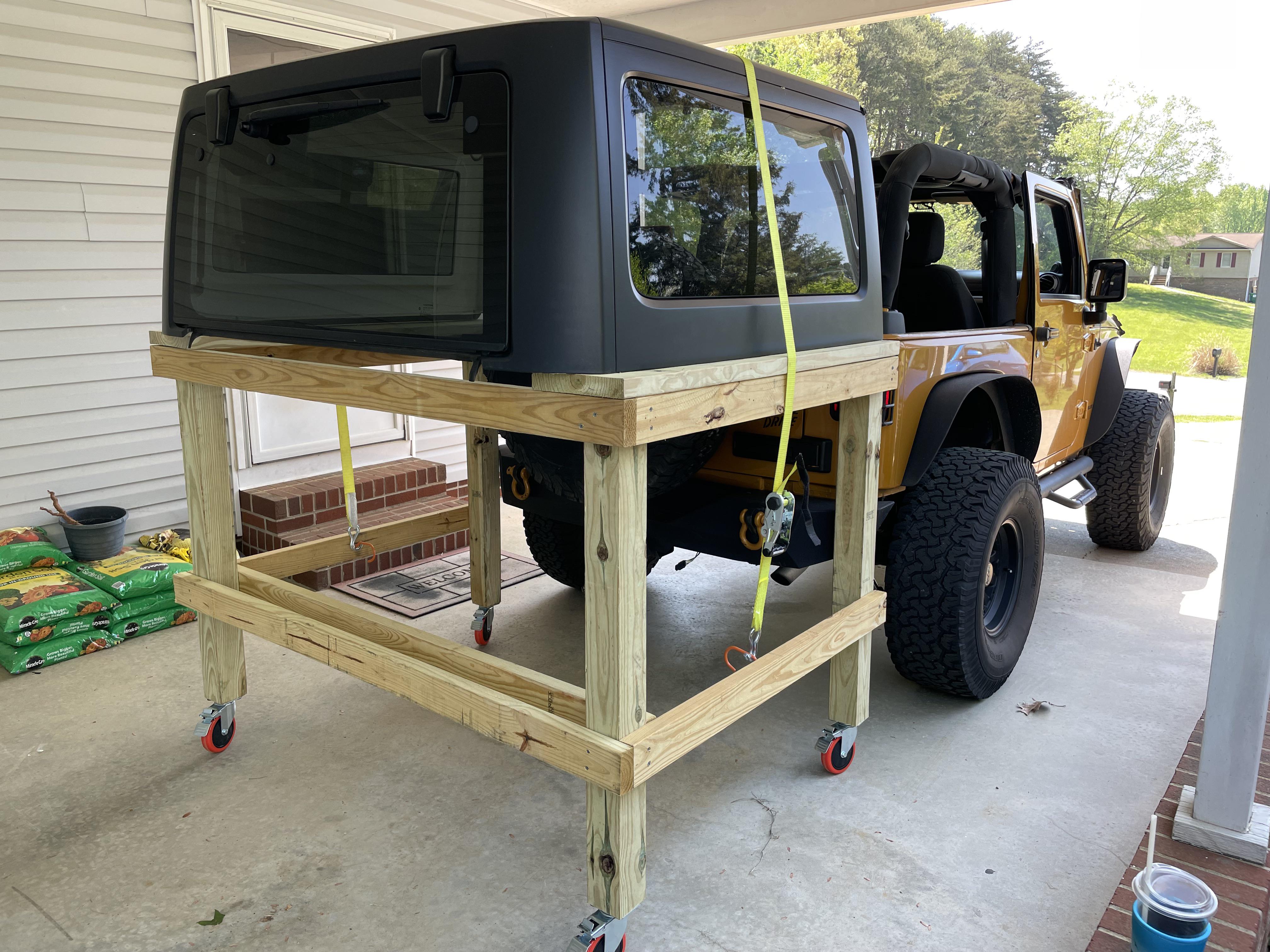
Placing the hard top flat on padded saw horses or a carpet helps avoid scratches. Never set it directly on concrete.
2. Shed Or Basement
If your garage is full, a shed or basement can also work. Basements offer good temperature control, but you need enough space to move the top safely.
Sheds are great if they stay dry and cool. Avoid sheds that get very hot or damp, as these conditions can damage seals and paint.
3. Outdoor Storage (with Precautions)
Storing outdoors is not ideal, but sometimes it’s the only option. If you must store your hard top outside:
- Use a heavy-duty waterproof cover and UV-resistant cover
- Place the top on a raised surface to avoid ground moisture
- Secure the cover tightly to stop wind from blowing it away
Outdoor storage increases the risk of weather damage, so check the top every few weeks.
4. Storage Facilities
Self-storage units are a good choice if you lack space at home. Choose a climate-controlled unit to prevent heat and humidity damage.
The cost is usually $50–$150 per month, depending on size and location. This is a safe way to store your hard top for several months.
Best Methods To Store The Hard Top
How you position your hard top is as important as where you put it. Here are the main options, with their pros and cons.
| Method | Pros | Cons |
|---|---|---|
| Flat on Floor | Simple, no extra equipment | Needs lots of space, risk of scratches |
| On a Storage Cart | Easy to move, protects seals | Extra cost ($100–$300) |
| Upright Against Wall | Saves space | Risk of tipping, needs padding |
| Hanging from Ceiling | Frees up floor space | Must install hardware, needs strong ceiling |
Using A Hard Top Cart
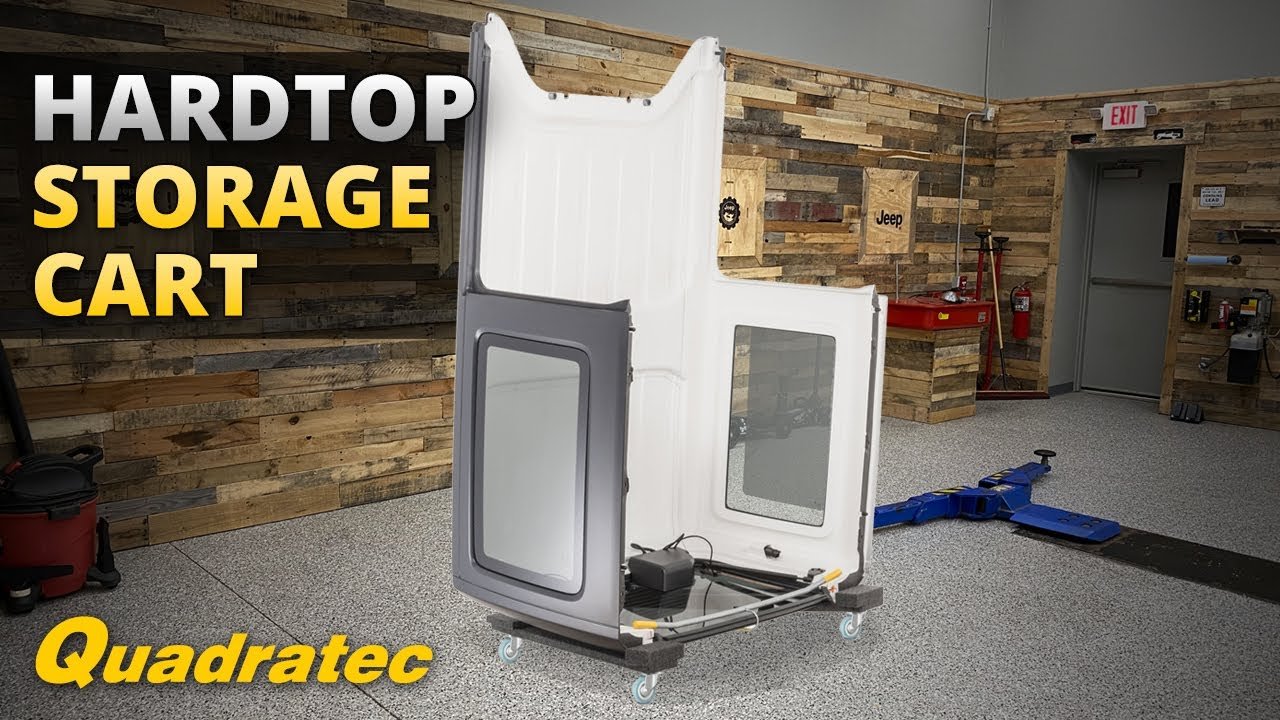
A hard top storage cart is a wheeled frame with padding. Many Jeep owners use them because they make moving and storing the top easy.
Most carts cost $150–$350. They keep the top upright, which saves space and protects the seals.
Ceiling Hoist Systems
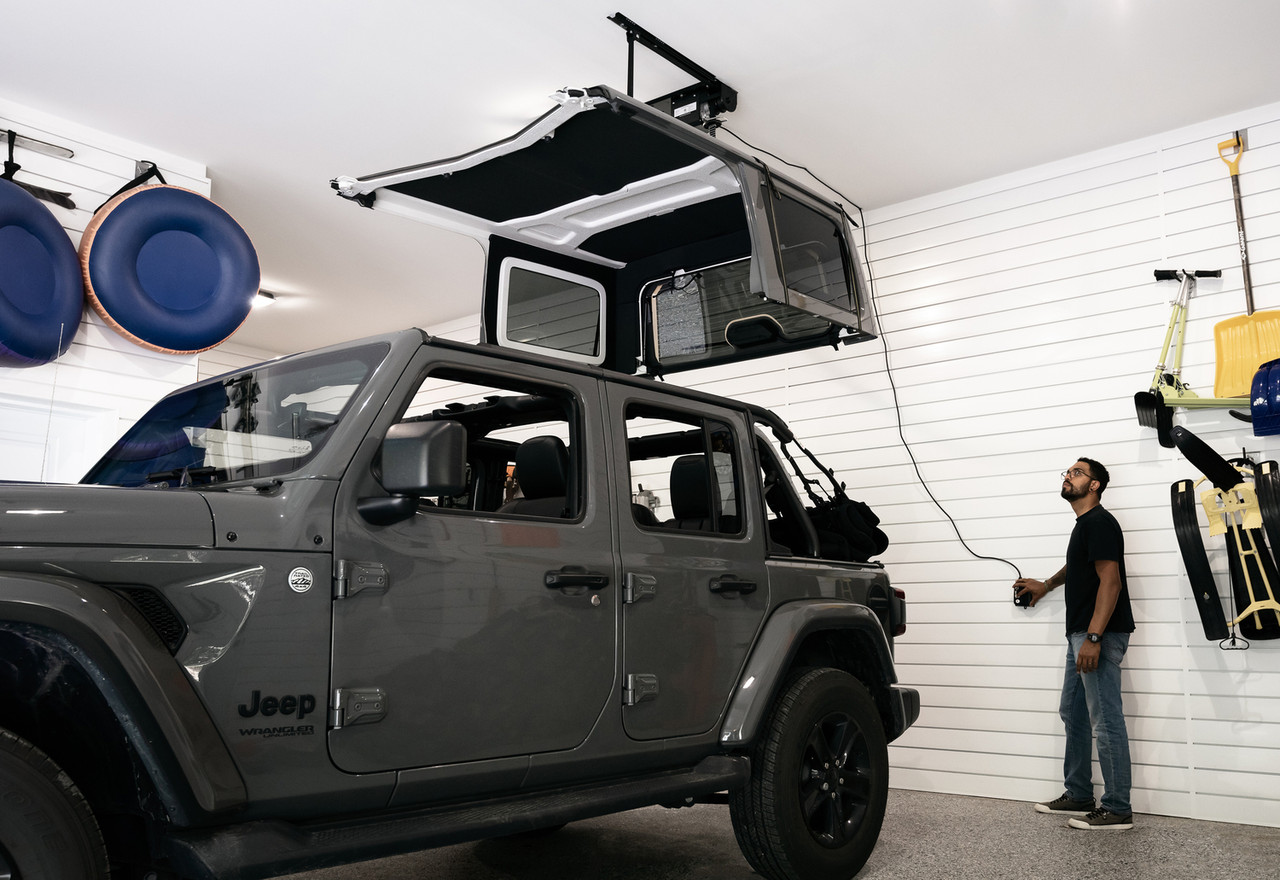
A hoist system lets you lift your hard top up and out of the way. Ceiling hoists start around $120, and some let you remove the top by yourself.
This is great for small garages. Make sure your ceiling can hold at least 150 pounds. Improper installation can be dangerous.
Common Mistakes To Avoid
Many people make the same storage mistakes. Avoid these to keep your hard top in top shape:
- Placing it on bare concrete: Concrete draws moisture, which can damage the bottom edge.
- Stacking items on top: The hard top is not made to hold extra weight.
- Storing in direct sunlight: UV rays fade the finish and weaken seals.
- Ignoring seals and glass: Store the top so seals do not get crushed and glass does not bear weight.
- Skipping cleaning: Dirt left on the top can scratch the paint or cause mold.
How To Prepare Your Hard Top For Storage
Before putting your hard top away, follow these steps:
- Clean the top with mild soap and water. Dry fully.
- Inspect for damage—fix any chips, cracks, or loose seals before storage.
- Remove all hardware and bag small parts together so you don’t lose them.
- Wrap or cover the top with a soft, breathable cover. Avoid plastic if stored indoors, as it traps moisture.
- Label the location if you use a public storage facility or have multiple tops.
These steps help keep your hard top ready for the next season and prevent expensive repairs.
Cost Comparison: Storage Options
To make it easier to compare, here’s a look at common storage solutions and their average costs.
| Storage Method | Average Cost | Recommended For |
|---|---|---|
| Garage (floor) | $0–$20 (pads) | Most owners, low budget |
| Storage Cart | $150–$350 | Frequent removal/storage |
| Ceiling Hoist | $120–$200 | Small garages, one-person removal |
| Self-Storage Unit | $50–$150/month | No home space, long-term storage |
| Outdoor (with cover) | $40–$80 (cover) | No indoor space, short-term only |
Non-obvious Tips For Long-term Storage
- Check every few weeks: Even in perfect storage, look for leaks, pests, or dust buildup.
- Loosen glass bolts: If storing for months, slightly loosen bolts on windows to prevent stress cracks.
- Rotate position: If on the floor for long periods, change the position every few months to avoid warping.
Many beginners forget these steps, which can save you from unexpected repairs.
Final Thoughts
Storing your Jeep Wrangler hard top the right way protects your investment and makes swapping tops fast and easy.
Garages, sheds, and storage carts are top choices for most owners, but even outdoor storage works with the right precautions.
Remember to clean, inspect, and cover your hard top before storing. Avoid stacking, direct sunlight, and moisture.
With smart planning, your hard top will stay in great shape for years.
Frequently Asked Questions
How Heavy Is A Jeep Wrangler Hard Top?
Most two-door hard tops weigh between 80–100 pounds. Four-door (Unlimited) tops can weigh 120–150 pounds. Always ask for help or use a hoist to avoid injury.
Can I Store The Hard Top Outside Year-round?
It’s possible, but not recommended. Extended outdoor storage exposes the top to UV rays, rain, and dirt. If you must, use a strong cover and check regularly for damage.
Do I Need A Special Cover For Indoor Storage?
A soft, breathable cover is best indoors. Avoid plastic, which traps moisture. Old blankets or car covers also work if they are clean and dry.
Will Standing The Hard Top Upright Damage It?
Standing upright saves space, but always use soft padding and secure the top to the wall to prevent tipping or bending the seals.
What Is The Safest Way To Lift The Hard Top Off My Jeep?
The safest way is with two or more people or a ceiling hoist. Avoid lifting alone, as the top is bulky and can crack if dropped or twisted.