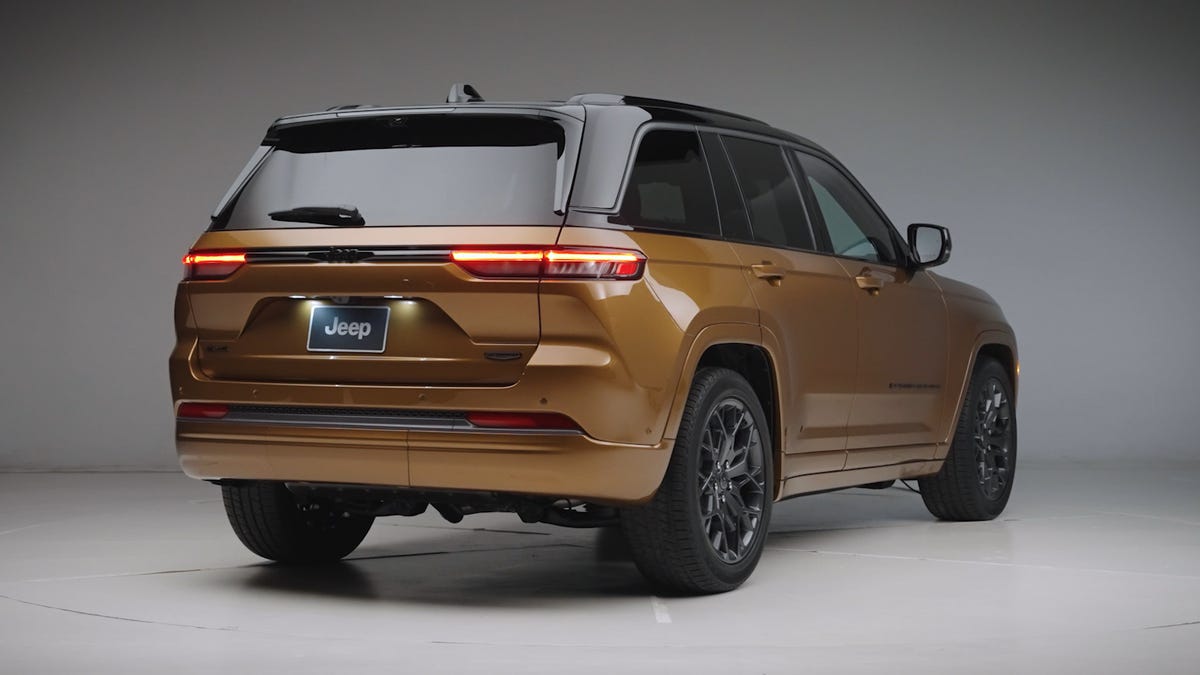
When you think of an SUV that combines power, style, and off-road ability, the Jeep Grand Cherokee often comes to mind. Over the years, this iconic model has become a favorite among adventure seekers and families alike.
But for many buyers, one number stands out: the 0-60 mph time. This simple metric shows how quickly a vehicle can accelerate from a complete stop to highway speed.
It’s not just about speed—it’s about confidence, merging onto highways safely, and sometimes, just having fun at the wheel. In this article, we’ll break down the Jeep Grand Cherokee’s 0-60 times, explore what affects them, and help you understand why they matter for everyday driving.
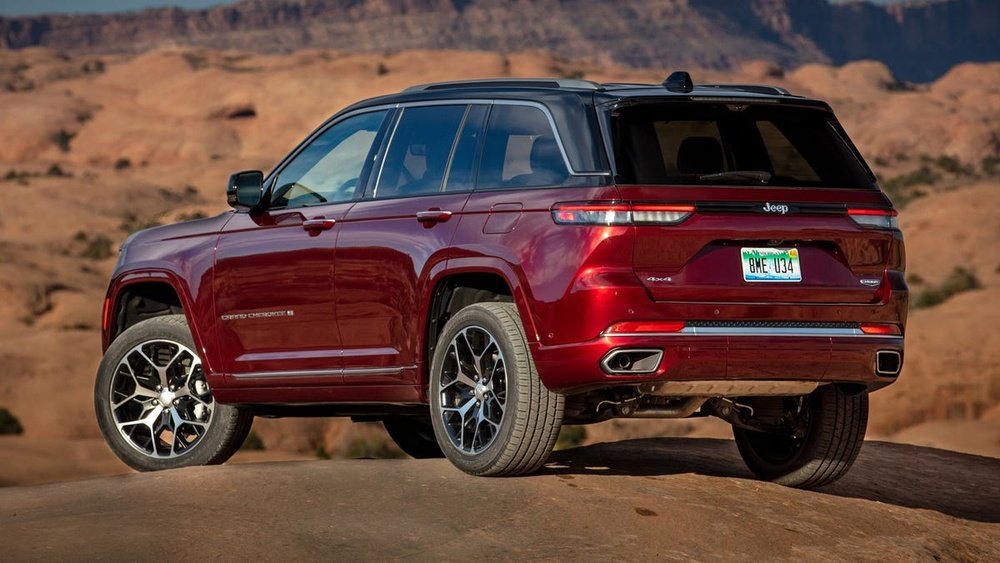
Why 0-60 Time Matters
Most drivers don’t race their SUVs, but the 0-60 mph figure is still important. Quick acceleration helps when merging onto busy roads, passing slower vehicles, or avoiding dangerous situations. For some, a faster 0-60 time means the car feels more responsive and exciting to drive. And for others, it’s simply a point of pride.
But acceleration times aren’t just about fun. They show how well the engine, transmission, and weight work together. A good 0-60 time can signal strong performance, but it’s only one part of the full driving experience.
Jeep Grand Cherokee: A Quick Overview
The Jeep Grand Cherokee has been part of the SUV world since the early 1990s. Over five generations, it has grown more powerful, more comfortable, and more high-tech. Today, you’ll find a range of models—from basic family SUVs to high-performance machines with serious horsepower.
Key things that set the Grand Cherokee apart:
- Diverse engine choices (V6, V8, plug-in hybrid, turbo)
- Four-wheel-drive options for off-road adventures
- Luxury trims that rival premium brands
- Advanced safety features
Yet, every Grand Cherokee has its own unique 0-60 time, depending on its engine, weight, and features.
Jeep Grand Cherokee 0-60 Times By Model
Let’s look at how fast each major Grand Cherokee model accelerates from 0 to 60 mph. The numbers here are manufacturer claims and real-world tests, so there may be small differences.
| Model/Engine | Horsepower | 0-60 mph (seconds) |
|---|---|---|
| Grand Cherokee Laredo (V6) | 293 hp | 7.4 |
| Grand Cherokee Limited (V6) | 293 hp | 7.4 |
| Grand Cherokee Overland (V6) | 293 hp | 7.2 |
| Grand Cherokee Summit (V6) | 293 hp | 7.2 |
| Grand Cherokee Limited (V8) | 357 hp | 6.2 |
| Grand Cherokee SRT (6.4L V8) | 475 hp | 4.4 |
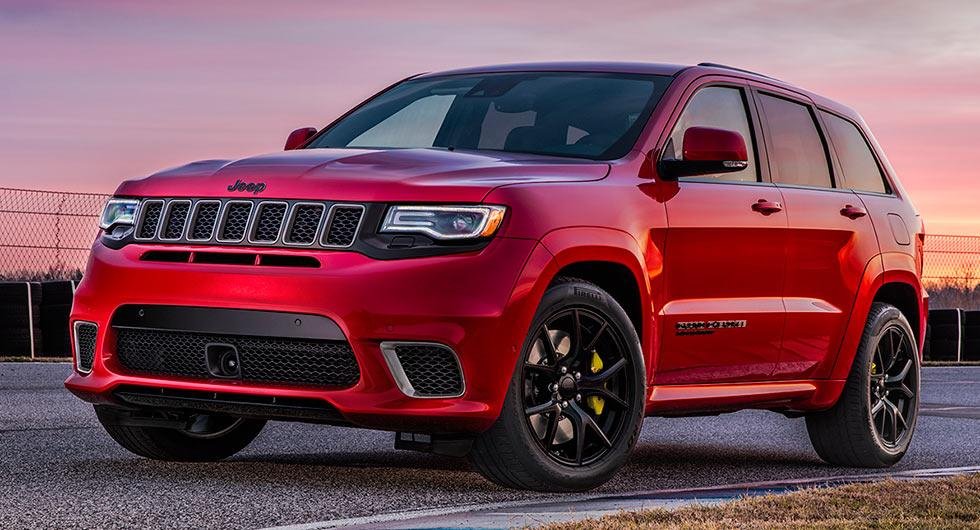
| Grand Cherokee Trackhawk (6.2L Supercharged V8) | 707 hp | 3.5 |
| Grand Cherokee 4xe (Plug-in Hybrid) | 375 hp | 5.3 |
As you can see, the 0-60 time varies a lot. The basic V6 models are quick enough for daily driving. The SRT and Trackhawk are in sports car territory, while the plug-in hybrid 4xe offers a balance of speed and efficiency.
What Affects The Grand Cherokee’s 0-60 Time?
Several factors play a role in how quickly the Grand Cherokee accelerates. Some are obvious, but others might surprise you.
Engine Power
This is the main factor. More horsepower usually means faster acceleration. The Trackhawk’s supercharged V8 is a great example—it delivers over 700 hp and can outpace many sports cars.
Vehicle Weight
Heavier vehicles take longer to accelerate. The Grand Cherokee is a large SUV, so even the strong engines have to move a lot of mass.
Upgrades like larger wheels or extra features can add more weight and slow the car down a bit.
Drivetrain
Most Grand Cherokees use all-wheel drive (AWD) or four-wheel drive (4WD). These help with grip, especially on slippery roads. However, AWD and 4WD systems add weight, which can slow acceleration compared to lighter, two-wheel-drive models.
Transmission
Jeep uses an 8-speed automatic transmission in most models. A good transmission shifts gears quickly, keeping the engine in its power zone. Older models with fewer gears may not accelerate as well as the newest versions.
Tires And Traction
Tires matter more than most people think. Sticky, performance-oriented tires can help launch the Grand Cherokee more quickly, while off-road tires may slow it down on pavement.
Fuel Type
High-performance engines often need premium gasoline. Using regular gas in a model designed for premium can reduce power and increase your 0-60 time.
How Does The Grand Cherokee Compare To Rivals?
If you’re looking for a quick midsize SUV, it helps to see how the Grand Cherokee stacks up. Here’s a head-to-head comparison with some key competitors.
| Model | Engine | 0-60 mph (seconds) |
|---|---|---|
| Jeep Grand Cherokee Trackhawk | 6.2L Supercharged V8 | 3.5 |
| Dodge Durango SRT Hellcat | 6.2L Supercharged V8 | 3.5 |
| BMW X5 xDrive50i | 4.4L Twin-Turbo V8 | 4.1 |
| Ford Explorer ST | 3.0L Twin-Turbo V6 | 5.2 |
| Toyota 4Runner TRD Pro | 4.0L V6 | 7.5 |
The Trackhawk is one of the fastest SUVs on the market, not just among Jeeps. Even the regular V6 Grand Cherokee stays competitive, though it’s not the quickest in its class. The plug-in hybrid 4xe is faster than many rivals’ base models, showing Jeep’s commitment to new technology.
Real-world 0-60: What To Expect
Manufacturers often test their cars in perfect conditions—with a light driver, empty trunk, and ideal weather. In real life, your 0-60 time might be a bit slower. Here’s why:
- Extra passengers or cargo add weight
- Hot or cold weather can affect engine power
- Tire pressure changes grip
- Road surface (wet, dusty, or rough pavement) can slow you down
Most drivers won’t notice these small differences day to day. But if you want the fastest 0-60, try to keep the SUV light and well-maintained.
Which Grand Cherokee Is Right For You?
With so many choices, picking the best Grand Cherokee isn’t just about acceleration. Here’s a quick guide to help you decide based on your needs:
- Daily driving/family use: The V6 models (like Laredo, Limited) are smooth, reliable, and have enough power for most drivers.
- Performance fans: The SRT and Trackhawk offer exciting acceleration, but they use more fuel and cost more to insure.
- Eco-conscious drivers: The 4xe plug-in hybrid delivers quick acceleration and can drive short distances on electric power alone.
- Towing/hauling: The V8 models provide extra torque for pulling trailers or boats.
Common Mistakes When Choosing For 0-60
Many buyers focus only on engine size or horsepower, forgetting other factors:
- Ignoring weight: Heavier trims (with more features) may accelerate slower.
- Overestimating needs: Most drivers never use the full power of an SRT or Trackhawk.
- Fuel costs: High-performance engines often need premium fuel and get lower mpg.
If you’re unsure, test drive a few models. Notice not just the speed, but also comfort, handling, and features.
The Evolution Of Grand Cherokee Performance
The Grand Cherokee’s 0-60 times have improved with each generation. Early models in the 1990s had V8 engines but took over 8 seconds to reach 60 mph.
By the 2010s, Jeep introduced the SRT model, dropping the time to under 5 seconds—a huge leap for an SUV.
The arrival of the Trackhawk in 2018 pushed performance even further. With a supercharged engine borrowed from the Dodge Hellcat, it became the world’s fastest production SUV at launch.
Today, even the 4xe hybrid is quicker than old V8s, showing how new technology boosts both power and efficiency.
Fuel Economy Vs Performance
It’s rare for an SUV to be both fast and fuel-efficient. The Grand Cherokee’s quickest models (SRT, Trackhawk) are thirsty, often getting less than 15 mpg.
The V6 and 4xe hybrid offer much better mileage while still delivering reasonable acceleration.
Here’s a quick look at the tradeoff:
| Model | 0-60 mph (seconds) | Combined MPG |
|---|---|---|
| Grand Cherokee V6 | 7.4 | 21 |
| Grand Cherokee V8 | 6.2 | 17 |
| Grand Cherokee SRT | 4.4 | 15 |
| Grand Cherokee Trackhawk | 3.5 | 13 |
| Grand Cherokee 4xe | 5.3 | 56 MPGe |
The 4xe stands out for its electric driving range and high MPGe (miles per gallon equivalent), especially in city driving.
Little-known Factors That Impact Your 0-60
Most articles stop at engine specs and weight. But two non-obvious details also influence your Grand Cherokee’s acceleration:
- Break-in period: New engines often perform better after a few thousand miles, once parts settle and oil circulation improves. Testing 0-60 on a brand-new Jeep may give slower results.
- Altitude: Higher elevation means thinner air, which reduces engine power. If you live in the mountains, expect slower acceleration, especially in non-turbo engines.
These factors catch many owners by surprise but can make a real difference in real-world driving.
Final Thoughts
The Jeep Grand Cherokee offers a wide range of 0-60 times, from family-friendly to supercar-fast. Whether you want smooth daily performance or the thrill of a Trackhawk, there’s a Grand Cherokee to fit your needs. But remember: 0-60 is just one part of the story. Comfort, safety, features, and fuel economy matter too. If you’re thinking about buying, test drive several trims, and focus on the full driving experience—not just the numbers.
For official specs and more details, you can visit the Jeep Grand Cherokee official site.
Frequently Asked Questions
What Is The Fastest Jeep Grand Cherokee 0-60 Time?
The fastest Grand Cherokee is the Trackhawk, which can go from 0-60 mph in about 3.5 seconds. This is thanks to its supercharged 6.2L V8 engine.
Is The Grand Cherokee 4xe Hybrid Fast?
Yes, the Grand Cherokee 4xe does 0-60 mph in about 5.3 seconds. That’s faster than most gas-only V6 and V8 models, and it uses less fuel.
Only the high-performance models like the SRT and Trackhawk require premium fuel for best results. Most V6 and regular V8 models run fine on regular gasoline.
How Does The Grand Cherokee Compare To Luxury Suvs?
The Trackhawk and SRT models can accelerate faster than many luxury SUVs, including some BMW and Mercedes-Benz models. Even the base Grand Cherokee is competitive with similar-priced rivals.
Does 0-60 Time Affect Towing?
A faster 0-60 time usually means more power, which helps with towing. However, towing capacity also depends on the engine, suspension, and cooling systems. Always check the towing rating for your specific model.