Hauling a kayak with a Jeep feels like opening new doors for adventure. Whether you’re driving a Jeep Wrangler or a Grand Cherokee, these vehicles offer excellent flexibility for outdoor trips.
But, carrying a kayak safely and easily is not as simple as it seems. Mistakes can damage your kayak, your Jeep, or create safety problems on the road.
This guide will help you understand the best ways to transport your kayak, what equipment you need, and common mistakes to avoid.
Choosing The Right Kayak Hauling Method
Not all Jeeps are the same, and not all kayaks are equal. Think about your vehicle, the size of your kayak, and your own physical abilities.
Roof Rack Systems
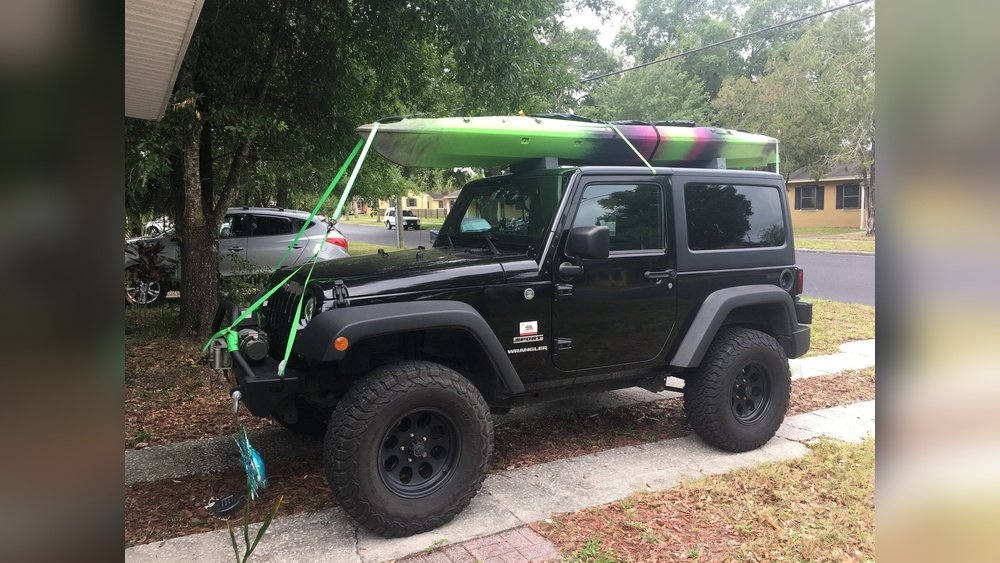
Most Jeep owners prefer roof racks for kayak transport. Roof racks keep your kayak secure and out of the way.
| Roof Rack Type | Fits Jeep Models | Max Weight (lbs) |
|---|---|---|
| Factory Crossbars | Wrangler, Cherokee | 150 |
| Aftermarket Racks | All Jeep models | 165-200 |
| Soft Racks | 2-door, 4-door | 80-100 |
Aftermarket racks are popular because they offer better weight limits and flexibility. Brands like Thule and Yakima are known for their strength and durability.
Hitch-mounted Kayak Trailers
If you have a heavier kayak or multiple kayaks, a trailer may be the best solution. Jeep vehicles usually have strong towing capacity.
- Small kayak trailers can carry up to 4 kayaks.
- Trailers are easier for loading and unloading, but need more parking space.
Inside The Jeep
Some owners with fold-flat seats can fit a short, inflatable kayak inside. However, this option is rare and not recommended for hard-shell kayaks.
Essential Equipment For Safe Hauling
Transporting a kayak requires more than just strapping it on top. Here’s what you need for a smooth trip:
- Crossbars: These are the foundation for any roof system.
- Kayak Carriers: J-cradles, saddle-style, or stackers hold the kayak steady.
- Cam Straps: Strong straps prevent shifting.
- Bow and Stern Lines: These tie the front and back of your kayak to your Jeep, reducing wind movement.
- Hood Loops or Tie-Down Anchors: Provide secure points for straps.
Never use bungee cords or rope that stretches; they can fail at highway speeds.

Step-by-step: How To Load And Secure Your Kayak
Many beginners damage their kayaks or vehicles because they skip important steps. Here’s a safe, efficient method:
- Prepare Your Jeep: Make sure the roof rack is tight and clean.
- Position the Kayak: Place it next to your Jeep, parallel to the side.
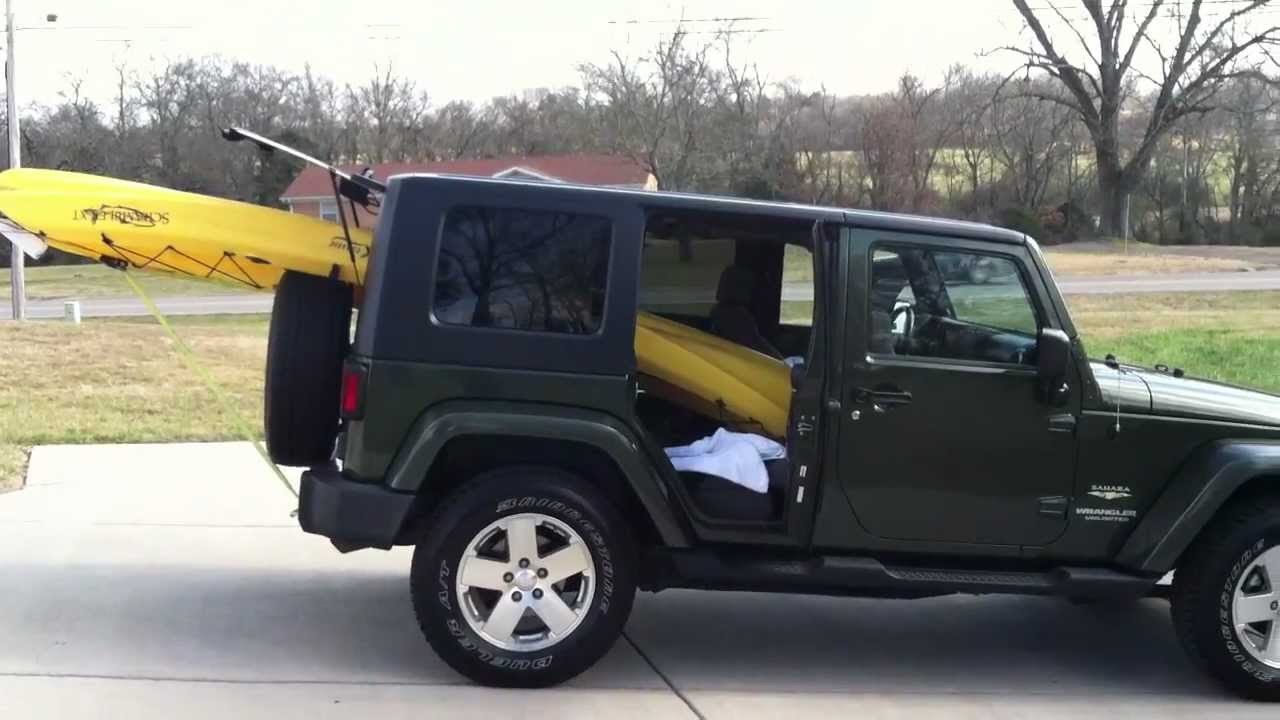
- Lift the Kayak: With two people, lift and place it on the rack. If alone, use a towel on the back window and slide the kayak up.
- Center the Kayak: Make sure it sits in the middle of the crossbars.
- Secure with Cam Straps: Loop straps over the kayak and under the crossbars. Tighten until snug, but not crushing the hull.
- Attach Bow and Stern Lines: Use hood loops for the front and rear tie-downs.
- Double-Check Everything: Pull on the kayak and straps. Nothing should move.
| Step | Time Needed | Common Mistake |
|---|---|---|
| Install Roof Rack | 10-20 min | Loose crossbars |
| Load Kayak | 2-5 min | Unbalanced placement |
| Secure Straps | 3-5 min | Twisted straps |
| Tie Down Bow/Stern | 2-3 min | Weak anchor points |
Safety Tips And Legal Considerations
Carrying a kayak on your Jeep is legal, but each state has specific rules:
- The kayak must not stick out more than 3–4 feet in front or back.
- Use a red flag at the end if the kayak extends past your bumper.
- Check height limits, especially for parking garages.
Speed matters: Avoid driving over 65 mph with a kayak on your roof. Wind can make straps loosen or the kayak shift.
Common Kayak Transport Mistakes
Many people make similar mistakes when they first start hauling kayaks:
- Using old, weak straps that break under pressure.
- Forgetting to check kayak position after 15–20 minutes of driving.
- Loading the kayak upside down or backward.
- Ignoring weather: Rain, heat, and sun can affect straps and the kayak.
A useful tip: Always keep a small toolkit and extra straps in your Jeep. Weather or sudden problems can happen anytime.
How To Unload At Your Destination
Arriving safely is only half the job. Unloading a kayak incorrectly can damage your Jeep or injure you.
- Park on flat ground.
- Remove bow and stern lines first.
- Loosen cam straps and lift kayak off with help, or slide it down gently.
- Inspect your kayak and Jeep for scratches or marks.

When To Consider A Trailer Instead
If you often carry more than one kayak, or your kayak is over 14 feet, a trailer might be smarter.
| Factor | Roof Rack | Trailer |
|---|---|---|
| Number of Kayaks | 1–2 | Up to 4 |
| Ease of Loading | Moderate/Hard | Easy |
| Parking Space Needed | Standard | Large |
| Cost | Low–Medium | High |
Trailers offer less lifting and can reduce back strain. However, they cost more and require a place to store when not in use.
Frequently Asked Questions
Is It Safe To Carry A Kayak On A Soft Top Jeep?
Yes, if you use the right soft rack system and keep the kayak light (under 80 pounds). Always check your Jeep’s owner manual for specific weight limits.
Can I Drive On The Highway With A Kayak On My Jeep?
You can, but keep your speed below 65 mph. Double-check all straps every time you stop for gas or a break.
What Type Of Straps Are Best For Securing A Kayak?
Cam buckle straps are best. Avoid ratchet straps because they can apply too much pressure and damage the kayak.
Do I Need Special Permits For Carrying A Kayak?
In most states, you don’t need a special permit if the kayak does not stick out too far. If it extends past your Jeep, attach a red flag as required by law. For full details, check the National Park Service.
How Do I Prevent Scratches On My Jeep When Loading A Kayak?
Use a towel or foam pads where the kayak touches your Jeep, especially when sliding the kayak onto the roof. This protects your paint and windows.
Transporting a kayak with a Jeep is simple and safe if you prepare correctly. Choose the right equipment, follow the steps, and check your setup regularly.
Small details, like using cam straps and tying down both ends, make a big difference.
Enjoy your trip and paddle with confidence, knowing your kayak will arrive safely every time.