If your Jeep JK’s brakes feel soft or spongy, it could be a sign of air trapped in the brake lines. This is a common issue after brake work, fluid replacement, or hard off-roading.
Bleeding the brakes removes air and keeps your stopping power strong.
Many Jeep owners are surprised by how much difference proper bleeding makes not just for safety, but for pedal feel and confidence on the trail.
With the right steps and a bit of patience, you can bleed your Jeep JK brakes at home and get professional results.
Why Bleeding Brakes Is Important
Brakes rely on hydraulic pressure. When you press the pedal, brake fluid pushes against the brake calipers. If there’s air in the lines, the pedal feels mushy, and your Jeep may not stop as quickly. Air gets in during repairs, after heavy use, or if seals are worn. Bleeding the brakes pushes this air out, restoring full braking power.
Tools And Materials Needed
Before starting, gather these items:
- Wrench set (usually 10mm for bleeder screws)
- Clear tubing (about 18 inches)
- Catch bottle (for old fluid)
- Brake fluid (DOT 3 or DOT 4, check your owner’s manual)
- Turkey baster or syringe (to remove old fluid)
- Gloves and safety glasses
- Assistant (optional but helpful)
Using the wrong brake fluid can cause damage. Always confirm which type your Jeep JK needs.
Step-by-step Guide To Bleeding Jeep Jk Brakes
1. Prepare Your Jeep
Park your Jeep JK on a level surface. Turn off the engine and let the brakes cool.
Open the hood and locate the brake fluid reservoir. Use a turkey baster to remove most of the old fluid, then refill with new brake fluid.
Never let the reservoir run dry during bleeding.
2. Find The Correct Bleeding Order
Jeep JK brake systems usually follow this order:
- Rear passenger side
- Rear driver side
- Front passenger side
- Front driver side
This order moves air out from the farthest point to the closest.
3. Attach Tubing And Catch Bottle
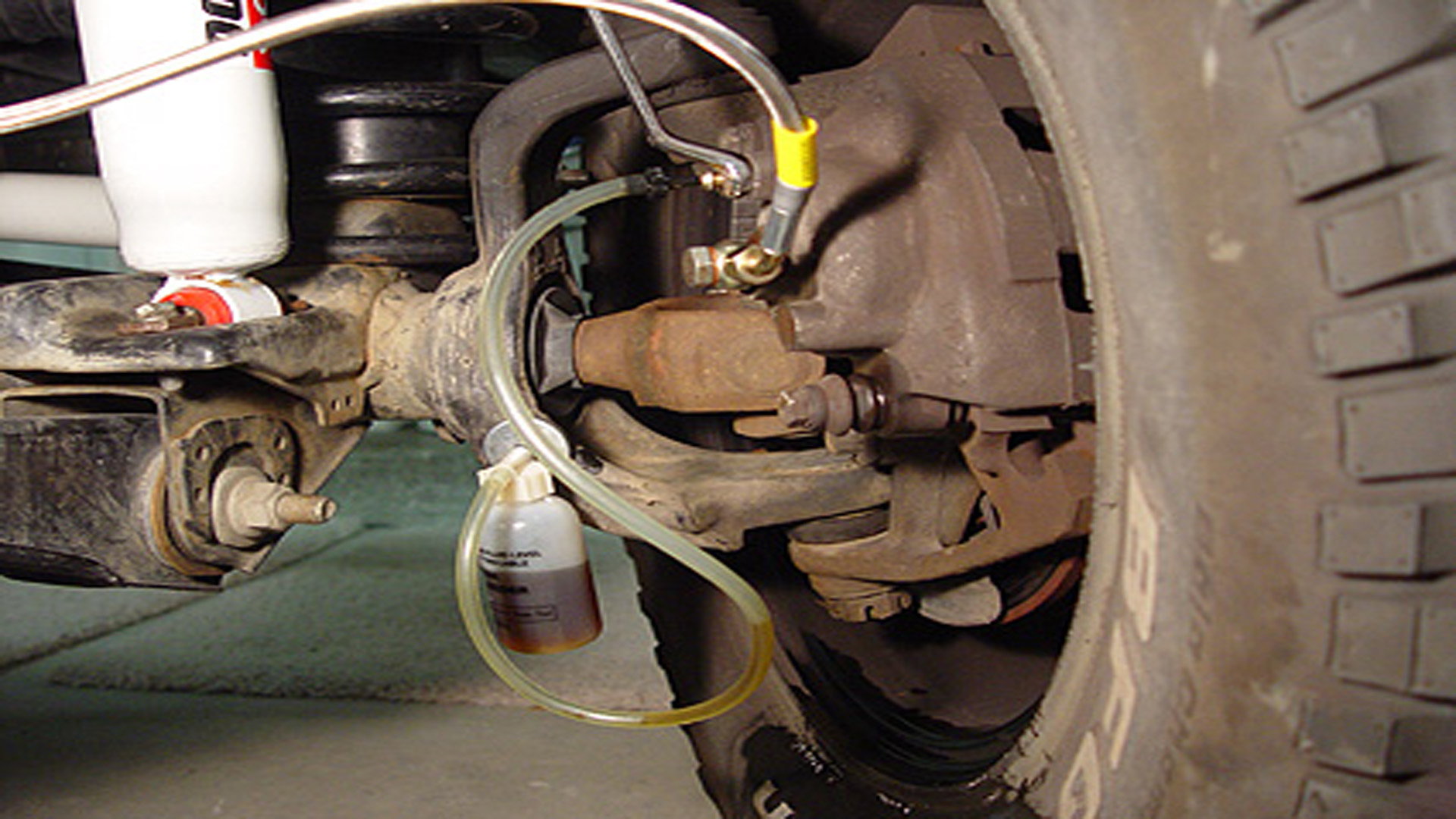
Place one end of the clear tubing on the bleeder screw of the brake caliper. Put the other end in your catch bottle. This setup keeps your workspace clean and helps you see air bubbles.
4. Bleed Each Brake Caliper
You’ll need an assistant for best results.
- Instruct your assistant to press and hold the brake pedal.
- Use your wrench to open the bleeder screw (about a half-turn).
- Old fluid and air will flow through the tube.
- Close the bleeder screw before your assistant releases the pedal.
- Repeat until no more air bubbles come out—usually 4–6 cycles per wheel.
- Check and refill the brake reservoir after each wheel.
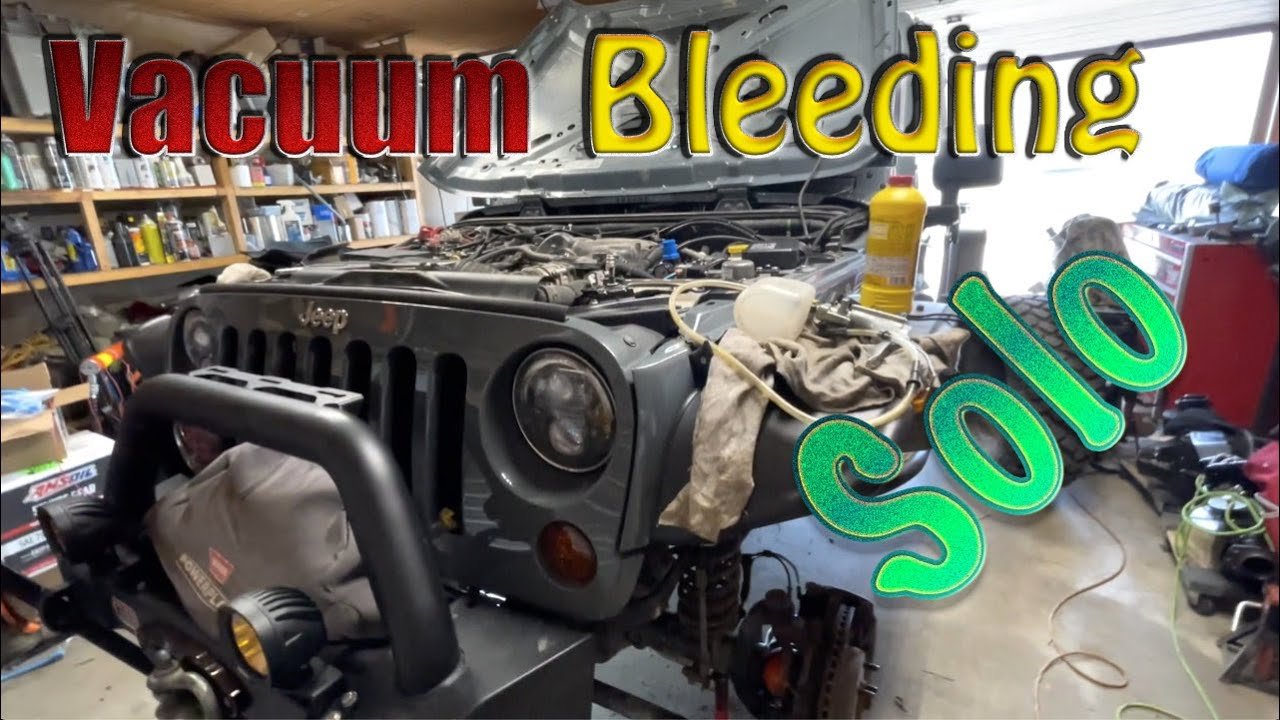
If working alone, you can use a one-man brake bleeder kit. It has a check valve to prevent air from going back in.
5. Repeat On All Wheels
Move to the next wheel in the correct order. Always check that the reservoir stays above the “MIN” line to avoid sucking in new air.
6. Check Pedal Feel And Top Off Fluid
After bleeding all brakes, press the pedal. It should feel firm and responsive.
If it’s still soft, repeat the bleeding process. Finish by topping off the brake fluid to the correct level.
Comparing Bleeding Methods
Different methods work for bleeding brakes. Here’s how the most common options compare for the Jeep JK:
| Method | Tools Needed | Best For |
|---|---|---|
| Two-person manual | Wrench, tubing, bottle | Home garages |
| One-man bleeder kit | Bleeder kit | Working solo |
| Vacuum bleeder | Vacuum pump | Fast jobs, pro shops |
Most DIY Jeep JK owners use the two-person method because it’s simple and cheap. Vacuum bleeders are faster but cost more.
Common Mistakes To Avoid
Many first-timers struggle with these issues:
- Letting the reservoir run dry: This pulls air into the master cylinder and makes things worse.
- Not bleeding in the right order: Always start with the farthest caliper.
- Loose bleeder screws: If not tight, air can sneak back in.
- Using old, contaminated fluid: Dirty fluid damages seals and reduces braking power.
Signs You Need To Bleed Your Brakes
It’s not always obvious when air is trapped. Watch for these symptoms in your Jeep JK:
| Symptom | Possible Cause |
|---|---|
| Spongy pedal | Air in lines |
| Longer stopping distance | Reduced hydraulic pressure |
| Brake warning light | Low fluid or air |
Even if you don’t notice these right away, regular bleeding after hard off-roading or every 2 years is a good idea.
Pro Tips For Success
- Tap the calipers gently with a rubber mallet during bleeding. This helps free trapped air bubbles.
- If you’ve just replaced brake parts, bleed twice—once after installation and again after a short test drive. Air can move around in the system.
- Always use brake fluid from a sealed container. Open bottles absorb moisture, which lowers performance.
When To Seek Professional Help
Sometimes, brake problems go deeper than air in the lines. If you notice leaking fluid, damaged hoses, or a pedal that won’t firm up after bleeding, get your Jeep checked by a mechanic.
Persistent issues could mean a failing master cylinder or ABS module.
For more technical details about hydraulic brake systems, check the official Wikipedia page on hydraulic brakes.

Frequently Asked Questions
How Often Should I Bleed My Jeep Jk Brakes?
Most experts suggest every 2 years or after any work on the brake system. Hard off-road use may require more frequent bleeding.
What Brake Fluid Does The Jeep Jk Use?
The Jeep JK typically uses DOT 3 or DOT 4 brake fluid. Always check your owner’s manual to be sure.
Can I Bleed Brakes Alone?
Yes, with a one-man bleeder kit or vacuum pump. However, the two-person method is simpler for most people.
What Happens If I Use The Wrong Brake Fluid?
Using the wrong type can damage seals and reduce performance. Always use the exact fluid type recommended for your Jeep.
Is It Normal For Brake Fluid To Look Dark?
Brake fluid darkens over time as it absorbs moisture and contaminants. Replace it if it’s brown or black, not just during bleeding.
Bleeding the brakes on your Jeep JK is a key part of maintenance. With the right tools and steps, you’ll restore strong, safe braking and enjoy your drives with peace of mind.