The Crank Position Sensor (CPS) is a small but vital component in your 2000 Jeep Cherokee. It plays a crucial role in the engine's operation by telling the engine control module (ECM) the exact position and speed of the crankshaft.
This information is essential for the ECM to properly time fuel injection and ignition spark. Without a functioning CPS, your Cherokee might struggle to start, run poorly, or even stall unexpectedly.
Understanding its function, common problems, and how to address them can save you time and money.
Understanding The Crank Position Sensor In Your 2000 Jeep Cherokee
The crankshaft position sensor on a 2000 Jeep Cherokee is typically a Hall effect sensor or an inductive sensor. Its primary job is to send a signal to the ECM that indicates the rotational speed and position of the crankshaft. This signal is critical for the ECM to calculate the precise moment to inject fuel into the cylinders and when to fire the spark plugs. The sensor works by detecting a reluctor wheel, which is attached to the crankshaft. As the reluctor wheel rotates, it passes by the sensor, creating a change in a magnetic field. The ECM interprets these changes as pulses, which it then uses to determine the crankshaft’s position and speed. This continuous stream of data allows the engine to run smoothly and efficiently.
How The Cps Works
The CPS on your 2000 Cherokee typically works by either interrupting a magnetic field or generating a voltage pulse as the crankshaft rotates.
- Inductive Type: This sensor uses a magnet and a coil of wire. As the metal reluctor wheel on the crankshaft passes the sensor, it changes the magnetic field. This change induces a voltage in the coil. The faster the crankshaft spins, the higher the voltage generated. The ECM reads these voltage pulses to determine the engine’s RPM and position.
- Hall Effect Type: This sensor uses a semiconductor element that changes its resistance when exposed to a magnetic field. A small magnet is usually integrated into the sensor. As the reluctor wheel passes by, it either strengthens or weakens the magnetic field affecting the Hall effect element. This change in resistance creates a digital on/off signal (a square wave) that the ECM interprets.
Both types provide the same essential information: the crankshaft’s speed and position. This data is fundamental for the ECM to control the engine’s timing.
The Importance Of Crankshaft Position Data
The ECM relies heavily on the CPS signal for several critical functions:
- Ignition Timing: Knowing the exact position of the crankshaft allows the ECM to determine the perfect moment to send a spark to the spark plugs. Incorrect ignition timing can lead to poor performance, reduced fuel efficiency, and engine knocking.
- Fuel Injection Timing: Similarly, the ECM needs to know the crankshaft’s position to inject fuel into the cylinders at the right time. This ensures efficient combustion and optimal power delivery.
- Engine Speed (RPM): The CPS signal is the primary source for the ECM to calculate the engine’s revolutions per minute. This information is used for various engine management strategies and is also displayed on your dashboard tachometer.
- Stalling Prevention: The ECM uses the CPS signal to manage idle speed and prevent the engine from stalling, especially when coming to a stop or under load.
If the CPS signal is weak, intermittent, or absent, the ECM cannot perform these functions correctly, leading to noticeable drivability issues.
Common Symptoms Of A Failing Crank Position Sensor
A failing Crank Position Sensor in your 2000 Jeep Cherokee rarely fails all at once. It usually begins to show symptoms that gradually worsen.
Recognizing these signs early can prevent more significant problems and roadside breakdowns.
Engine Cranks But Won’t Start
This is one of the most common and frustrating symptoms. If the CPS is completely dead, the ECM receives no information about the crankshaft's position.
Without this data, the ECM cannot tell the ignition system when to spark or the fuel system when to inject fuel.
The engine will crank over, as the starter motor is still functioning, but it will never fire up because the fundamental timing signals are missing.
Intermittent Stalling
A CPS that is starting to fail might cause the engine to stall unexpectedly. This can happen while driving, at idle, or even when you first start the engine.
The stalling is often intermittent because the sensor might be working partially, or the issue might be temperature-related.
For example, the sensor might work fine when cold but fail as the engine heats up, leading to a stall. Once the engine cools down, it might start and run again for a while.
Rough Idling And Poor Performance
If the CPS is sending an inaccurate or weak signal, the ECM will struggle to maintain proper ignition and fuel timing. This can result in:
- Rough Idle: The engine might shake or vibrate excessively when stopped.
- Hesitation: The vehicle might hesitate or stumble when you press the accelerator.
- Lack of Power: You might notice a significant decrease in acceleration and overall engine power.
- Misfires: The engine may run unevenly, feeling like it’s skipping a beat, due to misfires caused by incorrect timing.
Check Engine Light (cel) Illumination
A faulty CPS will almost always trigger the Check Engine Light on your dashboard. The ECM detects that the signal from the sensor is out of range, missing, or inconsistent with other sensor data (like the camshaft position sensor). When the CEL illuminates, it’s crucial to have the diagnostic trouble codes (DTCs) read. Common codes associated with a bad CPS include P0335, P0336, P0339, and others related to crankshaft position sensor circuit performance.
Difficulty Starting Or Extended Cranking Time
Even if the engine eventually starts, a failing CPS can cause it to crank for a longer period than usual. The ECM is trying to piece together enough valid information from the sensor to initiate combustion.
This extended cranking is a sign that the sensor's signal is weak or intermittent, making it harder for the ECM to get a lock on the crankshaft's position.
Fuel System Issues (less Common But Possible)
While the CPS's primary role is timing, severe signal degradation can sometimes indirectly affect fuel delivery. If the ECM cannot accurately determine engine speed, it might miscalculate the amount of fuel needed, leading to a too-lean or too-rich condition.
However, this is less common than ignition-related issues.
Diagnosing A Faulty Crank Position Sensor
Diagnosing a faulty Crank Position Sensor in your 2000 Jeep Cherokee requires a systematic approach. Simply replacing the sensor without proper diagnosis can lead to wasted money and time, as the problem might lie elsewhere.
Reading Diagnostic Trouble Codes (dtcs)
The first step is always to use an OBD-II scanner to read any stored trouble codes. As mentioned earlier, codes like P0335, P0336, P0339, P0340, P0341, or P0349 often point towards a crankshaft position sensor issue.
- P0335: Crankshaft Position Sensor “A” Circuit Malfunction
- P0336: Crankshaft Position Sensor “A” Circuit Range/Performance
- P0339: Crankshaft Position Sensor “A” Circuit Intermittent
While these codes strongly suggest a CPS problem, they don’t always mean the sensor itself is bad. The wiring, connectors, or even the reluctor wheel could be the culprit.
Visual Inspection
Once you have potential codes, perform a thorough visual inspection:
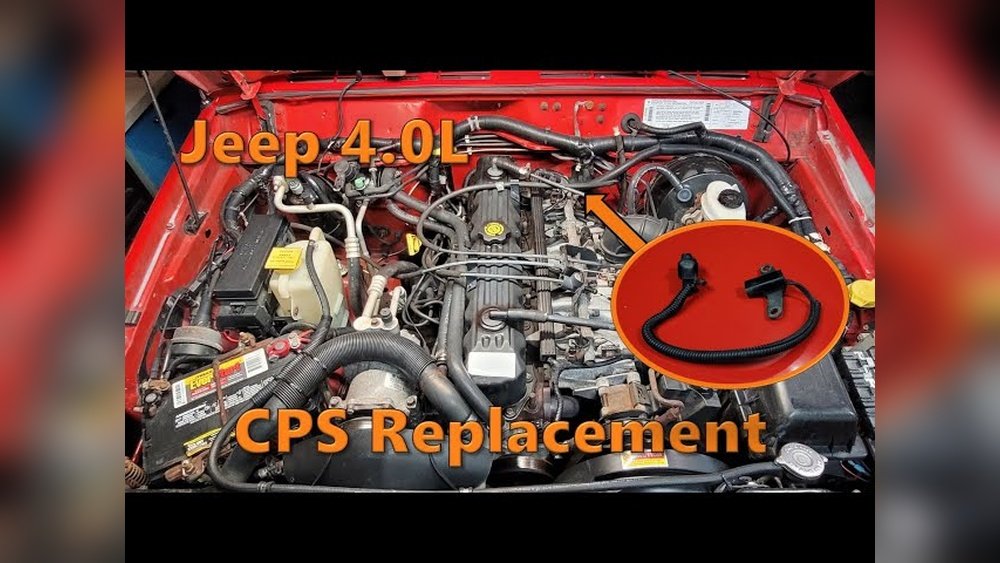
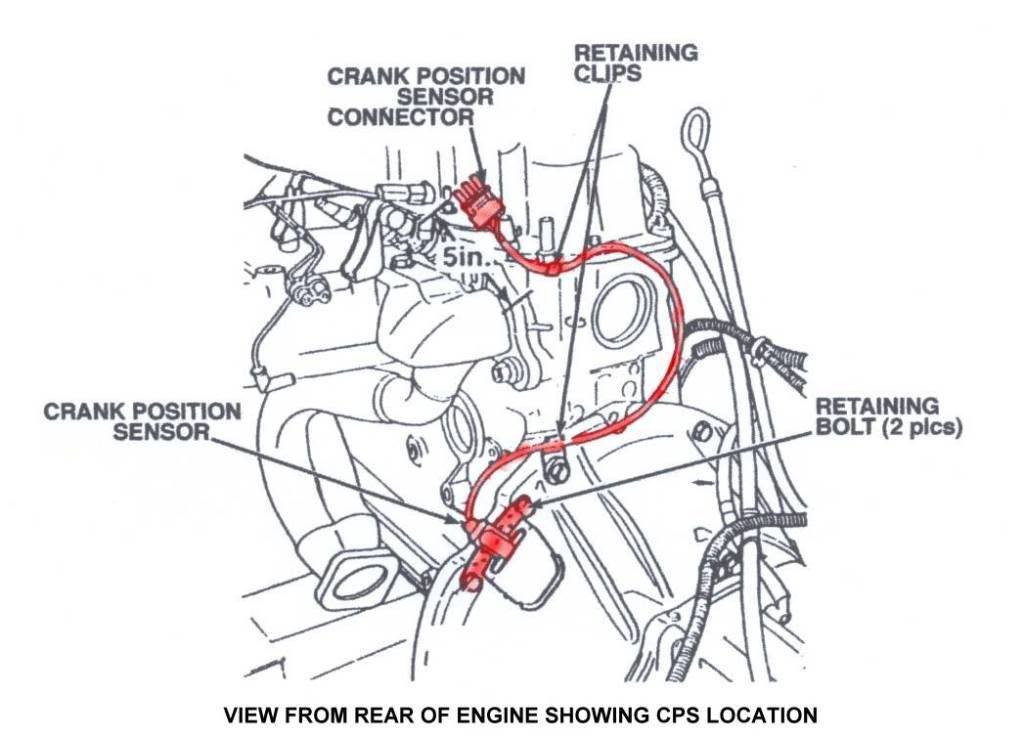
- Locate the Sensor: On most 2000 Jeep Cherokees (especially those with the 4.0L inline-six engine), the CPS is located on the bell housing of the transmission, near the rear of the engine block. It typically bolts into a small recess.
- Check the Wiring and Connector: Inspect the wiring harness leading to the CPS for any signs of damage, chafing, cuts, or corrosion. Pay close attention to the connector; ensure it’s clean, free of debris, and securely plugged in. Sometimes, a loose connection is all it takes.
- Inspect the Reluctor Wheel: If accessible (which can be difficult without removing other components), check the reluctor wheel for damage, missing teeth, or excessive debris. Any damage to the reluctor wheel can interfere with the sensor’s ability to read its position accurately.
Testing The Sensor
If the visual inspection doesn’t reveal obvious issues, you’ll need to test the sensor’s electrical properties. This usually requires a multimeter and knowledge of the sensor’s specifications.
- Resistance Test: Disconnect the sensor and measure the resistance across its terminals using a multimeter. Compare the reading to the manufacturer’s specifications. An open circuit (infinite resistance) or a short circuit (very low resistance) indicates a faulty sensor.
- Signal Output Test: This is more advanced and often requires an oscilloscope to see the signal waveform. With the sensor connected and the engine cranking (or running, if possible), you can monitor the output signal. You should see a clean, consistent pulse. A weak, erratic, or absent signal points to a problem with the sensor or its circuit.
Testing The Circuit
If the sensor tests good, the problem might be in the wiring or the ECM.
- Continuity Test: With the battery disconnected and the sensor unplugged, test for continuity between the sensor connector pins and the corresponding pins at the ECM connector. Any breaks in the wires will show up as infinite resistance.
- Short-to-Ground Test: Test for continuity between each wire and the vehicle’s chassis (ground). Any continuity indicates a short to ground, which needs to be repaired.
- Short-to-Power Test: Test for continuity between the signal wires and the positive battery terminal. Again, any continuity indicates a short.
Sometimes, a failing camshaft position sensor (CMP) can be mistaken for a CPS issue, or vice versa, as both are crucial for timing. Other components like the ignition coil, fuel pump, or even a clogged fuel filter can mimic CPS symptoms. Always rule out simpler issues first.
Replacing The Crank Position Sensor
Replacing the Crank Position Sensor on a 2000 Jeep Cherokee is a manageable DIY task for those with some mechanical experience. However, the location can make it a bit tricky.
Tools And Materials Needed
- New Crank Position Sensor: Ensure it’s the correct part for your 2000 Jeep Cherokee (e.g., for the 4.0L engine).
- Socket Set: You’ll likely need a socket wrench with the appropriate size socket (often 10mm or 13mm) to remove the sensor’s retaining bolt.
- Extension: A socket extension might be necessary to reach the sensor’s bolt.
- Pliers: Needle-nose pliers can be helpful for disconnecting the electrical connector.
- Torque Wrench: Recommended for tightening the new sensor’s bolt to the correct specification, although often not strictly required if carefully tightened.
- Penetrating Oil: May be useful if the sensor is stuck.
- Safety Glasses and Gloves: Essential for personal protection.
- OBD-II Scanner: To clear codes after replacement.
Step-by-step Replacement Guide
- Safety First: Disconnect the negative battery terminal to prevent any electrical shorts.
- Locate the Sensor: As previously mentioned, the CPS is usually on the transmission bell housing, on the driver’s side, near where the engine meets the transmission. It might be easier to access from underneath the vehicle.
- Disconnect the Electrical Connector: Carefully unplug the electrical connector from the old sensor. There’s usually a locking tab that needs to be pressed or lifted. Be gentle to avoid breaking the connector.
- Remove the Retaining Bolt: Use your socket wrench and extension to remove the bolt holding the CPS in place. This bolt might be tight.
- Remove the Old Sensor: Gently wiggle and pull the old sensor out of its mounting hole. It might be slightly seized. If so, a little penetrating oil or careful prying might be needed. Be careful not to damage the mounting bore.
- Prepare the New Sensor: Some new sensors come with a new retaining bolt. Ensure the new sensor is clean. Sometimes, a small amount of dielectric grease is recommended for the connector, but check the part’s instructions.
- Install the New Sensor: Insert the new CPS into the mounting hole. Ensure it sits flush and correctly aligned.
- Install the Retaining Bolt: Reinstall the retaining bolt and tighten it securely. Do not overtighten, as this can damage the sensor or threads. If you have a torque wrench, tighten it to the manufacturer’s specified torque (typically around 18-25 ft-lbs, but verify for your specific model).
- Reconnect the Electrical Connector: Plug the electrical connector firmly onto the new sensor until it clicks into place.
- Reconnect the Battery: Reconnect the negative battery terminal.
- Clear Codes and Test Drive: Use your OBD-II scanner to clear any stored DTCs. Start the engine and let it run. Take the vehicle for a test drive to ensure the problem is resolved and the engine runs smoothly. Monitor for any lingering symptoms or new warning lights.
Important Considerations
- Sensor Quality: Opt for a reputable brand for your replacement CPS. Cheap, unbranded sensors can fail prematurely or have inaccurate readings, leading to more problems.
- Sensor Alignment: The CPS must be positioned correctly relative to the reluctor wheel. Most sensors are designed to seat themselves properly, but ensure it’s fully inserted and the bolt is snug.
- Environmental Factors: The CPS is exposed to heat, dirt, and vibrations. This is why wiring and connector integrity are as important as the sensor itself.
Troubleshooting Common Issues After Replacement
Sometimes, even after replacing the Crank Position Sensor, you might still experience problems. This is frustrating, but it often points to a secondary issue or an incorrect diagnosis.
Persistent Symptoms
If the engine still won’t start, stalls, or runs poorly after replacing the CPS, revisit the diagnostic steps.
- Faulty New Sensor: Though less common, new parts can be defective. Re-test the new sensor or consider exchanging it.
- Incorrect Part: Double-check that you installed the correct CPS for your specific 2000 Jeep Cherokee model and engine.
- Wiring Harness Issues: The problem might still be in the wiring or connector. Inspect it again carefully for breaks, corrosion, or poor connections that you might have missed. A short circuit or open circuit in the harness will prevent the sensor from working correctly.
- Reluctor Wheel Damage: If the reluctor wheel is damaged (cracked, missing teeth), the new sensor won’t help. This requires more extensive