Many people love Jeeps for their rugged look and off-road ability. But when you hear “Jeep,” you might think of a big V6 or V8 engine, not a 4-cylinder. The truth is, Jeep 4 cylinders have a long history, and they’re becoming popular again. Some drivers wonder if these smaller engines are strong enough for a heavy vehicle, or if they can handle tough trails. Others want to know if 4-cylinder Jeeps are better for daily driving or saving money at the pump.
If you’re trying to decide if a 4-cylinder Jeep is right for you, this article breaks down the most important points. You'll learn about their strengths, weaknesses, and which models use them.
We'll also compare them to bigger engines and clear up some common myths.
By the end, you’ll know if a Jeep 4-cylinder fits your lifestyle or if you should look for something else.
History Of Jeep 4-cylinder Engines
The 4-cylinder engine has been part of Jeep’s story since the very beginning. The original World War II Jeep—the Willys MB—used a 2.2L four-cylinder called the “Go Devil.” It was simple, reliable, and easy to fix. Later, the famous CJ and Wrangler models continued to use four-cylinders for decades.
In the 1990s and early 2000s, Jeep started to focus more on six-cylinder engines. However, 4-cylinders never disappeared. Today, turbocharged 4-cylinders are back in modern Jeeps like the Wrangler JL and Jeep Compass. They offer more power than older versions, but with better fuel economy.
Main Types Of Jeep 4-cylinder Engines
There are four main types of Jeep 4-cylinder engines you’ll find, each with its own pros and cons. Let’s look at them one by one.
1. Amc 2.5l Inline-4
This 2.5-liter engine was used from the early 1980s until 2002 in models like the Jeep Cherokee (XJ) and Wrangler (YJ and TJ). It makes about 120 horsepower and 140 lb-ft of torque.
- Strengths: Simple design, easy to repair, and good for city driving or light trails.
- Weaknesses: Not much power for highway driving or heavy loads. Can feel slow, especially with big tires.
Many Jeep fans say this engine is nearly “bulletproof” if you keep up with oil changes. It’s a good choice for budget builds or for people who don’t need to tow or haul heavy gear.
2. 2.4l Dohc (dual Overhead Cam)
Found in Jeeps like the Liberty, Patriot, and base Wrangler TJ (2003–2006), this engine makes 147–150 horsepower and 165 lb-ft of torque.
- Strengths: Smoother and quieter than older engines. Decent fuel economy for a Jeep.
- Weaknesses: Still not great for towing. Some owners report higher oil use over time.
This engine does well for daily driving and light off-roading. If you want a small Jeep for commuting or occasional adventures, the 2. 4L can be a smart pick.
3. 2.0l Turbocharged Inline-4
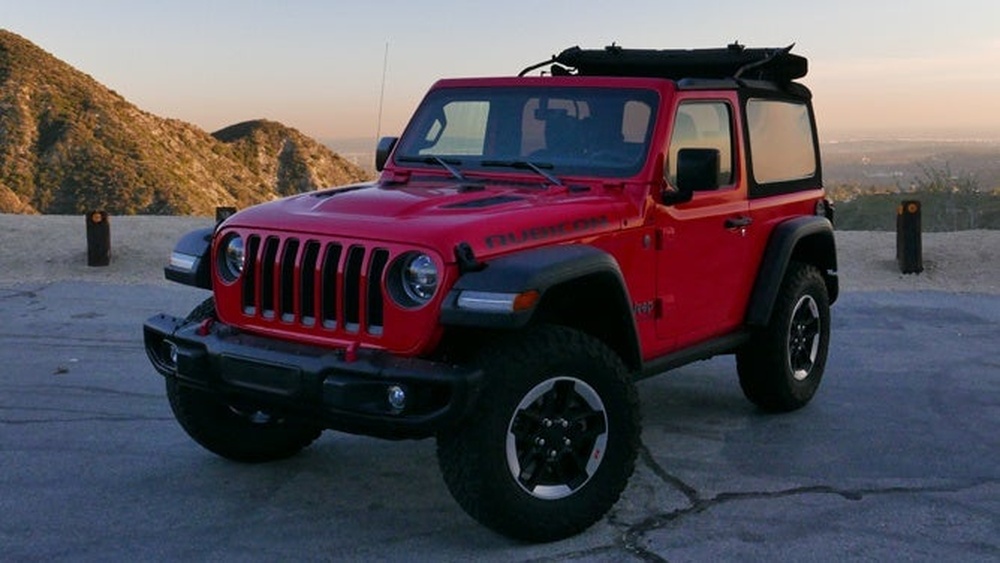
The Jeep Wrangler JL (2018+) and Jeep Cherokee use this modern turbo engine. It produces 270 horsepower and 295 lb-ft of torque—almost as much torque as the older V6!
- Strengths: Strong acceleration, especially at low speeds. Great for city driving and quick passing. Much better fuel economy than a V6.
- Weaknesses: Needs premium fuel for best performance. Turbo engines can be more expensive to repair after many years.
If you want a mix of power and efficiency, this is the standout four-cylinder. It’s popular with people who want a newer Jeep that’s fun and practical.
4. 2.8l Turbo Diesel
Mainly available outside the US (and in the Jeep Liberty CRD in 2005–2006), this 4-cylinder diesel puts out 160 horsepower and a strong 295 lb-ft of torque.
- Strengths: Excellent torque for towing and off-roading. Good fuel economy on long trips.
- Weaknesses: Diesel engines can be noisy and more expensive to repair in the US. Harder to find in North America.
The 2. 8L diesel is loved by off-roaders overseas.
If you care about towing or low-end power, this engine stands out among 4-cylinders.
Comparing Jeep 4-cylinders To 6-cylinders And V8s
It’s easy to think bigger engines are always better, but that’s not always true. Here’s a quick look at how the main Jeep engines stack up:
| Engine | Horsepower | Torque (lb-ft) | Fuel Economy (mpg, combined) |
|---|---|---|---|
| 2.0L Turbo I4 | 270 | 295 | 22-25 |
| 3.6L V6 | 285 | 260 | 19-22 |
| 5.7L V8 | 360 | 390 | 15-17 |
What does this mean? The newest 4-cylinder engines are almost as strong as a V6, but use less gas. They’re not as good for heavy towing, but they’re quick and easy to drive.
Pros And Cons Of Jeep 4-cylinders
Most buyers want a clear list of upsides and downsides. Here’s what you need to know:
Pros:
- Better fuel economy, especially in the city
- Lower maintenance costs (for older models)
- Lighter front end, which can help with handling
- Enough power for most daily tasks
Cons:
- Less towing power than V6 or V8
- Some older 4-cylinders feel slow on the highway
- Turbo models can need more expensive repairs
- Not as much “engine sound” as bigger Jeeps
Real-world Driving: Where Do 4-cylinders Shine?
Many drivers say the biggest surprise is how well new Jeep 4-cylinders perform in traffic. The turbo models feel lively and quick, even compared to larger engines. They’re also easier to park and maneuver.
For people who mostly drive in the city or on mild trails, a 4-cylinder Jeep is often the best fit. If you plan to tow a camper or climb steep mountains often, you may want a V6 or V8 instead.
Here’s a quick look at towing limits for common Jeep engines:
| Engine | Max Towing (lbs) |
|---|---|
| 2.0L Turbo I4 | 3,500 |
| 3.6L V6 | 3,500-3,750 |
| 5.7L V8 | 7,200+ |
This shows that 4-cylinders are fine for small trailers or bikes, but not heavy boats or RVs.
Common Myths About Jeep 4-cylinders
Some people think Jeep 4-cylinders are always underpowered or break easily. That’s not true today.
Modern turbo engines have solved most old problems. Many 4-cylinder Jeeps last over 200,000 miles with regular care.
A less obvious tip: newer 4-cylinders often need synthetic oil and regular coolant checks. Skipping these can shorten engine life, so follow your owner’s manual.
Should You Buy A Jeep 4-cylinder?
Choose a 4-cylinder Jeep if:
- You want to save gas and mostly drive in the city
- You do light off-roading or camping trips
- You want a reliable, lower-cost option
Skip the 4-cylinder if:
- You tow heavy loads often
- You want maximum power for mountain driving
- You like the sound and feel of a big engine
If you’re still unsure, test drive both engines before deciding. The difference is easy to feel.
For more technical details and Jeep’s full engine history, visit the Jeep Wrangler Wikipedia page.
Frequently Asked Questions
Are Jeep 4-cylinder Engines Reliable?
Yes, Jeep 4-cylinders are reliable if you keep up with oil changes and basic maintenance. Older models are very simple, while newer turbo engines need more careful service.
Do Jeep 4-cylinders Get Good Gas Mileage?
Most 4-cylinder Jeeps get 20 25 mpg in mixed driving, which is better than V6 or V8 models. Turbo versions are especially efficient in city traffic.
Can A Jeep 4-cylinder Handle Off-roading?
Yes, for most trails and mud, a 4-cylinder is enough. Only the toughest climbs or heavy rock crawling need a bigger engine.
What’s The Lifespan Of A Jeep 4-cylinder Engine?
With good care, many Jeep 4-cylinders last over 150,000 200,000 miles. Turbo engines may need more attention as they age.
Is A Jeep 4-cylinder Good For Towing?
They can tow small trailers or boats (up to 3,500 lbs for the 2. 0L turbo), but not heavy campers or car haulers.
For big towing jobs, pick a V6 or V8.