If your Jeep Wrangler dashboard lights up with an ABS or traction control warning, it’s often a sign of trouble with the wheel speed sensors. These small devices help your Jeep’s computer know how fast each wheel is moving. Without accurate readings, important features like ABS braking or stability control can fail. Testing for a faulty sensor isn’t hard, but you need to know what to look for and how to check. This guide will help you understand symptoms, diagnosis steps, and practical tips to test your Jeep Wrangler’s wheel speed sensors with confidence.
What Is A Wheel Speed Sensor?
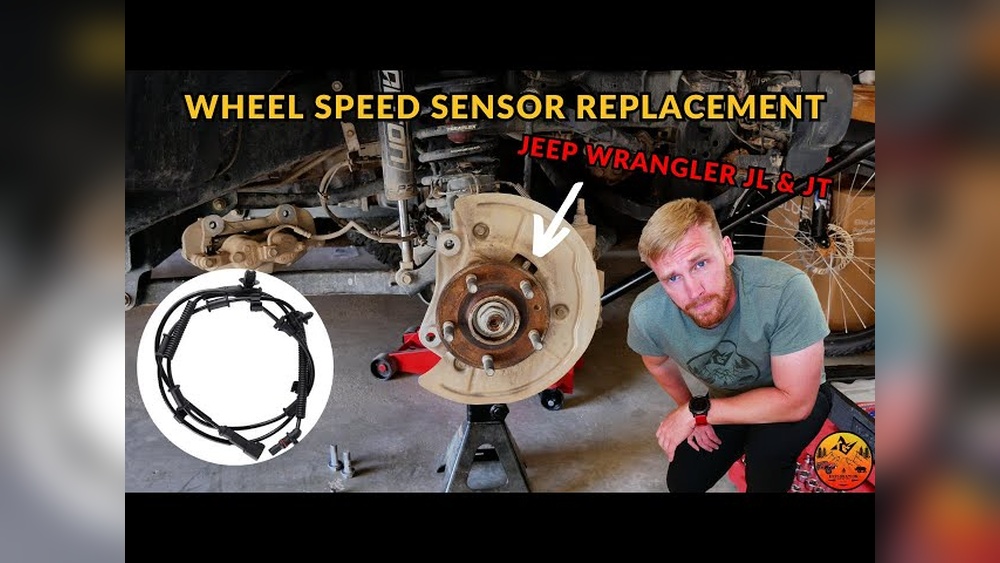
A wheel speed sensor is a small electronic device mounted near each wheel. It reads the speed of the wheel by sensing magnetic pulses from a ring (called a tone ring or reluctor) attached to the axle. The sensor sends this data to the vehicle’s ABS computer. Modern Jeep Wranglers use these sensors to control ABS, traction control, and sometimes stability programs.
If a sensor fails, your Jeep may lose important safety features. You might notice strange behavior, like the ABS kicking in for no reason or warning lights staying on.
Signs Of A Faulty Wheel Speed Sensor
Recognizing the symptoms early helps you avoid bigger problems. Here are common signs your Jeep Wrangler might have a bad wheel speed sensor:
- ABS warning light: The ABS light turns on when the system detects a sensor issue.
- Traction control light: This light may appear, especially during slippery conditions.
- Unusual braking: The ABS may activate unexpectedly, or not work at all.
- Speedometer issues: Sometimes, the speedometer behaves oddly.
- Loss of cruise control: Some models disable cruise control if a sensor fails.
Jeep Wranglers built after 2007 (JK and JL models) rely even more on these sensors. A faulty sensor can affect multiple systems at once.
Tools Needed For Testing
Testing wheel speed sensors doesn’t require expensive tools. Here’s what you need:
- OBD-II scanner: To read error codes.
- Digital multimeter: To measure voltage and resistance.
- Jack and jack stands: For safe wheel removal.
- Socket set: For sensor access.
- Cleaning supplies: To clear dirt and debris.
If you don’t own a multimeter, many auto parts stores let you borrow one. Using the right tools helps you get accurate results.
Step-by-step Guide: Testing The Wheel Speed Sensor
Testing your Jeep Wrangler’s wheel speed sensor involves both electronic and physical checks. Here’s how to do it:
1. Scan For Error Codes
Connect the OBD-II scanner to the port under the dashboard. Turn the ignition to “on” (engine off) and scan for codes. Common wheel speed sensor codes include:
- C0035: Left front sensor
- C0040: Right front sensor
- C0041: Right rear sensor
Record the codes. They pinpoint which sensor is faulty.
2. Inspect The Sensor Visually
Lift your Jeep using the jack and secure it with stands. Remove the wheel to access the sensor. Look for:
- Broken wires or connectors
- Dirt or rust on the sensor head
- Damaged tone ring
Sometimes, simple cleaning fixes the issue. If the sensor is physically damaged, it needs replacing.
3. Test Sensor Resistance
Use a digital multimeter set to ohms (Ω). Unplug the sensor connector. Place the probes on the sensor terminals. Compare the readings to Jeep’s specs:
| Sensor Location | Resistance (Ohms) |
|---|---|
| Front | 1,000–2,500 |
| Rear | 1,000–2,500 |
If your reading is far outside this range, the sensor may be faulty. Note: Some Jeep models have sensors with slightly different specs. Always check your owner’s manual.
4. Check For Ac Voltage
Turn the multimeter to AC volts. Spin the wheel by hand (as fast as you can). The sensor should produce a small voltage (typically 0. 2 2. 0 volts). No voltage means the sensor isn’t reading wheel movement.
5. Inspect The Tone Ring
The tone ring must be clean and undamaged. If teeth are broken or clogged with rust, the sensor won’t work. Wipe the ring and inspect for cracks.
| Condition | Possible Issue | Action |
|---|---|---|
| Clean, intact | Sensor may be faulty | Test sensor |
| Dirty, rusty | Signal interruption | Clean ring |
| Broken teeth | Incorrect readings | Replace ring |
6. Reconnect And Retest
After cleaning or replacing parts, reconnect the sensor and clear codes using your OBD-II scanner. Drive your Jeep to see if warning lights return.

Practical Tips For Accurate Testing
Testing isn’t just about following steps. Here are some insights many beginners miss:
- Check all sensors, not just one: Sometimes, multiple sensors fail or wiring issues affect more than one sensor. Test each sensor to be sure.
- Don’t ignore connector issues: Loose or corroded connectors often cause intermittent faults. Wiggle the connector while testing to spot hidden problems.
- Use proper torque: When reinstalling sensors, overtightening can damage the sensor. Jeep recommends specific torque values (usually 7–10 ft-lbs).
- Drive cycle matters: After repairs, your Jeep may need a few miles of driving for the computer to reset. Don’t panic if lights stay on briefly.
Common Mistakes When Testing Wheel Speed Sensors
Avoid these errors, which can lead to wrong diagnoses:
- Skipping the OBD-II scan: Without code reading, you might waste time on the wrong sensor.
- Not checking sensor wiring: Broken wires mimic sensor failure.
- Using wrong multimeter settings: Always check resistance with the sensor unplugged.
- Ignoring tone ring condition: Even a perfect sensor won’t work with a damaged ring.
- Replacing sensors unnecessarily: Test before buying new parts; cleaning often solves the issue.
Jeep Wrangler Wheel Speed Sensor Replacement Data
If you confirm a faulty sensor, replacing it is straightforward. Here’s a quick comparison of replacement costs and difficulty:
| Model Year | Average Sensor Cost | Labor Time (Hours) | Difficulty (1–5) |
|---|---|---|---|
| 2007–2018 (JK) | $30–$60 | 0.5–1 | 2 |
| 2018–2024 (JL) | $35–$70 | 0.5–1 | 2 |
| 1997–2006 (TJ) | $25–$50 | 0.5–1 | 2 |
Most owners can replace the sensor with basic hand tools. Always reset the codes after replacement.
Real-world Example: Diagnosing A Faulty Sensor
Let’s say your 2019 Jeep Wrangler JL shows an ABS light. You scan and find code C0040 (right front sensor). You lift the Jeep, remove the wheel, and find the sensor covered in mud. After cleaning, you test resistance (1,200 ohms) and AC voltage (0.6 volts when spinning). Both readings are within spec. You clear the code, drive the Jeep, and the light stays off. In this case, dirt caused the fault, not the sensor itself.
When To Seek Professional Help
Testing wheel speed sensors is safe for most Jeep owners. However, if you notice:
- Multiple warning lights
- Persistent codes after replacement
- Damaged wiring harness
It’s wise to consult a mechanic. Some issues, like computer faults or deep wiring problems, need expert tools and knowledge.
Preventing Wheel Speed Sensor Issues
You can reduce sensor failures by:
- Regularly cleaning under your Jeep, especially after off-roading
- Avoiding pressure washing directly on sensors
- Inspecting wiring for rub marks or damage
- Using quality replacement parts
Jeep Wranglers see more mud and water than most vehicles. Routine checks save you from sudden warning lights.
Frequently Asked Questions
What Happens If A Wheel Speed Sensor Fails On A Jeep Wrangler?
If a sensor fails, your Jeep loses ABS, traction control, and sometimes cruise control. The computer can’t read wheel speed correctly, so it disables safety features.
How Do I Know Which Sensor Is Bad?
An OBD-II scanner tells you exactly which sensor is faulty by displaying error codes. Common codes are C0035 (left front), C0040 (right front), and similar.
Can I Drive My Jeep Wrangler With A Faulty Wheel Speed Sensor?
You can drive, but your ABS and traction control won’t work. This makes braking less safe, especially in wet or slippery conditions. It’s best to fix the issue soon.
Is Cleaning The Sensor Enough To Fix The Problem?
Sometimes, yes. Dirt or rust causes false readings. Clean the sensor head and tone ring, then retest. If the sensor still fails, replacement is needed.
Where Can I Find Official Jeep Wrangler Repair Guides?
You can access official guides and diagrams from the manufacturer at Jeep Owners Manuals.
Testing for a faulty wheel speed sensor on your Jeep Wrangler is a practical skill. It saves money, keeps you safe, and helps you understand your vehicle better. Use the steps and tips above, and you’ll handle sensor issues like a pro.