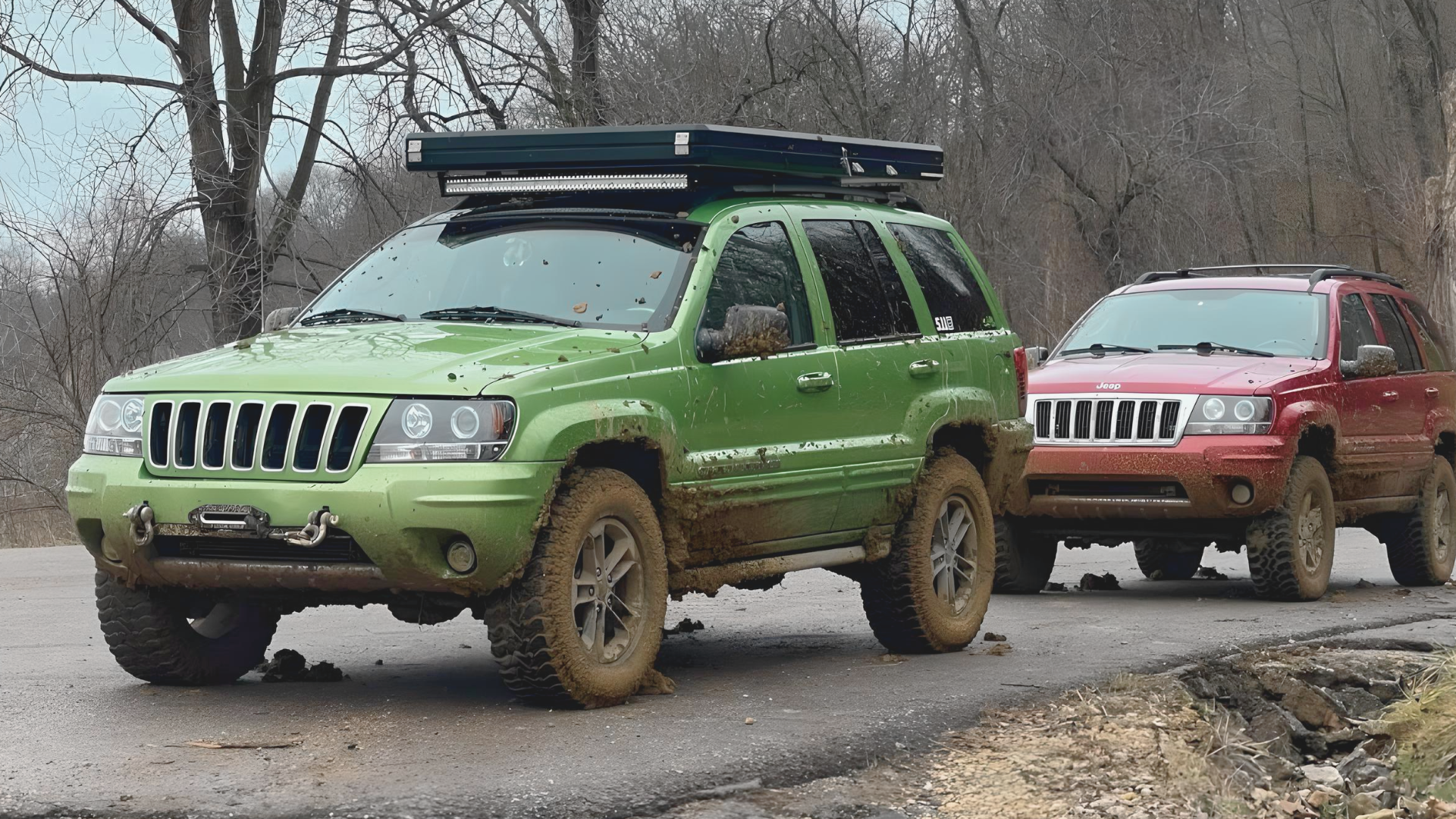
Fitting 38 inch tires on a Jeep Wrangler is not a casual weekend upgrade. It changes how the Jeep looks, crawls, brakes, steers, accelerates, and fits under the fenders.
Done right, 38s can turn a Wrangler into a serious trail rig with better ground clearance, a bigger contact patch, and a much more aggressive stance. Done wrong, they can make the Jeep slow, loud, unstable, expensive to maintain, and rough on axles and steering parts.
The tire itself is only one piece of the build. A Wrangler on 38s usually needs lift, bump stop tuning, wheel offset/backspacing, gearing, steering upgrades, brake attention, speedometer calibration, and a stronger spare tire carrier. Depending on the Wrangler model and how hard you wheel, axle upgrades may also be part of the conversation.
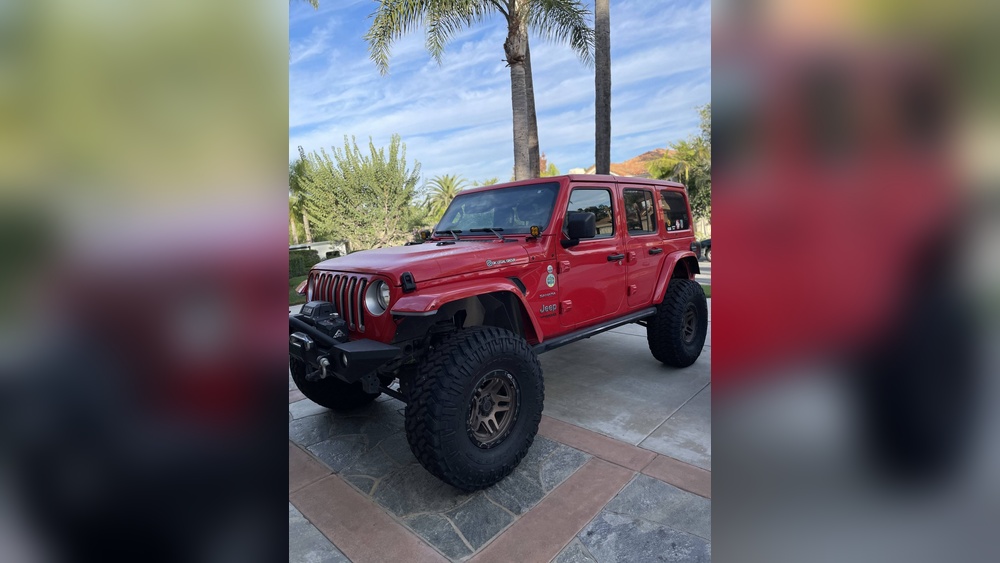
This guide breaks down what 38 inch tires really require, which Jeep Wrangler models handle them best, what tire types to compare, what the upgrade costs, and what mistakes to avoid before spending money.
Quick Answer
Most Jeep Wranglers need more than tires and wheels to run 38s properly. A practical 38 inch tire build usually includes:
- A 3.5 to 5 inch suspension lift, depending on model, fenders, wheel offset, and use
- Correct bump stops to prevent tire-to-body contact
- Wheels with suitable width and backspacing
- Re-gearing for drivability
- Stronger steering components
- Brake inspection or upgrades
- Speedometer and transmission calibration
- Spare tire carrier reinforcement
- Careful axle evaluation, especially on non-Rubicon models
If the Jeep is mainly a daily driver, 37s may be the smarter stopping point. If the Jeep is a trail-focused build and you are ready to upgrade the supporting parts, 38s can be worth it.
Are 38 Inch Tires Worth It on a Wrangler?
They can be. The payoff is real on the trail.
A 38 inch tire gives the axle housings more clearance than a 35 or 37, rolls over ledges more easily, and adds sidewall for airing down. The Jeep also gets the kind of stance many owners want from a serious build.
The tradeoff is that everything gets heavier. A 38 inch mud terrain can be much heavier than a stock tire, and that extra rotating weight is hard on the drivetrain.
Acceleration drops, braking distances can increase, fuel economy falls, and small weaknesses in steering or suspension show up faster.
38s make the most sense for:
- Rock crawling
- Deep mud
- Sand and dunes
- Trail rigs with upgraded axles and gearing
- Show builds that are also mechanically sorted
- Wranglers that are not expected to feel stock on the highway
They make less sense for:
- Stock or lightly modified daily drivers
- Wranglers with weak axle shafts or worn steering
- Owners trying to keep factory fuel economy
- Drivers who do not want to re-gear
- Builds that need to stay quiet and comfortable on long highway trips
Fitment Data Table
Use this table as the planning sheet before ordering tires. Actual requirements depend on Wrangler generation, axle, wheel offset, fender setup, suspension brand, and how much up-travel you want to keep.
| Upgrade Area | What To Plan For | Why It Matters |
|---|---|---|
| Suspension lift | Commonly 3.5-5 inches for trail use | Creates vertical clearance, but lift alone does not solve steering, gearing, or axle stress. |
| Fender clearance | High-clearance fenders or trimming may be needed | 38s need room at full steering lock and full suspension compression. |
| Bump stops | Must be measured and tuned after install | Prevents the tire from smashing fenders, liners, body seams, shocks, or wiring. |
| Wheel width | Usually 8.5-10 inches, depending on tire spec | The tire manufacturer lists the approved rim width for each size. |
| Backspacing/offset | Often less backspacing than stock wheels | Helps clear control arms and frame at steering lock. Too much poke can create legal and steering issues. |
| Gearing | Commonly 4.88, 5.13, or 5.38 depending on setup | Restores drivability, crawl control, and transmission behavior. |
| Axles | Rubicon axles are stronger, but still need evaluation | 38s add leverage. Shafts, ball joints, gears, and housings see more stress. |
| Steering | Tie rod, drag link, track bar, and ball joints should be inspected | Big tires expose weak steering parts quickly. |
| Brakes | At minimum, inspect pads, rotors, and fluid | Heavier tires are harder to stop. |
| Spare carrier | Reinforced carrier or bumper-mounted carrier | A 38 inch spare can damage a factory tailgate carrier. |
| Calibration | Speedometer, shift points, TPMS, and tire size settings | Keeps speed, mileage, and transmission behavior closer to correct. |
Wrangler Model Fitment Notes
Every generation can be built for 38s, but some get there with less drama.
| Wrangler Model | 38 Inch Tire Reality |
|---|---|
| TJ Wrangler | Possible, but it usually becomes a serious build. Expect lift, trimming, axle work, steering upgrades, and careful driveshaft angles. |
| JK Wrangler | Common platform for 38s, especially with Rubicon axles. Non-Rubicon models need more axle attention. |
| JL Wrangler | Generally more tire-friendly than older generations, but 38s still need lift, bump stops, gearing, and steering/brake checks. |
| Rubicon trims | Better starting point because of stronger axles, lower transfer-case gearing, and lockers, but not immune to stress. |
| Sport/Sahara trims | Can run 38s with the right work, but axle gearing, differential strength, and steering upgrades become more important. |
| 2-door Wranglers | Short wheelbase helps off-road but can feel twitchier with tall lifts and heavy tires. |
| 4-door Unlimited models | More stable and popular for 38s, especially for overlanding and trail rigs carrying gear. |
The short version: a Rubicon JL or JK is usually the easiest starting point. A TJ or non-Rubicon build can still be excellent, but the supporting parts matter more.
Tire Size: What “38 Inch” Really Means
Not every tire labeled 38 inches measures exactly 38 inches tall once mounted, inflated, and loaded under a Jeep. Some measure slightly smaller.
Some are wide enough to create extra clearance problems even if the diameter is manageable.

Common 38-ish sizing includes:
38x12.50R1738x13.50R1738x13.50R1838x13.50R2038x15.50R20
For a trail-focused Wrangler, 17 inch wheels are popular because they leave more sidewall than 20 inch wheels. More sidewall helps when airing down and crawling over rocks.
A 20 inch wheel can look good on a show build, but it gives up sidewall and usually makes the tire/wheel package harsher off-road.
Before buying, check:
- Actual overall diameter
- Section width
- Approved rim width
- Load range
- Tire weight
- Tread depth
- Speed rating
- Max load
- Whether the tire is directional
- Whether the tire is 3PMSF-rated if snow matters
Lift Requirements for 38 Inch Tires
There is no single lift height that fits every Wrangler. Two Jeeps with the same tire can need different clearance depending on fenders, wheel offset, bump stops, axle position, and suspension travel.
As a rough planning range:
| Build Style | Typical Lift Range | Notes |
|---|---|---|
| Street/show build with limited flex | 3.5-4 inches | May still need high-clearance fenders and careful wheel offset. |
| Mixed daily driver and trail Jeep | 4-4.5 inches | A common middle ground, but ride quality depends heavily on suspension quality. |
| Rock crawling with real flex | 4.5-5+ inches | Requires bump stop tuning, steering geometry, brake lines, driveshaft checks, and axle control. |
| Low center-of-gravity build | Less lift, more cutting | Better stability, but requires fenders, trimming, and careful setup. |
Do not judge fitment in the driveway only. A tire that clears while parked can still rub badly when the axle stuffs, the sway bar disconnects, or the steering is at full lock on uneven ground.
Re-Gearing: Why 38s Feel Slow Without It
Larger tires effectively raise the final drive ratio. That means the engine has to work harder to turn the tire, and the Jeep feels slower off the line.
Automatic transmissions may hunt between gears. Manual Jeeps may feel lazy, especially on hills.
Common re-gear ranges for 38s:
| Use Case | Common Gear Ratio Range |
|---|---|
| Light 38s, lighter Jeep, mixed street use | 4.88 |
| Most trail-focused 38 inch builds | 5.13 |
| Heavy Jeep, automatic, towing gear, or crawling focus | 5.38 |
These are planning ranges, not universal rules. Engine, transmission, transfer case, axle, tire weight, altitude, and driving style all matter.
A Jeep driveline shop can calculate the best ratio for your exact setup.
Axle Strength: The Part People Underestimate
38 inch tires add leverage. That leverage shows up when the tire grabs a rock, bounces in mud, or lands under throttle.
Weak axle shafts, ball joints, steering knuckles, housings, and gears can suffer.

Pay close attention to:
- Front axle type
- Rear axle type
- Gear set quality
- Axle shaft strength
- Ball joints
- Unit bearings
- Differential covers
- Locker condition
- Driving style
Rubicon axles are a better starting point than many non-Rubicon axles, but 38s can still push them hard. If you like throttle-heavy rock crawling, axle upgrades become much more important.
Tire Type Comparison
The best 38 inch tire is not the most aggressive one on the shelf. It is the tire that matches how the Jeep is actually used.
| Tire Type | Best For | Pros | Tradeoffs |
|---|---|---|---|
| Mud terrain | Mud, rocks, deep ruts, aggressive trail use | Strong lugs, self-cleaning tread, rugged look | Louder, heavier, weaker wet-road manners than many all-terrains |
| Hybrid/R/T | Mixed highway and trail | Better road manners than many M/Ts, still aggressive | Not as strong in deep mud as a true mud terrain |
| All-terrain | Daily driving, overlanding, gravel, light trails | Quieter, longer-wearing, better in rain and snow depending on model | Limited in deep mud and technical rock compared with M/Ts |
| Competition/sticky tire | Dedicated rock crawling | Huge grip off-road | Poor daily-driver choice, fast wear, higher cost, limited road suitability |
For most Wrangler owners running 38s, a mud terrain or rugged terrain/hybrid tire makes the most sense. A true all-terrain can work for an overland build, but size availability may be more limited.
Tire Lines To Compare
The original draft listed 38 tire names, but many tire lines change size availability over time. A cleaner approach is to compare tire families that are commonly used on large Jeep builds, then verify the exact 38 inch size before buying.
| Tire Line | Best Fit |
|---|---|
| BFGoodrich Mud-Terrain T/A KM3 | Rock, dirt, mud, and Jeep trail use with a proven off-road reputation. |
| Nitto Trail Grappler M/T | Owners who want a mud terrain with decent street manners for its category. |
| Toyo Open Country M/T | Heavy-duty trail builds where durability and long wear matter. |
| Cooper Discoverer STT Pro | Rock and trail use with strong sidewall protection. |
| Mickey Thompson Baja Boss M/T | Aggressive mud terrain look with serious off-road focus. |
| Maxxis Razr MT | Trail builds that need sidewall bite and puncture resistance. |
| Yokohama Geolandar M/T G003 | Mixed trail and highway use in a mud-terrain package. |
| Falken Wildpeak M/T01 | Mud-terrain use with strong casing and trail-focused construction. |
| Milestar Patagonia M/T-02 | Budget-aware builds, especially weekend trail rigs. |
| Interco Super Swamper TSL | Deep mud and old-school off-road builds where road comfort is not the priority. |
Check current manufacturer specs before ordering. A tire line may be excellent, but that does not mean the exact 38 inch size you want is available in your preferred wheel diameter or load range.
Products To Consider
The tire itself is usually purchased from a tire retailer or local shop, but these Amazon-friendly tools and accessories support a 38 inch tire build. The links below go directly to product pages where a stable ASIN is available.
| Product | Why It Helps | Link |
|---|---|---|
| Smittybilt 2781 5.65 CFM air compressor | A popular portable compressor option for airing up large Jeep tires after trail use. | View Smittybilt 2781 on Amazon |
| ARB CKMTA12 twin air compressor | A higher-output compressor option for serious off-road use and faster airing up. | View ARB CKMTA12 on Amazon |
| ARB ARB505 E-Z tire deflator | Lets you air down more quickly and consistently before rocks, sand, or trail driving. | View ARB E-Z Deflator on Amazon |
| EPAuto 1/2-inch drive torque wrench | Helps torque lug nuts correctly after wheel installation, rotation, or trail repairs. | View EPAuto torque wrench on Amazon |
| 38 inch mud terrain tire lookup | Tire listings change often by size, load range, and seller, so verify the exact tire size before ordering. | Compare 38 inch mud tires on Amazon |
| Jeep spare tire carrier reinforcement lookup | Spare carrier fitment depends on Wrangler generation, bumper, tailgate, and tire weight. | Compare Jeep spare carrier options on Amazon |
Do not buy a tire, wheel, or spare carrier based only on a product title. Confirm bolt pattern, wheel size, backspacing, load rating, Wrangler generation, and return policy before ordering.
Cost Breakdown
38 inch tires are expensive by themselves, and the supporting parts can cost more than the tires.
| Item | Typical Cost Range |
|---|---|
| Set of four 38 inch tires | $1,800-$3,200+ |
| Five-tire setup with matching spare | $2,250-$4,000+ |
| Wheels | $800-$2,500+ |
| Suspension lift | $1,200-$4,500+ |
| Professional installation and alignment | $600-$1,800+ |
| Re-gearing both axles | $1,800-$3,500+ |
| Steering upgrades | $400-$1,500+ |
| Brake upgrades | $300-$2,000+ |
| Spare tire carrier reinforcement | $250-$1,200+ |
| Speedometer/programming tool or calibration | $100-$400+ |
| Axle upgrades | $1,000-$8,000+ |
A clean 38 inch tire build can easily turn into a $6,000-$12,000 project once lift, wheels, gears, steering, and labor are included. A high-end axle and suspension build can go far beyond that.
Installation Checklist
Before the tires go on:
- Confirm tire size, load rating, wheel diameter, and rim-width approval.
- Confirm wheel bolt pattern and backspacing.
- Inspect ball joints, tie rod ends, drag link, track bars, unit bearings, and brakes.
- Decide whether gears are being changed now or later.
- Plan for spare tire weight.
- Confirm lift height, shock length, brake line length, and driveshaft angles.
- Make sure the shop can calibrate tire size and TPMS.
After the tires go on:
- Check clearance at full steering lock.
- Flex the suspension and check for fender, bumper, frame, and control arm contact.
- Adjust bump stops.
- Torque lug nuts to the correct spec.
- Get an alignment.
- Calibrate the speedometer.
- Test drive slowly and listen for rubbing, vibration, or steering wobble.
- Re-torque lugs after the initial drive period recommended by the wheel or shop.
Airing Down 38 Inch Tires
One of the big benefits of 38s is sidewall. Airing down lets the tire spread out, ride softer, and grip better off-road.
General trail ranges:
| Terrain | Typical Trail Pressure Range |
|---|---|
| Gravel roads | 18-25 psi |
| Sand | 10-16 psi |
| Rocks | 8-14 psi |
| Mud | 10-18 psi |
These are only starting points. Tire construction, wheel width, beadlock use, Jeep weight, and driving speed matter.
Do not drive highway speeds on aired-down tires. Air back up before returning to pavement.
Maintenance and Tire Life
Big tires punish sloppy maintenance. Keep them balanced, rotated, aligned, and properly inflated.
Basic routine:
- Check cold tire pressure at least monthly.
- Inspect sidewalls after every trail ride.
- Look for chunking, cuts, bulges, and exposed cords.
- Rotate regularly, including the spare if it matches.
- Rebalance if vibration appears.
- Keep alignment in spec.
- Watch for cupping or feathering.
- Clean mud from wheels and tires after trail use.
NHTSA recommends checking tire pressure when tires are cold and notes that rotation, balance, and alignment help tire life. For oversized Jeep tires, that advice matters even more because the tires are heavier and more expensive to replace.
Pros and Cons of 38 Inch Tires
| Pros | Cons |
|---|---|
| More ground clearance under the axles | Higher tire and build cost |
| Better obstacle rollover | More drivetrain stress |
| More sidewall for airing down | Lower fuel economy |
| Aggressive look | More road noise, depending on tread |
| Better mud, rock, and sand performance with the right tire | Slower acceleration without re-gearing |
| Stronger trail presence | More steering and brake load |
Common Mistakes
The most expensive 38 inch tire problems usually start before the tires are installed.
Avoid these:
- Buying tires before planning lift, wheels, and gears
- Assuming a 4 inch lift automatically clears every 38
- Skipping bump stop setup
- Keeping weak factory steering parts
- Ignoring spare tire weight
- Choosing a tire only because it looks aggressive
- Running too much wheel offset and creating poor steering feel
- Driving hard before checking clearance at full flex
- Forgetting speedometer calibration
- Assuming the factory axle will survive any trail style
Expert Fitment Notes
A good 38 inch tire setup is less about maximum lift and more about controlled clearance. The tire needs room to move through the suspension cycle without destroying the fenders or steering geometry.
More lift can create new problems if the control arms, track bars, drag link, driveshafts, and caster are not corrected.
That is why many well-built Wranglers use moderate lift, high-clearance fenders, correct bump stops, proper wheel backspacing, and strong steering instead of simply stacking height. A lower, better-cleared Jeep often feels more stable than a tall Jeep with poor geometry.
The other expert move is to decide how the Jeep will be driven before picking the tire. Deep mud wants an open, self-cleaning tread.
Rock crawling wants sidewall strength and controlled flex. Overlanding wants durability, availability, and road manners.
A show build may prioritize stance, but it still needs safe load rating and braking.
FAQ
Can a stock Jeep Wrangler fit 38 inch tires?
u003cpu003eNo. A stock Wrangler does not have enough clearance for 38 inch tires in normal driving and suspension movement.
It needs lift, clearance work, correct wheels, and supporting upgrades.u003c/pu003e
How much lift do I need for 38s on a Jeep Wrangler?
u003cpu003eMost builds land around 3.5 to 5 inches of lift, depending on Wrangler generation, fenders, bump stops, wheel offset, and trail use. A low center-of-gravity build may use less lift with more trimming.u003c/pu003e
Do I need to re-gear for 38 inch tires?
u003cpu003eIn most cases, yes. Without re-gearing, the Jeep can feel sluggish, hunt for gears, and lose crawl control.
Common ratios include 4.88, 5.13, and 5.38, depending on engine, transmission, axle, and tire weight.u003c/pu003e
Are 38 inch tires good for daily driving?
u003cpu003eThey can be daily-driven, but they are not ideal for everyone. Expect more noise, lower fuel economy, heavier steering feel, slower acceleration without gears, and higher maintenance costs.u003c/pu003e
Are 38s better than 37s?
u003cpu003e38s give a little more clearance and rollover than 37s, but they also add cost and stress. For many daily-driven Wranglers, 37s are the cleaner balance.
For more serious trail builds, 38s can be worth the extra work.u003c/pu003e
Do I need new axles for 38 inch tires?
u003cpu003eNot always, but the axle setup matters. Rubicon axles are a better starting point than many non-Rubicon axles, but driving style is the real test.
Hard rock crawling on 38s can expose weak shafts, ball joints, gears, or housings.u003c/pu003e
What wheel size is best for 38 inch tires?
u003cpu003eFor off-road use, 17 inch wheels are a strong choice because they leave more sidewall. Larger 18 or 20 inch wheels can work, but they reduce sidewall and can ride harsher off-road.u003c/pu003e
Will 38 inch tires hurt fuel economy?
u003cpu003eYes. Larger, heavier tires increase rolling resistance and rotating mass.
Fuel economy usually drops, especially without proper gearing.u003c/pu003e
Are 38 inch tires street legal?
u003cpu003eThat depends on local laws. Tire coverage, bumper height, headlight height, fender coverage, and lift rules vary by state or region. Check local regulations before building.u003c/pu003e
Bottom Line
38 inch tires can make a Jeep Wrangler look and perform like a serious off-road machine, but they are not a bolt-on shortcut. Plan the whole system: lift, fenders, wheels, bump stops, gears, steering, brakes, calibration, spare carrier, and axle strength.
If you want a daily-driven Jeep with mild trails, 35s or 37s may be easier to live with. If you want a more capable trail rig and are ready for the supporting upgrades, 38s can be a strong move.