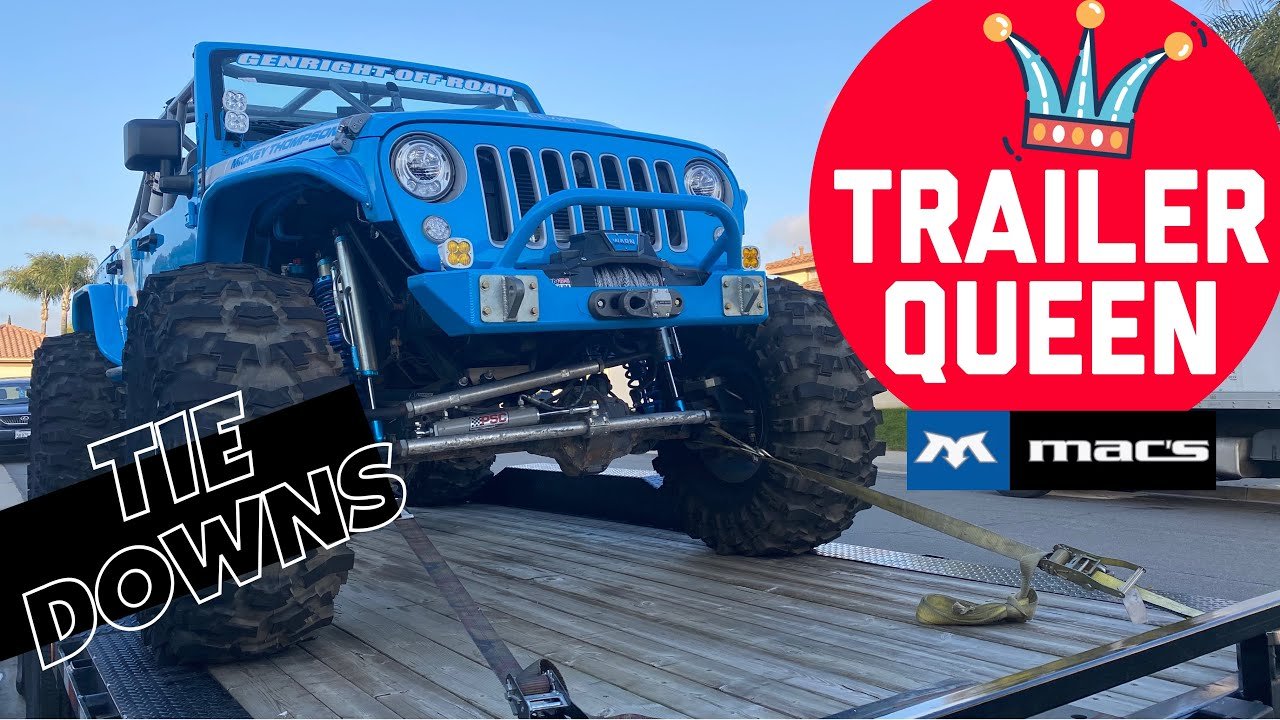
Strapping a Jeep to a trailer may look simple, but doing it wrong can damage your vehicle or even cause dangerous accidents on the road.
Whether you're heading to an off-road event, moving across the country, or transporting your Jeep for repairs, knowing how to secure your vehicle safely is essential.
This guide walks you through every step, highlights common mistakes, and gives you practical tips to make sure your Jeep stays safe during transport.
Why Proper Strapping Matters
A Jeep is heavier and taller than many cars. If it's not strapped down the right way, it can move, bounce, or even come loose while you drive.
According to the National Highway Traffic Safety Administration, cargo that is not secured causes over 25,000 crashes per year in the US.
Using the correct strapping method keeps you, your Jeep, and others on the road safe.
Tools And Equipment You Need
Before you start, gather these items:
- Ratchet straps (at least 4, rated for 10,000+ lbs each)
- Axle straps or soft loops
- Wheel chocks
- Trailer with tie-down points (D-rings or stake pockets)
- Gloves for hand protection
Using the right equipment is not just about security; it also prevents damage to your Jeep’s frame or suspension.
Strap Types Comparison
Here’s a quick look at common strap types and their best use:
| Strap Type | Best For | Load Rating |
|---|---|---|
| Ratchet Strap | Main tie-downs | 10,000+ lbs |
| Axle Strap | Wrapping around axles | 8,000–10,000 lbs |
| Cam Buckle | Light loads only | 1,500–2,500 lbs |

Step-by-step Guide To Strapping A Jeep
1. Prepare The Trailer
Park the trailer on flat, level ground. Apply the parking brake and use wheel chocks to stop any movement. Lower the trailer’s ramps and check that all tie-down points are secure and not rusted or damaged.
2. Load The Jeep
Drive or winch the Jeep slowly onto the trailer. Most experts suggest loading the Jeep forward so the engine weight is toward the trailer tongue. This improves balance and towing stability. Position the Jeep so about 60% of its weight is in front of the trailer’s axle.
3. Secure The Wheels
Place the Jeep in park (or in gear if it’s manual), set the emergency brake, and use wheel chocks on all four tires. This stops the Jeep from rolling during strapping.
4. Attach Straps To Tie-down Points
Use at least four ratchet straps. Connect each strap from the trailer’s D-ring (or tie-down point) to a strong part of the Jeep:
- Axle straps: Wrap these around the Jeep’s solid axles, not suspension arms or brake lines.
- Frame tie-downs: If your Jeep has factory tie-down hooks, you can use them, but axles are usually safer.
Never hook straps to bumpers, steering, or suspension parts that can bend or break.
5. Tension And Check Straps
Tighten each ratchet strap until there is no slack, but avoid over-tightening, which can compress the suspension too much. The straps should feel firm but not stretch the Jeep’s body or frame.
Always check that the Jeep cannot move forward, backward, or side-to-side.
6. Double-check Everything
Walk around your trailer and check each strap. Pull on them to make sure they’re secure.
Check the tie-down points and make sure nothing is rubbing on sharp edges. It’s a good idea to drive a short distance, then stop and recheck all straps.
Common Mistakes To Avoid
Many people make simple mistakes that can lead to trouble. Here are two issues beginners often miss:
- Strapping only the body: The Jeep’s suspension moves during transport. If you strap just the frame, the body can shift, loosening the straps. Always secure the axles for best results.
- Ignoring strap angles: Straps should be at a 45-degree angle from the Jeep to the trailer. This gives the best hold. Straight up-and-down or side-to-side straps are less effective.
Extra Tips For A Safer Haul
- Use strap protectors to stop cutting on sharp parts.
- Replace any strap with fraying, cuts, or worn hardware.
- Check state laws for trailer and tie-down requirements.
- For long trips, stop every 50–100 miles to retighten straps.
- Use a tire bonnet strap system for faster loading if you transport often.
Jeep Weight And Trailer Matching
Before you tow, make sure your trailer and straps can handle your Jeep’s weight. Here’s a quick guide:
| Jeep Model | Approx. Weight | Minimum Trailer Capacity |
|---|---|---|
| Wrangler (2-door) | 4,000 lbs | 5,000 lbs |
| Wrangler (4-door) | 4,500 lbs | 6,000 lbs |
| Gladiator | 5,000 lbs | 7,000 lbs |
It’s important to check the trailer’s load rating and use straps that match or exceed your Jeep’s weight.
What To Do If Something Goes Wrong
If you hear or feel the Jeep move while driving, pull over safely. Check all straps, tie-downs, and the Jeep’s position.
Never keep driving if you’re unsure small problems can become serious quickly.
Resources For More Information
For more details on towing safety and trailer laws, the NHTSA official site has reliable resources.
Frequently Asked Questions
How Tight Should I Make The Straps?
Straps should be tight enough that the Jeep does not move, but not so tight that they bend parts or compress the suspension fully. You should not be able to move the Jeep by hand.
Can I Strap The Jeep By The Wheels?
Yes, using a tire bonnet system is very secure. It holds the tires directly and works well for Jeeps with large, off-road tires.
What If My Trailer Doesn’t Have D-rings?
You can use stake pockets or add bolt-on tie-down anchors. Never attach straps to weak or unknown points.
Is It Safe To Transport A Jeep With Soft Tops Or Doors Off?
Yes, but secure all loose items inside. Wind can catch soft tops or doors, so check them at every stop.
Do I Need Special Straps For Lifted Jeeps?
If your Jeep is lifted, use longer axle straps and check that tie-down angles are correct. Standard ratchet straps are fine if they’re long enough and rated for your Jeep’s weight.
Strapping a Jeep to a trailer isn’t hard if you follow these steps and pay attention to the details. Take your time, double-check your work, and your Jeep will arrive safely every time.