Adding trailer lights to a Jeep can make towing safer, help you follow the law, and make night driving less stressful. Many Jeep owners want to tow boats, campers, or utility trailers, but find the wiring process confusing.
This article breaks it down into simple steps.
You’ll learn what parts you need, how to install everything, and tips to avoid common mistakes. Even if you’re new to vehicle wiring, you’ll finish with the confidence to light up your trailer and hit the road.

Why Trailer Lights Matter
Towing a trailer without proper lights is not only risky but also illegal in most states. Trailer lights help other drivers see your vehicle and trailer, especially at night or in bad weather. They signal when you’re braking or turning, reducing the chance of an accident. In the US, the Department of Transportation requires all trailers to have working tail lights, brake lights, turn signals, and a license plate light.
What You’ll Need
Before you start, gather these tools and parts:
- Trailer light kit (includes lights, wiring, and connectors)
- Wiring harness compatible with your Jeep
- Screwdrivers (flathead and Phillips)
- Wire stripper/crimper
- Electrical tape
- Zip ties or cable clips
- 12V test light or multimeter
- Drill (optional)
- Dielectric grease (prevents corrosion)
Some Jeep models need a special T-connector harness that plugs into the factory tail light wiring. Check your owner’s manual or ask at an auto parts store.
Understanding Jeep Trailer Wiring
Jeep wiring isn’t the same for every model or year. Some older Jeeps use a four-wire system (separate turn and brake signals), while newer models may use a five-wire or combined system. Most trailers use a standard four-flat connector: ground, left turn/brake, right turn/brake, and tail lights.
Here’s a quick comparison of Jeep and trailer wiring setups:
| Jeep Wiring System | Number of Wires | Connector Type | Common Models |
|---|---|---|---|
| Separate | 5 | 4-way or 5-way | Older Wrangler, Cherokee |
| Combined | 4 | 4-way flat | JK, JL Wrangler |
| CAN Bus | Varies | Requires module | Newer Grand Cherokee |
Tip: Always double-check your Jeep’s wiring before you buy a harness or kit.
Step-by-step Guide: Installing Trailer Lights
Getting trailer lights working on a Jeep isn’t just plug and play. Here’s how to do it right.
1. Prepare Your Jeep And Trailer
Park your Jeep and trailer on a flat, safe surface. Make sure both are turned off.
Disconnect the Jeep’s negative battery cable to prevent accidental shorts.
Check that your trailer’s wiring and lights are not damaged. Replace any broken bulbs or cracked lenses before starting.
2. Install The Trailer Light Kit (if Needed)
If your trailer doesn’t have lights, install them now. Most kits include instructions, but the basics are:
- Mount the tail lights at the rear corners of the trailer.
- Attach the side marker lights if required.
- Route the main wiring harness down the trailer frame.
- Secure wires with zip ties or clips to avoid dragging.
3. Connect A T-connector Wiring Harness
Most Jeep owners choose a T-connector harness because it’s simple and avoids cutting factory wires. This harness plugs into your Jeep’s tail light connectors.
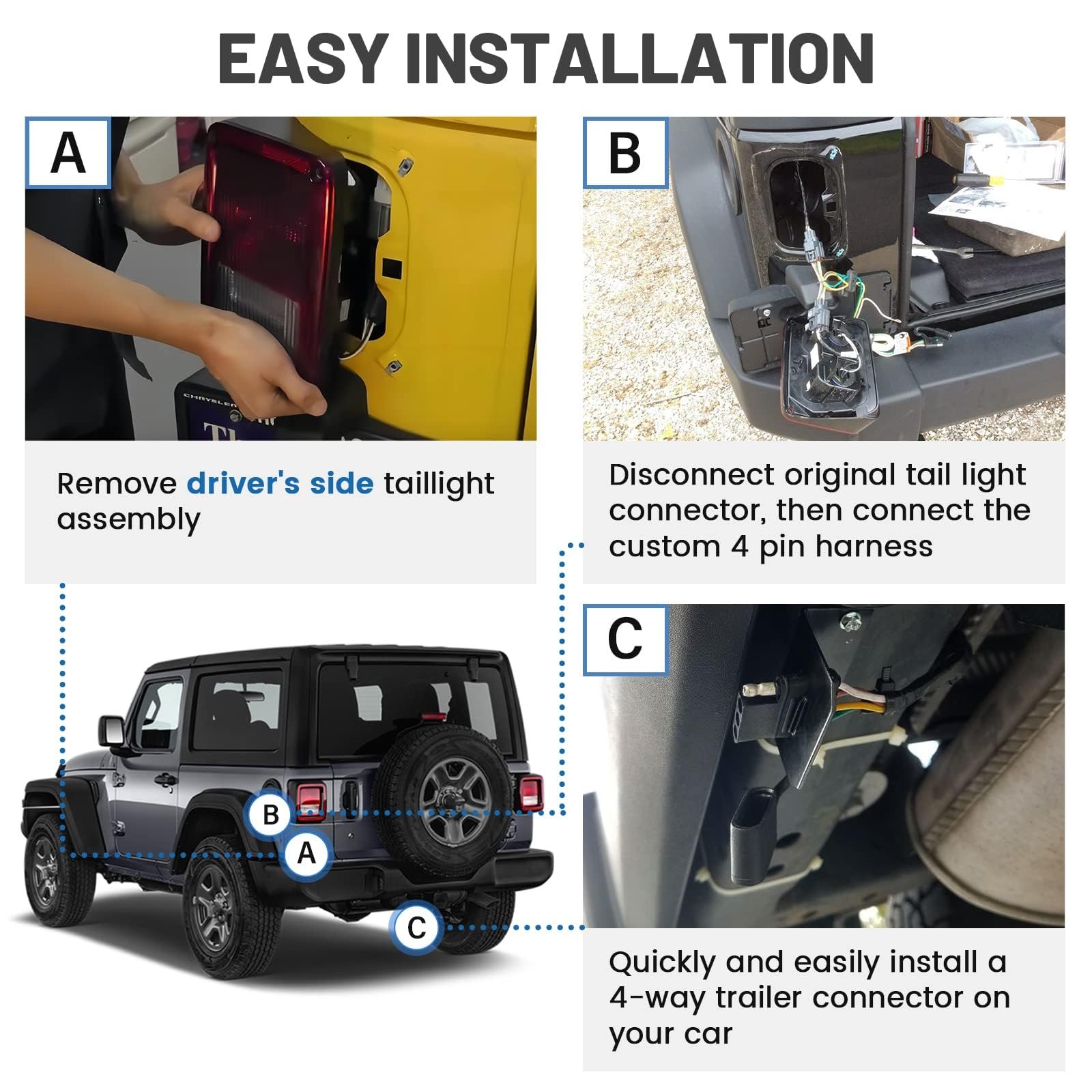
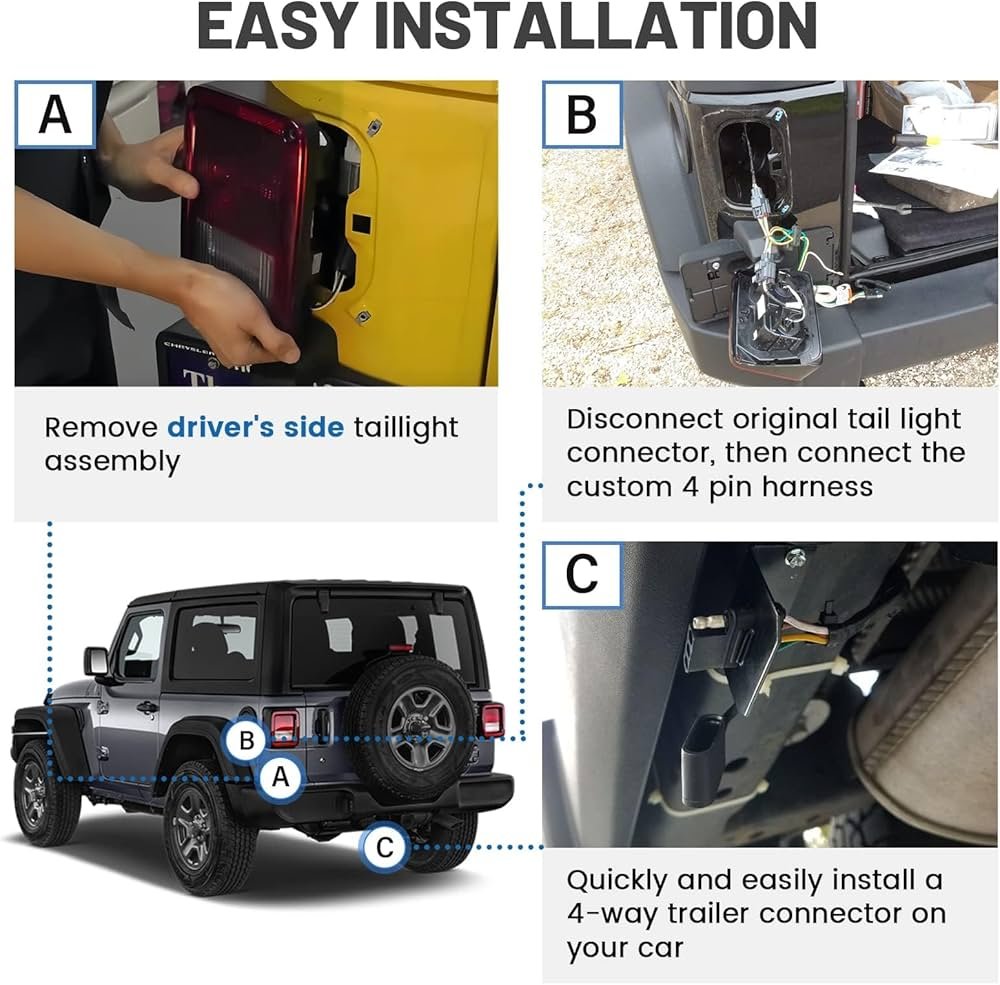
- Open the tailgate and remove the tail light assemblies (usually a few screws).
- Unplug the factory wiring.
- Plug the T-connector between the factory harness and the tail light.
- Route the new trailer wiring out through a grommet or existing hole near the bumper.
If your Jeep doesn’t have plug-and-play connectors, you may need to splice wires. Use crimp connectors and wrap with electrical tape for a solid, weatherproof connection.
4. Attach The Ground Wire
A poor ground is one of the most common causes of trailer light problems. Find a clean, bare metal spot on the Jeep’s frame near the hitch. Attach the white ground wire from the harness using a self-tapping screw. Add some dielectric grease to prevent rust.
5. Connect To The Trailer
Pull the four-flat connector from your Jeep harness to the hitch area. Plug it into the trailer’s wiring connector. Make sure the pins line up correctly.
If the trailer connector is different (for example, a round 7-way), use an adapter. Adapters are available at most auto parts stores.
6. Test The Lights
Before you drive, test every function:
- Tail lights: Turn on your Jeep’s headlights.
- Brake lights: Press the brake pedal.
- Left and right turn signals: Use the turn signal lever.
- Hazard lights: Activate the hazards.
Use a friend or a wall to check if all lights work. If one is out, check the ground, connectors, and bulbs.
7. Secure And Protect The Wiring
Loose wires can get caught or damaged. Bundle extra wiring and secure it under the Jeep with zip ties.
Avoid routing near hot exhaust parts or moving suspension.
Apply dielectric grease to connectors for extra weather protection.
Common Mistakes (and How To Avoid Them)
Even experienced DIYers make mistakes with trailer lights. Here are two issues that beginners often miss:
1. Not Using A Powered Harness On Can Bus Jeeps
Newer Jeeps with computer-controlled lights (CAN Bus) need a powered harness with a module. If you use a basic T-harness, you can overload the Jeep’s wiring or get dashboard errors.
Always check if your model needs a powered kit.
2. Ignoring Trailer Grounding
Many trailer light issues come from a poor ground. Always clean the grounding spot on the frame, and check that the trailer’s ground wire is not corroded or loose.
Another non-obvious tip: Test the Jeep’s wiring harness before plugging in the trailer. Use a test light or multimeter to make sure each pin gives the right signal. This can save hours of troubleshooting later.
Choosing The Right Harness For Your Jeep
Not every harness fits every Jeep. Here’s a quick side-by-side look at popular Jeep models and the type of harness you’ll likely need:
| Jeep Model | Year Range | Harness Type | Notes |
|---|---|---|---|
| Wrangler JK | 2007–2018 | T-Connector | Easy install |
| Wrangler JL | 2018–present | Powered module | CAN Bus system |
| Grand Cherokee | 2011–present | Powered module | Needs battery power wire |
| Cherokee | 2014–present | Powered module | Check factory tow package |
When in doubt, ask your Jeep dealer or check online forums for your year and trim.
Safety Checks Before Hitting The Road
Once your trailer lights are working, do a final safety check:
- Walk around the trailer with all lights on.
- Check wiring is secure and not near hot or moving parts.
- Make sure the trailer plug can’t drag or unplug while driving.
- Carry spare bulbs and fuses for emergencies.
If you plan to tow often, consider a multifunction tester to quickly check your lights before every trip.
Useful Tips For Reliable Trailer Lights
- Use dielectric grease on all connectors to prevent water and corrosion.
- Check your state’s trailer laws—some require extra reflectors or side lights.
- If you tow a boat trailer, make sure the lights are submersible and sealed.
- Label the wires under your Jeep with tape or tags for easier repairs later.
- For long-term durability, consider upgrading to LED trailer lights. They last longer and are brighter than standard bulbs.
When To Seek Professional Help
If you’re not comfortable with vehicle wiring or your Jeep has complex electronics, don’t hesitate to ask for help. Mistakes can cause shorts, blown fuses, or even damage your vehicle’s computer.
Many auto shops and trailer dealers offer quick, affordable installation.
Final Thoughts
Adding trailer lights to your Jeep isn’t just about following the law—it’s about keeping yourself and others safe. With the right tools, harness, and a careful approach, you can do the job in an afternoon. Remember to test everything before you tow, and check your wiring regularly for signs of wear or corrosion. If you run into issues, online resources like etrailer.com are packed with Jeep-specific guides and videos.
Once your trailer lights are working, you’ll be ready to tow with confidence day or night, rain or shine.
Frequently Asked Questions
What Color Wires Do Trailer Lights Use?
Most trailer lights use brown for tail/running lights, yellow for left turn/brake, green for right turn/brake, and white for ground. Always check your kit’s manual before wiring.
Do I Need A Converter Box For My Jeep?
If your Jeep has a separate turn and brake signal system or a CAN Bus electronic system, you’ll need a powered converter box. This device makes sure the trailer gets the correct signals and protects your Jeep’s electronics.
Can I Splice Into My Jeep’s Existing Wiring?
It’s possible but not recommended unless you’re experienced. T-harnesses are safer and make installation easier. Splicing can cause problems with your Jeep’s warranty and lead to electrical issues.
Why Do My Trailer Lights Work On One Vehicle But Not My Jeep?
This usually means there’s a wiring difference or a grounding problem. Test your Jeep’s wiring harness with a test light. Also, make sure the trailer’s ground wire is attached to clean, bare metal.
How Do I Protect Trailer Wiring From Weather?
Use dielectric grease on all connections. Wrap exposed wires with electrical tape and secure them with zip ties. For extra protection, use waterproof heat-shrink connectors when joining wires.
Adding trailer lights to a Jeep is a project most owners can tackle with a little patience and the right information. Take your time, double-check your work, and soon you’ll be towing safely wherever your adventures take you.


















