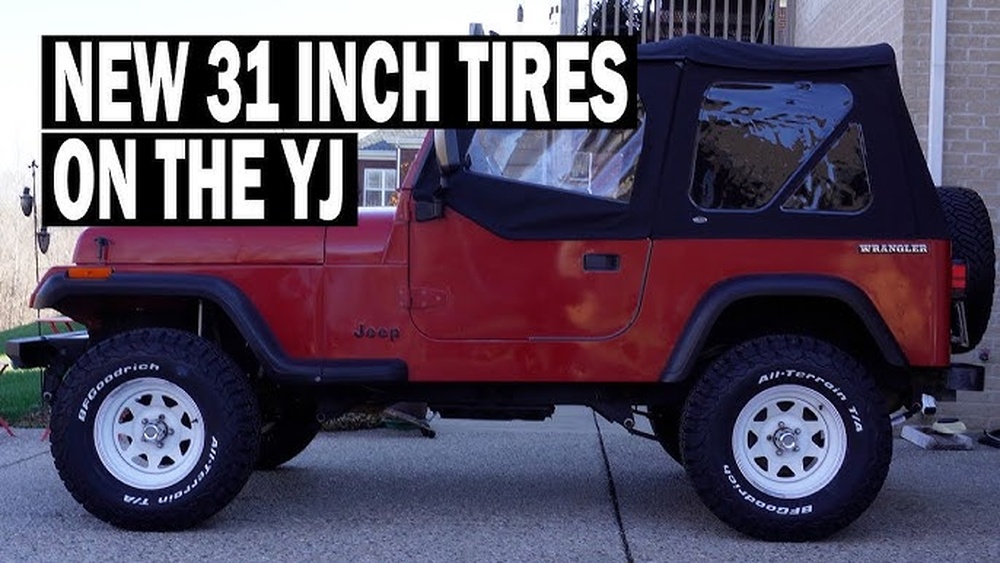
The Jeep Wrangler has always been known for its rugged design and ability to handle tough terrain. If you own a 2018 Jeep Wrangler, you may want to use its 4 wheel drive feature for off-road adventures, slippery roads, or snow. But for many drivers, especially those new to Jeep, it’s not always clear how to properly engage 4WD. This guide walks you through each step in detail, so you can confidently put your Wrangler in 4 wheel drive. You’ll also learn some mistakes to avoid, how the system works, and how it compares to other setups. By the end, you’ll know exactly how to use your Jeep’s 4WD system safely and correctly.
Understanding Jeep Wrangler 4 Wheel Drive Modes
The 2018 Jeep Wrangler offers several 4WD modes to suit different driving conditions. Knowing the differences helps you use the right mode at the right time, and prevents damage to your vehicle.
1. 2h (two High)
- 2H is the standard mode for everyday driving on dry, paved roads.
- Only the rear wheels receive power.
- This mode provides the best fuel efficiency and normal handling.
2. 4h (four High)
- 4H is ideal for slippery surfaces like snow, sand, mud, or gravel.
- Power is sent to all four wheels, helping you maintain traction.
- Use 4H when driving at normal speeds (up to 55 mph) on loose or uneven surfaces.
3. 4l (four Low)
- 4L is designed for extreme off-road situations, deep snow, steep hills, or deep mud.
- All four wheels receive power, but at lower speeds and higher torque.
- Use 4L only when crawling slowly, as it helps you overcome tough obstacles.
4. Neutral
- The Neutral position disconnects the transmission from the wheels.
- Use this only when towing your Jeep with all wheels on the ground.
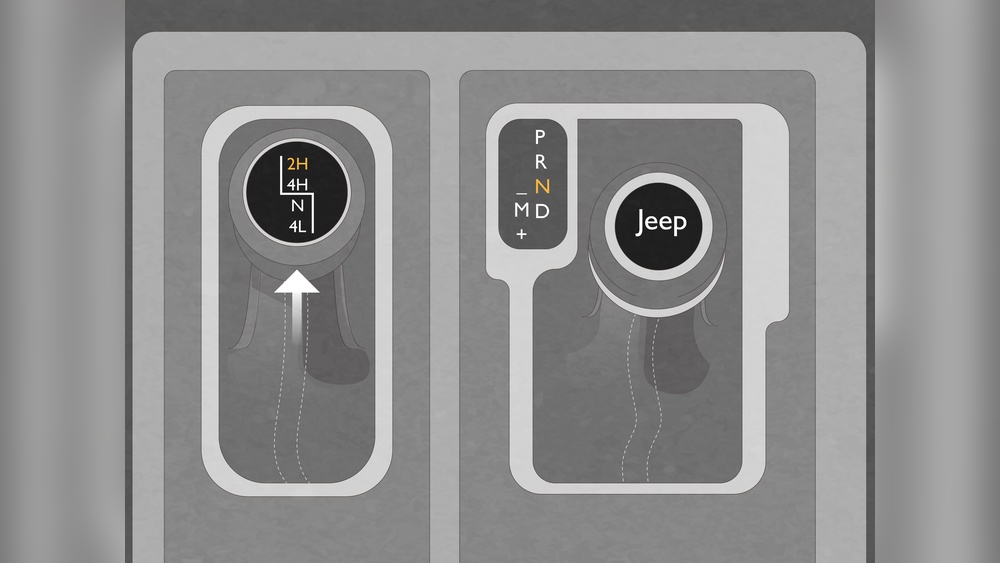
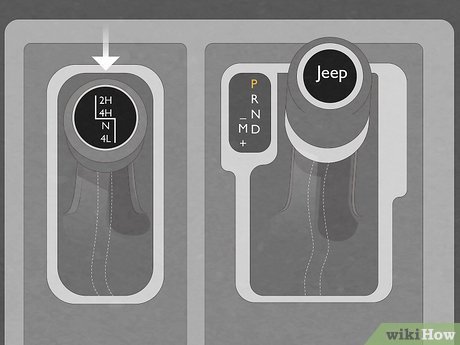
These four modes are controlled by a lever or switch, depending on your Wrangler’s trim. Most 2018 Wranglers use a manual lever between the driver and passenger seats.
How To Put Your Jeep Wrangler In 4 Wheel Drive (step-by-step)
Switching between 4WD modes is easy once you know the process. Here’s how to change each mode safely:
Putting Your Wrangler In 4h (four High)
- Check your speed: Make sure you’re driving below 55 mph.
- Steady driving: Keep your steering wheel straight.
- Move the lever: While driving, gently pull the 4WD lever from 2H to 4H.
- Listen and feel: You might hear a soft click or feel the lever lock into place.
- Check the dashboard: The 4WD indicator light should turn on.
Tip: You can shift into 4H “on the fly”—meaning you don’t need to stop the vehicle. Just slow down and shift smoothly.
Putting Your Wrangler In 4l (four Low)
- Stop your Jeep: Come to a complete stop.
- Shift to Neutral: Move the transmission gear to N (Neutral).
- Move the lever: Firmly pull the 4WD lever from 4H directly down to 4L.
- Check the dashboard: The 4L indicator should light up.
- Shift to Drive: Now switch back to D (Drive) or R (Reverse) to move.
Tip: Never shift into 4L while moving. This prevents damage to the transfer case.
Returning To 2h (two High)
- Stop or slow down: For best results, slow down to below 55 mph.
- Shift the lever: Push the lever back to 2H.
- Check the dashboard: The 4WD light should turn off.
Tip: If you were in 4L, first shift the transmission to Neutral before moving the lever.
Shifting To Neutral (for Towing)
- Stop your Jeep: Make sure the vehicle is stationary.
- Shift to Neutral: Move the transmission gear to N.
- Move the 4WD lever: Move it to the Neutral position.
- Confirm: The wheels are disconnected; you can tow the Jeep safely.
Most drivers rarely use the Neutral mode unless flat-towing behind another vehicle.
Detailed Guide For Each 4wd Mode
Let’s look deeper into each mode, when to use it, and mistakes to avoid.
Using 2h For Everyday Driving
2H is your default for regular roads. If you drive in dry conditions, keep your Jeep in 2H. Using 4H or 4L on dry pavement can cause drivetrain binding, which wears out parts and reduces fuel efficiency.
Example: If you commute to work on highways or city streets, always use 2H.
Using 4h For Mild Off-road Or Snow
4H gives you extra grip on slippery or uneven surfaces. You don’t need to stop the vehicle just slow down and shift.
Example: If you enter a snowy parking lot or drive on a gravel road, shift to 4H as you approach.
Common mistake: Shifting to 4H at high speeds can damage the transfer case. Always slow down first.
Using 4l For Extreme Conditions
4L is powerful but slow. Use it only when needed. You must be stopped and in Neutral before shifting.
Example: Crawling up a steep rocky hill or through deep mud.
Common mistake: Trying to use 4L at high speed or on regular roads. This stresses the transmission and can break parts.
Using Neutral For Towing
If you need to tow your Jeep behind a motorhome, set both the transmission and transfer case to Neutral. This prevents transmission damage.
Example: Flat-towing your Wrangler for a long road trip.
Common mistake: Forgetting to set both Neutral positions can cause serious transmission failure.
Comparison: Jeep Wrangler 4wd Vs Other Systems
How does the 2018 Wrangler’s 4WD compare to other SUVs? Here are the main differences:
| Feature | Jeep Wrangler | Typical SUV |
|---|---|---|
| 4WD Modes | 2H, 4H, 4L, Neutral | AWD or simple 4WD (usually automatic) |
| Manual Control | Manual lever or switch | Often automatic or electronic |
| Off-Road Ability | High | Medium to low |
| Flat Towing | Possible (with Neutral) | Usually not recommended |
Wrangler’s manual 4WD gives you more control and better off-road performance, but requires you to know the correct shifting process.
Key Data: Jeep Wrangler 4wd System
Some numbers help you understand how the system works in your 2018 Wrangler:
| Specification | Value |
|---|---|
| Maximum Speed (4H) | 55 mph |
| Maximum Speed (4L) | 10 mph |
| Towing Capacity | 3,500 lbs |
| Transfer Case Type | Manual lever (most trims) |
| Fuel Efficiency (2H) | Up to 23 mpg highway |
These specs help you decide which mode to use. For example, using 4L at speeds above 10 mph can cause overheating.
Practical Tips For Using 4 Wheel Drive
Even experienced Jeep owners sometimes make mistakes. Here are tips to get the most from your 4WD system:
- Practice shifting: Try changing modes in a safe area before heading off-road.
- Check your tires: Good all-terrain tires improve traction in 4WD.
- Listen for noises: Unusual sounds during shifting may mean a mechanical issue.
- Use 4WD regularly: Engage 4H and 4L once a month to keep components lubricated.
- Avoid sharp turns in 4WD: This reduces stress on the drivetrain.
- Don’t use 4WD on dry pavement: Only engage 4WD when needed for traction.
Non-obvious insight: Many drivers forget that using 4WD on dry roads can cause “binding”—a feeling of resistance, noise, and possible damage. Always return to 2H as soon as possible.

Jeep Wrangler 4wd Maintenance
Keeping your 4WD system in good shape ensures reliability. Here’s what you should check:
- Transfer case fluid: Replace every 30,000 miles or as recommended.
- Check for leaks: Look under your Jeep for fluid drops after using 4WD.
- Inspect the lever: Make sure it moves smoothly; stuck levers can signal mechanical problems.
- Listen for grinding: This could mean worn gears.
Regular maintenance prevents expensive repairs and keeps your Wrangler ready for adventure.
Real-world Example: Shifting In Snow
Imagine you’re driving your 2018 Wrangler and hit a patch of snow. Here’s what you should do:
- Slow down to about 30 mph.
- Shift the lever from 2H to 4H while driving straight.
- The dashboard light comes on, and you feel more grip.
- After the snow, return to 2H for normal driving.
Non-obvious insight: If the snow is deep and you need extra power, stop completely, shift to Neutral, then move to 4L. Many drivers skip Neutral and damage their transfer case.
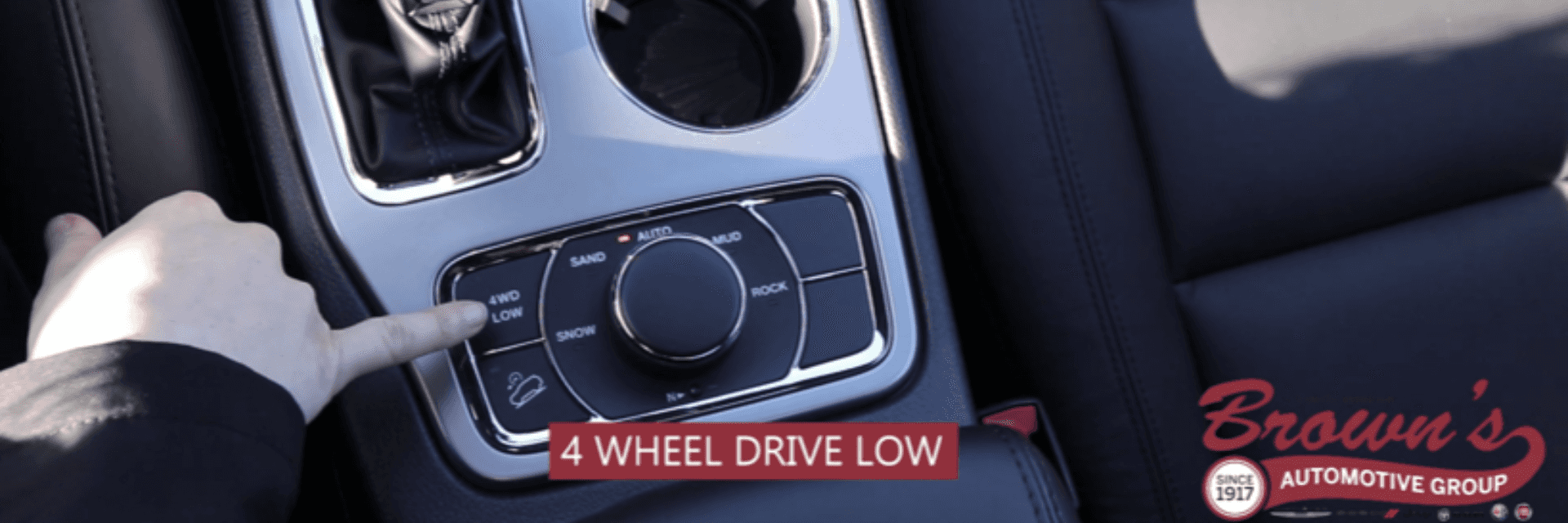
Table: Common Mistakes And How To Avoid Them
| Mistake | Consequence | Solution |
|---|---|---|
| Shifting into 4L while moving | Transfer case damage | Always stop and shift to Neutral first |
| Using 4WD on dry pavement | Drivetrain binding | Return to 2H as soon as possible |
| Forgetting to check indicator lights | Driving in wrong mode | Always verify dashboard lights |
| Sharp turns in 4WD | Axle and tire stress | Drive straight whenever possible |
Frequently Asked Questions
How Do I Know If My Jeep Wrangler Is In 4 Wheel Drive?
Look for the 4WD indicator light on your dashboard. When you shift into 4H or 4L, a light will show which mode you’re in. You may also feel extra traction or hear a small click.
Can I Switch From 2h To 4h While Driving?
Yes, you can shift from 2H to 4H “on the fly” at speeds below 55 mph, as long as you’re driving straight and gently moving the lever.
Should I Use 4wd On Dry Roads?
No. Using 4WD on dry pavement causes drivetrain binding and can damage your Jeep. Always use 2H for dry, paved roads.
What’s The Difference Between 4h And 4l?
4H is for higher speeds and mild off-road conditions. 4L is for slow speeds and extreme situations like deep mud or steep hills. You must be stopped and in Neutral to shift into 4L.
How Often Should I Use My Jeep’s 4wd?
It’s good practice to engage 4H and 4L at least once a month. This keeps parts lubricated and ensures the system works when you need it.
If you need more in-depth technical details, check the official Jeep guide at Jeep.com.
Jeep Wrangler’s 4 wheel drive system is powerful and reliable, but only if you use it correctly. By following these steps and tips, you can handle tough roads, snow, or mud with confidence.
Make sure to practice the shifting process, pay attention to indicator lights, and avoid common mistakes.
With some care, your 2018 Wrangler will take you anywhere you want to go on or off the road.