If your Jeep’s heater suddenly stops giving out hot air, it can make winter drives uncomfortable and even unsafe. Many Jeep owners run into this problem, but the causes are not always obvious.
Understanding why your Jeep is not blowing hot air helps you solve the issue faster and avoid costly repairs. Let’s dive into the most common reasons, how to spot them, and what you can do next.
How Your Jeep’s Heating System Works
A car’s heater is more than just a fan. The system uses the engine’s heat to warm the air inside your Jeep. Hot coolant from the engine flows through a small radiator called the heater core. Air passes over this core, heats up, and is blown into your cabin.
If any part of this process breaks down, you’ll notice cold or lukewarm air instead of heat.
Common Causes For No Hot Air In A Jeep
Several issues could stop your Jeep’s heater from working. Here are the most frequent culprits:
1. Low Coolant Level
Coolant doesn’t just keep the engine from overheating—it also carries heat to your Jeep’s heater core. If coolant is low, not enough heat reaches the cabin.
Signs:
- Temperature gauge reads higher than normal
- Visible coolant leak under the Jeep
2. Faulty Thermostat
The thermostat regulates coolant flow. If it’s stuck open, coolant keeps circulating and never gets hot enough for the heater.
Signs:
- Engine takes a long time to warm up
- Temperature gauge stays below normal
3. Clogged Heater Core
Over time, sediment can build up inside the heater core, blocking coolant flow. A clogged core cannot transfer enough heat to the air.
Signs:
- Sweet smell inside the cabin (coolant odor)
- Foggy windows
- Heat works only at high engine speeds
4. Air In The Cooling System
Air pockets can block coolant from reaching the heater core. This is common after a recent coolant change or if there’s a leak.
Signs:
- Gurgling sounds under the dashboard
- Uneven heating
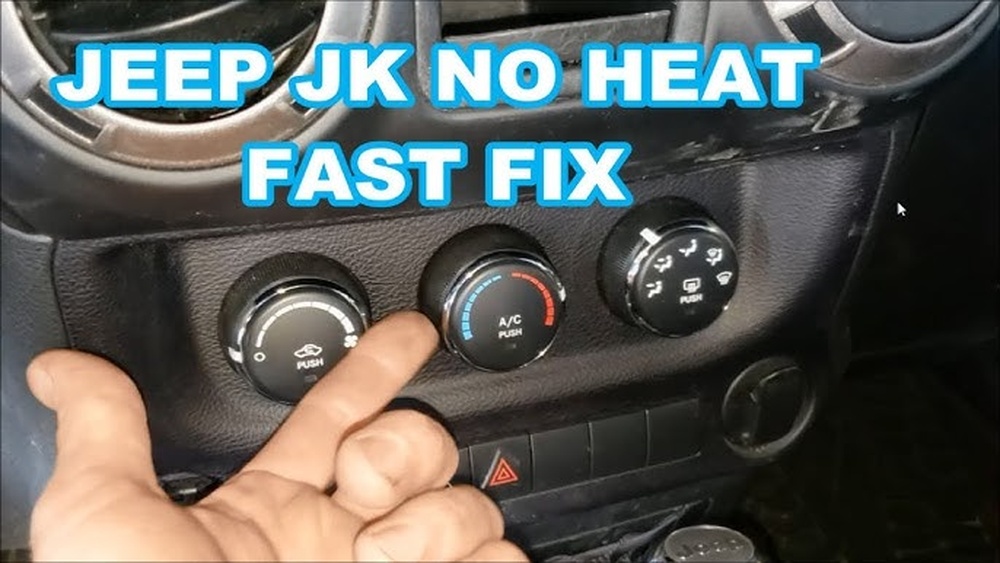
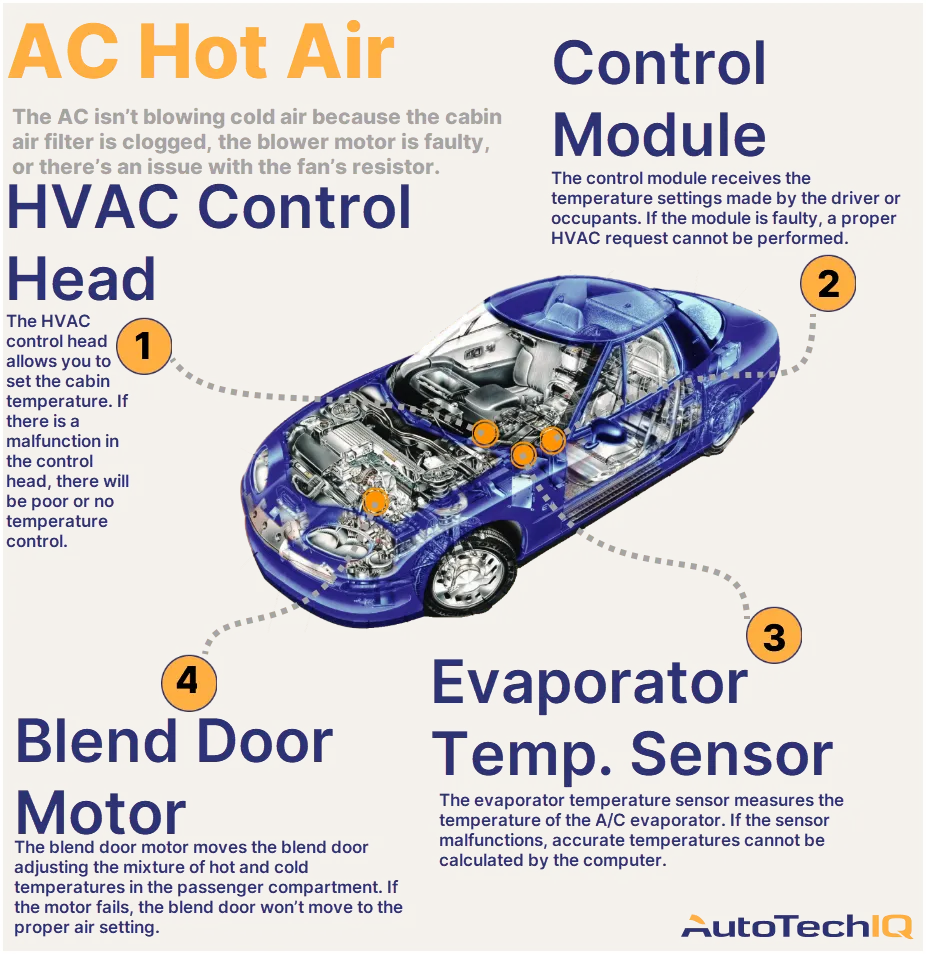
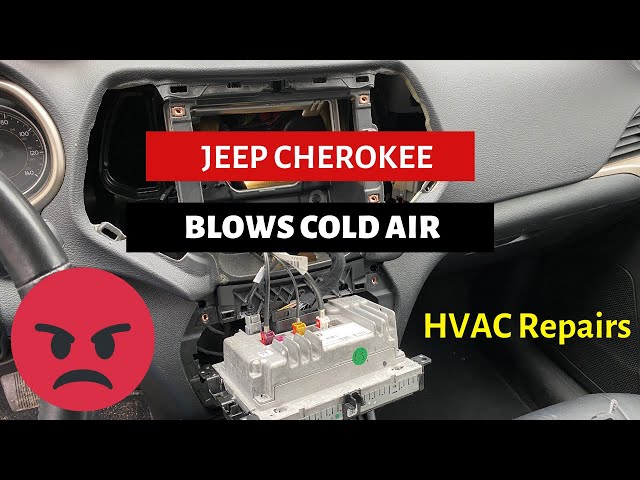
5. Broken Heater Controls Or Blend Door
The blend door directs airflow over the heater core or the AC evaporator. If it’s stuck or broken, you may only get cold air no matter the setting.
Signs:
- Clicking sound when changing temperature settings
- No change in air temperature from the vents
6. Faulty Water Pump
The water pump moves coolant through the engine and heater core. If it’s failing, coolant circulation drops, reducing heat.
Signs:
- Overheating engine
- Coolant leaks near the front of the engine
7. Clogged Cabin Air Filter
A dirty cabin filter can restrict airflow, making it seem like the heater is weak or not working.
Signs:
- Weak airflow even at high fan settings
- Musty smell inside the Jeep
Troubleshooting Steps
Not sure where to start? Here’s a simple plan to help you find the problem:
- Check coolant level in the reservoir when the engine is cold.
- Watch the temperature gauge during warm-up.
- Listen for unusual noises when you change temperature settings.
- Feel hoses going into the heater core—both should be hot if the system works.
- Inspect for visible leaks or puddles under your Jeep.
If you spot something wrong during these checks, it can narrow down the cause.
Repair Solutions And Estimated Costs
Some heater problems are easy DIY fixes, while others need a mechanic’s help. Here’s what to expect for each major issue:
| Problem | DIY Repair | Mechanic Cost |
|---|---|---|
| Low Coolant | Add coolant ($10-$20) | $40-$80 |
| Thermostat Replacement | $25-$50 (parts) | $120-$250 |
| Heater Core Flush | $20 (flush kit) | $100-$200 |
| Blend Door Repair | Not recommended | $200-$700 |
| Water Pump Replacement | Advanced DIY only | $300-$750 |
For many Jeep owners, simply topping up coolant or replacing a thermostat solves the problem. But if the issue is with the heater core or blend door, professional help is often safer and faster.
When To See A Mechanic
Some heater problems can signal bigger issues. If you notice any of the following, get your Jeep checked soon:
- Strong sweet smell (coolant leak) inside the car
- Engine overheating or warning lights
- No heat even after checking coolant and thermostat
Ignoring these can lead to expensive engine damage.
Preventing Heater Problems
A little maintenance keeps your Jeep’s heater running strong:
- Check coolant level every few months
- Replace the coolant as recommended in your owner’s manual (usually every 2-4 years)
- Swap out the cabin air filter once a year
- Run the heater occasionally, even in summer, to keep parts from sticking
These simple habits help you spot small issues before they become big repairs.
Jeep Models Most Affected
Some Jeep models are more likely to have heater problems due to design quirks. Here’s a quick comparison:
| Model | Common Issues | Repair Difficulty |
|---|---|---|
| Wrangler (JK, TJ) | Heater core clog, blend door failure | High |
| Grand Cherokee | Blend door, thermostat | Medium |
| Cherokee (XJ, KL) | Coolant leaks, air in system | Medium |
| Liberty | Water pump, heater core | Medium |
Older Wranglers are especially known for blend door and heater core problems, which often need the dashboard removed for repairs.
Two Non-obvious Insights Most Miss
- Multiple issues can happen at once. For example, a bad thermostat and a low coolant level together can make troubleshooting tricky. Always check both simple and complex causes.
- After a coolant flush, air pockets often form. If heat vanishes right after service, ask your mechanic to “bleed” the cooling system again.
Frequently Asked Questions
Why Does My Jeep Blow Hot Air Only When I’m Driving Fast?
At higher speeds, the engine works harder and coolant flows faster. This can push more hot coolant through a partially clogged heater core, creating heat only during highway driving.
Is It Safe To Keep Driving If My Jeep Heater Isn’t Working?
If the engine temperature stays normal, it’s safe but uncomfortable. If the engine overheats or you smell coolant, stop and get help to avoid engine damage.
Can A Bad Radiator Cap Cause No Heat?
Yes. A faulty cap can let air into the cooling system, causing air pockets and stopping hot coolant from reaching the heater core.
How Often Should I Change Coolant In My Jeep?
Most Jeeps need a coolant change every 2-4 years or 30,000-50,000 miles. Check your owner’s manual or see this Jeep maintenance guide for details.
Will A Heater Core Flush Fix My Jeep’s Heat Problem?
A flush can help if the core is only partially clogged. If the clog is bad or the core is leaking, replacement is needed.
A Jeep’s heater is usually reliable, but when it fails, it’s smart to act quickly. By understanding how the system works and spotting early warning signs, you can save money and stay warm on the road.
Regular checks and basic maintenance keep your Jeep’s heat running strong, even when winter hits hard.