Many Jeep owners love their vehicles for their rugged style and off-road power. But one common problem can quickly turn excitement into frustration: dim headlights.
You might notice your night driving is not as clear as before, or maybe your headlights look yellow and weak compared to other cars. Why does this happen, and what can you do about it?
This guide will help you understand the causes behind dim Jeep headlights and show you practical ways to fix the problem.
Common Causes Of Dim Jeep Headlights
Several factors can make your Jeep’s headlights appear dimmer over time. Sometimes, it’s a simple fix.
Other times, it points to a deeper electrical issue.
1. Old Or Failing Bulbs
Like any light source, headlight bulbs lose brightness as they age. Halogen bulbs, which are common in older Jeeps, can lose up to 20% of their output after a few years. If you haven’t changed your bulbs in a while, this could be the main cause.
2. Foggy Or Oxidized Headlight Lenses
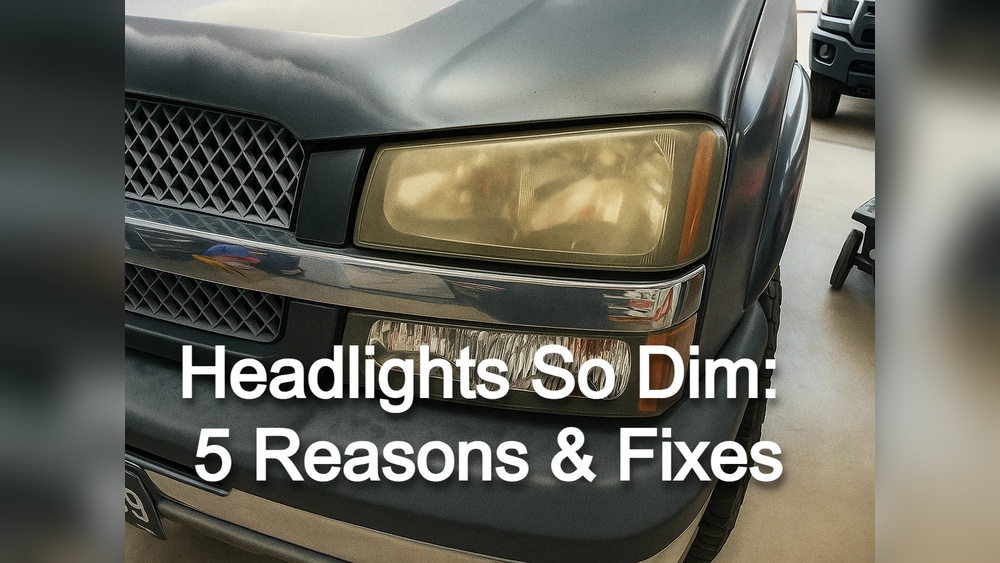
Jeep headlights are covered by plastic lenses, which can become cloudy due to sun exposure and road debris. This reduces the amount of light that reaches the road. Even new bulbs can seem dim if the lens is not clear.
3. Weak Electrical Connections
Dim headlights can result from voltage drop in the wiring or connectors. Corrosion, loose connections, or a failing relay can all reduce power to your bulbs. This is especially common in older Jeeps or those used in rough conditions.
4. Faulty Alternator Or Low Battery
Your headlights depend on the vehicle’s electrical system. If the alternator is weak or the battery is failing, your headlights might not get enough power. You may notice the lights get dimmer when you use other electronics, like the radio or air conditioning.
5. Wrong Bulb Type Or Poor-quality Aftermarket Bulbs
Not all bulbs are created equal. Using the wrong wattage or cheap aftermarket bulbs can lead to low light output.
Always check your Jeep manual for the correct specifications.
How To Diagnose Dim Headlights
It’s important to find out what’s causing the problem before spending money on new parts. Here are steps you can follow:
- Inspect the bulbs: Remove and look at the filaments. A gray or black appearance suggests age or failure.
- Check the lens clarity: If the lens is yellow or cloudy, try cleaning a small section. If it becomes clearer, the lens is the problem.
- Test voltage at the headlight connector: With the engine running, measure voltage at the headlight plug. It should be close to 12 volts. Anything below 11 volts may mean a wiring issue.
- Listen and look for electrical issues: Flickering, buzzing, or lights dimming when you use other electronics can suggest alternator or battery problems.
Comparing Headlight Types
Jeep headlights come in different technologies, and each has its pros and cons. Here’s a quick comparison:
| Type | Brightness | Lifespan | Cost |
|---|---|---|---|
| Halogen | Medium | 400-1000 hrs | Low |
| LED | High | 20,000+ hrs | Medium-High |
| HID (Xenon) | Very High | 2,000-3,000 hrs | High |
Upgrading to LED or HID bulbs can increase brightness, but only if your wiring and lenses are in good shape.
How To Fix Dim Headlights
Once you know the cause, you can choose the best solution. Here are proven ways to restore brightness:
1. Replace Old Bulbs
If your bulbs are old, replace them with new, high-quality ones. Always use the recommended type for your Jeep.
Avoid ultra-cheap bulbs they may burn out fast or give poor light.
2. Restore Headlight Lenses
You can clean foggy lenses using a headlight restoration kit from an auto parts store. These kits usually include sandpaper and polish. For severe cases, professional restoration may be needed.
3. Repair Electrical Issues
If you find voltage drop or corroded connectors, clean or replace them. For best results, use dielectric grease to prevent new corrosion. In rare cases, you may need to replace the wiring harness or relay.
4. Upgrade Your Electrical System
If the alternator or battery is weak, replace them. Consider a higher-output alternator if you run many accessories or upgraded lights.
5. Choose The Right Bulbs
Stick with bulbs that match your Jeep’s needs. If you upgrade to LED or HID, use a proper conversion kit and check that it’s street legal in your area.
Preventing Future Headlight Problems
A little care goes a long way in keeping your headlights bright:
- Clean the lenses every few months.
- Check for moisture inside the headlight housing—this can cause fogging and electrical problems.
- Inspect bulbs and connections at least once a year.
- Upgrade your wiring if you plan to use more powerful bulbs.
Data: Headlight Brightness Over Time
How much do headlights fade? Studies show a clear decline:
| Bulb Age | Typical Brightness Loss |
|---|---|
| 1 year | 5-10% |
| 2 years | 10-20% |
| 3+ years | 20-30% |
This shows why routine replacement is smart, even if your bulbs still work.

When To See A Professional
If you have tried new bulbs and cleaned the lenses but the headlights are still dim, it’s time to seek expert help. Electrical problems can be complex and may affect other systems.
A trusted mechanic can test the full system and make sure your Jeep is safe.
Non-obvious Insights
Many Jeep owners overlook one key factor: grounding points. Poor ground connections can cause voltage loss and dim lights, even with new bulbs and batteries. Also, using high-powered bulbs without upgrading wiring can actually make the problem worse by stressing old components.