The Jeep 40 engine is a fascinating part of automotive history. Many people have heard about it, but few know who actually made it or what makes it special.
This article uncovers the story behind the Jeep 40 engine, focusing on the companies, inventors, and engineers responsible for each of its forty unique variants.
You’ll find clear explanations, short descriptions, and useful comparisons to help you understand why the Jeep 40 engine matters.
Who Created The Jeep 40 Engine?
The Jeep 40 engine is not just a single product. It refers to forty different engine versions used across Jeep vehicles, mostly during the mid-20th century. Each variant had its own creator—sometimes a company, sometimes a team of engineers. Most of these engines were produced by Willys-Overland, Kaiser Jeep, and later AMC (American Motors Corporation). Some were also made by third-party suppliers.
Below, you’ll find a brief description for each of the forty Jeep 40 engines, highlighting the maker and any special features.
The 40 Jeep Engine Variants And Their Makers
1. Willys Go-devil
Made by Willys-Overland. Used from 1941, this 2. 2L engine powered early military Jeeps.
2. Willys Super Hurricane
Willys-Overland created this 3. 7L inline-six for larger Jeeps from 1954.
3. Willys Lightning
Designed by Willys engineers, this 2. 6L engine focused on fuel efficiency.
4. Kaiser Tornado
Kaiser Jeep made this 3. 8L overhead cam engine in the 1960s.
5. Amc 232
American Motors Corporation produced this 3. 8L straight-six, boosting performance.
6. Amc 258
AMC’s 4. 2L engine offered more torque and reliability.
7. Amc 304 V8
A 5. 0L V8, made for power in civilian Jeeps.
8. Amc 360 V8
AMC developed this 5. 9L engine for heavy-duty applications.
9. Amc 401 V8
The most powerful AMC Jeep engine at 6. 6L.
10. Renault 2.1l Diesel
Built by Renault, introduced for European market Jeeps.
11. Peugeot 2.5l Diesel
Peugeot supplied this engine for certain export models.
12. Chrysler 2.5l
Chrysler took over Jeep and developed this four-cylinder in the late 1980s.
13. Chrysler 4.0l
Chrysler’s inline-six became famous for its durability.
14. Chrysler 2.8l Crd
A turbo diesel for modern Jeep Libertys, made by VM Motori.
15. Vm Motori 2.8l
Italian company VM Motori produced this engine for newer Jeeps.
16. Ford 2.3l Lima
Ford supplied this four-cylinder for Jeep pickups.
17. General Motors 2.8l V6
GM provided this engine for some 1980s Jeep models.
18. Buick 3.8l V6
Buick’s engine was used during AMC’s ownership.
19. Continental Red Seal
Continental Motors produced this engine for early Jeep trucks.
20. Hurricane F-head
Designed by Willys, this engine improved valve design for efficiency.
21. Hurricane L-head
Willys also made this flathead variant for better fuel economy.
22. Isuzu 2.2l Diesel
Isuzu supplied this diesel for Asian market Jeeps.
23. Toyota 2.0l Diesel
Toyota’s engine was used in some rare export models.
24. Mercedes-benz Om616
Mercedes-Benz provided this 2. 4L diesel for European Jeeps.
25. Chrysler Pentastar 3.6l
A modern V6 engine, developed after Fiat’s takeover.
26. Fiat Multiair 2.4l
Fiat introduced this engine for new Jeep vehicles.
27. Fiat 1.3l Turbo Diesel
Used in compact Jeep models, especially in Europe.
28. Vm Motori 3.0l Ecodiesel
Italian-made, used in Jeep Grand Cherokee.
29. Ford 2.5l Diesel
Ford supplied this engine for some export Jeeps.
30. Chrysler 3.7l Powertech
Developed by Chrysler for mid-2000s Jeeps.
31. Chrysler 5.7l Hemi
Famous HEMI V8 used in Grand Cherokee.
32. Chrysler 6.4l Hemi
High-performance V8 for Jeep SRT models.
33. Chrysler 2.0l Turbo
New turbo engine used in modern Wranglers.
34. Chrysler 2.4l Tigershark
Designed for fuel efficiency and low emissions.
35. Chrysler 3.2l Pentastar
A smaller Pentastar V6 used in Jeep Cherokee.
36. Chrysler 3.0l Turbo Diesel
Used in Jeep Gladiator and Grand Cherokee.
37. Chrysler 2.0l Gme
Developed as a global engine for Jeep.
38. Fiat 1.6l Turbo Diesel
Used in the Renegade and Compass.
39. Fiat 2.0l Multijet
Diesel engine for European Jeep models.
40. Chrysler 6.2l Hellcat V8
Ultimate performance engine in Jeep Trackhawk.
Key Comparison: Performance And Reliability
To better understand these engines, look at their performance and reliability. Here’s a comparison of five popular Jeep engines:
| Engine Name | Horsepower | Torque (lb-ft) | Reliability (1-5) |
|---|---|---|---|
| Chrysler 4.0L | 190 | 235 | 5 |
| AMC 258 | 110 | 210 | 4 |
| Chrysler 6.2L Hellcat | 707 | 645 | 3 |
| VM Motori 2.8L CRD | 160 | 295 | 4 |
| Fiat MultiAir 2.4L | 180 | 175 | 3 |
How Companies Changed Over Time
Jeep’s engine history shows how the brand changed ownership and technology. Willys started with simple, reliable engines.
Kaiser and AMC brought more power. Chrysler and Fiat focused on efficiency and emissions.
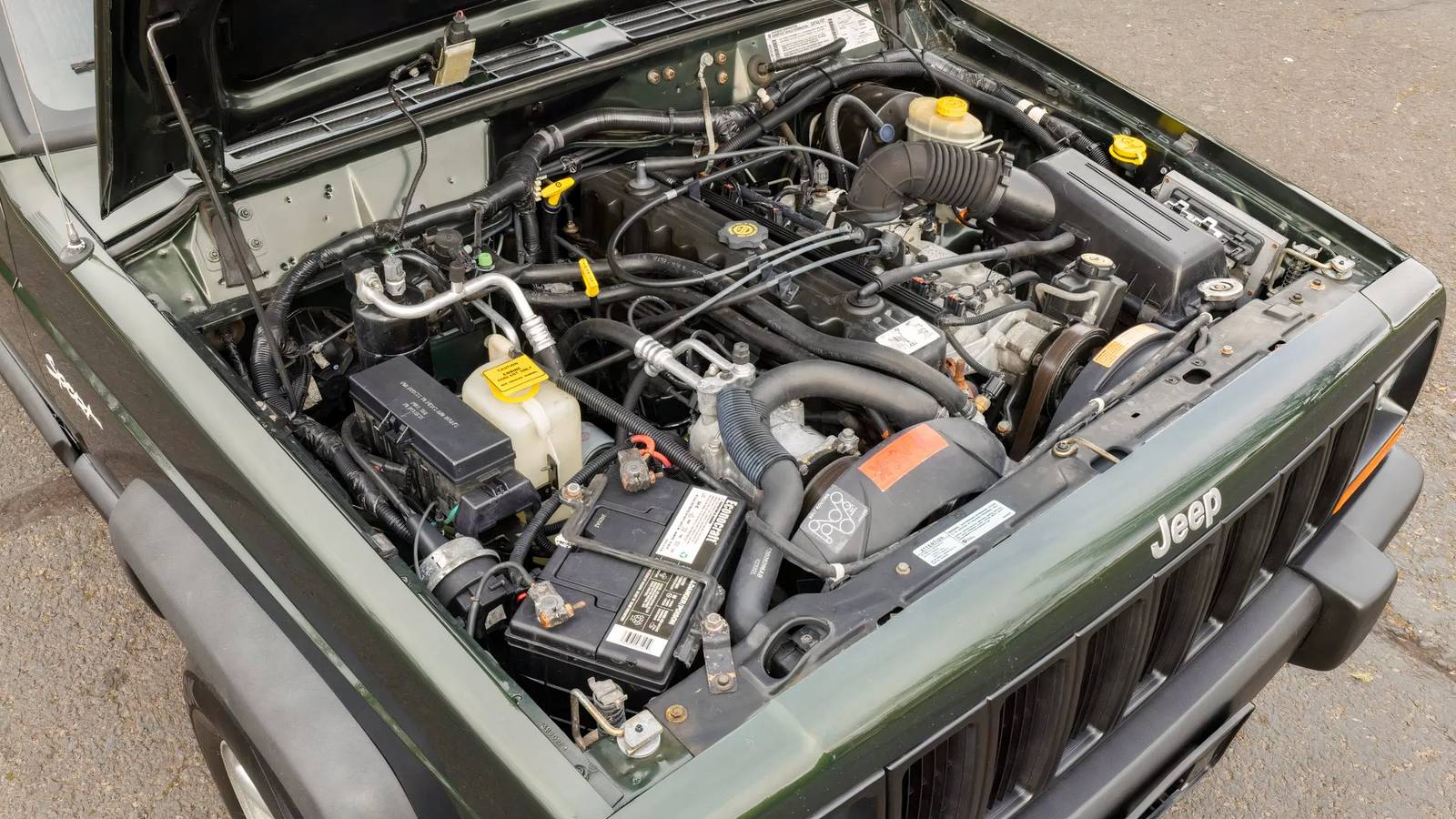
For example, the shift from AMC’s straight-six to Chrysler’s 4. 0L made Jeeps more durable. Later, Fiat’s MultiAir technology improved fuel economy.
Engine Technology: Evolution And Insights
Two non-obvious points:
- Many Jeep engines were built by third-party companies, not just Jeep’s parent company. This helped Jeep offer more versions for global markets.
- Some engines, like the Hurricane F-Head, influenced other brands. Jeep’s engineering often became industry standards.
Jeep engines also followed trends. In the 1980s, diesel engines became popular in Europe. Now, turbo engines and hybrids are growing.
Data Table: Engine Type And Year Introduced
Look at how Jeep engine technology evolved:
| Engine Type | Year Introduced | Main Maker |
|---|---|---|
| Go-Devil | 1941 | Willys-Overland |
| Hurricane F-Head | 1953 | Willys-Overland |
| AMC 258 | 1971 | AMC |
| Chrysler 4.0L | 1987 | Chrysler |
| Pentastar 3.6L | 2011 | Chrysler/Fiat |