Every Jeep Wrangler owner knows tire pressure matters. It affects how your Jeep handles, fuel economy, safety, and even how comfortable your ride feels.
But many people aren’t sure what the right tire pressure is, especially because Wranglers are used in so many different ways—on highways, rocky trails, sand dunes, or muddy tracks.
Let’s break down what tire pressure you should use for your Jeep Wrangler, why it’s so important, and how to adjust it for different driving conditions.
Standard Tire Pressure For Jeep Wrangler
For most Jeep Wranglers, the recommended tire pressure is printed on a sticker inside the driver’s door. It’s also listed in your owner’s manual. Typically, it’s 35 PSI (pounds per square inch) for stock tires. This number is set by Jeep engineers to balance safety, performance, and comfort.
Here’s a quick reference for common Wrangler models:
| Model Year | Stock Tire Size | Recommended PSI |
|---|---|---|
| 2024 Wrangler Sport | 245/75R17 | 35 PSI |
| 2022 Wrangler Rubicon | 285/70R17 | 35 PSI |
| 2021 Wrangler Sahara | 255/70R18 | 36 PSI |
These values are for normal driving on paved roads with factory tires. If you’ve changed your tires or wheels, the correct PSI can be different.
Why Tire Pressure Matters
The right tire pressure makes a huge difference. Too much air and your tires become stiff, reducing traction and making the ride rough.
Too little air and the tires flex too much, which can cause overheating, poor fuel economy, and even tire failure.
Some key effects of incorrect tire pressure:
- Low tire pressure: Decreases fuel efficiency, increases tire wear, and can cause poor steering response.
- High tire pressure: Reduces grip, makes tires wear faster in the center, and increases the risk of a blowout.
Many beginners forget that tire pressure changes with temperature. For every 10°F change in temperature, tire pressure can change by 1 PSI.
So if you check your tires when they’re cold, and then drive in hot weather, the pressure may go up.
Adjusting Tire Pressure For Off-roading
Jeep Wranglers are built for off-road adventures. When you leave the pavement, tire pressure needs to change.
Lowering tire pressure gives your tires more flex. This helps them grip rocks, sand, mud, or snow better. It also makes the ride smoother over rough ground.
Here’s a comparison of typical tire pressures for different conditions:
| Terrain | Recommended PSI | Benefits |
|---|---|---|
| Highway | 35-36 PSI | Best for fuel economy, handling, safety |
| Rocks | 15-20 PSI | Better grip, softer ride |
| Sand | 12-16 PSI | Maximizes tire footprint, reduces sinking |
| Mud | 15-18 PSI | Improved traction |
| Snow | 12-18 PSI | More contact area, less slippage |
Important: Always air your tires back up to normal pressure before driving on paved roads. Low pressure can cause tire failure at high speed.
Larger Tires And Aftermarket Wheels
Many Jeep owners upgrade to larger tires for style or off-road ability. Bigger tires usually need less PSI than stock tires to support the same weight. This is a common mistake—people keep inflating them to the factory number, which can cause a harsh ride and uneven wear.
For example:
| Tire Size | Normal PSI Range | Notes |
|---|---|---|
| 33×12.50R15 | 28-32 PSI | Popular upgrade; lower PSI needed |
| 35×12.50R17 | 26-30 PSI | Common for Rubicon builds |
| 37×13.50R17 | 24-28 PSI | Serious off-road use |
Always check the maximum load and PSI rating on the tire sidewall. If unsure, start at the lower end and adjust based on tire wear and ride quality.
How To Check And Set Tire Pressure
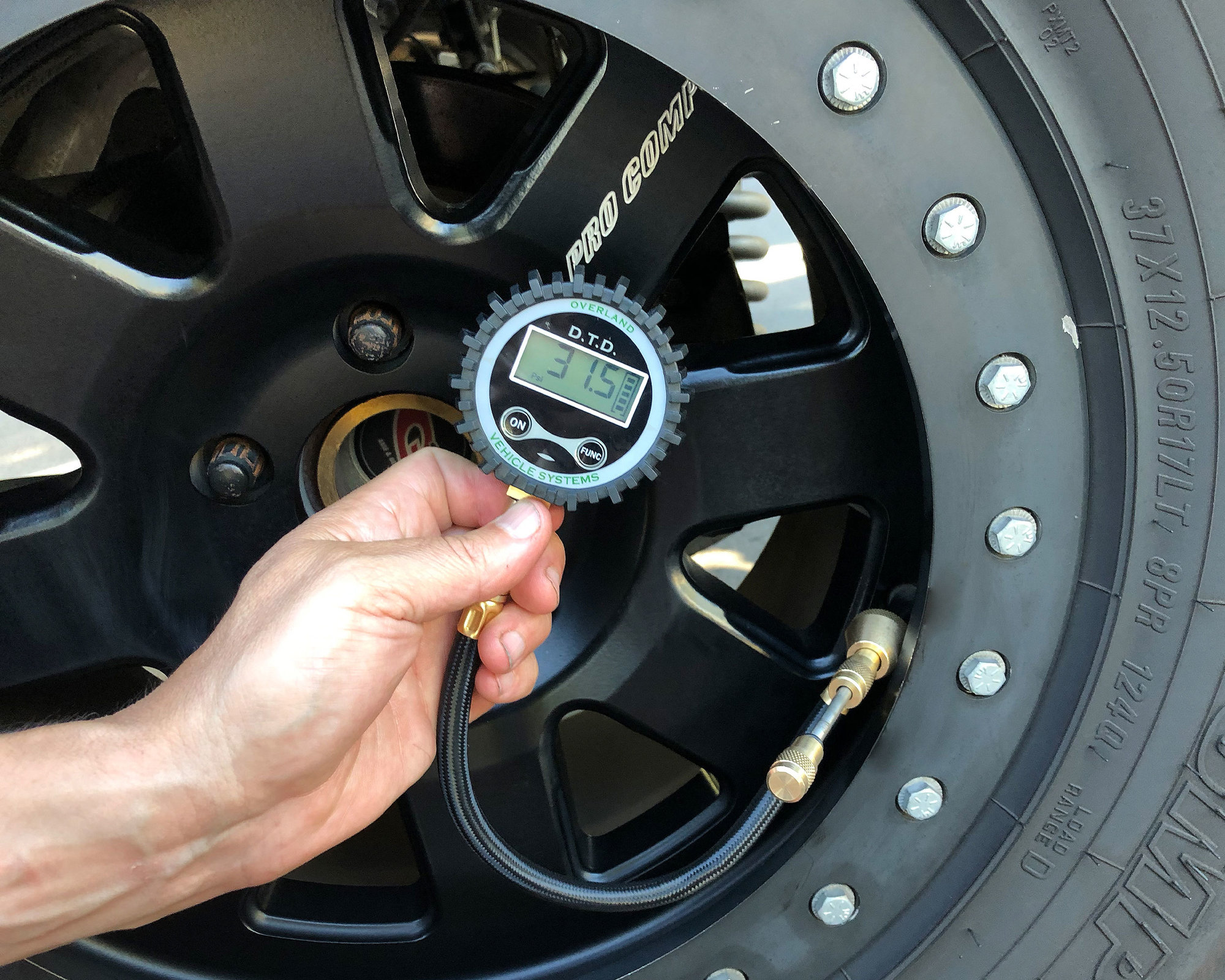
Checking tire pressure is simple, but many people forget to do it often enough. Use a digital tire gauge for the most accurate reading. Always check pressure when tires are cold—after the car has been parked for a few hours.
Steps to set your Jeep Wrangler’s tire pressure:
- Find the recommended PSI (door sticker or manual).
- Use a digital gauge to check each tire.
- Add air if below the recommended PSI, or release air if above.
- For off-road, use a tire deflator tool. Lower pressure to the right PSI for the terrain.
- After off-road driving, use a portable compressor to re-inflate tires before returning to pavement.
Tip: Carry a small air compressor and tire deflator in your Jeep. It’s a smart way to stay ready for any situation.
Common Mistakes To Avoid
- Ignoring the tire pressure when changing tire size.
- Forgetting to adjust for temperature changes.
- Not airing up after off-roading.
- Using a cheap, inaccurate tire gauge.
- Overinflating for heavy loads—always check the tire’s max rating.