The Jeep Trackhawk is not just another SUV—it’s a beast packed with supercar power. Many car enthusiasts and buyers wonder, what motor is in the Jeep Trackhawk? The answer is surprisingly bold. Jeep took their most powerful engine and squeezed it into their Grand Cherokee, creating a unique blend of luxury and performance. If you’re curious about the heart of this monster, this article will guide you through every detail, from specs and performance to comparisons and common questions.
The Motor Inside The Jeep Trackhawk
At the center of the Jeep Trackhawk is the 6.2-liter supercharged V8 engine, also known as the Hellcat engine. This motor is famous for its raw power and is shared with the Dodge Charger and Challenger Hellcat models. The Trackhawk’s engine is a major reason why it stands out from other SUVs.
Key Specifications
Let’s break down the numbers:
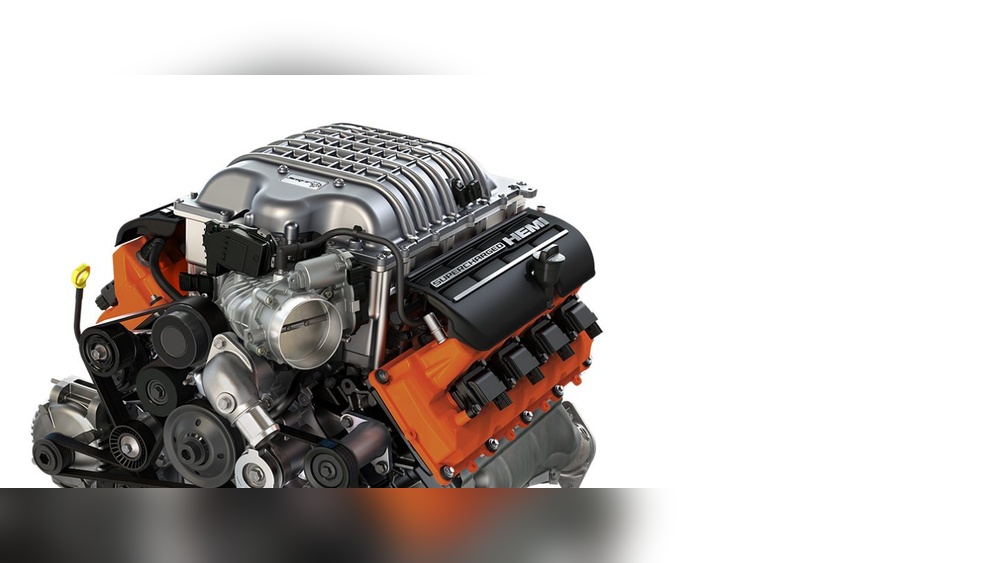
- Engine type: Supercharged 6.2L V8
- Horsepower: 707 hp
- Torque: 645 lb-ft
- Transmission: 8-speed automatic
This combination allows the Trackhawk to accelerate from 0-60 mph in just 3. 5 seconds.
For an SUV weighing nearly 5,400 pounds, that’s incredible. This motor is not only powerful but also reliable, thanks to advanced engineering and cooling systems.
Unique Features
The Hellcat V8 in the Trackhawk includes:
- Twin-screw supercharger for instant boost
- Forged steel crankshaft for strength
- High-flow fuel injectors to feed the engine
- Heavy-duty cooling for track-ready performance
One insight many beginners miss is how Jeep reinforced the transmission and drivetrain. The regular Grand Cherokee wouldn’t handle this much power, so Jeep added upgraded axles, driveshafts, and cooling systems.
Performance Compared To Other Suvs
The Trackhawk’s engine puts it in a league of its own. Here’s a quick comparison with other popular high-performance SUVs:
| Model | Engine | Horsepower | 0-60 mph (sec) |
|---|---|---|---|
| Jeep Trackhawk | 6.2L Supercharged V8 | 707 | 3.5 |
| BMW X5 M | 4.4L Twin-Turbo V8 | 617 | 3.8 |
| Mercedes-AMG GLE 63 S | 4.0L Biturbo V8 | 603 | 3.7 |
| Porsche Cayenne Turbo | 4.0L Twin-Turbo V8 | 541 | 3.9 |
As shown, the Trackhawk’s motor delivers more horsepower than its European rivals, leading to faster acceleration. Jeep’s decision to use the Hellcat engine set a new standard for performance SUVs.

Why The Hellcat Motor?
Jeep wanted to offer something no other SUV could: muscle car power with family-sized comfort. The Hellcat engine was already proven in Dodge models, so it was a smart choice for the Trackhawk. But Jeep made several changes to adapt it for SUV duty:
- All-wheel drive: Unlike Dodge Hellcats, which are rear-wheel drive, the Trackhawk uses AWD for better traction.
- Enhanced cooling: Extra radiators keep the motor cool, even during hard driving.
- Upgraded brakes: Brembo brakes handle the stopping power from 707 horses.
This combination allows the Trackhawk to perform on the street and the track. One surprising fact is the Trackhawk’s towing capacity up to 7,200 pounds.
Most high-performance SUVs sacrifice utility, but the Trackhawk remains practical.
Engine Details And Tech Insights
Let’s look deeper into the Hellcat V8’s design:
| Feature | Description |
|---|---|
| Supercharger | 2.38-liter twin-screw, provides up to 11.6 psi of boost |
| Block Material | Cast iron for durability |
| Compression Ratio | 9.5:1 |
| Fuel System | Sequential multi-port injection |
| Cooling | Oil cooler, intercooler, and extra radiators |
A common mistake is assuming the Trackhawk’s engine is the same as the SRT model. The SRT uses a naturally aspirated 6.
4L V8, which is less powerful. Only the Trackhawk gets the supercharged Hellcat motor.

Real-world Experience
Owners often describe the Trackhawk as a “rocket on wheels. ” It’s surprisingly easy to drive at low speeds, thanks to smooth power delivery.
But press the gas, and the supercharger whines, launching the SUV forward. Many beginners are surprised by the sound the Hellcat engine is loud, with a deep exhaust note.
Fuel economy is low, around 12 mpg city and 17 mpg highway. This is expected for such a powerful engine.
If you plan to use it as a daily driver, keep in mind the cost of gas and maintenance.
Jeep Trackhawk Motor Vs Dodge Hellcat
Some wonder if the Trackhawk’s motor is different from the Dodge Hellcat’s. Here’s a quick comparison:
| Model | Engine | Horsepower | Drive Type | Cooling |
|---|---|---|---|---|
| Jeep Trackhawk | 6.2L Supercharged V8 | 707 | AWD | Enhanced (for SUV) |
| Dodge Charger Hellcat | 6.2L Supercharged V8 | 707–797 | RWD | Standard |
| Dodge Challenger Hellcat | 6.2L Supercharged V8 | 707–797 | RWD | Standard |
The main difference is the Trackhawk’s all-wheel drive and enhanced cooling for heavy SUV use. Otherwise, the engines are nearly identical.

Frequently Asked Questions
What Engine Does The Jeep Trackhawk Have?
The Jeep Trackhawk uses the 6.2-liter supercharged Hellcat V8, producing 707 horsepower and 645 lb-ft of torque.
How Fast Is The Jeep Trackhawk?
It can go from 0-60 mph in just 3.5 seconds, making it one of the fastest SUVs in the world.
Is The Trackhawk Engine Reliable?
Yes, the Hellcat engine is known for durability, especially when properly maintained. Jeep adds extra cooling to improve reliability.
How Does The Trackhawk Compare To The Srt?
The Trackhawk is more powerful, with a supercharged V8. The SRT uses a 6.4L naturally aspirated V8 with less horsepower.
Can You Tow With The Trackhawk?
Yes, it has a towing capacity of up to 7,200 pounds, which is higher than most performance SUVs.
The Jeep Trackhawk’s motor truly sets it apart. It offers supercar performance in a family-friendly package, combining muscle car power with SUV practicality. If you want an SUV that roars, races, and hauls, the Trackhawk’s Hellcat engine is unmatched. For more technical details, you can check the official Wikipedia page.