If you own a Jeep or are thinking of buying one, you’ve probably heard people talk about “lug patterns. ” This term comes up in conversations about wheels, tire upgrades, and off-road modifications.
But what exactly is a lug pattern, and why does it matter for your Jeep?
Understanding your Jeep’s lug pattern can help you choose the right wheels, avoid costly mistakes, and keep your ride safe on and off the road.

What Is A Lug Pattern?
A lug pattern (also called a bolt pattern) describes how the bolts or “lugs” are arranged on your vehicle’s wheel hub. This pattern determines what wheels will fit your Jeep. The lug pattern is written as two numbers: the number of bolts (or lugs) and the diameter of the circle they form.
For example, a lug pattern of 5×5 means:
- Your wheel has 5 lug nuts
- The lugs form a circle with a 5-inch diameter
This measurement is crucial. Even if a wheel looks like it will fit, if the pattern doesn’t match, it simply won’t bolt on.
Common Jeep Lug Patterns
Different Jeep models use different lug patterns. Here’s a look at some of the most popular Jeep vehicles and their typical patterns:
| Jeep Model | Years | Lug Pattern |
|---|---|---|
| Wrangler YJ | 1987-1995 | 5×4.5 |
| Wrangler TJ | 1997-2006 | 5×4.5 |
| Wrangler JK/JL | 2007-Present | 5×5 |
| Grand Cherokee | 1999-2010 | 5×5 |
| Cherokee XJ | 1984-2001 | 5×4.5 |
Note: Always double-check your vehicle’s year and trim before buying new wheels. Some limited editions or special trims use unique patterns.
How To Measure Your Jeep’s Lug Pattern
Knowing your Jeep’s lug pattern is important when replacing or upgrading wheels. If you don’t have the owner’s manual, you can measure it yourself.
- Count the number of lugs: Most Jeeps have 5 lugs, but some older or heavy-duty models have 6 or 8.
- Measure the bolt circle diameter:
- For even numbers (like 6), measure from the center of one lug hole to the center of the one directly across.
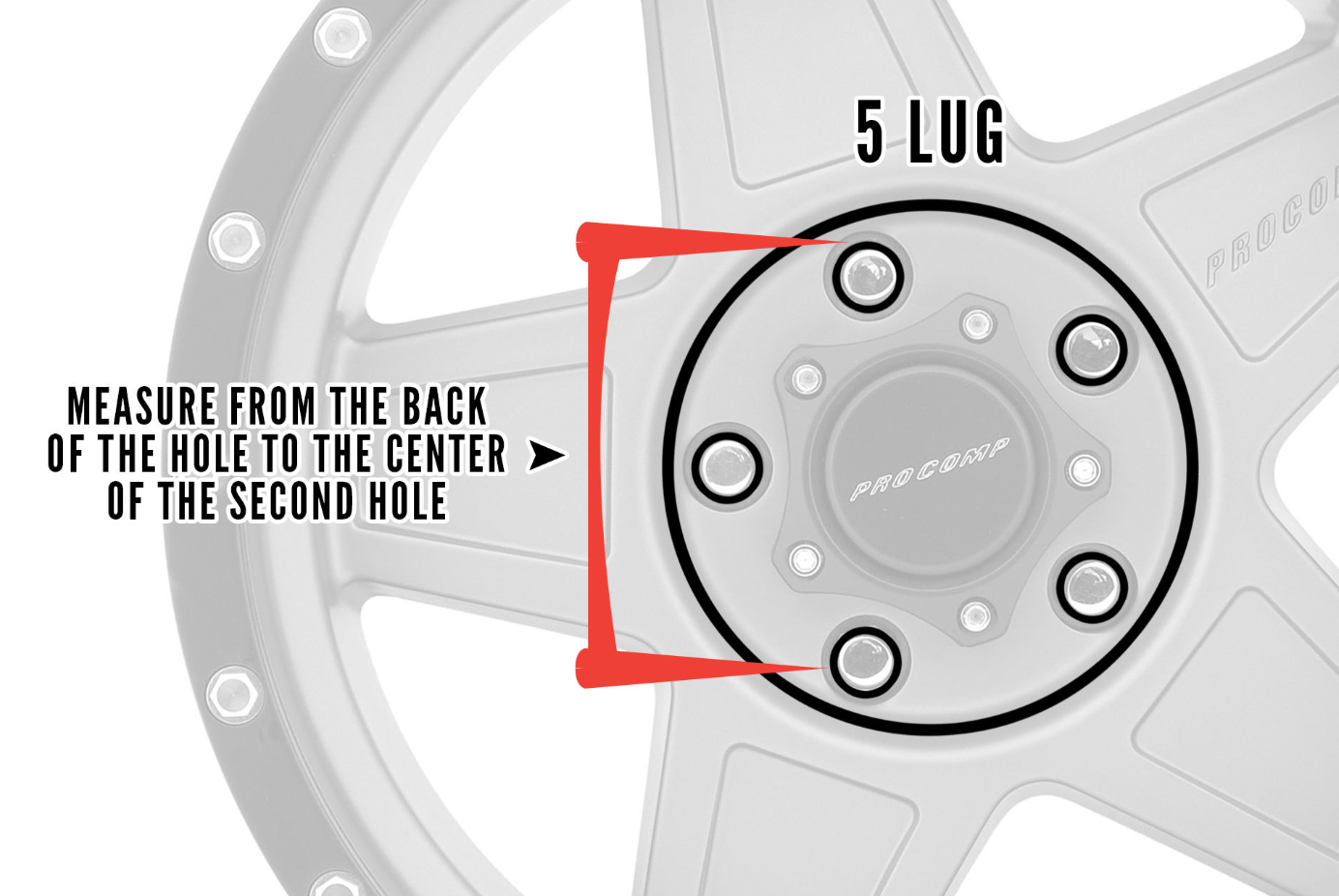
- For odd numbers (like 5), measure from the back of one lug hole to the center of the lug two spaces away.
For example, if you measure from the back edge of one lug hole to the center of the third lug hole away and get 5 inches, your Jeep likely has a 5×5 pattern.
Why Lug Patterns Matter
Choosing the wrong lug pattern can cause serious problems:
- Wheels won’t fit your Jeep at all.
- Using adapters or spacers can create safety issues or damage your suspension.
- You may void your warranty or fail a safety inspection.
If you want to upgrade to larger tires for off-roading, or switch to a different wheel style, matching the lug pattern is the first step. Even a small mismatch can cause vibration, uneven tire wear, or even wheel detachment.

Jeep Lug Patterns Compared To Other Brands
Jeep lug patterns are different from many other brands. Here’s a quick comparison:
| Vehicle Brand | Common Lug Pattern | Compatible with Jeep? |
|---|---|---|
| Jeep (JK/JL) | 5×5 | Yes |
| Ford F-150 | 6×135 | No |
| Toyota Tacoma | 6×139.7 | No |
| Dodge Ram | 5×5.5 | No |
This shows why it’s risky to assume a wheel from another truck or SUV will fit your Jeep.
Non-obvious Insights For Jeep Owners
Many Jeep beginners overlook two important details:
- Hub bore size: The hole in the center of your wheel (hub bore) must match your Jeep’s hub, or you could get vibration or poor fit. Lug pattern alone isn’t enough.
- Offset and backspacing: Even with the right lug pattern, the wheel’s offset (how far in or out it sits) affects steering and tire clearance. Don’t focus only on the bolt pattern when shopping for wheels.
Also, if you use aftermarket wheels, make sure the lug nuts are the right type (cone seat, mag seat, etc. ) For your new wheels.
Mistakes To Avoid When Choosing Jeep Wheels
- Assuming all Jeep wheels are the same. They are not—always check model and year.
- Ignoring hub-centric rings. These rings help aftermarket wheels fit tightly. Skipping them can cause vibration.
- Not considering brake caliper clearance. Some larger brakes need wheels with more space inside.
- Relying on “universal” wheels. True universal fit rarely exists for Jeeps due to their unique specs.
When To Use Wheel Adapters
Wheel adapters let you fit wheels with a different lug pattern, but they have risks. Only use high-quality, properly installed adapters.
Poor adapters can fail under off-road stress. Always check local laws some places ban adapters for safety reasons.
Real-world Example
A Jeep Wrangler JK owner wanted to install wheels from a Dodge Ram. The Ram’s pattern was 5×5.5, but the Jeep’s was 5×5. Even though both had 5 lugs, the difference meant the Ram wheels wouldn’t fit. The owner avoided a costly mistake by measuring before buying.
Where To Find Accurate Lug Pattern Information
Your Jeep’s owner’s manual is the best source. You can also check the back side of your factory wheels, or look up your VIN online. For more detailed guides, the Wikipedia Wheel Sizing page explains bolt patterns and related specs.
Frequently Asked Questions
What Is The Most Common Jeep Lug Pattern?
The most common Jeep lug pattern today is 5×5. This is found on Wrangler JK, JL, and many Grand Cherokees made after 1999.
Can I Put Wheels From Another Brand On My Jeep?
Only if the lug pattern, hub bore, and offset match. Most wheels from Ford, Toyota, or Chevy will not fit a Jeep without adapters.
How Do I Measure A 5-lug Pattern?
Measure from the back edge of one lug hole to the center of the third lug hole away. This gives you the circle’s diameter.
Do All Jeep Wranglers Have The Same Lug Pattern?
No. Older Wranglers (YJ, TJ) use 5×4.5, while JK and JL models use 5×5. Always check your year.
Is It Safe To Use Wheel Adapters On My Jeep?
Quality adapters installed correctly can work, but they add stress and may not be legal everywhere. Use them only if needed, and check local laws.
Understanding your Jeep’s lug pattern is more than just a technical detail. It’s key for wheel upgrades, off-road adventures, and safe driving.
Always confirm the correct specs before buying wheels, and consider all fitment factors for the best results.