The Jeep hierarchy is a unique concept in the automotive world. It describes the unwritten social order and respect among Jeep owners.
This hierarchy shapes the way Jeep drivers interact, both online and on the road. If you own a Jeep or plan to buy one, understanding the Jeep hierarchy can help you feel part of the community and avoid common mistakes.
What Is The Jeep Hierarchy?
The Jeep hierarchy is not official. It’s a mix of tradition, history, and brand loyalty. It started with the original Jeep Wrangler and grew as new models appeared. Owners often rank Jeeps based on factors like off-road ability, model type, modifications, and age. This system influences how Jeep owners greet each other, who gets the most respect, and which vehicles are seen as “true Jeeps.”

How The Hierarchy Works
The Top Tier: Classic And Off-road Models
At the top are Wrangler models, especially older versions like the CJ and TJ. These Jeeps are known for rugged design and strong off-road performance. Owners of these models are seen as the most loyal to Jeep traditions.
Middle Tier: Modern And Versatile Jeeps
Next are newer Wranglers (like the JK and JL) and other models such as the Cherokee and Grand Cherokee. These Jeeps balance off-road skills and comfort. They get respect, but not as much as the classic Wranglers.
Lower Tier: Urban And Crossover Jeeps
At the bottom are the Renegade, Compass, and other crossover models. These are built more for city driving than tough trails. Owners might not get the same recognition, but they are still part of the Jeep family.
Here’s a simple comparison of Jeep hierarchy levels:
| Tier | Jeep Models | Main Feature |
|---|---|---|
| Top | CJ, TJ, Classic Wrangler | Strong off-road, tradition |
| Middle | JK, JL, Cherokee, Grand Cherokee | Modern, versatile |
| Lower | Renegade, Compass | Urban, crossover |
Key Factors That Shape The Jeep Hierarchy
Several elements decide where your Jeep fits in the hierarchy:
- Model Type: The Wrangler is always at the top.
- Year and Generation: Older models get more respect.
- Off-Road Capability: Jeeps with better 4×4 features rank higher.
- Modifications: Lift kits, tires, winches, and lights can boost your status.
- Usage: Jeeps used for real off-roading are valued more than those for city driving.
Let’s compare two popular Jeep models:
| Feature | Wrangler TJ | Renegade |
|---|---|---|
| Off-Road Ability | Excellent | Moderate |
| Tradition | High | Low |
| Owner Respect | Very High | Lower |
Jeep Wave: A Sign Of Respect
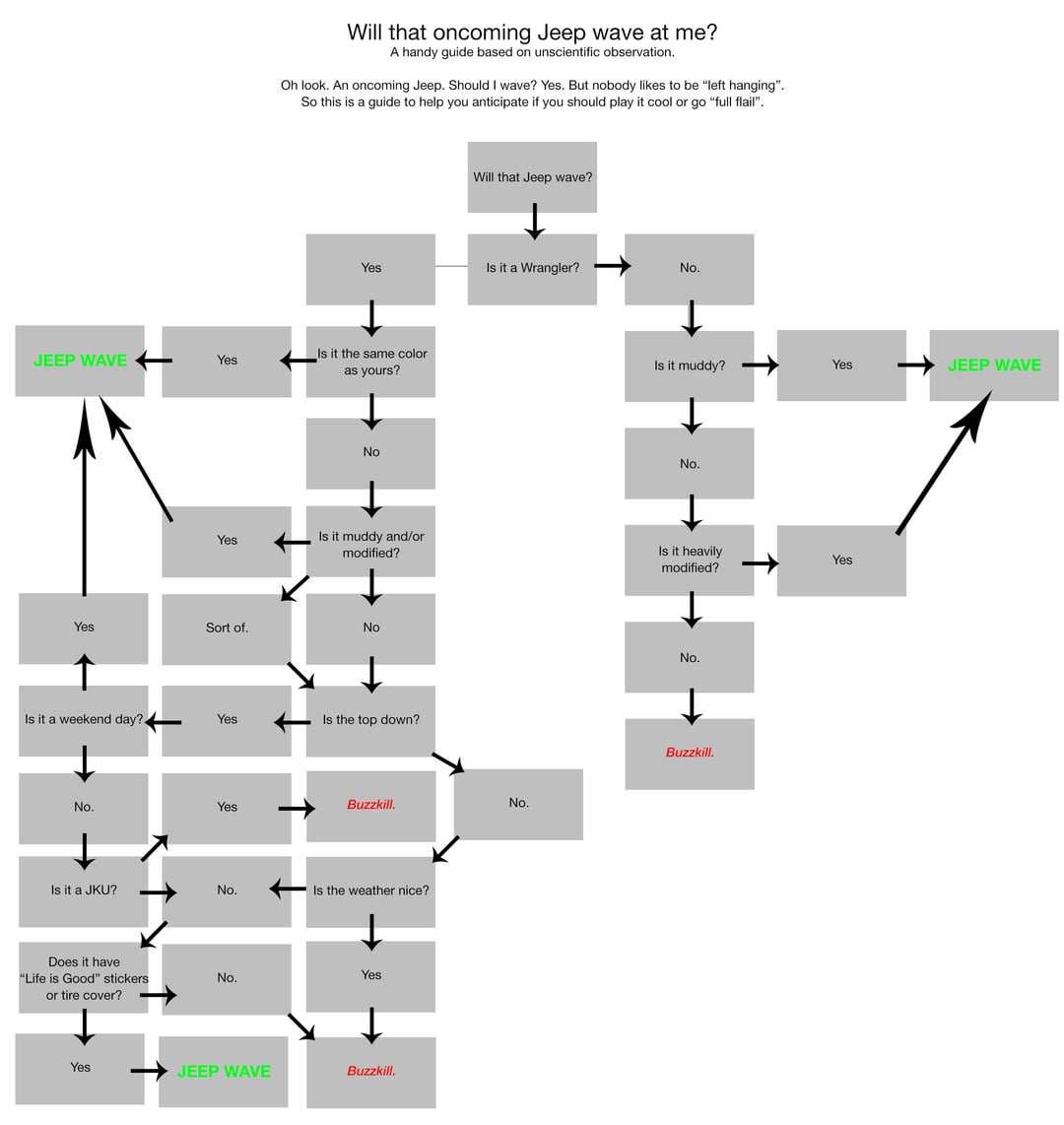
The Jeep Wave is a simple hand gesture between Jeep drivers. It’s an important part of the hierarchy. The wave started among Wrangler owners but now includes other models. However, some drivers only wave to “top tier” Jeeps. If you drive a Wrangler, you’ll notice the wave often. If you own a Renegade or Compass, you may see it less.
Jeep Modifications And Their Impact
Modifications play a big role. Adding off-road upgrades like bigger tires, lift kits, and winches can move your Jeep up the hierarchy. But there’s a catch: modifications must be practical, not just for looks. Serious Jeep fans value upgrades that improve performance, not just style.
| Modification | Impact on Hierarchy |
|---|---|
| Lift kit | High (if used off-road) |
| LED lights | Moderate |
| Sticker/decal | Low |
Common Mistakes By New Jeep Owners
Many new owners misunderstand the Jeep hierarchy. Here are two mistakes beginners often make:
- Thinking all Jeeps are equal: While every Jeep is valued, the community sees differences. Wranglers and older models get more respect.
- Adding non-functional upgrades: Stickers and flashy accessories don’t raise your status unless your Jeep performs better off-road.
A non-obvious tip: Attend local Jeep events. Meeting experienced owners and seeing their vehicles helps you learn what’s valued.
Jeep Hierarchy In Online Communities
Online Jeep forums and groups reflect the hierarchy. Posts about classic Wranglers or tough off-road trips get more attention.
Owners of city Jeeps may feel left out. If you want advice or respect online, share real adventures and show useful modifications.
Why The Jeep Hierarchy Matters
Understanding the hierarchy helps you fit in with the Jeep community. You’ll know why some Jeeps get more waves, and why certain upgrades get praise.
This knowledge can guide your choices if you want to earn respect or simply enjoy Jeep life.
It’s also useful when buying a used Jeep. Wranglers and older models often cost more because of their place in the hierarchy.
In 2023, used Jeep Wranglers sold for an average of $29,000, while Renegades averaged $18,000. This price difference comes from both performance and community value.

Frequently Asked Questions
What Is The Jeep Wave?
The Jeep Wave is a greeting between Jeep drivers. Usually, owners of Wranglers and classic models use the wave to show respect. It’s a tradition that started decades ago and is still popular today.
Which Jeep Is Highest In The Hierarchy?
The classic Wrangler models, especially CJ and TJ, are seen as the top Jeeps. They have strong off-road ability and deep history.
Do Modifications Affect My Jeep’s Status?
Yes, practical modifications like lift kits, tires, and winches can raise your Jeep’s status. Upgrades that only add style have less impact.
Can A Renegade Or Compass Be Part Of The Hierarchy?
Yes, every Jeep is included. But Renegade and Compass owners may get less recognition, especially from Wrangler drivers.
Where Can I Learn More About Jeep History?
You can read more about Jeep’s history at Wikipedia for detailed information.
The Jeep hierarchy adds fun and tradition to owning a Jeep. It shapes how people interact, value their vehicles, and build community.
Whether you drive a classic Wrangler or a modern crossover, knowing the hierarchy helps you enjoy Jeep culture and make smart choices.