Owning a Jeep is exciting, especially for those who love adventure. But many Jeep owners ask the same question: What axles are in my Jeep?
Understanding your Jeep’s axles is important for off-road driving, towing, and upgrading parts. Axles decide how much weight your Jeep can handle and how strong it is off-road.
Let’s break down the types, how to identify them, and what they mean for your Jeep’s performance.
Why Jeep Axles Matter
The axle is the backbone of your Jeep’s drivetrain. It connects the wheels, transfers power, and supports the vehicle’s weight. Different axles offer different strength levels, gear ratios, and features.
- Off-road ability: Stronger axles mean better performance on rough terrain.
- Towing: Heavy-duty axles can carry more weight.
- Upgrades: Knowing your axle type helps you buy the right parts.
Surprisingly, many Jeep owners don’t know their axle model, even though it affects everything from tire size to safety.
Common Jeep Axle Types
Jeep uses several axles in different models and years. The most common are:
- Dana 30
- Found in many Jeep Wranglers and Cherokees.
- Good for light off-road and daily driving.
- Not ideal for large tires or heavy loads.
- Dana 35
- Popular in older Wranglers and Cherokees.
- Known as a weak spot for serious off-roaders.
- Better for street use than rough trails.
- Dana 44
- Used in Wranglers, Gladiators, and other models.
- Stronger than Dana 35 and Dana 30.
- Handles bigger tires and moderate towing.
- Dana 60
- Found in some custom or heavy-duty builds.
- Very strong and heavy.
- Great for extreme off-road and big tires.
- Chrysler 8.25
- Used in some Jeep Cherokees and Libertys.
- Stronger than Dana 35, similar to Dana 44.
- Good balance for daily and off-road use.
- AMC 20
- Found in older Jeeps like the CJ series.
- Not as common today.
Each axle has unique strengths and weaknesses. Choosing the right one depends on how you use your Jeep.
Identifying Your Jeep’s Axles
Many people struggle to identify their axles. Here are practical ways to find out:
Check The Build Sheet
Your Jeep’s build sheet lists all parts installed at the factory. You can request it from Jeep or use your VIN online.
Inspect The Axle Housing
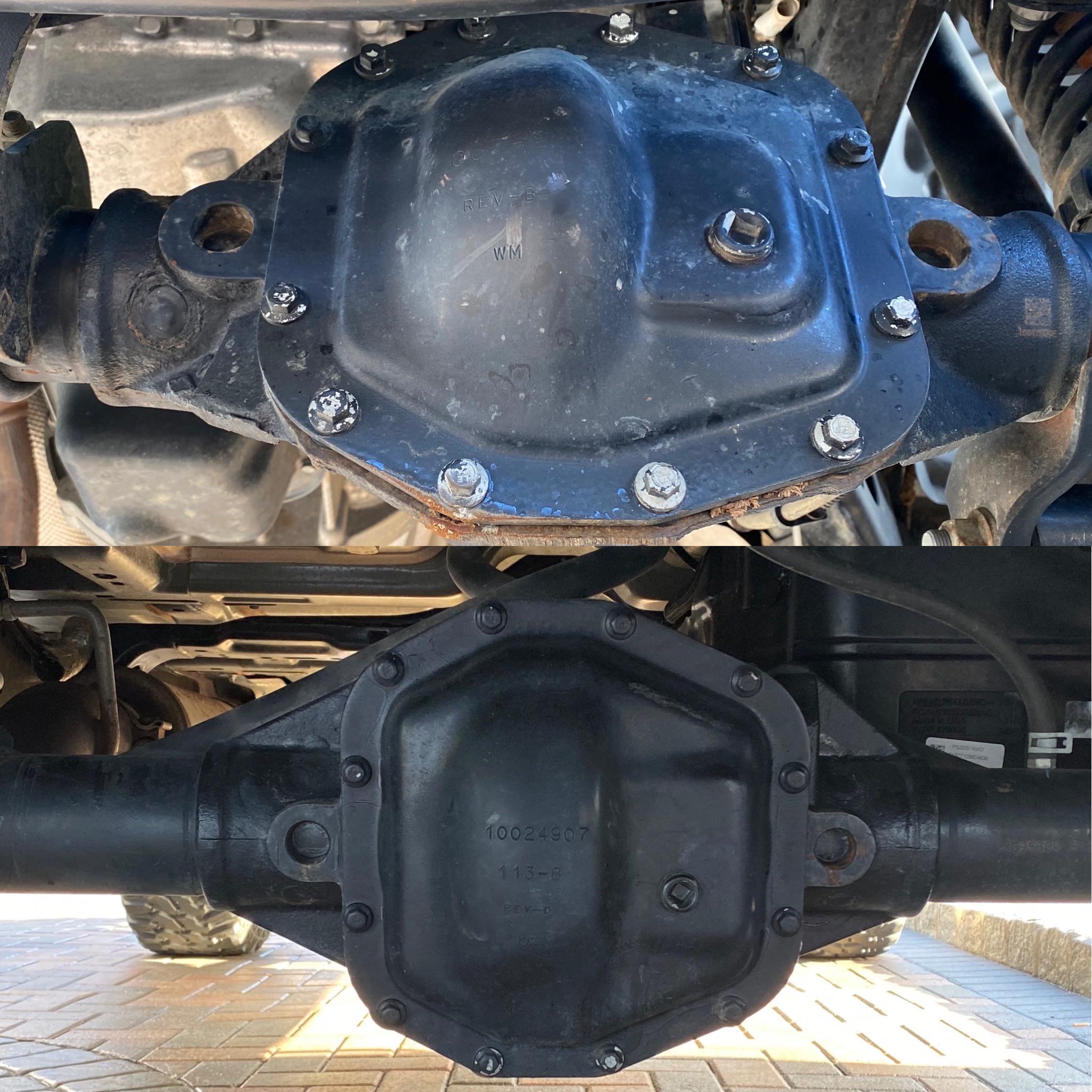
Look for a metal tag or stamp on the axle. This tag shows the axle model, gear ratio, and sometimes the serial number.
Count The Bolts
The shape and bolt count of the differential cover help identify the axle. Here’s a quick comparison:
| Axle Type | Bolt Count | Cover Shape |
|---|---|---|
| Dana 30 | 10 | Rounded |
| Dana 35 | 10 | Oval |
| Dana 44 | 10 | Hexagonal |
| Chrysler 8.25 | 10 | Flat Bottom |
Look Up Your Model And Year
Most Jeep models use specific axles based on the year and trim. Here’s an example:
| Jeep Model | Years | Front Axle | Rear Axle |
|---|---|---|---|
| Wrangler TJ | 1997-2006 | Dana 30 | Dana 35/Dana 44 |
| Wrangler JK | 2007-2018 | Dana 30/Dana 44 | Dana 44 |
| Cherokee XJ | 1984-2001 | Dana 30 | Dana 35/Chrysler 8.25 |
This data can help narrow down your axle type quickly.
What Axle Features Matter Most?
When you know your axle type, look at these important features:
- Gear ratio: Affects torque and speed. Lower ratios give more power, higher ratios give more speed.
- Axle shaft strength: Determines how much force the axle can handle.
- Locker type: Some axles have limited-slip or locking differentials, improving off-road traction.
- Spline count: More splines mean stronger axles.
Many beginners miss the importance of gear ratio and locker types when upgrading their Jeep. These affect performance much more than just axle size.
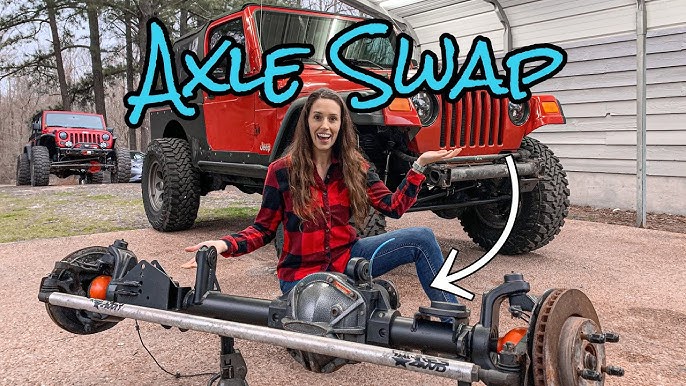
Upgrading Or Swapping Axles
If you plan to use your Jeep for heavy off-road or bigger tires, you may need stronger axles. Here’s what to consider:
- Compatibility: Not all axles fit every Jeep. Check year, model, and trim.
- Cost: Swapping axles can be expensive. Used axles are cheaper but may be worn.
- Skill Level: Some swaps need special tools and knowledge.
A common mistake is buying an axle just because it is “stronger. ” You must check if it fits your suspension and drivetrain.
Jeep Axle Comparison
Here’s a direct comparison of strength, towing, and tire size:
| Axle | Max Tire Size | Max Towing (lbs) | Best Use |
|---|---|---|---|
| Dana 30 | 33″ | 2,000 | Light off-road, daily |
| Dana 35 | 31″ | 2,000 | Street, light off-road |
| Dana 44 | 35″ | 3,500 | Moderate off-road |
| Chrysler 8.25 | 33″ | 3,000 | Daily/off-road mix |
| Dana 60 | 37″+ | 5,000+ | Extreme off-road |
This table shows why knowing your axle is so important for upgrades.